
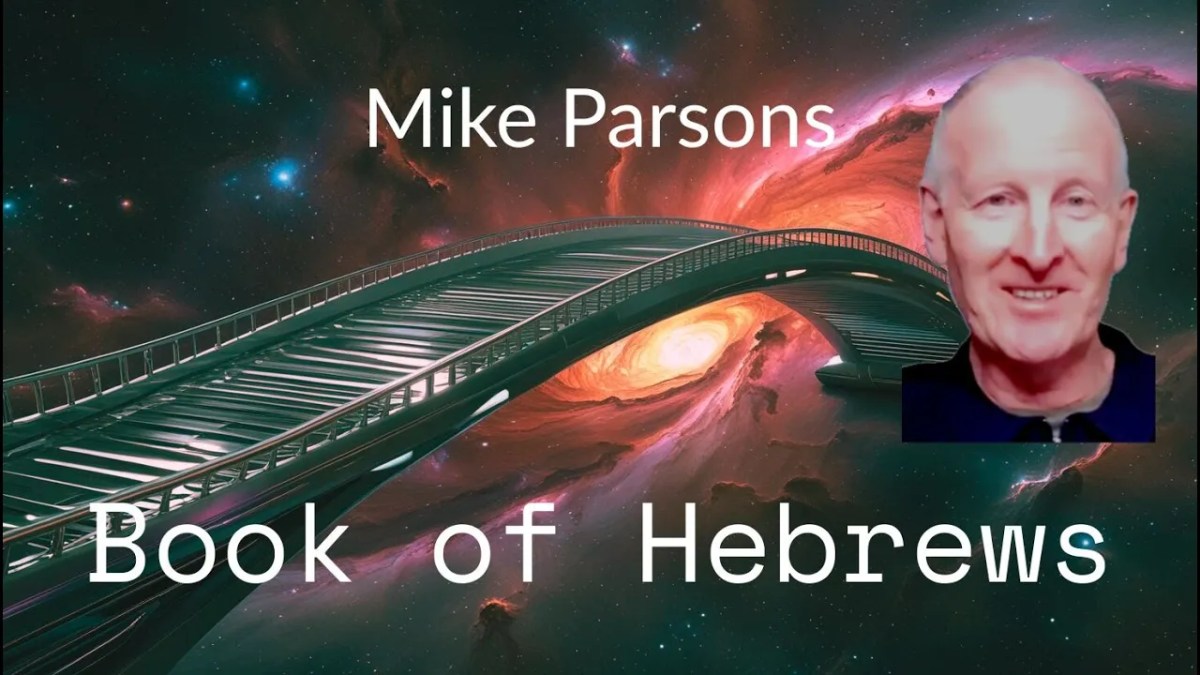
Mike Parsons
If you do not see the video above, please click here.
Hebrews for the Hebrews
Hebrews was written to the Hebrews, which is evident from its content and the mindsets and beliefs the writer was addressing. The aim was to help them understand that the old covenant had ended and a new covenant had begun. Much of the letter was therefore written in that context. When we read passages such as, “If we go on sinning wilfully after receiving the truth, there no longer remains a sacrifice for sins,” some read this with a predisposed theological lens—for example, evangelicals might interpret this as a threat, but the reality is that there is only one sacrifice for sins, and it has already been made. If you sin, there isn’t another sacrifice—you’re already forgiven through Jesus. It’s not about going back to animal sacrifices or Christ’s work being insufficient because someone continues to struggle independently.
The following phrase, “a terrifying expectation of judgment and the fury of a fire that will consume the adversaries,” raises the question: who are the adversaries? It’s not people, but rather those things that cause us to operate in lost identity, leading us to act in ways contrary to our true nature. A judgment is a verdict—God declares, “That’s not good.” God is a consuming fire; He consumes everything opposed to the truth so you don’t have to live that way any longer.
The writer refers to those who ignored the law of Moses being put to death without mercy by the witness of two or three people. He’s speaking to Jewish believers, helping them understand their historical context and system. Just because something is said to this specific group doesn’t mean it universally applies today. This is a common issue—we don’t always consider audience relevance, asking who the letter was written to, why, and when. Hebrews was written before the destruction of the temple; these were covenantal issues. The writer is essentially saying, “Jesus has come; those following Judaism are trampling underfoot the Son of God, not accepting Him as Messiah, so your old system is coming to an end.”
Hebrews with a modern Western mindset
Much Christian theology reads Hebrews with a modern Western mindset, not recognising the original audience or situation. The statement, “It’s a terrifying thing to fall into the hands of the living God,” is terrifying for those living by the old covenant, as there is no grace for those who choose to continue living under the law.
We need to take the whole argument—not just individual verses—into account. The entire letter is addressed to Hebrews wrestling with whether to continue following the law of Moses. Judaizers—Jewish Christians—were trying to bring people, even Gentiles, back under the law. The writer of Hebrews asserts that the law is obsolete and has faded away. Under the old system, they couldn’t approach God directly; they were afraid to come to Mount Zion, so they set up a system of mediation with Moses and their priests. Now, however, the writer says you don’t need a mediation system—entry into the Holy of Holies is open to all, as we are now priests and kings after the order of Melchizedek. He was helping them understand the transition from old to new covenant.
Not the end of the world
Hebrews is not talking about final judgment at the end of the world; it’s a judgment on the system and the people who were choosing to remain in that system—lost identity bound up in a redundant religious structure. God’s judgment is that “this system doesn’t work”, and His consuming fire will destroy everything opposed to the true, grace-based salvation found in Jesus. That old religious system is the adversary, not people themselves. Jesus warned that those remaining in Jerusalem and the old system would be subject to destruction at the end of that age—meaning, of the old covenant age, not the end of the world. “The Heavens and the Earth” would be destroyed, which was a name for the Temple, where Heaven met Earth. And in the New Testament context, “the end” and the “last days” refer to the end of the old covenant age, but due to mistranslation, it is often rendered “end of the world” rather than “end of the age”—and this completely changes the meaning. Some English translations have elsewhere turned “this generation” into “this race,” further muddying the intended message.
The writer of Hebrews consistently points to Christ as the one true and final sacrifice for sin, once and for all. He was helping his readers understand the power of the crucifixion, the resurrection, and the reality of the new covenant—using language and concepts familiar to their Jewish context. Many modern readers misunderstand this because they interpret it through a contemporary Christian theological filter.
Old Testament quotations such as “Vengeance is mine, I will repay,” or “The Lord will judge his people,” are also misunderstood. God did judge the old covenant system, which came to an end. The new covenant was, in essence, re-birthed out of the ending of the old. As Jesus described in Matthew 24, these were the birth pangs of the new, not the death throes of the old—birth pangs lead to something being born.
Hebrews from the evangelical viewpoint
If you read Hebrews at face value, from the viewpoint of evangelical conditioning, you might draw all the wrong conclusions, missing the overall purpose of the book. For example, the passage about striving to enter rest refers to their striving within a religious system for something that the man-made system could never provide. We, on the other hand, already rest in the finished work of Jesus, included in Him. Yet people often think they need to strive because “the Bible says so”—but that is taking things out of context.
This shows the problems caused by the doctrine of sola scriptura, where every verse is read as something to apply directly to our lives today, without considering context. Such literalism creates many unnecessary difficulties for believers.
If you enjoy these video blogs, please take a moment to like, share, comment, and subscribe—it really does help. Thank you very much.
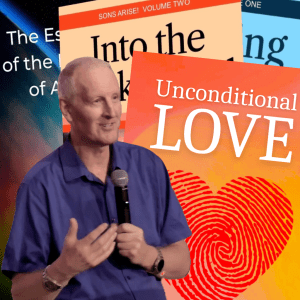
All Mike’s books, including The Eschatology of the Restoration of All Things, Into the Dark Cloud and Unconditional Love, are available to order from online and local booksellers or to buy as ebooks for instant download from our website.
More info at eg.freedomarc.org/books
Share this:


 Sons of Issachar