
Mike Parsons
Not seeing the video above? Please click here.
The cross was a powerful point where God dealt with every accusation made against us, reconciled us to himself and didn’t count anything we may have previously done against us. So why do we—and why does religion—keep bringing it up? Because religion keeps reinforcing the need to maintain a certain standard of behaviour. You have to do this, and do that, and if you don’t, you feel guilty. Christianity has its own set of laws now—which is a mixture of covenants. Read your Bible, pray every day, witness, go to church—these become the Evangelical law. Catholics might have communion, confession, sacraments. It’s all performance-based.
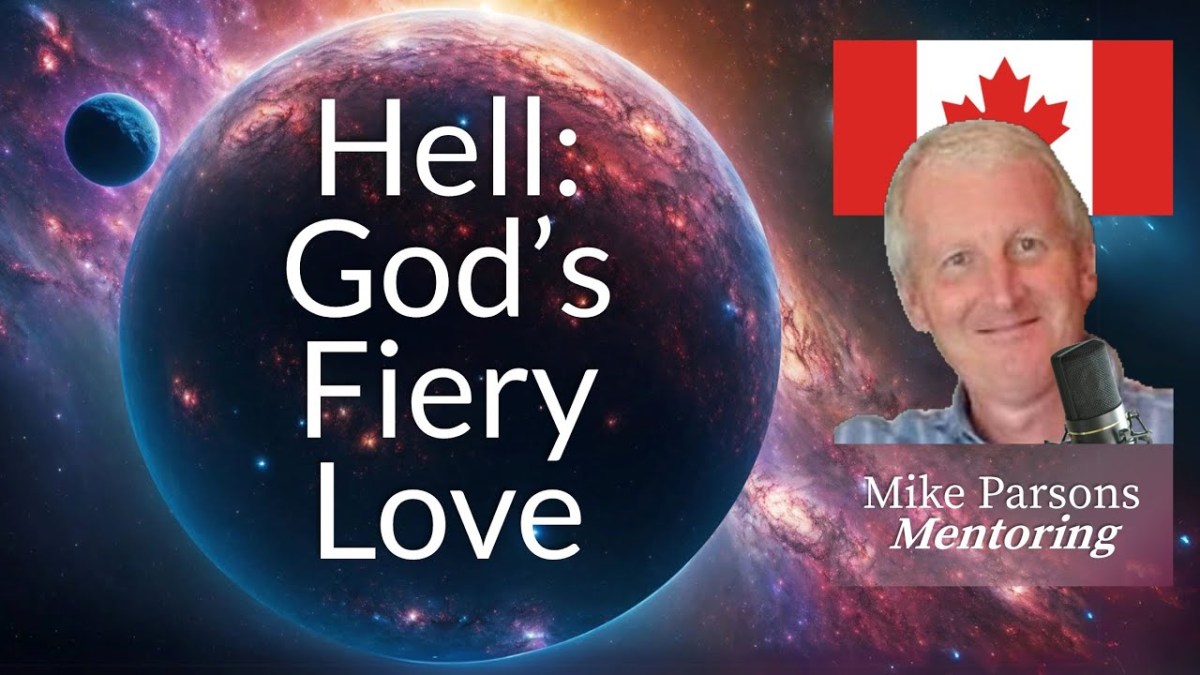
But God’s fire is God’s love. People talk about God’s fire as punishment, especially in political rhetoric—like “they’re gonna pay the price now!”—but really, God is a consuming fire, and that fire is always for purification, never punishment. He has no punishment to give. We’ve made God out to be a judge who must punish sin, but that’s a misunderstanding. Fire, like a refiner’s fire, is about removing impurities—transforming, not destroying. He wants us to be pure gold, purely who he created us to be.
 Mike’s latest book, Unconditional Love, is out now as an ebook on our website and will soon be available to order in paperback from your local or online bookseller.
More details at eg.freedomarc.org/books
We’ve been conditioned to think God punishes those who reject him. But what loving father does that? Instead, God makes every opportunity—even after death—for people to accept him. At the point of death, Jesus comes as light and invites people into that light. Some accept. Others, conditioned by other beliefs or guilt, reject it. They go into the fire of God’s love, which continues working until every hindrance is gone. The fire doesn’t destroy—it transforms. Even if someone knows God, they’ll still pass through that fire because he loves us too much to leave us incomplete.
Whether it’s the altar of sacrifice, or going through the river of fire, or the fiery furnace of Daniel’s friends, the fire never destroys. Even the Lake of Fire, when you examine the original Greek, is about testing, not torment. The word “brimstone” (theos) is connected to God’s presence. God’s wrath (orgē) means passion—passion against what harms us, not passion to punish.
For me, going through the fire has always meant transformation. Never punishment. Always love. Sometimes challenging, but always an invitation to change, not condemnation. When someone dies, if they’re a believer, their spirit and soul go into the realms and become part of the cloud of witnesses. If they’re not a believer, Jesus appears to them as light and invites them into relationship. Many accept. Angels take them, and train them. Others don’t—some feel unworthy due to guilt or religious conditioning. They feel they’re being punished, but it’s their own shame. God isn’t punishing them—they’re punishing themselves.
We can minister to those in that place—preaching good news even there. Some don’t believe they’re worthy of love because of their lives, but God never stops loving. Religion has turned the message of love into fear. “You’d better be sorry enough so God will forgive you.” But love is what transforms, not fear.
Religion has made “sin” a verb—wrong actions. But in the Greek, “sin” is a noun. It’s not about behaviour; it’s about lost identity. “The wages of sin is death” means the consequence of lost identity is a life less than what God intended. Jesus dealt with sin—our lost identity—on the cross. He reconciled all of us. God’s not holding anything against anyone. Christianity often says, “You’re saved by grace through faith,” but turns that into a requirement for your own faith to save you. Yet even that faith is a gift. There are no works involved. Repentance (metanoia) doesn’t mean “be sorry.” It means change your mind—agree with God’s perspective.
God has forgiven everyone already. Jesus took our death, gave us his life, and came to dwell in us. Many just don’t know it yet. Religion doesn’t lead people to freedom—it creates another set of rules, conditions and guilt. Every stream has its own standards, and if you don’t meet them, you’re condemned. But God has made us righteous. He sees us as we truly are. If we can see ourselves as he sees us, our lives will be transformed.
Even fallen angels lost their identity. I’ve heard of angels missing others—missing Lucifer and those who fell. I believe God will restore all things. Colossians 1 says all things were created by and for him and will be reconciled. Some fallen angels don’t believe restoration is possible because they’ve been told otherwise. But when we minister to them with love, it can stir their memory. Those who haven’t fallen probably know restoration is possible—thousands have already been restored.
Sometimes we hear only the reflection of our own voice when we ask God things. It’s easy to hear what we want to hear. That’s why we need to measure everything against love. If what you hear doesn’t align with love, it’s not God.
When I ask him about choices, like whether to go somewhere or do something, God often says, “Do what you want.” He wants us to mature into sons who can choose based on alignment with his heart, not just wait for orders.
Related posts

 Sons of Issachar