
Mike Parsons
Not seeing the video above? Click here.
God is love—and that love is unconditional. We need to carry that message of unconditional love, of inclusion, of reconciliation and restoration, which God has already brought about in Jesus. Our role is to help people come into the reality of that; to help them experience the truth that they are already reconciled, already loved, and that God holds nothing against them. That is the ministry we are called to.
Sadly, I would say that much of what has been preached as the gospel—particularly in evangelical contexts—has been the opposite. It has been about exclusion. It has been based on works and, far too often, motivated by fear: the fear of punishment rather than the invitation into love.
What I have come to understand—and to experience—is that love can only be unconditional. That means there are no conditions you must meet in order for God to love you. None. And I want to encourage you to embrace that truth, even if just for a moment. There are no conditions for God’s love. Absolutely none.
If you can truly grasp that—experientially, not just intellectually—it will transform your whole life. It has certainly transformed mine. That does not mean life will be without difficulty. That does not mean you will never be tested. But the truth remains: you are loved, because God is unconditional love. And God loves all His children equally—regardless of what you have done, where you have come from, or what you have been through. He loves you as fully as it is possible to be loved. He loves without limits. Lavishly, with no barriers, no hindrances.
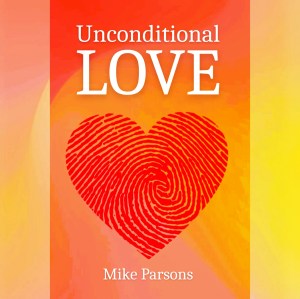 This teaching forms part of Mike Parsons’ new book Unconditional Love, which is out in print on 20 June 2025. Order it from your favourite local or online bookseller today, or get the ebook from our website. More details at eg.freedomarc.org/books.
Now, many people accept that God is love, because the Bible says so. But there is often a “but.” Why is that? Because the idea of unconditional love seems too good to be true to an independent or alienated mind. We are separated from God in our own thinking—alienated within the mind of humanity. I believe this mindset comes from the tree of the knowledge of good and evil. That is the mindset which begins to shift when we experience God for ourselves.
But for so many, it has been shaped and programmed by religion. All religion is man-made. God never intended it. He has always wanted relationship. Yet religion has taken something that is already ours and made it into something we have to earn or deserve—or a state we must appease God to reach. That same religious programming has presented us with a view of God as angry, disappointed, or frustrated with us. But God is none of those things. He loves us unconditionally, and He wants us to truly experience that.
People say, “Yes, God is love… but He is also holy”—as if His holiness contradicts His love. Or, “Yes, God is love… but He is also righteous,” as though love and righteousness are somehow opposed. Or, “Yes, God is love… but He is also just”—again implying that justice counteracts love. These are all religiously programmed ideas. I used to believe them myself because I had never experienced the truth, which made it easy to believe the lies.
Some say, “Yes, God is love… but He is also a judge,” as if that makes Him a harsh judge who is looking to find us guilty. But love keeps no record of wrongs. So how could He ever find us guilty?
Another one: “Yes, God is love… but He cannot look upon sin.” People usually mean behaviour when they say that—but sin, in reality, is lost identity. If God cannot look at a lost world, how could Jesus ever have come And of course God is not only looking at this world—He is present in every single person. He is working within everyone to bring them into the reality of their relationship with Him, into their inclusion in Christ. We have already been reconciled in Christ. We have already been made righteous in Christ. We have already been made holy in Christ. We did nothing to make that happen. He did it all.
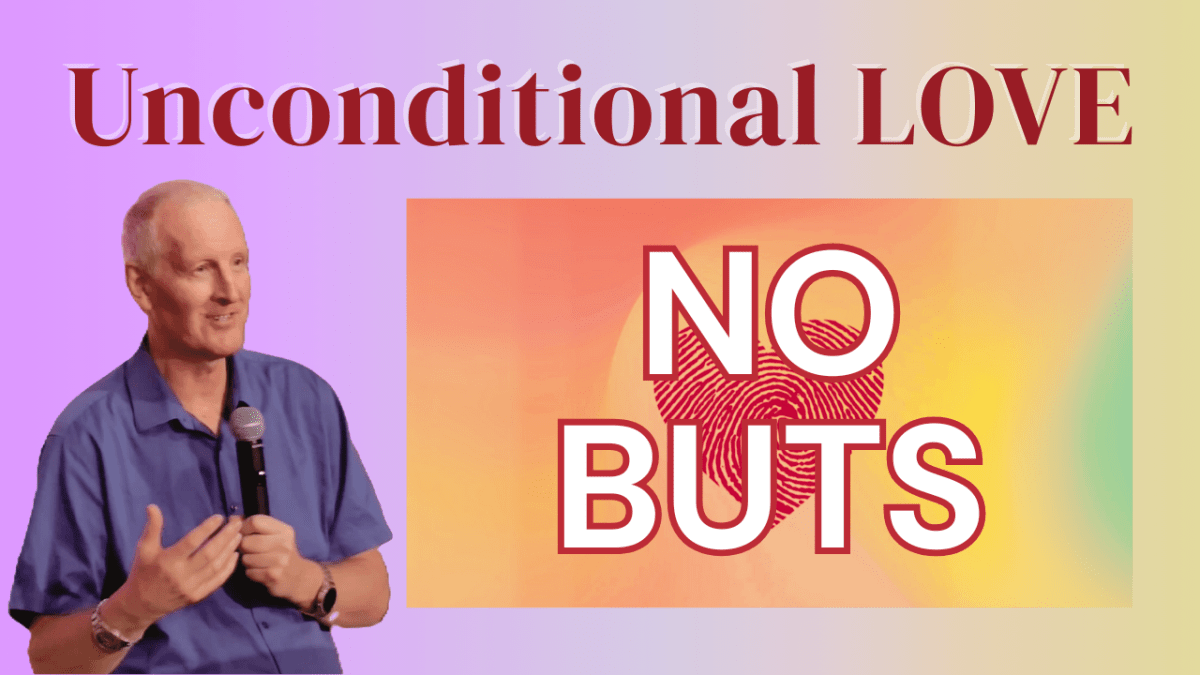
Religion is full of “buts.” And all those “buts” do is undermine the truth that God is love—unless you believe the false doctrines that paint God as two-faced: loving in the New Testament, but angry in the Old. Even within the New Testament, people sometimes see wrath and anger. But they do not realise that the word orge, often translated “wrath,” also means “passion.” God is passionate—passionate about removing anything that hinders our relationship with Him. That passion is not about fury or violence; it is about His relentless, determined love working to bring about transformation.
Religious deception has distorted the nature of God, separating aspects of His character and creating a false image of love that punishes. But what loving father would punish his children eternally? This kind of theology has created a God who is hard to trust—a God who claims to love, yet threatens to torment unless we do things a certain way. That is not who God is.
Many people have been fooled into trying to earn something that is already theirs by inheritance. As God’s children, we have a right to relationship with Him. That is not something we must strive for—it is something embedded in the very nature of who He is and who we are. The deception is in making us believe that we have to do something to get something. But the truth is that we are already God’s children, and therefore we are already loved—unconditionally—by a Father overflowing with lovingkindness. It is not that we must do something. We only have to realise something, to come into the full awareness of it.
Religion has twisted the meanings of holiness and righteousness by misinterpreting concepts like judgment and justice. That distortion is what has created the false narrative of hell—a place where God punishes and tortures His children eternally. But in truth, God loves His children eternally. He will never stop loving, never give up—until we fully experience that love. His love is a purifying, refining fire. A consuming fire that burns away every obstacle and objection until nothing remains but pure, unconditional love.
Holiness, righteousness, judgement, justice—none of these contradict unconditional love. In fact, they flow from it:
Holiness expresses love.
Righteousness reveals love.
Judgment results from love.
Justice enforces love.
The judgment of God, made on behalf of all humanity and all creation, is this: not guilty. If you are not guilty, then you are innocent. And if we would only see ourselves the way God sees us—as innocent—we would begin to live from that place of understanding and experience.
God cannot be a contradiction. He is either love, or He is not. And He most definitely is love.
 Thank you to our Patreon patrons who help make my books and videos – and this blog – possible! Join them at patreon.com/freedomarc and partner with us in taking this good news of unconditional love to all creation.

 Sons of Issachar