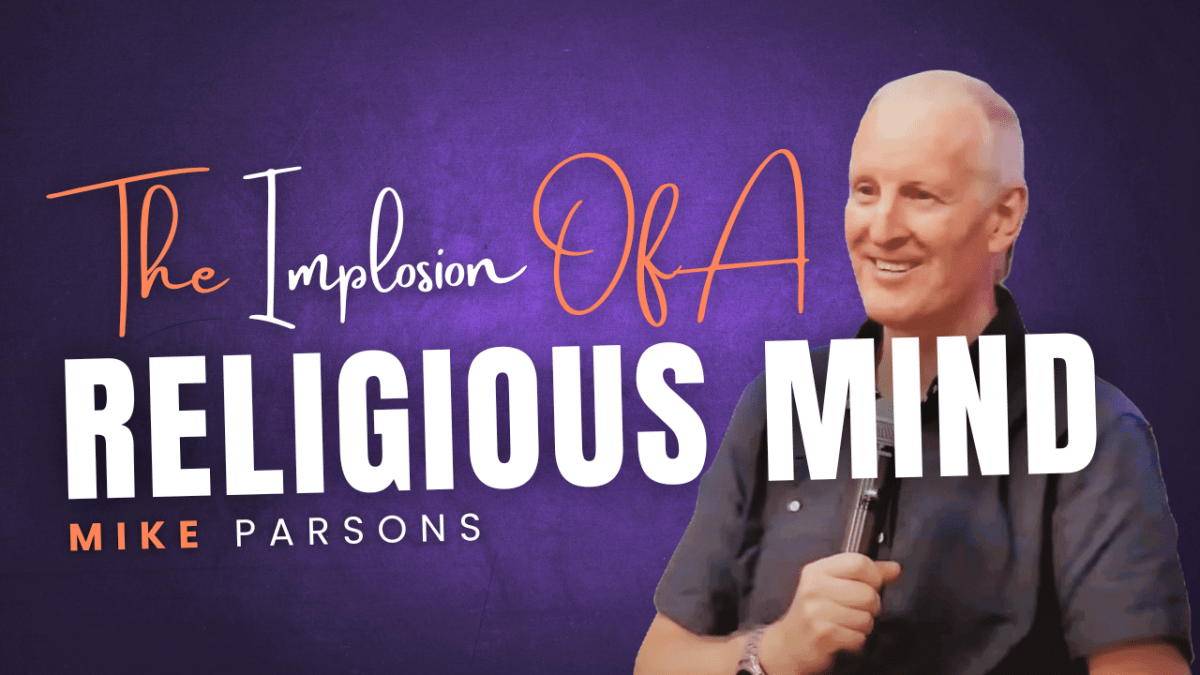
One by one all those pillars began to collapse and fall. Augustinianism was another pillar. I mean, I’ve never studied Augustine. I knew a little bit about Augustine and but I never studied him. I didn’t know what Augustinianism was. So I had to go and look it up.
When God said, “One of the pillars is Augustinianism,” I thought “How did I get that as a mindset?” Because it was embraced within Brethrenism and other streams of thought.
Hebrew mindsets, Greek mindsets, both included within the pillar system of my mind. Again, I thought, how did I get those? Because they’re based within the system of teaching that I had received all the way through.
So eventually when all those pillars collapse, what is there now?
God spoke to me and said, “I am really bored with this church stuff.” And I thought, you cannot say that. That cannot be you. How can you be bored with people worshipping you? But he was not saying he was bored of people, or of their desire to worship. He was saying he was bored of the format, the same things, week after week.
So I pressed him. “What do you mean, bored?” He said, “Why do you not ask me what I would like you to do?” I said, “We do. We ask you every week.” And he replied, “Yes, but you are only giving me a menu of five things to choose from. What you are really asking is: what order do you want to do those five things?”
I had to admit he was right. We claimed to be led by the Spirit, but only within the boundaries of those five things. That realisation shocked me. I kept quiet at first, because I knew it would cause an uproar. Instead, I began teaching the Engaging God programme in my office on Sunday mornings. The main meetings had to stay at a basic level for the newer people and those from the rehabilitation unit, so others handled that.
I would spend the first part of the service downstairs teaching, then went upstairs to join the main gathering. And when I did, I felt the same as God had said. This is really boring, is it not? I enjoyed myself more in the office than in the service. It was not the people—I loved the people. But while we were on the cutting edge of engaging God, with angels and portals into heaven, we were still doing everything in the same tired format. Someone would say something, we would sing, there would be ministry, and perhaps something else—but always within the same framework.
What is church?
I began to understand what God was saying, and I felt it too: this is not it, is it? He took me out of that scenario and began to press the deeper question: what is church? Why do we run a meeting? Because church is not a meeting. Church is people in relationship—with each other and with God. But what we had built, with worship, a preach and the rest, was the very thing God was challenging. “Why are you doing this? Who said I wanted you to?” And that challenge shook us.
It challenged people. What was this going to look like? So then we did not do any of that. We turned up on a Sunday and asked, “Oh, what does God want to do then? What do you want to do, God?”
God said, “If you had asked me before you got here, I would have told you I did not want you to come and do this today.” Ah. So it is not about meeting this way and turning up in a building then? No. Not every Sunday. No. If you had asked me, I would have told you I wanted you to go and do something yesterday, to go for a walk and enjoy the beautiful fresh air.
That was a very different challenge to our thinking. This was not just, “Oh well, we will turn up in the building and then ask you what to do.” This was actually, “Do you even want us to meet this way this week?” People struggled with that because they were so conditioned to being told they had to turn up on the day to do whatever was going to happen. That was ‘church’, and they were expected to be there if they were part of church.
What is the way forward?
So it was very challenging, and we got to the point where those who were meeting together began saying, “Well, let’s just seek God and ask Him to show us the way forward. What is the way forward?” This was November–December 2019. Then God used COVID to show us the way forward, because suddenly we could not meet anymore anyway. We had all the technology to meet online, but we asked God, “Do you want us to meet online?” No, because all you would be doing is recreating something online that you cannot do in person.
Eventually, people were weaned off church — the meetings, the format, the structure that we called church. They were still relating to one another, still building relationships, still pursuing the mission God had given to care for people. Some people could not cope with not having a church service, so they went off and found one that made them feel comfortable. Great. If that is what they want to do, no problem. They were free to do that. But some people were so free that they realised they did not have to go to a meeting on a Sunday — or two meetings, or whatever it might have been. They would never want to go back to that. They discovered that being church is very different to going to a meeting that we call church.
That deconstruction took place in people’s understanding of church over quite a long period. I did not turn around and say, “You can’t do this anymore.” I did not say, “You can’t meet this way anymore,” because that would have been forcing them. I said, “Okay, I am not making these decisions. I am not going to be a leader anymore who tells you what God might be saying or not saying. You are responsible to hear God for yourself. So you decide what you are going to do.”
An everyday relationship
When COVID came, with all the restrictions, we could not meet the way we had been meeting, and for a time, we could not even meet together individually. People realised their relationship with God was just as strong, if not stronger, after they stopped doing Sunday church meetings than it had been before. They found their relationship with God was an everyday relationship, not based on the structure we had put in place to ‘help’ them.
Some people struggled. Some wanted the fellowship of meeting together in a bigger setting, and they found that elsewhere. But others found their relationship with God growing anyway. They discovered that their relationship with others, if genuine, is not dependent on meeting on a Sunday. They still had relationships and friends.
It is very interesting to see the process God takes us through to challenge our preconceived ideas about the Christian life, about what church is, about what we ‘should’ or ‘should not’ do. And when we are free from it, we find freedom. Now, I am free to go, free not to go, free to do whatever I feel in God. And I know God enjoys me watching the football just as much as He enjoys it if I went to a home group!
If you enjoy these blogs and videos, would you please take a moment to like, share, comment and subscribe? It really does help. Thank you very much.
If you do not see the video above, please click here.
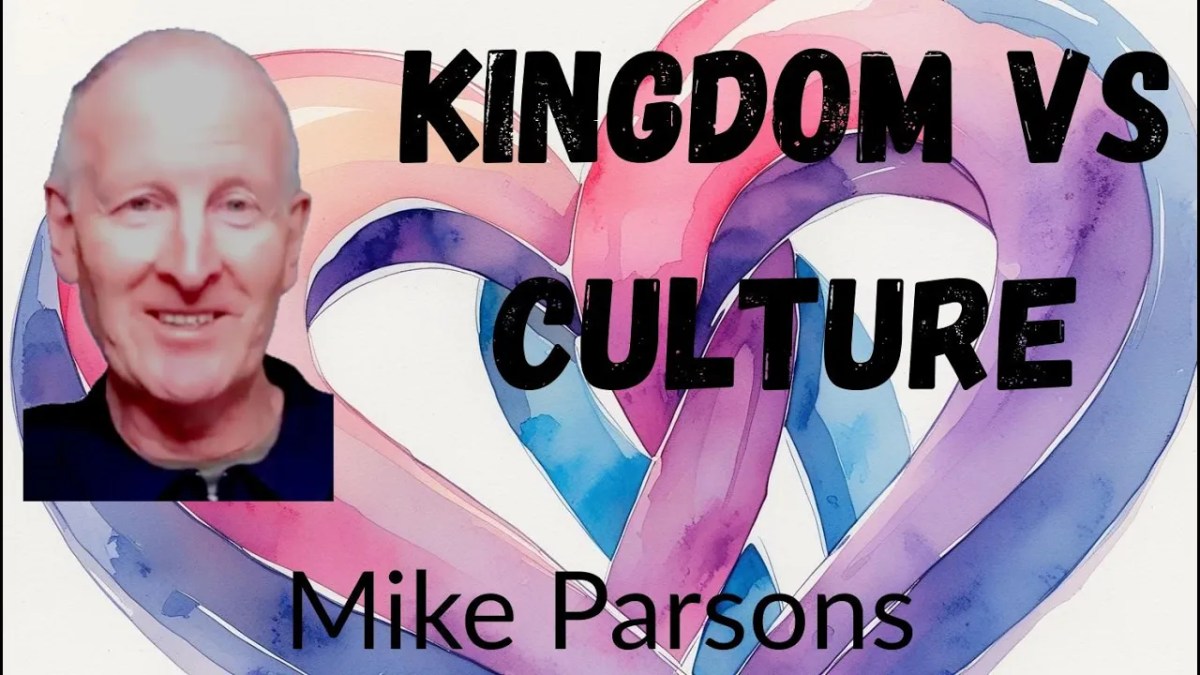
There are many questions we should be asking and signs we should be looking for. If God is doing something—like Enoch appearing or other unusual things—what is that about? I cannot give a hard, fast answer, but I do believe God is challenging us to think and to question what we believe. What are the foundations of our lives and the way we live? Are they kingdom foundations, or are they cultural?
If they are cultural and oppose God’s kingdom, which is love, then we must ask, where is my heart? Is it aligned with God’s heart, or with the culture where I live? I do not want to be known culturally as British. Yes, I was born in Britain, it is on my passport, but I do not want to be subject to the culture of Britain if it is anti-kingdom. I would never call myself a British Christian, or even a Christian. I just want to be seen as a follower of God, of the Father.
So, what might cause me to have views which may be contradictory to the kingdom? We need to ask: what has shaped my life, my thinking, my belief systems, my worldview? Are they aligned with God’s heart, or do they need deconstruction? I see three main areas where God is challenging people (there may be more): religious deconstruction, political deconstruction, and financial deconstruction. A friend of mine said God was taking him through those things, and I realised he was doing the same with me. I now know to look at things differently in those areas and make sure that I am not thinking in a cultural way that puts me into contradiction to God.
So, financially, my views have changed from religious rules about tithing to simply asking, “God, what do you want me to do?” Politically, I had to face assumptions about why I voted as I did. I had assumed God agreed with me, but he showed me I had never asked him. I had to be completely unravelled and deconstructed in that area. Now I ask, “Is there a way you want me to vote?” And if he says it does not matter, then I examine my own heart and motives. Each of us may have a different way of looking at that question.
God wants our whole mindset aligned with the kingdom and with one another, to become one mind, the mind of Christ. That requires major shifts, deconstruction, and honest questioning of why we think, believe and act as we do. Most people never really consider these things, but I believe it is part of the process God is taking us through so that heaven can be established on earth.
For the past ten years, God has been deconstructing most of my old assumptions. My thinking has changed in many areas. This does not mean there are simple answers, because each of us must discover what God is asking of us in our own sonship. But it does mean we must begin to make decisions based not on selfishness, economics or cultural conditioning, but on God’s heart.
Strong opinions are often shaped by culture rather than by God. Even in raising my children, I tried to let them think for themselves, yet they still reflected my political views. That made me wonder whether I had been more vocal than I thought. The key is not to pass on political perspectives but to help people find God’s heart.
Some people vote based on economics, others on compassion, but the real question is whether our choices reflect God’s heart or merely our conditioning. I am not convinced God is as invested in political systems as solutions as we might think. Much of the prophetic movement seems to have become politicised in a way it never was 20 years or so ago, perhaps out of disillusionment when promised revivals did not happen as expected. Whatever the reason, it seems to have become blind to the real issues in some way…
If you enjoy these videos, would you please take a moment to like, share, comment, and subscribe? It really does help. Thank you very much.
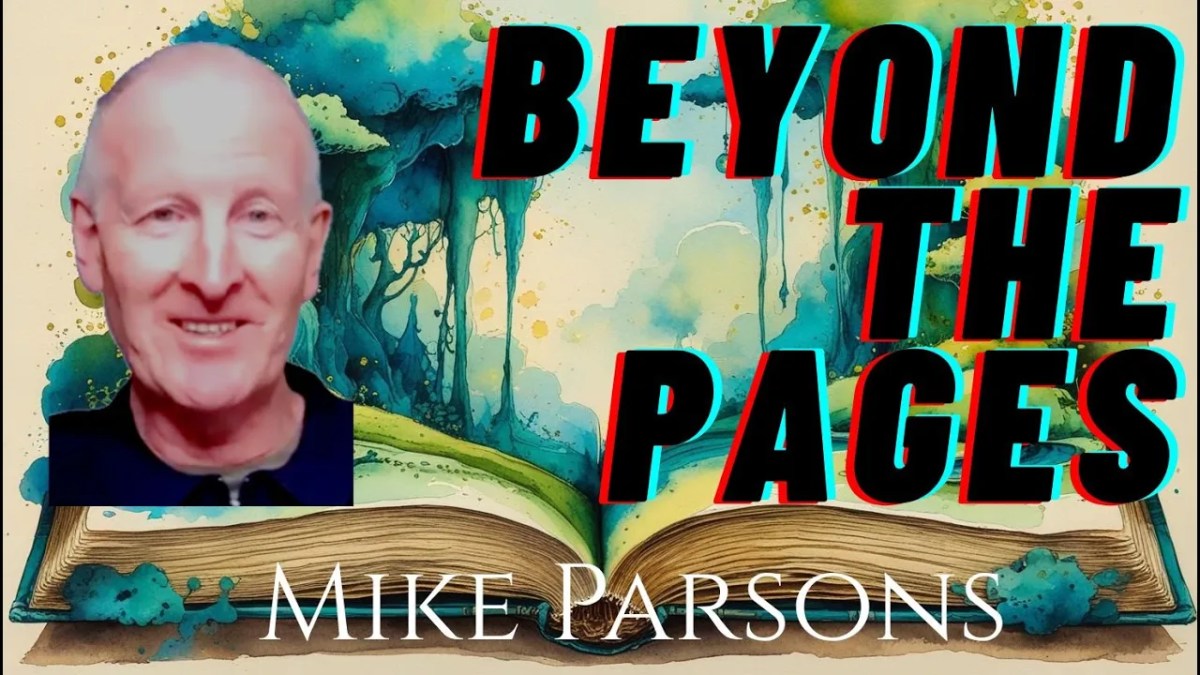
We are following a book which has been translated by people with an agenda and a preconceived confirmational bias, rather than out of relationship with Jesus. Yet Jesus said he would speak to us and that we could follow him. We have the Holy Spirit, the Spirit of Truth, within us. We do not need another teacher.
So why are we telling people they must follow a book, when they can be guided by the Holy Spirit and through Jesus, who is the Truth? Jesus is the Word of God. The Bible is not the Word of God. The problem is that we have been taught otherwise. I hear people say, “We are going to read the Word.” But they are reading a book, half of which was never intended for them, the other half written for people in the first century preparing for the end. We are not those people.
That does not mean God has not used the Bible. He has used it in my life, but it has also caused huge confusion. I was deceived into believing things simply because I was taught that was what the Bible said. Now, I go with what Jesus says. I will not live by an interpretation of a book; I will follow a person in relationship. He is the Way, the Truth and the Life. The Bible is not. Even if someone had never read a verse, never seen a Bible, they could still encounter Jesus and through him engage the Father.
This is why I would never encourage a new believer to start with the Bible. It will only confuse them, as they are faced with conflicting interpretations and even two seemingly different versions of God. But it was always just people’s limited view of God, not who he truly is. Relationship is what matters. I can walk in relationship even with those I disagree with, because I do not need to prove them wrong. My faith is grounded in personal experience and testimony, not in the teaching of a book.
I use the Bible only as a frame of reference, because that is how people have been taught. Yet I can count fewer than five times when the Father or Jesus has actually quoted a Bible verse to me. When they did, it was revelatory. For example, “Come to me, all who are weary and heavy laden…” was spoken to me when I was striving to be good enough and keep a behavioural standard. It showed me why I was weary and how I could come into his rest. The principle was what mattered, not the verse.
Jesus is quite capable of saying directly, “Follow me and enter rest.” He does not need to quote Matthew 11:28. People can and do go astray, but many have also gone astray while following the Bible. History shows how it has been used to persecute, to endorse slavery, the Inquisition and Christendom itself. The Bible is not safe. Only Jesus and the Holy Spirit, as the Way, the Truth and the Life, keep us on a safe path. If you use love as the plumb line, you will not go far wrong.
This is what God showed me when he challenged my views of the Bible. He brought me back to the relationship I had with him, and how he speaks directly. He weaned me off my need for Bible confirmation. I know many still need that, but their thinking must eventually shift. They were told “the Bible says this,” but that has to be undone if they are to truly follow God.
Some quote verses about people falling away from sound teaching in the last days. But those last days were AD 66 to 70, when many fell away under persecution. That does not apply to us in the same way today. And this is the issue.
If you enjoy these videos, would you please take a moment to like, comment and subscribe. It really does help. Thank you very much.
We can find ourselves really constrained within certain systems and among people who all think the same way—which leaves little room for personal growth or enjoying life. Christians, for example, often end up repeating the same routines—organising potluck meals and eating quiche and such things, which can become a bit staid and, frankly, rather dull and boring. That’s not to say Christians can’t have fun—but generally speaking, the world exists for us to discover, to enjoy, and to bring light into, ideally in a way that’s enjoyable and adventurous.
Sometimes I wonder why anyone would want to become a Christian when, so often, Christians come across as quite miserable. Then there’s the expectation of attending church three times on a Sunday. Why should that be necessary? If I’m enjoying myself by going out, why can’t I worship God in the fresh air? These mindsets persist: we invite people to join us, and then expect them to give up what they find pleasurable in order to join a ‘Christian club.’ In the process, such people often lose touch with real life—and many of the positive experiences they had with God in the past are lost. They end up just becoming ‘church people,’ which really doesn’t attract anyone.
Representatives of God’s love
Instead, we ought to show that life can be enjoyable, that we can have fun, love others, and care for them—that’s the sort of dynamic we should be bringing to the world. We’re meant to be representatives of God’s love, demonstrating care and compassion through what we do. When people hit a crisis, they’ll seek out those who are authentically loving, relatable, and understanding—the kind of people who can help them encounter God through genuine relationships.
I wholeheartedly believe in continuing to enjoy life. Since embracing this perspective, I enjoy life much more as I believe it was intended to be—without imposing a set of rigid rules and obligations that dictate where I should be and what I must do.
Going to church
I go to church meetings with Debbie because she enjoys fellowshipping with others. I like singing too, so I don’t mind joining in, but I doubt I would go if it weren’t for her. I value those friends and connections, but sometimes I do find it a struggle. In the home group, I occasionally bite my tongue to avoid offending others, but now and then God gives me permission to say something a bit provocative, to open up honest discussion. Ultimately, though, if Debbie didn’t attend the group, I wouldn’t go there either. This week, there’s football on—so I’ll watch that, as I’ll probably enjoy it more than wrestling with theological discussions I find hard to connect with. I don’t attend to cause trouble; I simply value the freedom to go or not to go.
No option
Reflecting on my past, especially when I was in church leadership, I remember having no option—I had to be there, unless I was on holiday. It was expected of me as a leader. I was often speaking—which meant there was little choice, and as I was being remunerated, there was a sense of obligation. I would have felt guilty for not going. Although it was genuinely more than just a job for me, there was still a mindset that I needed to “give them their money’s worth.” That way of thinking comes from conditioning: it is certainly not freedom.
If you enjoy these video blogs, please take a moment to like, share, comment, and subscribe—it really does help. Thank you very much.
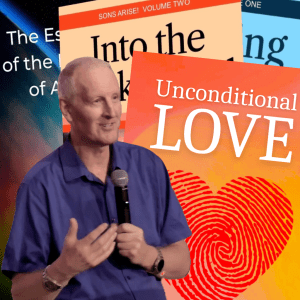
All Mike’s books, including Into the Dark Cloud and Unconditional Love, are available to order from online and local booksellers; or you can buy them as ebooks and download them instantly from our website.
More info at eg.freedomarc.org/books
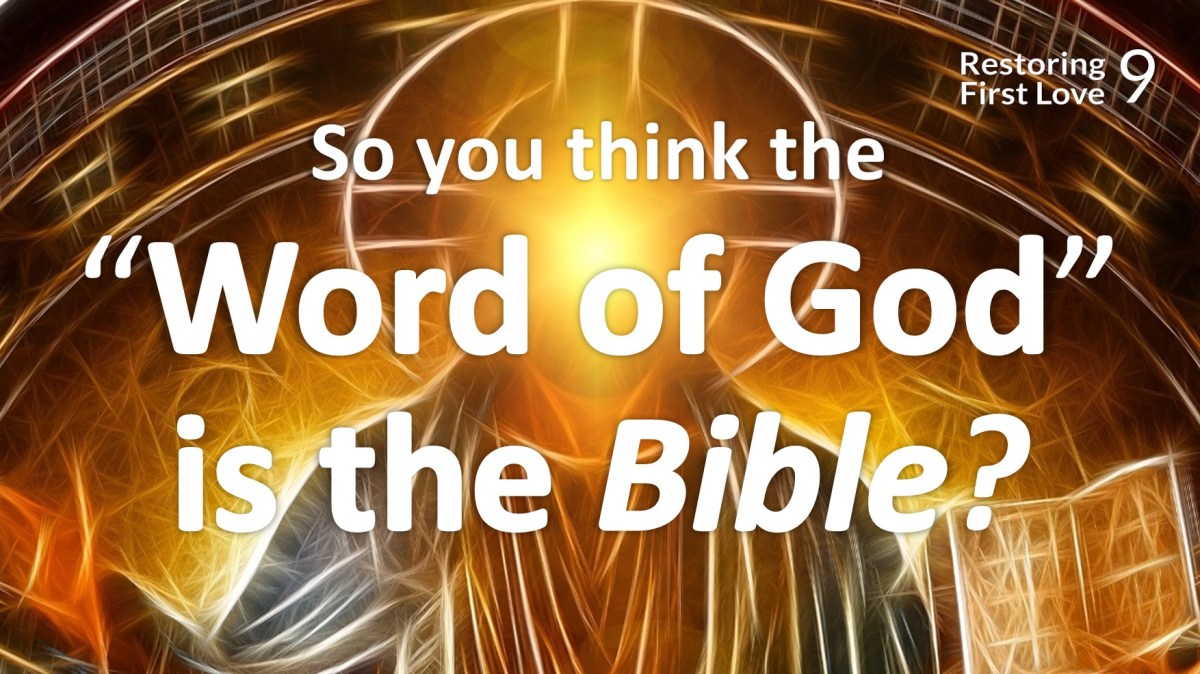
I couldn’t move beyond, as long as I was restricted by my mindset and belief system, which was deeply rooted in evangelicalism. For years, I held the absurd notion that certain Bible verses referred to the Bible itself as the “Word of God.” But none of those verses mean the Bible, even though my deceptive sola scriptura programming led me to believe they did. I read the text and interpreted it in the way I had always been taught.
The Bible is a collection of writings, compiled over centuries, that wasn’t formally assembled until around AD 385. It couldn’t possibly refer to itself as the “Word of God” because it didn’t exist in its current form. Those who wrote its books had no idea they would one day be gathered into a single volume called The Holy Bible. That title was given by man—not by the Bible itself, and certainly not by God.
Misunderstood verses
Here are some examples of verses I misunderstood because of my conditioning:
Psalm 119:105: “Your word is a lamp to my feet and a light to my path.” I immediately assumed ‘word’ referred to the Bible.
Ephesians 5:26: “That He might sanctify her, having cleansed her by the washing of water with the word.” Again, I thought ‘word’ meant the Bible—it doesn’t.
Ephesians 6:17: “Take the helmet of salvation and the sword of the Spirit, which is the word of God.” I thought of the Bible as the ‘sword of the Spirit.’ But in reality, Jesus is the Word of God, and the words He speaks are the Word of God. This verse doesn’t refer to the Bible. My children even played a computer game where you would ‘draw your sword,’ which was portrayed as the Bible. You’d take it out from under your arm and use it as the ‘Sword of the Spirit.’ That just reinforced the idea that the Bible itself was the weapon, which was completely inaccurate.
1 Timothy 4:5: “For it is sanctified by means of the word of God and prayer.” To an evangelical, as soon as ‘word of God’ and ‘prayer’ are mentioned in the same sentence, it automatically means the Bible and prayer—because that’s what we were taught.
2 Timothy 2:15: “Be diligent to present yourself approved to God as a worker who does not need to be ashamed, accurately handling the word of truth.” Again, I was conditioned to interpret ‘word of truth’ as the Bible. In the King James Version, it even says ‘study to show thyself approved,’ which led to the belief that studying the Bible was what made you acceptable to God. But that’s not what it means at all.
We need to embrace a deeper understanding. Jesus said, “My sheep hear My voice, and they follow Me.” He didn’t say, “By reading the words in the Bible.” It’s about hearing His voice and following Him. Of course, some of the words Jesus spoke might speak to us today, but not all of them were meant for us. Many were directed to the people He was speaking to at the time.
Hebrews 4:12: “For the word of God is living and active, sharper than any two-edged sword, penetrating as far as the division of soul and spirit.” I thought this meant I had to use the Bible to separate my soul and spirit. When I heard teachings about soul and spirit separation, I believed this was something I had to do. Thankfully, God had a completely different way. Jesus, as the living and active Word of God, was able to separate my soul and spirit and reintegrate me into wholeness.
2 Corinthians 3:18: “But we all, with unveiled faces, look as in a mirror at the glory of the Lord, and are being transformed into the same image from glory to glory, just as from the Lord, the Spirit.” When I read this, I had no idea it meant I could look into God’s face and see Him directly—face to face—and be transformed by the image reflected back to me. I thought it meant looking into the Bible and trying to identify the image of God in it so I could imitate it. I was so caught up in this evangelical belief system.
Hebrews 6:5: “And have tasted the good word of God and the powers of the age to come.” Again, I interpreted ‘word of God’ as the Bible. But I don’t see it that way now.
1 Peter 1:23: “You have been born again, not of seed which is perishable but imperishable, that is, through the living and enduring word of God.” Once more, I could only see this as referring to the Bible, rather than to Jesus—the living and enduring Word of God in me, bringing life.
1 John 2:14 says, “I have written to you, fathers, because you know Him who has been from the beginning. I have written to you, young men, because you are strong, and the word of God remains in you, and you have overcome the evil one.”
When preaching on this, I would have said something like, “You need the Word of God! You need to feed on the Bible! You need to read it daily so that it’s in you, and then you’ll overcome the evil one and grow strong.” But the reality is that the ‘Word of God’ in this verse refers to Jesus, who is in us. He has already overcome the evil one, and we overcome through Him. At the time, I would have thought John’s letters—now included in the Bible—were the key to their strength. However, their strength came not from intellectual knowledge, but from their personal, experiential knowledge of Him.
Titus 2:5, which instructs women “to be sensible, pure, workers at home, kind, and subject to their own husbands, so that the word of God will not be dishonoured,” was another verse I misunderstood. I was taught this meant wives needed to submit to their husbands to avoid bringing dishonour to the Bible. But let’s set the record straight. This isn’t about women submitting to their husbands in some rigid hierarchy. Instead, it’s about being in a mutually respectful and loving relationship. It’s about mutual submission in the context of Christ’s example. The focus is on living in a way that honours God, not enforcing roles for the sake of protecting a book. Jesus is the Living Word of God, and He calls us into relationship with Him.
When we talk about the ‘Word of God,’ it’s essential to recognise that this primarily refers to Jesus, not the Bible. God’s words, whether spoken directly to us today or recorded in Scripture, can be meaningful. But the emphasis must remain on Jesus, the Living Word, who is still speaking and guiding us. He wants us to hear His voice and follow Him.
All God-breathed writings
Now, let’s address 2 Timothy 3:16, a verse often quoted in evangelical circles: “All Scripture is inspired by God and beneficial for teaching, for rebuke, for correction, for training in righteousness.” This verse is frequently used to argue that the entire Bible is inspired, infallible, and inerrant. However, there are several issues with how this verse is traditionally interpreted.
First, the word ‘all’ doesn’t mean everything indiscriminately. Second, the term ‘scripture’ is often mistranslated with a capital ‘S,’ implying it refers to the entire Bible. The original text doesn’t imply this. In fact, when this was written, the Bible as we know it didn’t even exist—it wouldn’t be compiled for another 300 years.
Let me read this verse from Young’s Literal Translation, which translates it as: “Every writing God-breathed is profitable for teaching, for conviction, for setting aright, for instruction that is in righteousness.” Notice the difference? It says every God-breathed writing is useful—not that every part of the Bible is God-breathed, nor that it refers specifically to the Bible at all.
This means that writings inspired by God—whether ancient or modern—are profitable and beneficial. God is still breathing inspiration into people today, and those writings can be just as useful for teaching, guidance and correction as any ancient text. This isn’t about elevating the Bible to an infallible status but recognising the broader scope of God’s inspiration.
God is still breathing inspiration into people today, and those writings can be just as useful for teaching, guidance and correction as any ancient text.
Unfortunately, I was conditioned to believe that this verse proved the Bible was infallible, inerrant and the ultimate authority. The evangelical mantra reinforced this: “The Bible is inerrant, infallible, and inspired.” But when you take a closer look, 2 Timothy 3:16 doesn’t say anything about the Bible being inerrant or infallible. It simply states that inspired writings—those breathed by God—are beneficial.
We must break free from the deception of assuming these verses mean something they don’t. God is still speaking today, and the Living Word—Jesus—continues to guide and transform us through His voice and presence.
This video blog is an excerpt from Mike's current teaching series, Restoring First Love. Get the full length videos every month, only at eg.freedomarc.org/first-love
Activation
So let’s take a few minutes to engage with God, with unconditional love.
Close your eyes, begin to still your heart, and still your mind.
Start to slow down your breathing.
Focus your thinking on God. Focus your thinking on engaging unconditional love.
Breathe in deeply. And as you breathe in, you are breathing in the unconditional love of the Father for you as his child.
Wait in that place. Be still. Let the love of God, that unconditional love, rest on you.
Let Him reveal Himself as pure, unconditional love.
Perhaps now, you want to ask Jesus, as the Truth, to speak something specific to you?
“You have heard it said, But I say unto you.” Maybe some belief system, maybe the way you’ve looked at God, maybe the way you have been programmed with religious thinking, some mindset or belief system.
Open up your heart. Ask Jesus, as the Truth, the Living, Active Word of God, to show you something where is He saying, “You’ve heard it said, you believe this but I am saying unto you… this.”
Listen to His voice, revealing something at this moment that will bring truth to you. Just let that frequency of his voice engage you.
When your faith seems weak or compromised, what do you do? Well, I think it goes back to the concept of labouring to enter rest. Now, you don’t actually labour to enter rest. That concept, shared in Hebrews, refers to the Old Testament and the old covenant, where people were striving to enter rest but were not succeeding. What it really says is: don’t do that. Don’t try to enter rest in the way they did. The reality is that you are in rest because rest is about trusting in the completed work of Jesus and living in that reality.
When you look at Hebrews and the message it conveys, it’s clear. Essentially, it’s addressing those who were still adhering to Old Testament, old covenant practices. They were striving—striving to enter rest, striving to take the land, fighting for what was promised. All of that was under the old covenant. But in the new covenant, we are already in rest.
Hebrews says: “Therefore, let us fear if, while a promise remains of entering His rest, any one of you may seem to have come short of it. For indeed, we have had good news preached to us, just as they also did; but the word they heard did not profit them, because it was not united by faith in those who heard.” For we who have believed, we enter that rest.
So, if we are operating with a new covenant mindset, we are already in rest. Jesus said, “Come to me, and I will give you rest.” Rest isn’t something you have to achieve or do; it’s something you receive through your relationship with him. And that’s the key many people miss—it’s already happened. Jesus has finished the work. It’s complete.
When your faith feels weak or compromised, you don’t have to do anything because it’s not about your faith—it’s about his faith. “I live by the faith of the Son of God, who loved me and gave himself for me.” It’s his faith in me, who he believes me to be. When I’m faithless, he remains faithful because he doesn’t change. The truth is, everything has already been accomplished. It’s not about me having enough faith; it’s about recognising that he has enough faith in me. If I can accept how he sees me, then that’s how I’ll live.
The relational aspect is simple: come to Jesus. Keep coming to Jesus. When you feel doubts or struggles, it’s often because you’re trying to set your own agenda about how things should be. Instead, just engage with God without any agenda. Don’t try to see anything or understand it visually. Instead, enter into a realm of perception where you know—you just know—the reality of the rest in him, a rest you’ve already received because of what he’s done.
I would encourage you not to focus on what you need to do but allow him to do what he wants to do. Create space for that relational connection where he can work in you. Look at Psalm 23: “He makes me lie down in green pastures; he leads me beside quiet waters; he restores my soul.” You don’t have to strive for rest; it’s already there. Just come to him, and he will give you rest.
Take his yoke upon you, learn from him. He is gentle and humble in heart. Being gentle is about knowing who I am in him, and being humble is about accepting who I am in him. I don’t have to strive or fight for it—I just have to be with him. Jesus says, “Come to me, and I will give you rest.” So, if you’re struggling with doubts or questions, forget about trying to figure it all out. Just keep coming to him.
When you surrender—when you let go of all your agendas and come to him as a living sacrifice—he will do what needs to be done. You don’t need to try to do anything. Trust him to restore you, to enable you. Life has its stresses, but you can choose to create space for God. Let go of your own ideas of what you need, and surrender fully. Say, “Here I am, Lord; you do what you need to do. I’m entering into your rest.”
As you stop trying to receive it and allow him to unveil it to you, you’ll begin to experience the reality of it. It’s already accomplished. You’ve already been included in him—actually, from before the foundation of the world. He simply wants to bring you into an experience of that rest. Stop trying to figure it out or work it out. Just come to him and surrender.
Psalm 46:10 says, “Be still and know that I am God.” In some translations, it says, “Cease striving.” Stop your works, and let him do his. The more you try, the harder it seems to get. God’s invitation is simple: stop, be still, and know that he is God. In that stillness, you’ll know by experience who he is and, in turn, who you are. Stop striving and let him work. The rest is already there, waiting for you to receive it.
If you enjoy these blog posts, please take a moment to like, share, comment and subscribe—it really helps. Thank you!
The traditional Evangelical view of the Bible as the inerrant and infallible word of God is problematic. The true “Word of God” is Jesus, the Living Word, and direct experience of God through the Holy Spirit takes precedence over scriptural interpretation.
Biblical passages often used to support legalistic or fear-based theology, including those about the “deceitful heart” and “missing the mark,” point to humanity’s lost identity in God rather than inherent wickedness or behavioural failures.
Redemption
Jesus’ sacrifice on the cross was not to appease an angry God but to restore humanity’s true identity as children of God. Redemption is not earned through religious practices but is a free gift received through recognizing our inherent union with Christ.
Religious Conditioning and Personal Experience
Religious indoctrination, particularly within Evangelicalism, parallels cult-like control through fear and guilt. Personal experience with God, guided by love and discernment, is preferable to blind acceptance of religious dogma and trusting external authorities (including charismatic figures and self-proclaimed prophets).
Nine Pillars
In my personal journey of deconstruction, I once viewed the world through a framework of nine “pillars,” primarily rooted in Evangelical doctrines but also influenced by cultural and scientific conditioning. The process of each pillar being challenged and ultimately dismantled led to a transformed mind, grounded in love and direct relationship with God.
The Role of Love
Prioritise direct relationship with God through the Holy Spirit over rigid adherence to scripture or religious systems. Love is the ultimate measuring stick for discerning truth and evaluating personal experiences. Actively seek God’s guidance in a process of ongoing deconstruction and renewal, leading to greater intimacy with God and a more accurate understanding of our true identity in Christ.











 Sons of Issachar