
Mike Parsons
If you do not see the video above, please click here.
God just wanted relationship. He did not make a contract but invited them into a covenant relationship. He did not want a business arrangement—He desired a relationship of love.
In the context of Hebrew marriage, the bride and her father, and the groom and his father, would come together to make an agreement. This agreement defined the boundaries of the marriage. The bride could include anything she wished in the ketubah, as long as the groom agreed, and vice versa. Once both agreed, the contract became binding. These were the terms of their union, and to break them was considered ‘marital unfaithfulness’.
Marital unfaithfulness was not limited to adultery. It meant breaking the agreed terms of the contract, which is why people could issue divorces for such breaches. This was a contractual arrangement—not a relationship. Once the agreement was made, the couple would stand and face each other. The groom would say to the bride, “I go to prepare a place for you, that where I am, you may be also.” He was referring to preparing a new room at his father’s house, a place for them to live, joined to the family home. This is the context we see reflected in John 14.
The bride would then ask, “When will you come back to receive me unto yourself?” The groom’s response would be, “I do not know the day or the hour, but when my father approves the wedding chamber, he will send me back to receive you unto myself.” These words should sound familiar—Jesus used them (in John 14).
These words place Jesus’ death on the cross within the context of marriage and covenant. “In my Father’s house are many dwelling places…”—this is all part of the same imagery. The new covenant is a preparation for us to become a place of intimacy, a marriage dwelling, so that God can live in us. On the day of resurrection, they would know that Jesus was in the Father, they were in Him, and He in them—this wonderful union that was to take place.
So what Jesus taught, as recorded by John, would have been clearly understood in terms of covenant. They would have recognised that God still wants to marry us. That is such an amazing truth.
 This is an excerpt from Mike’s current teaching series, ‘Restoring First Love.’ Get the full series up to date, plus a new session each month as they are released, at eg.freedomarc.org/first-love
The ‘Ten Commandments’ as Covenant Invitation
Now think about the ‘Ten Commandments’ as a marriage invitation. The ketubah was God’s promises to His people—not His expectations of them. Have we made vows or promises to God as if entering a contract? Do we have expectations of God based on that contract? I did—wrongly. I made my ketubah with wrong intentions and motivations.
If you have made vows to God based on performance, I encourage you: retract those vows. Do not let those past vows become a hindrance or restriction to your future. God is not looking for vows. He is looking for relationship.
We need to see the Ten Commandments from the right perspective, and understand ketubah and our relationship with God. Many people still live under a mistaken Old Covenant view of God. The commandments were never meant to be a restrictive set of rules—they were the foundations of a relationship intended to bring freedom.
From Slavery to Sonship
Remember, these people had been slaves for 430 years—a heritage of slavery where their opinions did not matter. Every day for 430 years they rose to make bricks, beaten at their masters’ whim, treated as inhuman. Seven days a week, twelve hours a day, every single day of the year. They had no human rights. They were property.
The Ten Commandments were God’s way of helping a nation of slaves rediscover their true identity. He was not trying to control them. He was forming a culture based on His way of living—a culture so attractive that the world would look at it and desire it for themselves.
It was also a wedding proposal. God was proposing marriage to a people who still thought like slaves. In this new culture, God respected their dignity—unlike Pharaoh or their former masters, who could abuse or kill them at a whim. God honours His image in us. But it is very difficult to live as a son while still thinking like a slave or an orphan. God wants to heal us from these ways of thinking, from these internal emotional bondages.
The Ten Commandments were truth given to free them, not laws designed to control them. That is still true today. God does not want us to live in fear, under a legalistic system. After centuries of oppression, this was a radical shift.
“You shall not steal.” No one thought of that as a restrictive rule. In the new culture, it meant you cannot take things from me just because you can. That alone would have been an incredible revelation. But there is an even deeper meaning to these stipulations within the ketubah. It carried the implication: You do not need to steal—this relationship contains all your needs and provision.
That beautiful verse in 2 Corinthians 9:8 says, “God is able to make all grace abound to you, so that in all things at all times, having all that you need, you will abound in every good work.” That is God’s provision within the relationship. He wants us to be blessed—empowered to prosper and succeed in every area of life.
This remains true under the new covenant. Matthew 6:33: “Seek first the kingdom of God and His righteousness, and all these things will be added to you.” If we simply pursue God in relationship, everything we need will be added. There is no need to strive in our own strength.
All they knew was four hundred years of slavery. When they heard “You shall take a day off,” imagine how that must have sounded. They had not had a day off in 430 years. Yet God was saying, Take a day off every week! He was teaching them that their identity and value did not come from how many bricks they could make or how productive they were. Their worth was rooted in the relationship. But sadly, they did not value themselves as He did.
“You shall not lie.” In the new culture, integrity in business and relationships mattered. Corruption was not good trade, because no one wants to deal with someone they cannot trust.
God was not trying to make them good by restricting them.
He was trying to make them free.
He was showing them that there was a different way to live—freedom, not bondage. He was not presenting conditions for His love. You do not propose to someone you do not already love. This was God’s marriage proposal, His invitation to a love relationship with Him.
 Unconditional Love – new book out now
Mike Parsons’ new book, Unconditional Love, is out now. Order it from your favourite local or online bookseller today, or get the ebook instantly from our website. More details at eg.freedomarc.org/books.
A Relationship Built on Love, Not Law
God is not and was not trying to make us good. Compared to whom—Him? He was and is trying to make us free. His whole goal was to deliver people from slavery, from whatever held them captive, and to bring them into freedom. He was not offering a list of requirements for acceptance, not a series of how-to steps to qualify for heaven one day. This was about enjoying relationship with Him now—in all its wonder, freedom and joy.
God never intended to establish a relationship through fear and guilt. He is not saying, You must marry me whether you love me or not. We love because He first loved us.
The law says, “Love the Lord your God with all your heart, mind and strength, and your neighbour as yourself.” Jesus says, “Love one another as I have loved you.” Just allow Him to love you. That love will empower you to love others.
God has always wanted to form relationship out of freedom, not restriction. His laws, rules and principles were not conditions for relationship; they were confirmations of His desire for us to live our best life within that relationship. Relationship establishes relationship. You do not establish a relationship through rules. If you do, it is not a true relationship. True relationship is always built on love. God’s grace promises keep us safe and secure within that covenant of love.
This was a radically new concept for them—and perhaps even for us. It certainly was for me.
The First Word: Intimacy and Increase
“I am the Lord your God. You shall have no other gods before me.” In Hebrew, this begins with the words Anokhi Yahweh Elohim.
God wanted to create a culture in which everyone possessed basic dignity, as children made in the image of God. A culture so good that the whole world would desire what they had. He was establishing a community of people who would become a light to the Gentiles and would one day bring forth the Messiah through a new covenant.
Of course, they got it wrong—completely. They did not enter into a relationship of grace and love. Instead, they entered a system based on rules and law, in which they believed they had to earn relationship with God by making sacrifices and offerings.
God wanted a culture and values in place so salvation would come to the whole world; to establish a kind of life in a community of people so the world could see what God’s love is really like. I do not believe the church today has truly presented to the world who God really is and what his love is like.
So the first word of the ‘Ten Commandments’ is anochi. Four Hebrew letters: alef, nun, chet and yod. Hebrew was originally a pictorial language. Each word is like a comic strip of images. Alef is the image of an ox-head in a yoke—representing strength and authority. Nun is a fish—symbolising multiplication and fruitfulness. Chet is a fence or hedge—indicating boundaries, protection, or separation. Yod is an upraised hand—the first letter of Judah, meaning praise or submission.
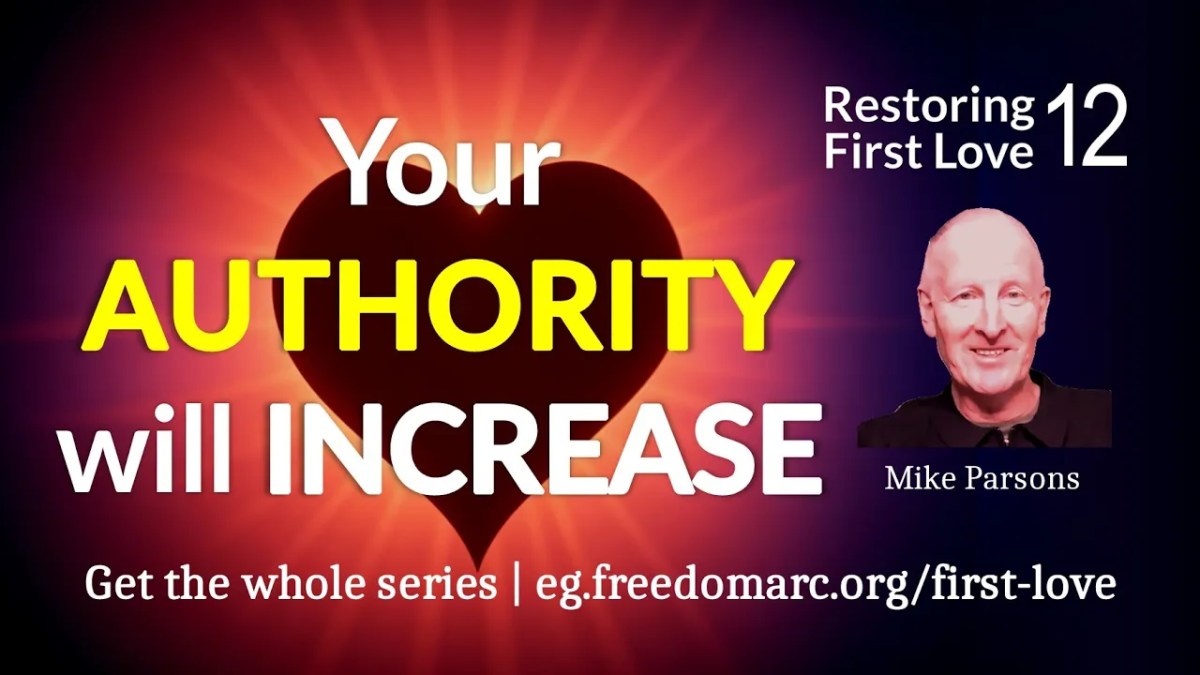
So the very first word of God’s covenant invitation, anokhi, communicates this: Your authority will increase inside the hedge of praise and submission.
“I am the Lord your God. You shall have no other gods before me.” Why would they want other gods, when He was offering them a relationship where their authority would grow within the protective hedge of praise and trust? That single phrase sums up the invitation of the ketubah—an invitation into covenant relationship. I am the Lord your God, choosing to bless you with freedom from slavery—not because of anything you have done, but because I love you. And I want the whole world to know that I am a loving God.
Reclaiming the Heart of the ‘Commandments’
This is the power contained in the very first word of what we now call the Ten Commandments. Religion has turned it into “Thou shalt not…” But what if we reimagined that? What if our lives became a response to anokhi?
If we truly knew that we have authority within the wonderful hedge of God’s love and protection, we would live differently. We would be a people who turn the world upside down by being authentic, generous, compassionate and kind—committed to helping the poor, the sick, the disadvantaged. And that was the early Church. That was their testimony. It changed the world. It spread across the known world within a generation. Amazing.
What would that look like today?
Activation: Let the Father Lead You
Some of you may desire to experience the Father and let the Father lead you. If so, begin to fix your eyes and thoughts upon the Father,
seeing him face to face.
Let those thoughts form in your imagination.
There is a door in your spirit.
Choose to open that door.
Invite the Father in—
to hug you,
to breathe his very breath into you.
Breathe in… and breathe out.
Breathe in deeply the unconditional love of the Father.
As you breathe it in,
just as oxygen is absorbed by the lungs into the bloodstream,
let the unconditional love of God begin to fill every part of your whole being, flowing through you.
You can just be still,
as God loves you and loves on you.

 Sons of Issachar