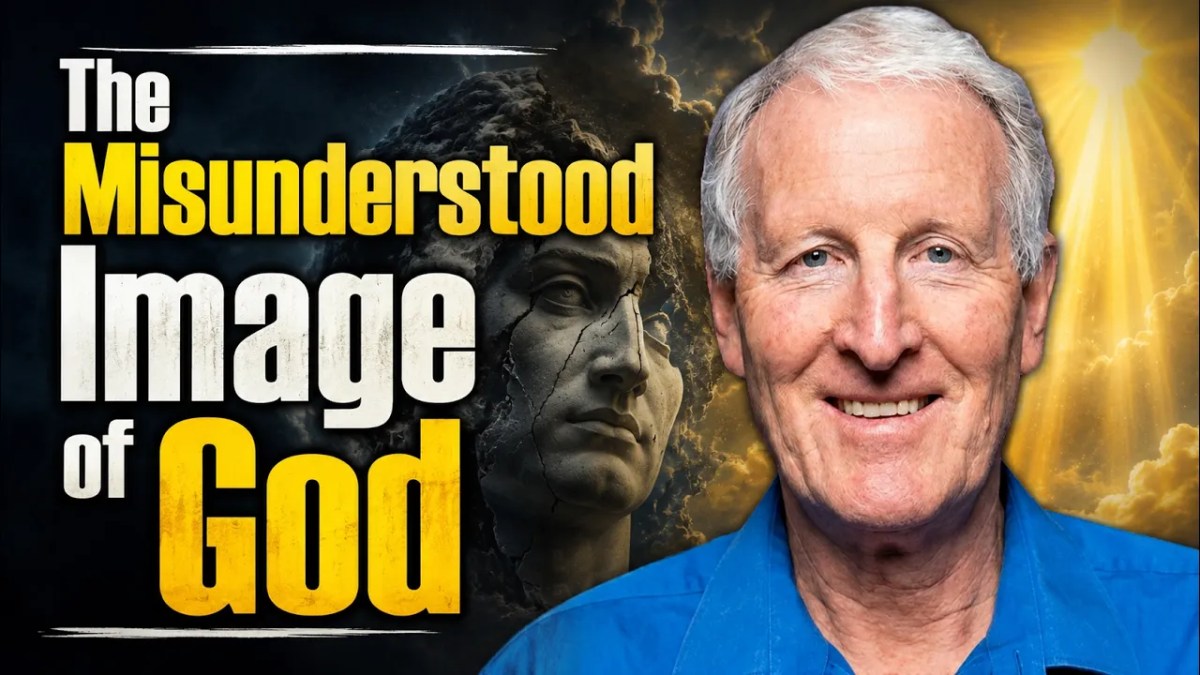
539. The Misunderstood Image of God | Relationship versus Religion

Mike Parsons


If you do not see the video displayed, you can play it here instead.

Can you know God? Can you know Allah?

We think of Islam and other religions, some of them being polytheistic, some monotheistic, but actually when you look back into the history of Islam, they chose a moon god out of other gods and then developed that into a monotheistic belief in Allah. But if you go back into the very roots of it, they were polytheistic when they started. They just chose the moon god. Hence we have the crescent moon associated with those kinds of beliefs. Most Muslims don’t know that, because they don’t know their own history and they don’t know where it came from. They tend to live from the Quran and from the teaching of the imams and all that sort of thing, but they don’t really know God, because their God does not allow for relationship. It is a blind trust of Allah who is sovereign, and therefore everything that happens must be the will of Allah. It leaves out the relational, the interactive, and the communicative dimension of that.

So I would not really try and argue with any Muslim about anything. I would talk to them about their experience. Can you know God? Can you know Allah? And they would probably say no, we can’t do that. Allah is holy. And so actually, I can say, well, I do know God. I have a personal relationship with him in which there is communication and sharing and life and joy and peace and love, using words which are evocative of good experiences rather than fear, which is what a lot of them associate with their god. They are afraid to get it wrong. Their knowing of God is by intellectual understanding of a concept rather than a relationship with a person who is loving and kind and good and gentle and all of the fruit of the Spirit. Where do you get angry, harsh and judgmental in the fruit of the Spirit? You don’t, because it isn’t there, and it isn’t in God.

523. How We Can All Connect with God

Why Jesus came

God does make judgments based on verdicts and evidence, but those verdicts are always going to come out of his love. And that is the problem with intellectual knowledge, with theology, with the understanding or study of God through an external medium, the “word”, the Bible. That is how many know God: through what the Bible says about God. But the Bible says very different things about God in the Old Testament and the New Testament, because in the Old Testament they didn’t know God. They thought they knew God and had their own understanding, their own religious construction of him. But he wasn’t the God that Jesus came to reveal. Which is why Jesus came.

Jesus came to reveal the true nature of God as love, and to help them have a relationship with the Father, because they didn’t have God as Father. In one sense they had a wider concept of God as Creator, but the relationship of Father and Son, when Jesus said “Abba”, was scandalous to them. When he said I and the Father are one, it was deeply challenging, because they had a view of God which was coming entirely out of religious knowledge and not experience.

443. Unconditional Love – NO RECORD OF WRONGS

Transactional knowledge of God

Let’s face it, only one of them could go in and meet with God once a year, and that was very much on the basis of, we’re terrible sinners, we need to atone for our sin, will you forgive us? It wasn’t a relationship; it was a transaction from their perspective. So they had a transactional sort of knowledge of God which you could say was covenantal, but they didn’t understand the nature of covenant as God fulfilling himself within the covenant. He tried, but they wouldn’t have it.

He wanted them to come up on the mountain when they came out of Egypt. He invited them into his presence, into that spiritual dynamic of his presence. They were afraid. Why were they afraid? Because they had 430 years of fear living under Pharaoh, and they had very little sense of what they had started with, with Abraham and Isaac and Jacob and their sons and all of that. And even then, their relationship with God was somewhat distant. Abraham, in a dream, was put to sleep to come into the presence of God. It never really started off in what Jesus came to reveal.

So they had their own version of God, carrying around idols all the way through the wilderness and into the Promised Land from Egypt, which is what Stephen said, and which is revealed in other places as well. They made a golden calf because they wanted something like other people’s gods, whereas God had invited them to come up into the fire of his presence, which is love, but they saw it as something to be feared. And therefore they sent a mediator, Moses, to go on their behalf. The seventy elders also went with him on their behalf, and then they set up a religious system so that they could have some connection with God at a distance, which was what they wanted. You don’t really get any sense of intimacy with God in much of it. Gideon meets an angel; there are various encounters.

Then the prophets begin to have more of a sense of hearing God speak to them, and I’m sure they were quite shocked by some of the things they said, because that’s when it started to turn around. Sacrifices and offerings you never required, they began to declare, and all of a sudden they were saying things that were leading up to the new covenant, beginning to reveal what God was truly like, and fulfilling all of those promises that they had viewed through their own understanding, revealing them in the truth of Jesus being the Way, the Truth and the Life, the express image of God; being one with the Father and having a relationship of I AM.

379. Created in His Image | The Purpose of Our Existence

John 14

My favourite chapter in the Bible has always been John 14, in which Jesus describes the relationship, describes going to the cross, coming back in resurrection, enabling them to have relationship in which they would know, “Where I am, you may be also.” And of course that’s been totally trashed in the meaning, to mean heaven in the future, where it actually means is where I am in relationship. Jesus says, I am in the Father and the Father is in me, and that is the relationship he was describing that they would have.

And then later on it says, “on that day (resurrection day), you will know this relationship: you will know that I am in you and you are in me and we are in this relationship with the Father together,” which is what he came to unveil. There was no veil. Hence the veil of the temple was torn, showing that there had never been any separation. And then they gradually began to work out that the Gentiles could come into this, that it was for everyone. Even after three and a half years with Jesus, they still didn’t grasp the fact that this was for everybody. He came to take away the sin of the world, not the sin of the Jews.

339. Universal Inclusion in Christ

Tabernacle of David

So the concern was, we can’t associate with Gentile people because they’re unclean. And then the revelation comes from heaven in the vision: don’t call anything unclean that I call clean; take, taste and eat, as a symbol of, you’re all one now, there is no separation or division. And of course they then described this as the tabernacle of David, which was God in their midst, no temple or holy of holies or structure, which is what they had celebrated for quite a while, dancing and celebrating in the presence of the Ark, not hidden away in a box somewhere.

And I guess the sad question I’ve asked a lot is: why did David then want to go and build a temple for the God they had just experienced and enjoyed in their midst? Maybe because the timing of Jesus’ coming was not yet. Things had not yet reached the point where Jesus was going to come, and therefore another system was set up through David and Solomon building the temple, and eventually the next temple with Herod and everything else.

You can know God for yourself

But when I look at what Jesus came to help us come into, he was the door so we could come into a relationship with the Father. Jesus made us to be a dwelling place, a habitation of God, which was what it was all about and what John 14 was describing: you will be like me in this relationship with the Father. They never had that before. None of them. Even John the Baptist, who was the greatest of the Old Testament prophets, the least in the kingdom is greater than he. We look at all the miracles and the amazing things that happened, but they did not know him. He was not in them the way he is in us. There is a huge difference.

And that’s what we come back to: you can know God for yourself. God already dwells in you. He lives in you and he wants you to know him in that inner relationship. That’s what I would encourage people to experience, and if anything, that’s what I would share with others who have not had that experience, to help them think, “I would like that.” So I wouldn’t argue theology with a Muslim over the Quran or the Bible or Abraham or all the other things people try and use to find some sort of common ground. I would simply ask: do you know God by experience? Do you have a relationship with him through experience? And then share the testimony of your experience with God, which would hopefully open their eyes to something they had not considered.

God is awakening the Muslim world

Let’s face it, God is awakening the Muslim world. There is huge revival going on in Muslim countries. People are having visitations of Jesus in dreams. There is great transformation. The gospel is spreading in places like Iran under persecution far more greatly than in our sort of western, “Christmas and Easter” sort of culture where not much else happens, and where we have got inoculated from it all because it has become another religion rather than the relationship God wants all his children to experience and know.

496. When Love Rewired My Mind, Goodbye Religion!

So definitely, stick with the relationship. Present God as a good God, a loving God, a kind God, rather than the angry, judgmental God who is so distant that we can’t really know him. Muslims have very little certainty, because their relationship is based on performance. If they don’t perform to a particular standard, they won’t make it. It’s the works-based mindset: you have to be good enough, keep a standard, perform, live according to the manual, rather than follow Jesus. Jesus made it very simple: come and follow me. He didn’t make it hard. He didn’t say do this and this and this and this and this. He just said, come and follow me, because he invited them into relationship, and then he opened the door for them to have a relationship with the Father and the Spirit through following him.

Help take the message of God’s unconditional love to all his children when you join any tier at patreon.com/freedomarc

If you enjoy these videos, would you please take a moment to like, comment, and subscribe? It really does help. Thank you very much.

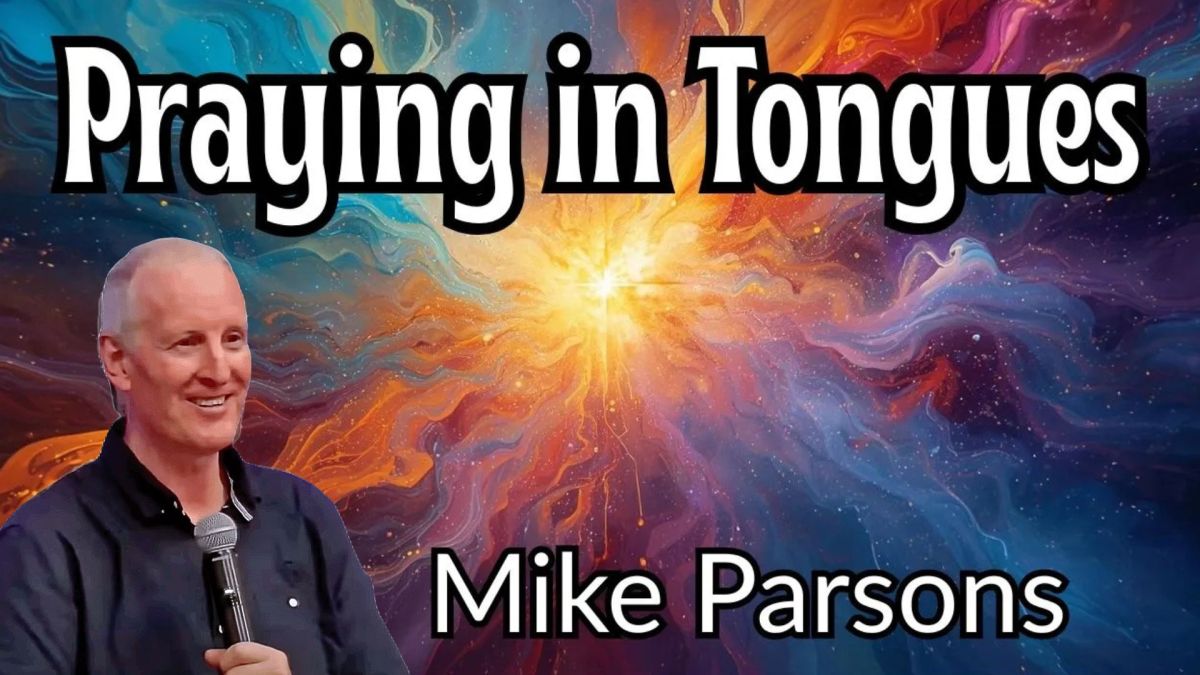
 

538. How Praying In Tongues Transformed My Spiritual Life

Mike Parsons

Get more from Mike when you join any tier at patreon.com/freedomarc.

Praying in Tongues: Learning to Live in Dual Realms

Praying in tongues is a very interesting thing. When I first learned to pray in tongues in the spirit, particularly when I was engaging heaven and engaging supernatural dimensions, it was very much something that was going to help me understand how to do two things at once. I didn’t quite understand why, but God then showed me later that this was going to help me understand how to live in two places at once, how to operate in the soul and the spirit at the same time, how to function connected soul and spirit. So I did a lot of practising: praying in tongues while I was speaking out loud, praying in tongues in my mind while I was reading the Bible, praying in tongues in my head, all sorts of different things. I’ve practised a lot with it.

And then, as I became more intimate with God, and got to know God, my senses were more trained to engage him, and I was having daily encounters and conversations with God all the time. I felt that the praying in tongues aspect of it was something I didn’t need to do any more for this purpose. I stopped, though not as a deliberate decision that I wasn’t going to pray in tongues any more. I might sing in the spirit at times, or do different things, but the purpose of it was no longer something I was practising with. I was able to live in this way, so it lessened in how I would pray in tongues in that particular way. There are various things that also lessened while I was doing that, in terms of the ministry style I was involved in. God really challenged me on helping people to engage God themselves, rather than prophesying over them or ministering to them in that way. So praying in tongues in that context became unnecessary.

508. God’s Desire For You | Discovering True Intimacy

But what I did find was that, as my spirit was engaging and dwelling in the realms of heaven all the time, it began to engage on its own, and I found myself praying in tongues, like when I woke up, or at a particular time, all of a sudden I would be praying in tongues. I didn’t choose to do that. It wasn’t something I thought, I’m going to pray in tongues now because this is a gift I have, I can use this gift. It didn’t happen that way. I just found myself praying in tongues. So then I would wonder, what’s going on? It felt like my spirit was communicating, “Hey, pay attention. There’s something here for you!” Maybe I’ve encountered something during the night, or whatever, now just tune into it. So I found that whenever I started praying in tongues like that, it was a signal: what’s going on, what do I need to look into, is there something I need to focus on here? I became sensitive to the fact that my spirit could be functioning and doing all sorts of things while I wasn’t consciously aware of it. And this gave me the sense that maybe I needed to engage, that my consciousness needed to be aware of this. So I would tune into it, look into it, and maybe go and engage where my spirit was. I sort of felt that was part of where I was then.

523. How We Can All Connect with God

So I think there’s definitely a decreased need to pray in the spirit in tongues when you’re engaging in the spirit, because you’re dwelling there. You’re not talking to God in another language, because you’re engaging with God face to face. I believe, as we mature and increase in our experience of God in the spirit, and dwell with him and abide with him there, there’s definitely less need to pray in tongues the way we did before. It talks about edifying your spirit, building up your spirit, and I certainly used it for that. I used it to pray all the time, in my mind or out loud. But I found my spirit had this bubbling energy within, as it got activated, that I felt all the time; it felt like my spirit was engaged. That was the sort of residue of the fact that I could live in dual realms.

276. Living In Dual Realms

I was dwelling in dual realms, so my spirit was always active, and I just felt that connection. Even though I wasn’t always conscious of it, it certainly was something I felt was very real, a sign that my spirit was active and functioning as it was intended. We live in multiple realms in that way.

 If you enjoy these videos, would you please take a moment to like, comment, and subscribe? It really does help. Thank you very much.

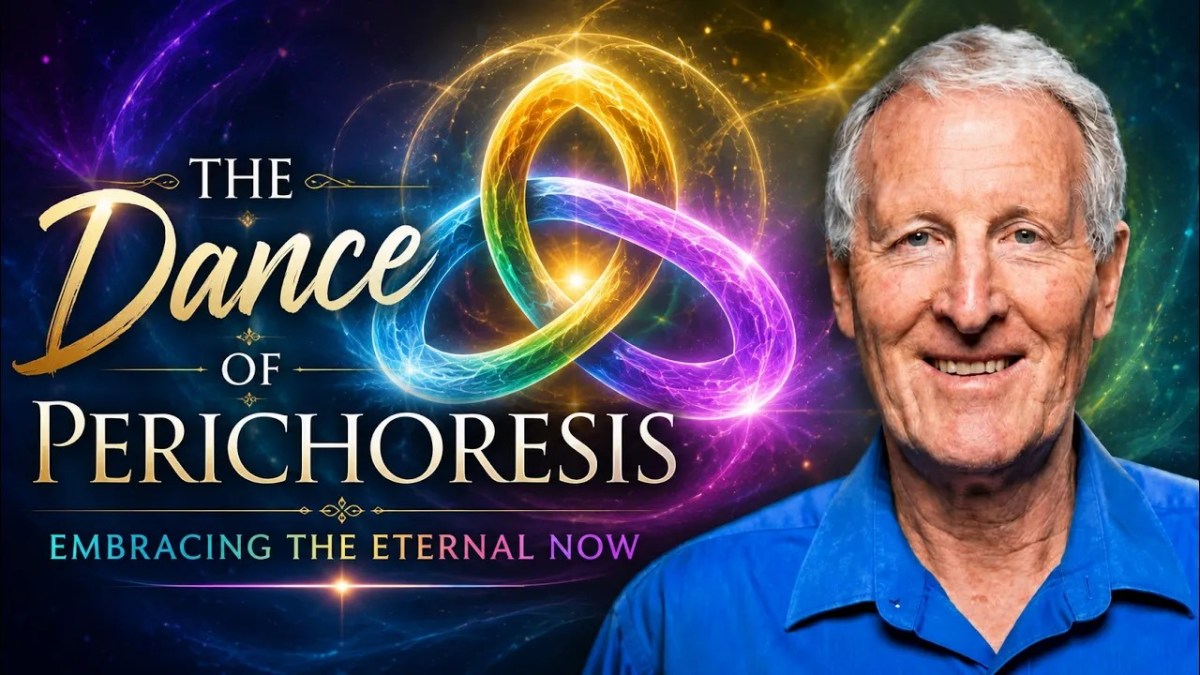
537. The Dance of Perichoresis | Embracing the Eternal Now

Mike Parsons

No video? Click here.

The eternal now

God dwells within the eternal now, which would be outside of time and space, but not disconnected from it. I’ve found that there are ways God has drawn me into the eternal now to experience his presence in that pure essence, and I describe it as perichoresis: the circle of the dance, the conversation between Father, Son, and Spirit, where there is pure relationship, pure love, pure everything that God is that he has invited us into. We came from that place, out of his heart. He created us there within his heart, and we were not separated from his heart until he formed creation. And when he made creation, he then formed us to engage with creation, both in the spirit but also when we become living beings on earth, and therefore we can go back to the place which I call home.

536. Reframe Your Reality: The Process of Mind Renewal

You know, it’s sort of, for me, the place of pure intimacy, pure face-to-face engagement, but outside of time and space, and therefore disconnected from this realm in a way that means I’m not distracted or affected by this realm when I’m in that realm, and I can be in that realm in the purity of God. I find that it’s very difficult to engage it cognitively, in that I can’t figure it out or work it out, because it’s nonlinear and it’s not like this realm. But the relationship is there. Now, that realm relates to the created realm, and there also I can engage God in the realm of perfection in light, which is connected to this realm and that realm, and I find I engage God’s heart there for the outworking of his heart into this realm, the created realm where I can engage God face to face. In that realm, in the purity of light, but it’s connected with this realm in its governmental aspect.

I engage in the relational aspect within the purity of God in what I call the eternal now, and it is pure relational love. But I also engage God relationally in relation to his government in the realm of light and perfection. So I am face to face, heart to heart, mind to mind with him there. Jesus said he only did what he saw the Father doing. You know Jesus said, I am in the Father and the Father is in me. That is the place where I engage, where I only outwork what I feel the father’s heart is. I’m engaged relationally, but I’m also engaged governmentally.

293. Expanding God’s Government of Peace

Pure love relationship

When I engage outside of time and space within the eternal now, it is pure, intimate relationship. If God is infinite and eternal, then everything that he has created has been created within a space within him. So it isn’t separate from him, but it is in a space within him which is within him in a different way.

This is where, it’s like, God is everything in everything, and all that, we live and move and have our being in him, and he fills all in all, and there are lots of Bible verses that indicate his connection with creation. But for me, the pure essence of God, in what I call perichoresis, is what the early church fathers used for the description of the trinitarian relationship of Father, Son, and Spirit in pure love relationship, and we are invited to be in the midst of that. That’s where we were formed within the Father’s heart, and that’s where we can learn to dwell and engage. And because we are made in his image and likeness as sons, we have access there that the other angelic beings don’t.

There were various routes that I found, that God took me to that place, even though I didn’t understand it, and I couldn’t figure it out. So to start with I just had to park my intellect outside, if you like, and not try and figure it out. It was an experience, not knowledge; so it’s not knowledge as intellectual knowledge, it was experiential knowledge. I couldn’t describe it in a visual sense, because it was beyond a visual expression. I couldn’t describe it, as an image, but I can describe the intensity of the love relationship that I’m included in. And it’s the pure, absolute essence of who God is, relationally, that we all are invited to participate within, in the purity of it.

390. The Essence of Wisdom: Living in Union with the Father

And that, I think, is why we can’t try and figure it out or understand it — you just have to experience it — and it is life-changing, because what you find within that is who you are. God reveals… I mean, that really is the sort of mirror that we look into, in its purest essence, to discover who we are, free from any connection to what’s happened to us in this realm.

Help take the message of God’s unconditional love to all his children when you join any tier at patreon.com/freedomarc.

531. When the Bible Becomes a Barrier

Mike Parsons

If you do not see the video above, please click here.

Get more from Mike when you join any tier at patreon.com/freedomarc.

Moving Beyond the Need for Proof

When I started this journey, everything for me had to be focused in the Bible because that was what I was brought up with in the evangelical system of thinking. And that was limiting what God was able to show me, which were things beyond the Bible. But because I needed it grounded there, that grounding then was outworked in what I knew. And so I would try to do it myself because I knew and I was confident, well, the Bible says this.

481. Beyond The Pages | Finding Truth Outside the Bible

Now, at that point, I had not gone through deconstruction, and that was still what was framing my relationship with God. But God wanted to take me beyond that, so he had to start weaning me off needing proof, biblical proof, which was where my proof came from, you know, because there were things then he started to show me. Well, if you want biblical proof about this, your understanding of the Bible needs to change because the way you see the Bible now is not going to give you the proof, which is actually the truth. Because you are framing it with a wrong expectation of me.

And I suddenly started to realise that what God was saying to me is, “You do not have to do this yourself. You just let me do it.” So presenting myself as a living sacrifice, as a priest, meant for me I was doing what I needed to do to be a good sacrifice. Whereas actually Jesus my high priest prepares me in my life. But I was doing the preparation.

Trust Jesus Rather Than Knowledge

So every day I would want to go into the tabernacle in heaven and I would want to look into the bronze laver and see a reflection. But what I was looking at was a reflection of my understanding of the Bible. I did not know at that point that Jesus was the Word of God. Of course, I knew it intellectually, but actually the Bible was the word of God. So for me, that is how it was.

403. So you think the ‘Word of God’ is the Bible? Think again!

Therefore being washed by the water of the word was not Jesus doing that. It was me, reading the Bible, who was doing it. So I was actually trying to wash myself. You know, when I was trying to renew my mind, I was using the Bible to try and renew my mind. And all of the things like “the word of God is like a sharp two-edged sword just dividing soul and spirit,” – I was trying to divide my soul and spirit using the Bible to do it.

And actually what Jesus was trying to say is “No, I am the living Word. So trust me, not in your knowledge, because your knowledge will not be enough to do it because you do not know enough, and also some of the things you think you know are not true.”

So it was quite a challenge, you know, to go through that process of him removing the evangelical framework of my thinking to trust him rather than to trust my knowledge. Ultimately that took me through a whole process where I had to accept that I was in control and I was doing it myself. And I was not trying to do a bad thing, but I was still doing it in works, and I was still doing it in the power of my soul, and I was still doing it actually because I trusted myself more than God.

489. Nine Pillars That Shaped (And Shook) My Beliefs

You know, because of the [understanding of the] nature I still had of God who was to be feared, because that was before my understanding of God was deconstructed into unconditional love. So I was still functioning in penal substitutionary atonement and all of those doctrines which were my understanding of framing the Bible. So I was framing the Bible wrongly all of that time.

Surrender, Deconstruction and Trust

So he decided to wean me off the need for biblical truth and biblical proof and show me that a lot of my understanding of what I thought was true based on the Bible was not true because it was based in a false system of belief based around a god who is not actually who God is.

So you go through seasons, and it is not always easy if we do not surrender. So what I have learned to do is just surrender and trust. If it seems to be a season of inactivity, it is okay: I trust you, and I trust you enough that if there is anything you want me to do, then you will show me. And when this season changes, then I will actually sense and feel something has shifted and now something else is happening.

But it is not an easy process when you are conditioned. And I was certainly conditioned. And I had to go through a lot of deconstruction. And I had to surrender to trust God before that deconstruction could really take place. You know, there was a degree where I had experiences that challenged some of the things I believed about God, but that was not sufficient at that point without a surrendering of my soul’s need to understand and to know and effectively to be in control.

501. Deconstructing Beliefs: A Journey to Authentic Faith

So God took me through a whole process of softening me up, preparing me, a lot of refining experiences of going into fire and going into being soaked and getting ready for the most difficult thing that ever happened when I got to the point where I had to surrender my right and need to know to just trust him. And that was such a hard thing back in 2012. But since then, my relationship with God, my understanding of who God is, my understanding of who I am has been totally transformed because I now know God at a completely different level.

So go for it, you know, go for resting. And it does not mean that you cannot say to God, okay, if you want to tell me what is going on or show me what you are doing, I am open. But that is not the driving force behind what you do when you engage God. Because there is no problem, God is quite happy for us to talk to him and ask him questions, but he is quite at liberty not to give us the answer if he does not want to. And we have to accept that there is a reason for that, whatever it might be. That is what we have to trust God in, the process.

 If you enjoy these videos, would you please take a moment to like, comment, and subscribe? It really does help. Thank you very much.
529. Transform Your Reality | Let Go Of The Past

Mike Parsons

No video displayed above? Click here.

Choosing Reality from God’s Heart

That is how God has created us to be, that we can choose and create our own reality. Part of the problem is if we keep choosing our reality out of our knowledge of the past, then we keep repeating the past and our reality never really changes that much.

477. Transform Your Reality | Harnessing the Power of Intention

We have got to actually see the possibilities that God has for our future and begin to align our choices from our future, which also comes from his heart in eternity. So it is coming from a place of intimacy with his eternal heart, which essentially is my scroll, my destiny, to which I then choose to align to what that frequency is.

His living words, when he spoke me into being as my source of life, are still vibrating within me. Now, when I resonate with that source and those words, then I am going to choose a reality from his original intention for me. And when he shows me a vision, if you like, of how he intends my life to be, then I see future realities that cause me to be able to choose them in the present, so they actually begin to form and come about. But it is not like it is fixed, therefore God shows me my future; and if I choose it, it will be guaranteed to happen. It is like there are possibilities for my future aligned to his desires, and for me, and if I come into agreement with them they will begin to form.

464. The Power of Co-Creation: Aligning with the Heart of God

Breaking Free from Past Programming

We have a lot of history in which we have been disconnected from our eternal identity, and we have made decisions based on what we have been taught from nature and nurture in our lives. So our soul has been programmed from all our experiences that have happened in our life from the outside in. But God wants us to begin to be led and guided from inside out, from his Spirit, my spirit, and therefore not the programming that my life has had. So if I keep choosing the reality based on what my past experiences are, I keep getting the same experiences, and that has got to change. So my mind needs to be renewed to see things differently, so I am not programmed to inevitably keep repeating the mistakes of my past.

The future is better. God wants me to succeed and prosper. He has blessed me. I need to come back into that place of his blessing and empowerment so that then my future is good, and his desire for my future is always going to be for my good and for my blessing, and so I can be a blessing. I am blessed so I can be a blessing. I am loved so I can love others, and that comes out of that reality of my relationship with God, which causes me to choose aligned to his heart rather than from my past. But we all have things that we are in process of having renewed so that we are not influenced by those things anymore, but we have a higher frequency of influence, that we resonate to a higher frequency rather than to the lower frequency that we have been used to living in. And his words still vibrating in me resonate with that higher frequency, but am I choosing to come into that agreement with that, or do I keep choosing the low frequencies.

Sometimes that is what people do. They are so familiar with the low-frequency life that they have been living, they do not think there is any other way of living. But when we start to glimpse what God starts to show us, then what is possible enables us to choose that to become reality rather than the inevitability of life just going on the same way. So yes, I totally agree with that statement, but it requires a relationship of intimacy to choose those realities rather than what we have been necessarily programmed with. And eventually, you know, we will be deprogrammed, if you like, and renewed to think differently and not have those negative choices or negative things dictating what we choose or how we choose it. So there is a process involved, but God is active in that process in renewing our minds.

253. Framing Your Reality

Cooperation and Corporate Agreement

Ultimately, we mature to a level where we create our reality instantly rather than over a period. At the moment for most people it is pray, believe that you have received and you will receive, because we have been used to waiting for what we have chosen to manifest. And sometimes it has to be a time period because other people are involved in that, and other things are involved in that, and I cannot just force my reality on other people. So there has got to be somewhere where cooperation comes in, and connection comes in, that there is a corporate mind of Christ choice of reality that more and more people will embrace and things will change on a greater scale rather than just around my life.

Because none of us are an island independent of everyone else; we still have to interact with other people. So if I am living in this area and I am choosing for this area to be blessed, but there are a thousand other people believing the worst, I have got to have a thousand times more influence than they have if I am going to change things. But if two or three come together, well, one can put a thousand to flight, but two, ten thousand. So there is a sense of exponential increase in there. If we start to come together with others and agree with God for those realities, then I think those realities can begin to bring good for the benefit of everyone, even if they are not making that choice themselves. It is not forcing them, but it is creating an environment where they will see what a wonderful thing it is to be blessed, rather than to live in a state of less than what God intended.

So I think more and more people will begin to connect with God’s heart, God’s mind, and will have a union of desire and heart which will bring about change, which is why I think things like the earth shield and other things, where people were coming together in agreement to engage with God and therefore be looking to see a place of protecting what God was doing on the earth and keeping it from interference from external sources so that God’s purposes can be outworked in practice. But I do think it is something we need to start to focus on, but we have got to make sure we are choosing a reality that is aligned to God’s heart.

465. The Earth Shield | How Spiritual Beings Influence Natural Disasters

Help take the message of God’s unconditional love to all his children when you join any tier at patreon.com/freedomarc.

If you enjoy these videos, would you please take a moment to like, comment, and subscribe? It really does help. Thank you very much.


517. Experiencing Heart to Heart Intimacy with God

Mike Parsons – 

Intimacy with God goes far beyond any physical union; it is the knowledge of the heart—cardiognosis—a deep knowing that is revealed through experience rather than intellect.

Please click here if you do not see the video.

On my journey, I encountered many moments that imparted this knowledge directly into my heart, often through simple acts of intimacy, like a heartfelt embrace. A hug can convey connection, or it can create distance, depending on how it is given. God invites us to embrace Him as Father, allowing Him to reveal the truth of our relationship so that we may know Him experientially.

I remember a moment when I became caught up in doing things for God—exploring what I could do in the heavenly realms, understanding my sonship and governmental authority. It was exhilarating, but it risked becoming my focus instead of the relationship itself. One day, during my daily engagement with God, I asked, “What are we doing today?” and there was no verbal response. Instead, He simply held me close, refusing to let go. In that embrace, He infused truth and knowledge into my heart, drawing me away from a works-based mentality and revealing the fragrance of intimacy with Him more powerfully than anything else I had experienced.

Relationship union with God transcends gender. Sonship and daughtership are spiritual realities, not defined by male or female. God looks at who we are at the core of our being, made in His image, which encompasses both masculine and feminine characteristics. First love restores our true identity in union—spirit, soul, and body—with Father, Son and Spirit at the very heart of who we are.

This journey of first love leads to consummation, a deepening of the relationship as we accept God’s love, embrace our identity and destiny as sons and daughters, and allow transformation to prepare us for face-to-face intimacy with Him. My path through the garden, the dance floor, the soaking room, and the bridal chamber brought me into a presence with God that was overwhelming at first, yet opened the door to ongoing experiences of dwelling heart to heart, mind to mind, spirit to spirit. Over the years, this intimacy became my dwelling place, just as God dwells in me, revealing His presence, perfection, love, joy, and peace in ways I could not have imagined at the beginning.

The process took over a decade, guiding me through experiences that expanded my understanding of God and myself, revealing multidimensional realities beyond time, space, or material limitations. Like a courtship or betrothal, the journey into first love deepens continually until soul, spirit and body are in union with God.

If you enjoy these videos, please take a moment to like, comment, and subscribe. It really does help. Thank you very much.

331. Embracing Being Over Doing

361. Quantum Entanglement | Face to Face with God

424. First Love | From the Inside Out

508. God’s Desire For You | Discovering True Intimacy

Mike Parsons

This is the relationship God wants us to have: the deepest, most intimate relationship we could ever have with anyone.

He wants to reveal Himself in such a way that this relationship becomes possible, because we are no longer caught up in the issues that have separated us from Him or made us fearful of intimacy.

Often we are afraid of getting close because we think, well, He will really know me. But He already knows us, and He loves us anyway. That love is unconditional. Because of that, we do not need to be afraid to be real or honest with Him. We can share how we feel. We can learn how He feels towards us and be inspired by that. This is real relationship. It is not abstract or distant. It is real, and because it is real, it includes everything.

Sometimes we struggle. Sometimes it is difficult. Sometimes things happen that we do not understand and we ask, how could God allow that to happen? We have questions. We have doubts. At times, we even experience unbelief. God understands all of that. He is not threatened by it. He wants to draw us closer and closer, deeper and deeper, bringing us to a place where He truly reveals Himself.

As He does that, we begin to see ourselves reflected back in the wonderful mirror of His face. We see ourselves as He made us. He reveals who we really are. He wants us to live in that intimacy, but intimacy always brings change. It brings transformation. Sometimes the crucible gets hot, releasing the things in us that hinder relationship and closeness. But there is no guilt, no shame and no condemnation in that process. There is only love.

It was love that inspired me to trust God and to open my heart and my life fully to Him. It was love that brought me to the judgment seat, where the fire of His presence burned away the wood, hay and stubble of my scroll. It was love that brought me to a place of complete surrender. If I had feared Him, I could never have done that. He wants us to come to a place where the intimacy of His presence reveals the true nature of His heart, and we discover that this is home.

Not knowing who we are keeps us from Him. Sin is not primarily a verb, something we do, but a noun, something we are affected by. We lost our identity, and because we do not know who we are, we feel unworthy, undeserving or unqualified for relationship with God. Sometimes we even think we do not need it. All of these mindsets keep us from the relationship God always intended and has always prepared for us.

God’s desire has always been for us to return to restored innocence, to face-to-face relationship. The things that keep us from that are lies. Paul said that we are alienated in our own minds. God has never been separated from us. We think these things keep us from Him, but in reality, God embraces us as we are. In that intimacy, He reveals who we truly are.

As we come into agreement with that truth, we begin to resonate with it. The frequency of truth changes us. We are entrained into alignment with who we always were, but lost sight of and forgot. It is not behaviour that keeps us from God. It is mindset. It is the way we see ourselves.

That is why God wants to renew our minds, to the true nature of who He is and who we are. He wants us to realise that the only thing that keeps us from Him is our own perception. Once we begin to see rightly, we discover that nothing can separate us from God, not even ourselves, because His love never fails and never gives up.

As the psalmist David said, where can I go from Your presence? If I go into the grave, You are there. If I go into the highest heavens, You are there. In Him we live and move and have our being. We cannot be separated from Him except in our own minds. God has never separated Himself from us.

If you enjoy these videos, please take a moment to like, comment and subscribe. It really does help. Thank you very much.

284. His Love Never Fails

422. From Rejection to Acceptance | Understanding Your Identity in Christ

442. Unconditional Love – NO GUILT, NO SHAME

446. Embrace Love’s Fire

473. Why Do We Assume? | Questioning Our Beliefs and Practices

Mike Parsons

Not seeing the video above? Find it here.

We often make assumptions simply because we’ve never thought to question things, or even paused to ask, “Why am I doing this?” It’s so important to consider our motives. I’m not saying that people shouldn’t gather, worship, or take part in services—if that’s how they want to express themselves, that’s perfectly fine. But it’s worth asking ourselves and one another, “What’s at the heart of this? Why am I really doing it?”

A friend of mine, for instance, shared how God told her and her husband not to attend the Sunday meeting anymore. Her husband was delighted—he could use the time for other things—but she was horrified. Every time Sunday rolled around, she felt guilty for not going. It took her six months to work through that guilt. Guilt doesn’t come from God—it stemmed from her conditioning and an internalised mindset of what she thought she ‘should’ be doing. Once she processed those emotions, she found incredible freedom and began enjoying life outside of that obligation. She also found that her relationships changed: there were genuine friends who stuck by her whatever she did, and ‘church friends’ who were only present if she attended church. Real friends are those who stand by you through thick and thin, not just casual acquaintances from shared routines.

Whenever we feel compelled or would feel bad for not doing something, it’s worth asking ourselves: why? What is driving that feeling—guilt, compulsion, or freedom? God never wants us to be in bondage to something because we’ve assumed He desires it when it may not be His intent at all. Asking “Why am I doing this?” is always helpful, and I’ve had to do this myself many times. God has nudged me out of many such patterns. For example, a few years ago—around 2022—He told me to stop doing my annual Vision Destiny teaching series. The idea was that people should discover their own destinies with God and engage in their own conversations with Him, rather than relying on mine.

I realised that, even after stopping public teaching, I was still journaling out of habit. When I asked whether God wanted me to continue, He made it clear that it was up to me—He didn’t require it as a condition for our relationship. It was freeing to realise that my sense of duty was self-imposed, not divinely required. Eventually, I let go of journaling, and even changed how I approached my time with God in the mornings.

This shift wasn’t about having a better or worse relationship with God, just a different one. I learned that intimacy and union with God doesn’t depend on set routines or religious disciplines; it can be experienced just as deeply in everyday life, in the garden, the workshop, or wherever I am. Sometimes that connection comes through a conversation with God, but just as often it’s a felt sense of His presence throughout the day.

Since embracing this freedom and releasing the conditions I thought were required, my experience of God’s unconditional love has grown so much deeper. I realised that the expectations I thought God had of me were really just conditions I’d placed on myself. As I allowed those to fall away, I became freer, more connected, and filled with joy in everyday life, knowing that God’s love is unconditional and not dependent on any ritual or discipline.

If you enjoy these video blogs, please take a moment to like, share, comment, and subscribe—it really does help. Thank you very much.

All Mike’s books, including Into the Dark Cloud and Unconditional Love, are available to order from online and local booksellers; or you can buy them as ebooks and download them instantly from our website.
More info at eg.freedomarc.org/books


307. God’s Unconditional Love For You

FREE – 2020 Vision Destiny

442. Unconditional Love – NO GUILT, NO SHAME

460. The Dark Cloud 2 | The Surprising Power of Surrender

Mike Parsons –

If you do not see the video, please click here.


God does not want to keep us at a distance. He wants us to be safe and secure in His presence—but that requires transformation.

Of course, Jesus wanted to share many things with His disciples, just as the Father desires to reveal amazing things to us. But we may not yet be ready to experience them. In John 16:12, Jesus said, “I have many more things to say to you, but you cannot bear them now.” That was certainly true for me. God wanted to reveal so much, and eventually He did, but at the time I simply could not bear it.

There is revelation, truth, and encounter available to us—but, like the disciples, we may not be ready. It is not because we are unworthy or not good enough, but because our minds need renewing. There are still things in our souls that need to be dealt with so that we learn to trust God—not based on what we see or understand—but simply because He is God. Our relationship with Him must be based on who He is, not on what He does for us, nor on what we do for Him.

Visiting or Dwelling?

God prepares us to dwell with Him in face-to-face intimacy—not just to visit from time to time. At one stage, I was visiting His presence. I was engaging with the realms of heaven, but I was not able to engage with His person—at least, not until I had been through this process.

My encounters in the dark cloud were preparing me for what was to come, though I was completely unaware of that at the time. I did not know what He was doing, or what He was going to do. I thought I had experienced everything there was to experience—how wrong I was!

Once, during one of those dark cloud encounters, I saw my destiny scroll. There was an event marked on it by a blue flame. The Father called it the eternal flame. I was deeply curious—why was I being shown this? At the time, I had no idea it would relate to what I was about to walk through. I saw my life flash before me, leading up to that moment within the flame. I just knew that nothing would ever be the same again. But I did not know what it meant, or how it would unfold. God was showing me something important, something intriguing—an invitation. And, as I sometimes say, Jehovah Sneaky knew I would not be able to resist.

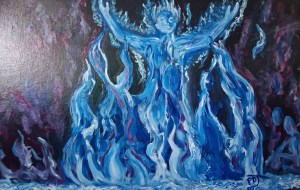
He did not tell me what He was going to do—He simply invited me to engage the eternal flame for a life-changing experience. A friend of mine later painted a picture of someone in a blue flame. When I saw it, it resonated so strongly—it felt as though she had painted me, right there in the midst of that flame that had changed my life.

True Identity and Redemptive Gifts

As part of that process, the Father wanted to reveal my true identity to me—an identity closely linked to my redemptive gift. That redemptive gift is how the Father has wired me, as a son, to engage with the world around me and to mature into His fullness. It is how I see, perceive, and interact with life.

My true identity is connected to my redemptive gift, but it needed to be freed from the performance-based, soul-driven tendencies that had developed through my life experiences. Trauma, nurture, and upbringing can all shape how that gift functions—often making it impure.

In my case, I was using my redemptive gift to create and validate my identity. My redemptive gift is prophet–teacher. That is not the same as the spiritual gift of prophecy. This kind of “prophet” describes how I perceive and process the world. And I am almost equally prophet and teacher—every redemptive gift survey I have done reflects that. That is how God wired me to function as a son: curious about how things work, with the ability to explain them to others. That is probably why He chose me to be a forerunner in heavenly engagement—to open up that realm for others. Hopefully I can share my experiences in a way that is not too weird, so that people can see what is available to them too.

But I had gained my identity and security from the knowledge I received by doing that. I was using my soul to engage heaven—to see and know what the Father was doing, which in itself is good. But my soul would not allow my spirit to engage heaven on its own. Though we are seated in heavenly places, the consciousness of my soul was limiting my spirit’s ability to dwell and remain there. I was tethered to myself, and to the earth.

The Surrender of Self

So the essence of who I was, redemptively, was being used to create a false identity—and to bring me security and independence from my spirit. What I discovered was that me, myself, and I had to surrender. My soul and spirit had to be separated so that they could be reintegrated into oneness—spirit, soul, and body—joined and one with God. From His perspective, we are already one with Him.

As it says in 1 Corinthians 6:17,19-20: “But the one who joins himself to the Lord is one spirit with Him. Do you not know that your body is a temple of the Holy Spirit who is in you, whom you have from God, and that you are not your own? For you have been bought with a price: therefore glorify God in your body.”

This is what God desires: union so complete that we are one. But I could not experience that union—because my soul would not allow it. In my own understanding, I was alienated.

The Mirror Bible puts it beautifully:
“In our union with Him, we are one spirit with the Lord. Do you not realise that your body, by design, is the sacred shrine of the Spirit of God echoing within you? You are not the sole owner of your life—you are bought and paid for. All of you is His. Live your life conscious of how irreplaceably priceless you are. You host God in your skin.”

Gifted by Design, Not Performance

God wants to free us from the need for our soul to find identity in works—what the Bible calls the tree of the knowledge of good and evil, the path most of the world is on.

The purity of who we are redemptively must be tested and refined by fire. I believe our redemptive gifts will grow beyond just one or two, eventually reflecting all seven—to become more like Jesus. As the fruit of the Spirit matures in us, we will function more fully as sons—engaging not just in one way, but in every way.

The redemptive gifts listed in Romans 12:6–8 are prophet, servant, teacher, exhorter, giver, ruler, and mercy. These are not spiritual gifts for ministry. They are who we are. We are God’s gift to the world. The refining process reveals those gifts and frees us from the need to earn our identity through our own works. We can finally be who God intended—no longer performance-driven, trying to earn His favour.

That testing will look different for each of us. When I first studied redemptive gifts—through the teaching of Arthur Burk—I began to see how God uses testing to purify each one. When I taught on the ketubah in church, I warned people: If you go down this road, you will be tested.

I knew ruler-gift and servant-gift friends who had their ability to rule or serve removed—just like that. Then they had to face the question: Who am I without that? Who was I, without being able to see, understand, and teach?God was trying to show me: I am not who I am because of what I do, but because of who He made me to be. Even if I never did any of those things again, I would still be who I am.

A Restoration of Original Design

God took me through the dark cloud because He loves me.
He wanted to restore me to my original condition—so that I would know myself as He made me.
He wanted to bless me fully.
He wanted to reveal my heavenly identity and position as a son.
He wanted to release me into the fullness of sonship authority to engage creation.

But to do that, He had to do something quite drastic -it may be easier for you than it was for me.


All Mike’s books, including Into the Dark Cloud and Unconditional Love, are available to order from online and local booksellers; or you can buy the ebooks and download them instantly from our website.
More info at eg.freedomarc.org/books


Activation: Resting in Unconditional Love

I encourage you to just close your eyes.
Get relaxed.

You may want to lie down.
You can relax your body.

Begin by focusing on your breathing.
Breathe in slowly… and hold it…
Then breathe it out… slowly.

And as you breathe in… and breathe out…
Start to focus your thinking on God the Father, who is love.

As you begin to breathe in,
You are breathing in unconditional love—
The love of the Father for you,
As a son,
As a daughter,
As His child.

Breathe it in.

As you do, that unconditional love begins to flow
Through your whole being—
Touching every cell of your body,
Your mind,
Your emotions,
The whole of your soul, spirit, and body.

Let yourself be still,
And let God love on you.
Let Him show you how much He loves you.

As His love fills you,
Joy and peace come—
They overwhelm you,
They cocoon you.

All of His being begins to flow in you.
An atmosphere forms around you—
A cocoon of love, joy, and peace.

You are just resting in it.
Relaxing in it.

Be still.
Wait.
Rest.
Wait expectantly.

Whatever God wants to do with you—right now—
This is a safe place.

You can get out of the boat—figuratively.
You can choose to abandon yourself,
To sink into that vast ocean of unconditional love,
Where God’s love is so strong, so powerful—
You can trust Him.

He is a good God,
And He wants the best for you.

Just go deeper and deeper into that love
As He restores first love to you.

You can sink deeper…
And deeper…

There may be things around you that you sense or feel.
Be willing to go deeper and deeper…
Into love.

459. The Dark Cloud 1 | Why Would God Hide From Us?

Tuesday 29 July 2025, 1:00 pm 0 boosts 0 favorites

281. Scroll of Destiny: Just Being

217. Redemptive Gifts (1)

207. Restored to Original Condition

452. Your Authority Will Increase

Mike Parsons

If you do not see the video above, please click here.


God just wanted relationship. He did not make a contract but invited them into a covenant relationship. He did not want a business arrangement—He desired a relationship of love.

In the context of Hebrew marriage, the bride and her father, and the groom and his father, would come together to make an agreement. This agreement defined the boundaries of the marriage. The bride could include anything she wished in the ketubah, as long as the groom agreed, and vice versa. Once both agreed, the contract became binding. These were the terms of their union, and to break them was considered ‘marital unfaithfulness’.

Marital unfaithfulness was not limited to adultery. It meant breaking the agreed terms of the contract, which is why people could issue divorces for such breaches. This was a contractual arrangement—not a relationship. Once the agreement was made, the couple would stand and face each other. The groom would say to the bride, “I go to prepare a place for you, that where I am, you may be also.” He was referring to preparing a new room at his father’s house, a place for them to live, joined to the family home. This is the context we see reflected in John 14.

The bride would then ask, “When will you come back to receive me unto yourself?” The groom’s response would be, “I do not know the day or the hour, but when my father approves the wedding chamber, he will send me back to receive you unto myself.” These words should sound familiar—Jesus used them (in John 14).

These words place Jesus’ death on the cross within the context of marriage and covenant. “In my Father’s house are many dwelling places…”—this is all part of the same imagery. The new covenant is a preparation for us to become a place of intimacy, a marriage dwelling, so that God can live in us. On the day of resurrection, they would know that Jesus was in the Father, they were in Him, and He in them—this wonderful union that was to take place.

So what Jesus taught, as recorded by John, would have been clearly understood in terms of covenant. They would have recognised that God still wants to marry us. That is such an amazing truth.


This is an excerpt from Mike’s current teaching series, ‘Restoring First Love.’ Get the full series up to date, plus a new session each month as they are released, at eg.freedomarc.org/first-love


The ‘Ten Commandments’ as Covenant Invitation

Now think about the ‘Ten Commandments’ as a marriage invitation. The ketubah was God’s promises to His people—not His expectations of them. Have we made vows or promises to God as if entering a contract? Do we have expectations of God based on that contract? I did—wrongly. I made my ketubah with wrong intentions and motivations.

If you have made vows to God based on performance, I encourage you: retract those vows. Do not let those past vows become a hindrance or restriction to your future. God is not looking for vows. He is looking for relationship.

We need to see the Ten Commandments from the right perspective, and understand ketubah and our relationship with God. Many people still live under a mistaken Old Covenant view of God. The commandments were never meant to be a restrictive set of rules—they were the foundations of a relationship intended to bring freedom.

From Slavery to Sonship

Remember, these people had been slaves for 430 years—a heritage of slavery where their opinions did not matter. Every day for 430 years they rose to make bricks, beaten at their masters’ whim, treated as inhuman. Seven days a week, twelve hours a day, every single day of the year. They had no human rights. They were property.

The Ten Commandments were God’s way of helping a nation of slaves rediscover their true identity. He was not trying to control them. He was forming a culture based on His way of living—a culture so attractive that the world would look at it and desire it for themselves.

It was also a wedding proposal. God was proposing marriage to a people who still thought like slaves. In this new culture, God respected their dignity—unlike Pharaoh or their former masters, who could abuse or kill them at a whim. God honours His image in us. But it is very difficult to live as a son while still thinking like a slave or an orphan. God wants to heal us from these ways of thinking, from these internal emotional bondages.

The Ten Commandments were truth given to free them, not laws designed to control them. That is still true today. God does not want us to live in fear, under a legalistic system. After centuries of oppression, this was a radical shift.

“You shall not steal.” No one thought of that as a restrictive rule. In the new culture, it meant you cannot take things from me just because you can. That alone would have been an incredible revelation. But there is an even deeper meaning to these stipulations within the ketubah. It carried the implication: You do not need to steal—this relationship contains all your needs and provision.

That beautiful verse in 2 Corinthians 9:8 says, “God is able to make all grace abound to you, so that in all things at all times, having all that you need, you will abound in every good work.” That is God’s provision within the relationship. He wants us to be blessed—empowered to prosper and succeed in every area of life.

This remains true under the new covenant. Matthew 6:33: “Seek first the kingdom of God and His righteousness, and all these things will be added to you.” If we simply pursue God in relationship, everything we need will be added. There is no need to strive in our own strength.

All they knew was four hundred years of slavery. When they heard “You shall take a day off,” imagine how that must have sounded. They had not had a day off in 430 years. Yet God was saying, Take a day off every week! He was teaching them that their identity and value did not come from how many bricks they could make or how productive they were. Their worth was rooted in the relationship. But sadly, they did not value themselves as He did.

“You shall not lie.” In the new culture, integrity in business and relationships mattered. Corruption was not good trade, because no one wants to deal with someone they cannot trust.

God was not trying to make them good by restricting them.
He was trying to make them free.

He was showing them that there was a different way to live—freedom, not bondage. He was not presenting conditions for His love. You do not propose to someone you do not already love. This was God’s marriage proposal, His invitation to a love relationship with Him.


Unconditional Love – new book out now
Mike Parsons’ new book, Unconditional Love, is out now. Order it from your favourite local or online bookseller today, or get the ebook instantly from our website. More details at eg.freedomarc.org/books.


A Relationship Built on Love, Not Law

God is not and was not trying to make us good. Compared to whom—Him? He was and is trying to make us free. His whole goal was to deliver people from slavery, from whatever held them captive, and to bring them into freedom. He was not offering a list of requirements for acceptance, not a series of how-to steps to qualify for heaven one day. This was about enjoying relationship with Him now—in all its wonder, freedom and joy.

God never intended to establish a relationship through fear and guilt. He is not saying, You must marry me whether you love me or not. We love because He first loved us.

The law says, “Love the Lord your God with all your heart, mind and strength, and your neighbour as yourself.” Jesus says, “Love one another as I have loved you.” Just allow Him to love you. That love will empower you to love others.

God has always wanted to form relationship out of freedom, not restriction. His laws, rules and principles were not conditions for relationship; they were confirmations of His desire for us to live our best life within that relationship. Relationship establishes relationship. You do not establish a relationship through rules. If you do, it is not a true relationship. True relationship is always built on love. God’s grace promises keep us safe and secure within that covenant of love.

This was a radically new concept for them—and perhaps even for us. It certainly was for me.

The First Word: Intimacy and Increase

“I am the Lord your God. You shall have no other gods before me.” In Hebrew, this begins with the words Anokhi Yahweh Elohim.

God wanted to create a culture in which everyone possessed basic dignity, as children made in the image of God. A culture so good that the whole world would desire what they had. He was establishing a community of people who would become a light to the Gentiles and would one day bring forth the Messiah through a new covenant.

Of course, they got it wrong—completely. They did not enter into a relationship of grace and love. Instead, they entered a system based on rules and law, in which they believed they had to earn relationship with God by making sacrifices and offerings.

God wanted a culture and values in place so salvation would come to the whole world; to establish a kind of life in a community of people so the world could see what God’s love is really like. I do not believe the church today has truly presented to the world who God really is and what his love is like.

So the first word of the ‘Ten Commandments’ is anochi. Four Hebrew letters: alef, nun, chet and yod. Hebrew was originally a pictorial language. Each word is like a comic strip of images. Alef is the image of an ox-head in a yoke—representing strength and authority. Nun is a fish—symbolising multiplication and fruitfulness. Chet is a fence or hedge—indicating boundaries, protection, or separation. Yod is an upraised hand—the first letter of Judah, meaning praise or submission.

So the very first word of God’s covenant invitation, anokhi, communicates this: Your authority will increase inside the hedge of praise and submission.

“I am the Lord your God. You shall have no other gods before me.” Why would they want other gods, when He was offering them a relationship where their authority would grow within the protective hedge of praise and trust? That single phrase sums up the invitation of the ketubah—an invitation into covenant relationship. I am the Lord your God, choosing to bless you with freedom from slavery—not because of anything you have done, but because I love you. And I want the whole world to know that I am a loving God.

Reclaiming the Heart of the ‘Commandments’

This is the power contained in the very first word of what we now call the Ten Commandments. Religion has turned it into “Thou shalt not…” But what if we reimagined that? What if our lives became a response to anokhi?

If we truly knew that we have authority within the wonderful hedge of God’s love and protection, we would live differently. We would be a people who turn the world upside down by being authentic, generous, compassionate and kind—committed to helping the poor, the sick, the disadvantaged. And that was the early Church. That was their testimony. It changed the world. It spread across the known world within a generation. Amazing.

What would that look like today?

Activation: Let the Father Lead You

Some of you may desire to experience the Father and let the Father lead you. If so, begin to fix your eyes and thoughts upon the Father,
seeing him face to face.

Let those thoughts form in your imagination.
There is a door in your spirit.
Choose to open that door.
Invite the Father in—
to hug you,
to breathe his very breath into you.

Breathe in… and breathe out.

Breathe in deeply the unconditional love of the Father.

As you breathe it in,
just as oxygen is absorbed by the lungs into the bloodstream,
let the unconditional love of God begin to fill every part of your whole being, flowing through you.

You can just be still,
as God loves you and loves on you.