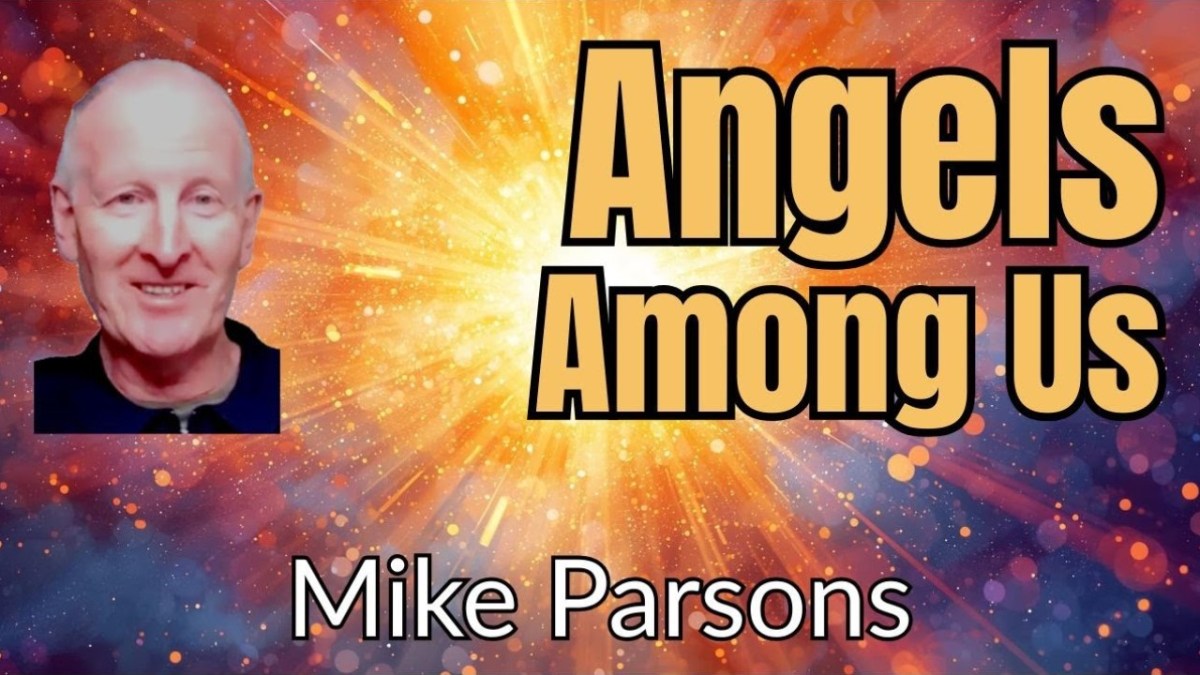
465. The Earth Shield | How Spiritual Beings Influence Natural Disasters

Mike Parsons

If you do not see the video above, please click here.

Two or three years ago, when we started engaging with the Earth Shield and began to examine what was operating both on and within the Earth, and also what was behind many of these systems. We began to discern God’s desire, and then, we saw the counterfeits and the beings responsible for them. At that point, it became necessary to engage with those beings directly.

Yellowstone Supervolcano

We encountered three specific beings who were active—part of a larger order—operating in Yellowstone Park in the United States. Their names were Devastation, Disaster, and Destruction. These three beings sought to bring about destruction through the supervolcano located in Yellowstone Park. If that volcano were to erupt, the entire United States could be blanketed in ash, leading to crop failure and essentially wiping everything out. So, we became aware of their agenda and engaged them.

During this engagement, we came to understand their strategy. We confronted them, and—in the process—we saw them turned from their destructive purpose and restored to their original names and identities, which were Conservation, Preservation, and Construction.

War and ‘natural’ disasters

Subsequently, we learned about their influence throughout history, including their involvement in so-called natural disasters and other catastrophic events. They were responsible for causing destruction through war and similar means, manipulating and controlling people to destabilise the world and prevent peace. In the crises that ensued, the same people always seemed to profit and gain further control.

It’s crucial that we do not allow such forces to operate and bring about disaster, destruction, and devastation—whether by means of floods, famines, eruptions, earthquakes, tsunamis, or other so-called natural phenomena. These beings use elements like wind and rain to engineer crises, which are then manipulated by the same individuals for their own ends. We must ensure that those beings are prevented from operating in that manner and, instead, be wise and engage actively with the Earth Shield to protect the planet from external influence.

Pockets of darkness

By doing so, we are also able to perceive the strategies at play on Earth. When I observed, I saw areas that appeared as pockets of darkness—places into which I could not see, as if they were shielded. To discern what was happening, we had to penetrate that darkness with light. When we did so, we were able to see those beings and, ultimately, witness their restoration. That was just the case for those operating in Yellowstone Park; of course, many more are active in other parts of the world.

Global and creational restoration

We need to focus on restoring such beings across the globe, ensuring they no longer facilitate the crises that continuously unfold. What we need is lasting peace—not simply an absence of human conflict, but planetary peace. This involves harmony from the Earth’s core to its crust – with tectonic plates existing in a state of peace, not tension – thus minimising earthquakes, eruptions, and similar disturbances.

Our responsibility, as sons of God, is to legislate for a global and creational restoration and to cooperate for the wellbeing of the planet. This means administering freedom to creation and working with the elementals to ensure the Earth operates in peace.

If you enjoy these video blogs, please do take a moment to like, share, comment, and subscribe—it really does help. Thank you very much.


All Mike’s books, including Into the Dark Cloud and Unconditional Love, are available to order from online and local booksellers; or you can buy them as ebooks and download them instantly from our website.
More info at eg.freedomarc.org/books


298. Revealing the Function of the Earth Shield

256. The Period of Restoration of All Things


427. Align with the Divine!

Mike Parsons

Not seeing the video? Please click here.

The person of God

Going in to meet the person of God—that is an experience beyond any other I’ve ever had. I could never have entered into that in the state I was in, but God began to change me, prepare me, in all those things in the soaking room, so I could get to that place where I was able to meet Him face to face. Now, I’d met God in many different ways, but there’s a difference between engaging the presence of God and engaging the person of God.

Metamorphosis

Metamorphosis is a process that produces transformation. Not only do things get removed, but things also get changed, added, to enable us to go into deeper levels of intimacy. So we have the ability to live in multi-dimensional realms, in the fullness of our eternal nature and identity.

An example in nature of metamorphosis is the transformation of a tadpole into a frog. It hatches from spawn and begins life restricted to water, breathing through gills—but that’s not God’s intention for it, that’s just the beginning. The tadpole eventually loses its gills and tail, develops legs and a new respiratory system, so as a frog it can be free from restrictions and live in both water and on land. A butterfly goes through a similar process—starting as a caterpillar, restricted to crawling on the earth, but changing through the chrysalis into something that is free to fly.

These are symbolic of the change and transformation that’s needed. We also go through a similar transformation that removes, adds, and restores abilities.

Many times in the Bible, you’ll find characters placed in a place of restriction to prepare them for their destiny. Now, sometimes people really struggle with that. They find it really difficult—to be restricted. They think God is putting that restriction on them in a negative way. But it is a positive thing when God places us in a position that brings about the change and transformation needed in our lives.

Some examples of that—Jacob under Laban, where he was looking to receive his wife, and there were all these conditions put on him, and tricks and everything else, but it produced character in him. Moses in the wilderness—he was called, but lived in the wilderness until he was able to take his position, after he had matured. David in Adullam’s cave—called for the kingdom, but in this place with a group of misfits, and God used that. Jeremiah was in anguish of soul, but came out into a place of fulfilling his destiny.

And then Joseph and Esther—they were also prepared. Joseph was prepared in the pit—his brothers threw him into the pit. How difficult must that have been? Then in slavery, in stewardship, and in prison—the prison of obscurity—until the time was right when his dreams and destiny would be fulfilled. Joseph, in his father’s house, was never going to fulfil his destiny. It was Joseph who’d gone through the process of change and transformation, who grew, who matured, who would end up in leadership in Egypt—in a way beyond what we’d have thought possible. But God prepared him, took him through seeming injustice and different situations that so challenged him—and yet he remained humble through those situations.

Esther went through 12 months of preparation before she could come before the king. That was so difficult. I’ve engaged Esther in the spirit—I’ve engaged her in the cloud of witnesses. I asked her, “What was it like?” And she said, “I didn’t want to be prepared to go and see the king.” That was not something a young Jewish girl would ever have wanted—to be a concubine of a king, a foreign king. But God had a purpose for Esther that would bring about the salvation of her people.

So it’s really important we don’t just look at the external circumstances of our life and think, “This is terrible. How can I get out of this?” We need to understand that sometimes, places of restriction are the places of greatest transformation.

For our soul to be prepared, there needs to be an identification of the things in our lives that are hindrances—coping mechanisms, defence mechanisms, trauma—and all of that leads us to a place of surrender. We surrender our independence. We learn to trust the Father for our provision, protection and direction in life. We’re no longer going to do it by the DIY tree path.


This video and blog post are taken from Mike’s current teaching series, Restoring First Love. Get the full-length videos every month, ad-free and with many extras, only at eg.freedomarc.org/first-love


Realign with our divine origin

Our spirits, souls and bodies realign with our divine origin—get realigned and brought into union and oneness with each other and with God. The identification of our false identity and any works- or performance-based orientation gives us the opportunity to find our true origin and redemptive gifts.

There’s preparation for glorious sonship in restored First Love, and creation is longing and waiting for the revealing of the sons of God—for the revealing of our true nature and how that can bring freedom to the whole of creation.

So the soaking room experiences began to engage my body, they began to engage my soul, to prepare my body to radiate glory and my soul to operate in light. This soaking begins to realign the frequencies of our being, to restore resonance with God, with our true identity—harmony and balance to our whole being.

We experience the sound and light frequencies of glory—God’s nature—for transfiguration from one degree of glory to another. We don’t stay the same. We increase in glory. So we increase in the full revelation of who we are, and begin to express that and live from that place.

Now literally, excitation of light waves of specific frequencies causes our DNA photons to be energised and transformed. That light is God Himself. We begin to be transfigured in light by God, who is light. We become sons of light, living in physical and emotional harmony, health and wholeness—and it all happens by the presence of God.

The symbols of the things in soaking are symbols of God’s presence—of God Himself. God as our Father is calling us to embrace the restrictions of transformation, to receive the freedom of our sonship. And it’s so important that we receive that freedom, so we can receive the full revelation of our eternal destiny—to live trans- and multi-dimensional existences, fully embracing all of the eternal characteristics of sonship that are our eternal identity, our true authentic self.

John 3:30 says, “He must increase, but I must decrease.” Now I’ve heard that preached as if it’s something we need to beat ourselves up about—as if we need to put ourselves on the cross every day. It doesn’t mean that. He reveals in me what is like Him—I embrace that. He takes away from me what is not like Him—I embrace that. It’s not something I have to try and do, like “I’ve got to decrease,” as if I’m nobody and nothing and with this sort of false humility. No—this is allowing Him to increase. Therefore, if He increases, then everything that’s not like Him falls away.

So I learn to surrender, where I can present myself to Him—I can be changed, conformed to sonship through this whole process by allowing Him to soak me in His presence.

So, what is soaking? Soaking is to make or allow something to become thoroughly wet by immersing it in liquid—that’s the dictionary definition: to immerse, to steep, to submerge, to submerse, to dip, to sink, to dunk, to bathe, to wet, to rinse, to douse, to marinate, to steep, to pickle. I mean, some of it’s really important.

To baptise in water, to baptise in the Spirit, to baptise in fire—in which we are immersed in those things which bring about the changes. I’ll go into that in more detail in a future session when I look at the heat and how heat transforms us. But the soaking room is the place of preparation that has parallel heavenly encounters in the River of Life, which is a river of energy—of Spirit—and in the river of fire.

God is a consuming fire. His love is a consuming fire. We can be baptised in the River of Life and in the associated waterfalls that cascade down. We can be baptised in the river of fire, engage the altars of fire, engage the process. See, the River of Life is Spirit energy—living water. It’s not H₂O, but the very essence of life, encoded with the frequencies of God—God’s essence. And when we are baptised into it, when we submerge ourselves into it, it begins to change and transform us.

The sound of many waters—it says God’s voice is like the sound of many waters. The sound of many waters are the creational frequencies of God’s voice that will realign us to who God created us to be.

Baptised into Love (meditation excerpt)

I encourage you right now
just to close your eyes.
Get comfortable.
Begin to relax.
To focus your thinking on God.

Focus your thinking
on God’s love, grace, mercy for you.

Focus your breathing by slowing down.

Breathe in more slowly.
Breathe in more deeply.
And as you’re breathing in,
you’re breathing in
the unconditional love of the Father.

You’re breathing in love.
You’re breathing in joy, and peace.

And as you breathe it in, just receive.
Let it flow into your being.
Whether you feel it, or sense it,
just let it flow.

Continue to be still.

Breathe in
and breathe out slowly.
Breathe in slowly
and breathe out slowly.

Slow everything down and totally relax.
Just become mindful
that you’re cocooned
right now
in God’s presence.

As you are still,
He is cocooning you in love.
He’s loving on you.

Consciously invite love,
invite joy,
invite peace,
to come upon you,
to flow in you,
to flow through you—
to create an atmosphere of rest around you
that you are completely submerged in –
baptised into the higher frequency of love.

Vibrating in that energy.
Vibrating in peace and joy.

Overshadowed with the presence of the Holy Spirit,
energising you,
transforming you,
changing you.

Be open to that overshadowing.
For the presence of God
to rest upon you.


Related posts

Into the Dark Cloud

281. Scroll of Destiny: Just Being

399. Become Acquainted With Perfection


414. Living in the Spirit

Mike Parsons –

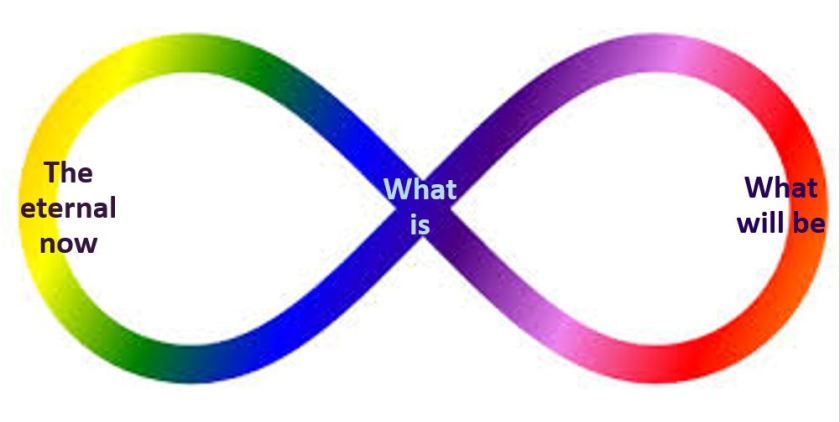
Eternity symbol

I did the same thing when I was on my journey. I found that whenever I was in a setting where I could just let go—usually in a worship setting or something similar at the time—I would notice my hand just drawing this sign. And I remember thinking, “What am I doing?” It felt a bit strange, but I just went with it because I didn’t really care what anyone else thought. I decided to just go with it.

Eventually, God began to show me that I was connecting with something, and He was unveiling an understanding of where I was in the beginning—the origin of my identity in Him—then bringing that into the present and outworking it in the present to create the future. It’s a continual pathway, drawing from where we are in relationship with God in the eternal now, living in intimacy with Him, and outworking that in the present, which then brings the future into place. What I do today becomes history, so today I can establish my future for tomorrow. Tomorrow is going to come, but what I do today can prepare for it out of what was in the eternal now—what was, what is, and what will be.

From doing to being

Sometimes people talk about the end and beginning of a circle, saying the end of one thing is always the beginning of another, which is true in a sense. But actually, God told me, “No, it’s not a circle; it’s this sign, the sign of my eternal covenant with man.” We were predestined to return to face-to-face relationship with Him, and that relationship enables us to outwork who we are in that state of being—what was, what is. I can just be.

I had always been very active because I’m quite an active person. I like to do things. So I was always focused on what I was doing today and how I was outworking things. It became a lot of activity. But God pulled me back from that place and showed me that it’s not about what I’m doing today—it’s about who I am today. My state of being has a greater impact than just what I do. Because what I do can sometimes come from a need, a desire, or something that isn’t necessarily from the heart of God. But if I’m flowing from what was and always is—because God is always in that eternal state—then I can simply be.

I started off doing and eventually became someone who could be. And that was really liberating because it meant I only needed to be in relationship with the Father, connected to His heart. That connection would inspire and motivate me to outwork His heart every day. But I didn’t have to keep asking, “What should I do today?” or “What needs to be done?” I just needed to be me. Because if I am me, that naturally creates space for the outworking of who I am in any situation. I could be more relaxed, at peace, at rest, without always wondering, “What should I be doing?” or “God, what are you doing?” It became a heart-to-heart relationship instead of a list of tasks.

In the beginning, God did give me lists because He met me where I was. But He didn’t leave me there. One day, He just stopped giving me anything to do and simply embraced me. And I remember struggling with that because I thought, “I’m not doing anything!” But He was showing me that being in that oneness was far more important than what I thought I needed to do. Being enabled a flow rather than duty, obligation, or what I thought I should be doing.

Just because I know how to do something doesn’t mean I need to do it.

Just because I know how to do something doesn’t mean I need to do it. And God demonstrated that to me over and over again. There were times when things were happening, and I’d go to God and ask, “Can I do something here?” And He’d say, “No, it’s all right. I’ve got it covered.” Someone else was doing something, and later on, I would find out who those people were. And that was great, because then I realised God was already at work in them. He didn’t need me, but if he did ask me to do something, that would be good. But I knew it would be coming out of a place where I was feeling his heart about it.

Connected in the spirit

And actually, sometimes feeling his heart about a situation but not having any sense that I should do something doesn’t mean I have to be passive, because I can still be encouraging others who God has assigned to do it. In a sense, when we’re connected in the spirit—because we’re all one in the spirit—then my encouragement can help somebody else feel secure in what they’re doing. So my heart wouldn’t be, “Oh, I wish I was doing that,” but rather, “How can I help encourage whoever is doing that so they are able to do it in the way God would want them to?”

My thoughts are always that way—I’m part of the whole, and God has many different ways of doing things. And of course, we can be doing things in the spirit without necessarily needing to know what we’re doing cognitively. I’m doing that all the time. That’s a state of being multi-dimensional, doing things in many different places without needing to be there in a conscious way, because my spirit is there. All our spirits are seated in heavenly places with Christ; we just haven’t mostly learned how to engage with it. But we’re there, so our spirit is active even if we’re not aware of what we’re doing. But we can become more aware as our soul and spirit begin to learn how to engage—until we don’t need to consciously engage because it’s just happening.

I can engage right now with whatever I might be doing in the spirit realm, but most of the time, I don’t need to, because that actually gives me more time to be here in a way that enables me to be at peace and at rest. It allows me to be a demonstration of that and to live it out with a more creational perspective. Before, I was so focused on what I was doing in the spirit realm that the earthly realm almost seemed secondary. But God really showed me the value of this realm—of living here and outworking who we are there, here: “on earth as it is in heaven“—in a way that made me much more connected to creation. I had more time to feel and sense what was going on around me, whereas before, my focus was so much on what I was doing in heaven that earthly things seemed less important. But actually, it’s creation that is waiting for the revealing of the sons of God, longing to be set free.

The groan of creation

There is an aspect of our sonship that is very much about the restoration of how God intended things to be here. And I found that having a more relaxed way of living with creation around me enabled me to tune into that more—to feel that groan and sense what was going on. Sometimes, even the earth groans at what we do to it and what we do to ourselves. You often see physical events happening in the world when significant things happen with people. There’s a kind of disturbance that we can bring peace into. We don’t want so-called natural disasters to follow human disasters—if we can bring peace so that the earth doesn’t react to what’s happening among people.

Reconcile the earth

There’s a lot going on in the world right now—many places where things are unfolding. I believe that, as sons of God, we have the ability to bring peace into these situations. Even if external peace isn’t happening between people, we can still reconcile the earth itself so that there isn’t a reaction from creation to what’s going on. I think that’s really important—that we are peacemakers. It would be great if we could bring peace into every environment; but at the very least we can bring peace between the earth, the creation we are part of, and anything negative that is going on.

If you find these posts helpful, please like, share, comment and subscribe so they reach others who can enjoy them too. Thank you!

Related posts by Mike Parsons

409. Miracles Are A Lesser Way | The Truth About Healing (Part 2)

Mike Parsons –


Union of spirit, soul and body

If we do anything that contradicts loving our bodies, we need to apologise for that. Our body is an equal partner within the union of spirit, soul and body, so we must work together in harmony. I personally operate within the cells of my body to ensure health and well-being. But if I do something that contradicts that—if I am careless—then I take responsibility for it.

For me, this often happens with accidents in the garden or workshop. But one particular experience stands out.

In the tunnels

While on holiday in Vietnam, we visited the Cu Chi tunnels—an underground network built by the Viet Cong near Saigon, where thousands of people once lived. They were incredibly small, only about two foot six high, making it difficult for me to move around. The tunnel was dark, 100 metres long, with exit points every 20 metres. I was about 50 metres in when the tunnel made a slight turn that I couldn’t see.

In the darkness, I slipped, headbutting the floor. I took the skin off my chin, nose, top lip, forehead, and eye. My eye socket was bruised, leaving me with a big black eye, and there was blood everywhere. At first, I wasn’t sure what had happened—I just felt wetness running down my face and thought, “Oh no, I’ve cut my head open.”

Eventually, I got out of the tunnel and had to deal with the fear and trauma immediately. I didn’t want it to take root, so I consciously started smiling, refusing to let negativity set in. When Debbie saw me, she reacted with concern, asking what I had done. But rather than panic, I focused on staying calm. I found some water, washed off all the blood, and assessed the damage. I looked like a mess, but I was determined not to let fear, worry or anxiety take hold.

I knew it was my fault—yes, it was an accident and I had slipped, and  because my elbows and knees were too close to the tunnel walls, I had no way to stop my fall—it was just a two-foot-six bang into the ground! But what mattered was how I dealt with it. I immediately worked with my body, ensuring there would be no infection. I washed the wounds with water from a bamboo spout—who knows what was in it—but I consciously chose the reality that there would be no infection and that my body would heal quickly.

I dealt with the trauma. I released the trauma immediately. I worked in cooperation with my body, and within less than a week the whole injury had gone and I had no physical marks. I had thought “I’m going to come home with a great big scar on my face” but actually I did not. I had to capture my thoughts, because I was thinking “how long is this going to take to heal?” but then  I chose “No, I’m going to work with the cells of my body to repair themselves quickly.” And that’s exactly what happened.

People in the tour group were amazed. ” Well, you healed quickly!” And I did, within less than a week. But I did not want (a) anything to hinder my enjoyment of the holiday or (b) any infection. Some of the Canadian ladies kept offering me antiseptic and antibiotic creams, saying, “Here, you should use this.” But I politely declined. I wanted to let the wounds breathe because exposure to air often speeds up healing. I was intentional about working with my body rather than just assuming healing would happen on its own.

Miracles are a lesser way

Many people believe in healing but don’t necessarily know how to cooperate with it. Some rely on gifts of healing, wanting someone else to lay hands on them and make everything better. While gifts of healing do exist, they are not a guarantee. Some people believe that Jesus died so they could be healed, but they don’t necessarily understand how to work with that truth. They expect healing to happen in a moment—instant and effortless.

Miracles do happen, and I’m not saying they don’t, but miracles are actually a lesser way of living. God’s desire is for us to live in health, not just to keep receiving miraculous healings, or relying on others to heal us, but to learn how to walk in health as children of God – because that is our inheritance.

Denial isn’t the answer

Sometimes, we don’t fully understand why healing doesn’t manifest for someone. We don’t know what’s happening inside them—emotionally, spiritually or physically. I’ve visited and prayed for people who were terminally ill and who insisted, “I’m not going to die. I completely believe I will be healed.” But sometimes, something didn’t feel right. There were moments when I sensed I couldn’t fully agree with them because, deep down, it felt like they were not being real – that they were in denial rather than in genuine faith. Christian Scientists, for example, tend to deny the existence of illness and sickness altogether, but denial isn’t the answer. We have to learn to engage with our bodies, to cooperate with them, and to work through the process of healing.

If you enjoy these blogs and videos would you please take a moment to like, share, comment and subscribe? It really does help! Thank you very much.


353. God’s Offspring – or Adopted Children?

Mike Parsons

God’s desire is for us to embody love because we are made in His image—He is love, light and spirit. Our spirits are light, and we’re designed to love just as God does. The highest goal is to give love, reflecting God’s image. When we follow an independent path, it distorts love into a need and driving force, leading us to seek love from others rather than giving it ourselves.

A common misunderstanding is that we were separated from God and need adoption back into His family. This view, often held in evangelical circles, is flawed. God never separated from us; we were never outside His family. So adoption is our coming of age within that family, not rescue from abandonment. Biblical adoption is about maturity and coming into full authority from the Father, not placing orphans into new families. Genesis 1:26 shows that God created us in His image and blessed us to be fruitful and rule on the earth. Adam’s choice to walk independently disrupted this plan, but now, in Christ, we are redefined by our identity in Him.

Any idea that Jesus is the true Son and we are merely adopted obscures our true identity: we have always been God’s children, made in His image and likeness. Our perception of rejection or abandonment is false. Romans 8:14 says, “For all who are led by the Spirit of God are children of God.” The Spirit is in everyone, guiding us all, even if we don’t always follow. When Jesus breathed the Holy Spirit into His disciples, He revealed their true identity. We all have received God’s Spirit, confirming that we are His children and helping us understand who we really are.

So our Western and Roman concept of ‘adoption’ might not fully capture what the Bible word means. Some interpret adoption as something that happens when we accept salvation or when God adopts us. However, this interpretation can also imply that we were once orphans or outside God’s family, which isn’t accurate. Romans 8:15-17 explains that we have received the Spirit of adoption, not as a sign of previous separation but to affirm our existing sonship. The Spirit confirms that we are already God’s children and co-heirs with Christ. This adoption isn’t about coming from outside into the family but recognising our inherent identity as God’s offspring.

God has always been our origin; we just need to rediscover this truth. Romans 8:14-17 in the Mirror Bible describes the Spirit leading us into the fullness of life in God, showing that we are His children, not through fear but through a relationship with Abba Father.

And Jesus’ suffering was for our benefit, not a requirement for entering our inheritance. The idea that we must suffer to gain inheritance is a misunderstanding. Jesus suffered so that we wouldn’t have to face the same trials. We are not orphans; Jesus assured us that He would not leave us as orphans but would come to us, showing that God dwells within us and is not distant or rejecting. If we teach that people are orphans or rejected by God, we distort the gospel and the true nature of salvation. The message of salvation reflects God’s nature as loving and inclusive, not as one who condemns or separates.

We have the rights and responsibilities of sonship, as part of God’s royal family. Peter tells us that we’re privileged to represent God on earth, showing others what He is like through our relationship with Him. Initially, Israel was meant to fulfil this role, but their system became law-based rather than grace-based. Romans 8:19 reveals that creation eagerly awaits the revealing of God’s children. If we see ourselves as ‘lesser’ adopted children, we miss out on our role as co-creators with God. Being part of a royal family gives us access to the Heavenly Palace, where we’re seated with Jesus and can engage with God intimately in His presence.

Despite being taught that we’re orphans needing adoption, the truth is we’ve always been part of God’s family. According to Ephesians 1:4, our restored face-to-face relationship with God is a done deal, and God’s love will eventually bring everyone to this realisation. Our true identity means we don’t need to live like orphans. We can experience our origin in first love, knowing God as our loving Father. The Spirit confirms this, enabling us to call God “Abba Father.”

Picture a door in your spirit.
God is knocking: invite Him in.
As He enters, He hugs you and breathes His life into you.
Feel His heartbeat and embrace.
Know that you’re home.

He whispers into your heart,
sharing His love and affirmation,
telling you how treasured and loved you are.