407. Intentional Healing | My testimony of healing from Ménière’s disease

Mike Parsons

The Father’s intention

‘Not having an agenda’ when you do have one is quite difficult, because you do have an agenda: you want to find healing.

The shift happens when you align with the Father’s intention. Instead of thinking, “I want to be healed,” you rest in the reality of “I am healed.” Symptoms may persist, but they will follow your position of rest.

Jesus said, “Pray, believing you’ve received, and you will receive.” When you truly know the Father’s intention and accept healing as your inheritance, your body will align with your belief. But this can’t come from striving—it starts with accepting what God has already declared true.

Most people believe it when they’ve received it, rather than before they’ve received it; and it works when you believe it before you have actually manifested it, because that is what brings the manifestation. And people get disappointed because the symptoms are still there. They may say “I’m healed,” but actually they’re in denial.

“Well, I’m healed,”
“Do you still have the symptoms?”
“Yes”
“Okay, so are you healed or are you not healed?”
“Well…”

And you get all this muddled mixture of thoughts and feelings around it. And I know when I speak to someone and they’re not in denial: they can honestly say “There are still symptoms in my body but my body is aligning with how I think.”

You can consciously choose to call that into being. Therefore the frequency of your words will begin to vibrate your body into alignment with it, when you’re at rest in it. So a lot of people say, “Renew your mind” and they confess scripture; they are just speaking, they are not actually renewing their mind. You can’t renew your own mind, your mind gets renewed when you agree with God’s mind.

Striving to believe often hinders the manifestation. So it’s getting that fine balance… it is the truth that you are healed, but it might not be the fact within your present situation. When the truth is more true to you than the symptoms that you might still have, that is the point where things begin to change.

My testimony of healing from Ménière’s disease

Years ago, I had Ménière’s disease, which caused vertigo and other symptoms. This was the 1early 1990s, and I went on a quest for healing, because I didn’t know what I believed about it. I’d been prayed for many times and received healing, so I knew God could heal. I knew people could lay hands on me –  and I’d been healed. But none of that worked in this situation. God was trying to get me to look at “What do you really believe about healing?”

So I did what I knew to do, then: I went back and found every Bible verse on healing, and looked at them, and discovered some things that were different from what I’d believed. Because at that point I was believing that healing was in God’s Kingdom, but that we were still in the ‘now, and the not yet’ of God’s Kingdom; so sometimes God would heal and sometimes not. Well, that’s not really helpful, you know, because what if I am is the one where it doesn’t happen, and I’m stuck?

So I realised that no, God IS my healer, it’s one of His names. Jesus actually took my sickness and disease when He died so I don’t have to have it. That sickness died when I died with Him.

So why am I not just perfectly whole? Well, because even though I might actually choose to believe that, my physical body has to come into agreement; therefore some change needs to take place within my physical being to align with where I am in that place of rest, knowing the truth. The truth you know will set you free, and you have to know by experience.

Now, that doesn’t mean you have to experience the healing to know the healing; you have to experience what God says and where you are in the experience with God. So you are resting in that reality; it is the truth. There is no double-mindedness; there is no doubt or unbelief; it is the truth, and no one could convince you otherwise – even the symptoms that you might still have – and therefore you are at rest in it. “I’m not striving for it; I know it’s the truth that will bring about the reality.”

But it often takes some time to get to that point because we have to overcome the battle of the thoughts and the symptoms to get to that point where we “know that we know.” And eventually, after about three years of learning all about healing, learning about God, learning about what Jesus did on the cross, learning how that all applied, I got to the point where I was at rest.

I never said “Well, I am healed.” It is more that I was thinking, “That is the truth, so I’m going to focus on what is true rather than what might be the present fact.” So the present reality didn’t affect what I saw as being my true reality, which was to be whole, to be healed. And eventually, after resting in that place for quite a while, I was content in it. I was still taking medication, because it is dangerous to drive if you’re going to get vertigo attacks and things like that. It wasn’t pleasant medication, but I was taking it.

And one day I had the breakthrough, in that something changed physically in my ears. I had deafness and tinnitus in one ear – severely – and I could hardly hear anything other than muffled sound. The tinnitus was quite pronounced. And I was listening to some music – I was in a conference actually, in a worship conference, and all of a sudden it was as if “Who turned the PA up?” You see, it was as if the volume just went up and I thought “Wow!!!” And then I realised, “I don’t think anyone else is noticing this, it must be me!” And then I felt God say, “Now you can throw the medication away.” And I did. I never took another tablet and never had another vertigo attack or anything else, and my hearing was fine.

PLEASE NOTE: We strongly advise you to consult a suitably qualified health professional before discontinuing any medication that has been prescribed for you.

But it took a number of years to get to that point and then it took months living at that point until the reality was there. And, you know, for me it was a dramatic thing – it was like BANG! OH! It’s done! But it’s not always that way. Sometimes it’s just that the process gets to the point where you just realise “Oh, can’t hear anything wrong in my ear anymore,” or “my hearing’s improved.” Sometimes it just creeps up on you and sometimes it’s progressive in that it gets better and continues to get better until it’s completely healed.

You know, Jesus sent the lepers to the Temple to show themselves to the priests, and it happened along the way. As they were walking, they still bore the signs of leprosy. Perhaps it faded gradually with each step, or maybe they were simply walking when, all at once, they realised it was gone. But eventually they showed themselves to the priests… (we know one of them definitely did, because he came back and said thank you. We’re not really sure about the others – they may have been healed and just not bothered to come back and thank Jesus, or they may have not, because on the way they may have had doubt and unbelief and not followed through the process – who knows?) But we know definitely that the one person did:  he was able to show himself to the priest and the priest pronounced him healed, or whole.

So it takes time, and no one can really determine exactly what the process is for every individual, but it does work.

If you enjoy these videos would you please take a moment to like, comment and subscribe? It really does help! Thank you very much.
This was originally an ‘early access’ video for our Patreon patrons.
Join them at freedomarc.org/patreon

Related posts by Mike Parsons


406. Recognise the Finished Work of Jesus

Mike Parsons

The Bible was

At that time, the Bible was still the living Word of God for me—not Jesus. I saw the Bible as the Word that washed me, not Jesus. I relied on the Bible to separate my soul and spirit, rather than allowing Jesus to do it. I used the Bible as a mirror to see myself, rather than looking to Jesus or the Father.

Jesus, mediator of a New Covenant

During this process, I was presenting myself in the heavenly tabernacle as a living sahttps://freedomarc.blog/2014/01/21/present-a-living-sacrifice-3-practice/crifice, prepared by me, acting as my own high priest. Now, that might sound bizarre, but when I first received this revelation and began engaging in the heavenly tabernacle, this is what I thought I was doing.

I approached the laver—a basin used for washing—which I understood to have a bronze, mirror-like surface. I used it as a mirror to wash myself through the Bible, performing the role of my own high priest. I consumed the showbread as biblical food, again as my own high priest. I sought wisdom from the light of the menorah, the Bible, instead of Jesus. I engaged the altar, refining myself through the Bible, all the while acting as my own high priest.

In truth, all of this was a self-reliant, religious duty—a “do-it-yourself” form of faith. The reality, as I later came to understand, is that I am not my own high priest—Jesus is. Hebrews 6:20 makes it clear: “Jesus has entered as a forerunner for us, having become a high priest forever, according to the order of Melchizedek.” Jesus is the mediator of the New Covenant, not me. I made no covenant with God—Jesus did.

Deeply ingrained religious mindsets

My deconstruction was revealing God’s grace and the finished work of Jesus, and that was challenging my old covenant thinking. My “do-it-yourself” religious mindset had trapped me and severely limited my ability to truly know God and my original, authentic self.

Now, that might sound really odd to you, and you may never have approached things in this way. I would certainly encourage you not to. However, it shows how deeply ingrained these mindsets can be, distorting our view of God and His work. Only when those limitations and restrictions were removed could I begin to discover my true origin, identity and destiny as a son of God. It was then I began to see how powerful the finished work of Jesus truly is.

Jesus accomplished everything on our behalf so we don’t need to rely on our own efforts. He died for me, and as me, so I died. He was resurrected for me, so I was resurrected. He ascended for me and I ascended. Jesus established the New Covenant for me and included me in it. He is my high priest, he is my mediator—I don’t have to do it myself. Jesus did everything necessary to restore the whole cosmos, reconciling everyone, corporately. We are not required to achieve this individually in our own strength. He has accomplished it on behalf of all mankind; he took away the sin of the entire cosmos.

Renewing the mind

We may need to transition into a renewed mindset because most of us have likely been programmed by some form of works-based mentality. Even if it wasn’t specifically religious works, cultural influences can drive us to succeed and build our identity around what we achieve. Transitioning from an old to a new mindset requires a deep deconstruction—a process of renewing the mind. it is a process, that is the key.

It’s a process that God orchestrates and that he leads us through. It is relational, and through this relationship, our thinking about God—and everything else—begins to change. Old restrictive doctrines and theological mindsets need to be replaced by a relational lifestyle of face-to-face innocence with God. This is the amazing truth of the relationship He has invited us into.

No need to fear deception

Through this, we can learn to trust our Father to father us without fear of deception. Personally, I struggled with a deep fear of “getting it wrong.” This fear was instilled in me through the belief that everything had to be done strictly “by the Bible,” as the Bible was my sole source of security against error and deception.

The reality, however, is that every Christian sect or cult uses the Bible in some way, so relying on it alone for safety didn’t truly protect me from deception. I believed the Bible was God’s Word: all of it was infallible, inspired, and entirely inerrant, and I thought that following it would keep me safe. But whose version was I following? Whose interpretation of the Bible was I basing my life on?

These questions were hard to face because I had been conditioned to think otherwise. In truth, that belief system itself was the deception that was keeping me religiously bound in fear, unable to move beyond the Bible. I was afraid that if I went beyond its pages, I’d fall into some weird error or be led astray. This is a fear shared by many people I have spoken to: their families and friends often worry that they are going off into some error or cult-like movement, because they are no longer going to church or no longer reading their Bible in the same way they once did.

But the fear of deception is itself a powerful form of deception that keeps us locked up. We don’t need to live in fear of deception, because we have the Holy Spirit of Truth within us, guiding us. Jesus, who is the Way, the Truth and the Life, is also in us and with us, discipling us. Our loving Father is within us, fathering us into our true identity as sons and daughters. And if we measure everything against agape love, we won’t stray far. Love is the ultimate standard, and if we root everything in love, we can trust the process.

This video blog is an excerpt from Mike's current teaching series, Restoring First Love. Get the full length videos every month, only at eg.freedomarc.org/first-love

Rest in Love (guided meditation)

Close your eyes,
Slow down your thinking,
Rest—rest in love.
As you are breathing in,
And breathing out,
The very breath of God.

And as you rest in love,
Let the unconditional love of God
Rest on you.

Open your heart,
Open your mind,
Ask the Father to reveal:
“Are there any Old Covenant mindsets,
Any Old Covenant belief systems,
Still operating?
Is there any mixture of covenants
In your heart?

Open up your heart to listen
That the Father could show you.
 
And if there is anything
That’s a mixture of covenants
In your experience
Just hand it over to him.
Take off those old covenant mindsets
And clothes, if you like,
And hand them over to the Father.

And let Him clothe you
In robes of righteousness,
Let Him clothe you
In new covenant grace,
In mercy,
In unconditional love.

Related posts by Mike Parsons

405. Angels Explained | Embracing Our Royal Identity in God

Mike Parsons

Angels

Where you get the terminology often comes from how angels are described in Hebrew. They’re usually called angels, or they might be called seraphim or cherubim, but some of the others aren’t named—they’re just described as angels as a general term— but in reality, they are different orders of angels that people don’t commonly connect with. For instance, there are references to ophanim, chayoth, and others.

The Merkabah

There is an external perspective related to the Throne of God and the Merkabah (divine chariot); however, there’s also an internal aspect which operates within us. The Merkabah represents the core of our being and embodies God’s identity within us. It brings about the focus of spirit, soul and body in union with Father, Son, and Spirit at the core of who we are. And actually, it’s probably more important to grasp that than it is to understand the canopy of angels around the throne of God, the four living creatures and all of those fascinating things, mentioned in Revelation and elsewhere. There is a canopy of angels, and they do have functions, rising up from the throne of God all the way to some of the more unusual ones—the chayoth, which are living creatures that aren’t necessarily humanoid but are living nonetheless. It gets pretty weird. And some of it, does it really matter what all that is about?

God will give us insight when we need it, when we encounter it. Do we need to understand it all? When I first started hearing about the canopy of angels, the ten thousand times ten thousand angels, the myriad of angels, I thought, “What are they all about?” It seemed overwhelming—like, whoa, this is a little more than I can take in. And actually, that’s what God is like in his majesty, the throne of God, and all of that—it’s supposed to be awesome. It’s supposed to be somewhat of a mystery. It’s meant to inspire awe at the amazing things around the throne of God. But it’s also meant to help us engage with the angelic realm ourselves, in our own sonship. When I get to the throne of God, I just want to fall on my face. I want to honour him, to be in awe of him, to totally yield and surrender.

Order of Melchizedek

There are so many different levels of revelation towards each one. Take the four living creatures, for example. They’re connected with what Ezekiel describes as a four-headed being with the cherubic nature of man—reflecting the four living creatures, which, in turn, reflect the order of Melchizedek.

Now, do I literally have the head of an ox, an eagle, and a man? No, I don’t. I have the face of a man. But do I have a cherubic nature, which is how God designed us to function in the order of Melchizedek as a priest, king, oracle and legislator? Yes. There are aspects of who I am that are eagle-like, figuratively speaking. I don’t soar around in the sky, but I carry legislative, governmental authority in terms of my identity. I am an oracle, so I have characteristics of the ox, reflected in being a voice of God—speaking his oracles from his heart. There’s the king, the government, and the priest. So, my nature as a royal priest and an oracle and a legislator is connected to the four living creatures, the cherubic nature, and the cherubim themselves, which carry those characteristics.

I don’t totally need to understand all the symbolism, because some of it is quite weird. I embrace it as part of my identity within the order of Melchizedek. I’ve engaged with the four faces of God, stood in each face, and stood within the name of God. That represents my authority and power of attorney—to use my identity as a son to speak his heart, his intentions, and his purposes, creating reality around my life.

I sort of understand how it relates to those aspects. But do we really need to fully understand how it all relates to the throne of God and the glory and majesty of God? No, because that’s supposed to be an awe-inspiring mystery.

In relation to our sonship

What’s important is how we engage with the angelic realm and the canopy of angels in relation to our sonship. I’ve engaged with the different angelic canopies to see if there was something I need to know to help me in my sonship. That’s how I relate to the angelic canopy—not in terms of their function for God, but their function for me.

If I’m seated on a throne, as we all are in heavenly places, then that canopy comes around me when I’m in that position of identity. They’re designed to help me in my sonship identity, in ruling and reigning from that position. So I engaged with the different angelic beings, to see if there was anything I need to know to help me in my sonship. I have also engaged with the court of angels, participating and sharing there. That drew angels to support, encourage and help, because ‘they are ministering spirits for those who are inheritors of salvation’.

Do I understand all the terminology and functions associated with God’s throne and glory? No, but I do have some insight into how they relate to us, our throne, our position of authority, and our identity. Our glory is our identity, and creation itself will one day be liberated into the freedom of the glory of the children of God. This refers to us, living fully in our identity as sons and daughters of God. There are aspects of these heavenly realities that help us grow into that identity.

Names and functions

Do angelic beings have multiple functions and titles? Perhaps. Some people may relate to them in different ways or use varying names depending on their functions. This is likely where some confusion arises. For instance, who are the twelve ambassadors of the ages? What order of angels are they from, or are they from separate orders? Who are the court of judges or the 24 elders? There are so many questions one could ask that it might seem overwhelming, as though a great deal of knowledge is required. However, I don’t believe such knowledge is essential for day-to-day life. There’s certainly more to discover, but people often describe these realities differently based on their own experiences and where they are in their journey. Just because someone describes it differently doesn’t mean their perspective is definitive or universal—it simply reflects their personal engagement.

For example, have I engaged with cherubim? Yes. Seraphim? Yes. Ophanim, Elohim, and Ben Elohim? To some degree, yes. Each of these has different names in different positions, or functions, and their roles vary. Take the twelve chancellors, for instance—some refer to them as high chancellors, as there are many other chancellors, and we can also function as chancellors ourselves. Wisdom once gave me a seal and staff representing a chancellor’s authority, and I’ve engaged the Chancellors’ Court. I’ve functioned at the bench there to facilitate scrolls and mandates being released and accepted, and other heavenly matters. That said, I’m not someone who pays much attention to details, so I couldn’t describe exactly what the others looked like. My focus was more on their functions and what I could learn to do in cooperation with them. For all I know, each chancellor could be from a different order of angels, and my interactions with them might differ in another type of experience.

Not for intellectual curiosity

It’s not set in stone, a fixed or rigid concept—it’s a dynamic, fluid reality in the heavenly realms. Their roles might vary depending on the situation. For example, the angel who sits behind my throne—though I suspect it might be one of the Ben Elohim—I don’t know for certain, and I haven’t been especially curious to find out. The point is not to engage with these realities for intellectual curiosity or the sake of knowledge but to discern how they relate to our journey, so we can cooperate with them as they help us grow into greater maturity. That’s how I approach these things. They’re about my growth and ascension into deeper levels of maturity, not about creating rigid definitions that apply to everyone universally.

My engagement with cherubim or seraphim has been deeply personal. I’ve encountered seraphim when I was on the altar. I’ve also engaged the seven spirits of God. Are they separate beings? From my perspective, they are. They seem entirely distinct from any other heavenly beings I’ve encountered. To me, they are seven created beings that reflect the fullness of God’s Spirit. Some people might argue they are simply aspects of one Spirit, and while they may reflect aspects of the Spirit, when I engaged them, they were individual personalities—beings embodying specific aspects like wisdom, knowledge, understanding… all seven.

The Spirit of the Fear of the Lord, for example, engaged with my scroll and led me to the Judgment Seat. Each spirit revealed an aspect of my growth in sonship, guiding me in my journey. For me, these encounters aren’t about intellectual pursuits or acquiring knowledge but about learning to cooperate with these heavenly beings in my journey toward maturity.

I agree—it can be confusing to try to understand all the different names, titles and roles of these beings, especially if we attempt to fit them into a fixed, rigid framework—I don’t believe they’re meant to be understood in that way.

If you enjoy this blog and video, please take a moment to like, share, comment and subscribe—it really helps. Thank you!

Related posts by Mike Parsons
404. Framing Hell in a New Light

Mike Parsons


That’s what happened with me. My eschatology got deconstructed, and then the same verses led me to a view where hell doesn’t exist in the form I thought it did. In fact, hell doesn’t exist at all, because it’s not even in the Bible. But it does talk about Gehenna, it does talk about Hades, it does talk about Sheol—the grave. So, it talks about those things, but it also talks about them in a restorative way, not in a punishment way.

I know it’s hard because I’ve been through it. But I’ve been through it, and I’ve continued the process of realising that a lot of what I was taught was referring to the period of transition—out of the old and into the new—until the end finally came. And that is the end. No prophecy came after that. It was all fulfilled.

Jesus actually said that. He said, “Unless this comes to an end,” and, “Unless every ‘i’ is dotted and every ‘t’ is crossed,” and all that, you know—then the end won’t come. Well, the end did come. So that is the end: all things were fulfilled. It says in Luke that all things were fulfilled; every prophetic statement was fulfilled. All the promises of God were fulfilled in Jesus. It says in Corinthians, all the covenants were therefore fulfilled, because covenants are promises. So, they all got fulfilled. And I think that draws a line under it.

So, let’s listen to God and Jesus and the Spirit every day, because they’re speaking to us—not through a book, but in an inner, small voice as they dwell in us. There are a lot of people who aren’t listening to that voice, and a lot of people, obviously, who don’t even know that voice exists in them yet. But God is not going to stop until they do, in revealing the truth of their inclusion in Christ, their reconciliation in Christ, and their forgiveness through what Jesus did on the cross—which is an amazing, good-news testimony that the world needs to hear. But, “They’re all going to be cast into hell if they don’t accept Jesus”—that’s not a good-news testimony. No, that’s bad news. Let’s give good news!

And I think the world will begin to find God—who is a God of love and who loves them too much to let them be lost eternally for punishment. He loves them too much for that. He loves them, and according to Ephesians 1:4 he’s already made sure—predestined them to become restored to face-to-face intimacy. It’s predestined, even before the foundation of the world, that everyone would eventually be restored. People can resist that restoration. But people cannot resist God’s love forever.

I don’t believe God’s love will ever fail. It will never stop until everyone is fully restored back into relationship with him. Because he loves us.

If you enjoy these videos, would you please take a moment to like, comment and subscribe? It really does help. Thank you very much.

Related posts by Mike Parsons
 

403. So you think the ‘Word of God’ is the Bible? Think again!

Mike Parsons

The Bible, the Word of God?

I couldn’t move beyond, as long as I was restricted by my mindset and belief system, which was deeply rooted in evangelicalism. For years, I held the absurd notion that certain Bible verses referred to the Bible itself as the “Word of God.” But none of those verses mean the Bible, even though my deceptive sola scriptura programming led me to believe they did. I read the text and interpreted it in the way I had always been taught.

The Bible is a collection of writings, compiled over centuries, that wasn’t formally assembled until around AD 385. It couldn’t possibly refer to itself as the “Word of God” because it didn’t exist in its current form. Those who wrote its books had no idea they would one day be gathered into a single volume called The Holy Bible. That title was given by man—not by the Bible itself, and certainly not by God.

Misunderstood verses

Here are some examples of verses I misunderstood because of my conditioning:

Psalm 119:105: “Your word is a lamp to my feet and a light to my path.” I immediately assumed ‘word’ referred to the Bible.

Ephesians 5:26: “That He might sanctify her, having cleansed her by the washing of water with the word.” Again, I thought ‘word’ meant the Bible—it doesn’t.

Ephesians 6:17: “Take the helmet of salvation and the sword of the Spirit, which is the word of God.” I thought of the Bible as the ‘sword of the Spirit.’ But in reality, Jesus is the Word of God, and the words He speaks are the Word of God. This verse doesn’t refer to the Bible. My children even played a computer game where you would ‘draw your sword,’ which was portrayed as the Bible. You’d take it out from under your arm and use it as the ‘Sword of the Spirit.’ That just reinforced the idea that the Bible itself was the weapon, which was completely inaccurate.

1 Timothy 4:5: “For it is sanctified by means of the word of God and prayer.” To an evangelical, as soon as ‘word of God’ and ‘prayer’ are mentioned in the same sentence, it automatically means the Bible and prayer—because that’s what we were taught.

2 Timothy 2:15: “Be diligent to present yourself approved to God as a worker who does not need to be ashamed, accurately handling the word of truth.” Again, I was conditioned to interpret ‘word of truth’ as the Bible. In the King James Version, it even says ‘study to show thyself approved,’ which led to the belief that studying the Bible was what made you acceptable to God. But that’s not what it means at all.

We need to embrace a deeper understanding. Jesus said, “My sheep hear My voice, and they follow Me.” He didn’t say, “By reading the words in the Bible.” It’s about hearing His voice and following Him. Of course, some of the words Jesus spoke might speak to us today, but not all of them were meant for us. Many were directed to the people He was speaking to at the time.

Hebrews 4:12: “For the word of God is living and active, sharper than any two-edged sword, penetrating as far as the division of soul and spirit.” I thought this meant I had to use the Bible to separate my soul and spirit. When I heard teachings about soul and spirit separation, I believed this was something I had to do. Thankfully, God had a completely different way. Jesus, as the living and active Word of God, was able to separate my soul and spirit and reintegrate me into wholeness.

2 Corinthians 3:18: “But we all, with unveiled faces, look as in a mirror at the glory of the Lord, and are being transformed into the same image from glory to glory, just as from the Lord, the Spirit.” When I read this, I had no idea it meant I could look into God’s face and see Him directly—face to face—and be transformed by the image reflected back to me. I thought it meant looking into the Bible and trying to identify the image of God in it so I could imitate it. I was so caught up in this evangelical belief system.

Hebrews 6:5: “And have tasted the good word of God and the powers of the age to come.” Again, I interpreted ‘word of God’ as the Bible. But I don’t see it that way now.

1 Peter 1:23: “You have been born again, not of seed which is perishable but imperishable, that is, through the living and enduring word of God.” Once more, I could only see this as referring to the Bible, rather than to Jesus—the living and enduring Word of God in me, bringing life.

1 John 2:14 says, “I have written to you, fathers, because you know Him who has been from the beginning. I have written to you, young men, because you are strong, and the word of God remains in you, and you have overcome the evil one.”

When preaching on this, I would have said something like, “You need the Word of God! You need to feed on the Bible! You need to read it daily so that it’s in you, and then you’ll overcome the evil one and grow strong.” But the reality is that the ‘Word of God’ in this verse refers to Jesus, who is in us. He has already overcome the evil one, and we overcome through Him. At the time, I would have thought John’s letters—now included in the Bible—were the key to their strength. However, their strength came not from intellectual knowledge, but from their personal, experiential knowledge of Him.

Titus 2:5, which instructs women “to be sensible, pure, workers at home, kind, and subject to their own husbands, so that the word of God will not be dishonoured,” was another verse I misunderstood. I was taught this meant wives needed to submit to their husbands to avoid bringing dishonour to the Bible. But let’s set the record straight. This isn’t about women submitting to their husbands in some rigid hierarchy. Instead, it’s about being in a mutually respectful and loving relationship. It’s about mutual submission in the context of Christ’s example. The focus is on living in a way that honours God, not enforcing roles for the sake of protecting a book. Jesus is the Living Word of God, and He calls us into relationship with Him.

When we talk about the ‘Word of God,’ it’s essential to recognise that this primarily refers to Jesus, not the Bible. God’s words, whether spoken directly to us today or recorded in Scripture, can be meaningful. But the emphasis must remain on Jesus, the Living Word, who is still speaking and guiding us. He wants us to hear His voice and follow Him.

All God-breathed writings

Now, let’s address 2 Timothy 3:16, a verse often quoted in evangelical circles: “All Scripture is inspired by God and beneficial for teaching, for rebuke, for correction, for training in righteousness.” This verse is frequently used to argue that the entire Bible is inspired, infallible, and inerrant. However, there are several issues with how this verse is traditionally interpreted.

First, the word ‘all’ doesn’t mean everything indiscriminately. Second, the term ‘scripture’ is often mistranslated with a capital ‘S,’ implying it refers to the entire Bible. The original text doesn’t imply this. In fact, when this was written, the Bible as we know it didn’t even exist—it wouldn’t be compiled for another 300 years.

Let me read this verse from Young’s Literal Translation, which translates it as: “Every writing God-breathed is profitable for teaching, for conviction, for setting aright, for instruction that is in righteousness.” Notice the difference? It says every God-breathed writing is useful—not that every part of the Bible is God-breathed, nor that it refers specifically to the Bible at all.

This means that writings inspired by God—whether ancient or modern—are profitable and beneficial. God is still breathing inspiration into people today, and those writings can be just as useful for teaching, guidance and correction as any ancient text. This isn’t about elevating the Bible to an infallible status but recognising the broader scope of God’s inspiration.

God is still breathing inspiration into people today, and those writings can be just as useful for teaching, guidance and correction as any ancient text.

Unfortunately, I was conditioned to believe that this verse proved the Bible was infallible, inerrant and the ultimate authority. The evangelical mantra reinforced this: “The Bible is inerrant, infallible, and inspired.” But when you take a closer look, 2 Timothy 3:16 doesn’t say anything about the Bible being inerrant or infallible. It simply states that inspired writings—those breathed by God—are beneficial.

We must break free from the deception of assuming these verses mean something they don’t. God is still speaking today, and the Living Word—Jesus—continues to guide and transform us through His voice and presence.

This video blog is an excerpt from Mike's current teaching series, Restoring First Love. Get the full length videos every month, only at eg.freedomarc.org/first-love

Activation

So let’s take a few minutes to engage with God, with unconditional love.

Close your eyes,
begin to still your heart,
and still your mind.

Start to slow down your breathing.

Focus your thinking on God.
Focus your thinking on engaging unconditional love.

Breathe in deeply.
And as you breathe in,
you are breathing in
the unconditional love of the Father for you
as his child.

Wait in that place.
Be still.
Let the love of God,
that unconditional love,
rest on you.

Let Him reveal Himself
as pure, unconditional love.

Perhaps now,
you want to ask Jesus, as the Truth,
to speak something specific to you?

“You have heard it said,
But I say unto you.”
Maybe some belief system,
maybe the way you’ve looked at God,
maybe the way you have been programmed
with religious thinking, 
some mindset or belief system.

Open up your heart.
Ask Jesus, as the Truth,
the Living, Active Word of God,
to show you something
where is He saying,
“You’ve heard it said, you believe this
but I am saying unto you… this.”

Listen to His voice,
revealing something at this moment
that will bring truth to you.
Just let that frequency of his voice engage you.

Related posts by Mike Parsons

402. Check it Out with the Father!

Mike Parsons


Be open to shifting

If you have a particular mandate and you’re with a group of people who don’t understand it and are almost hindering it, there might be others who could join you and enhance that mandate. That’s when we’ve really got to be open to shifting—and not get stuck. We shouldn’t feel obliged to stay in a situation even if others might not understand why we’re moving on. That’s their issue, not ours.

We should definitely be open to new relationships and to discovering others who are on the same path. At the same time, I can have relationships with people at a certain level without needing to be on the same page with them in terms of what they’re doing. That’s true of the people I’m in relationship with. I rejoice in what they’re doing—it’s great—but I don’t feel any desire to do it myself, and I’d never feel pressured into it.

Seemed like a good idea

For example, late last year, we were discussing doing a Restoration of All Things 4 conference. I got swept along with the idea because I have a desire for the restoration of all things. But then I realised I had no energy for it—not even the desire to think about it. When I talked to the Father about it, He said, “Well, you didn’t even really check it out with Me, did you?” And I had to admit, no, I hadn’t. I’d just gone along with it because it seemed like a good idea. But when it came down to it, I realised I had no energy for it at all.

So, I had to say to the others, “Look, I really don’t feel like I want to be involved in doing that.” They said, “Well, we don’t want to do it without you,” and I told them, “That’s fine, but I just don’t feel it’s for me.” So, we decided to shelve that and started talking about things we were all passionate about. As we discussed, we all felt a real energy and connection with something else entirely. When we checked with the Father, we all agreed this was where He was leading us. It was the same group of people, but this time there was energy in it because we really felt it was the Father’s heart.

Life & Immortality

Looking back, I think the original idea felt more like something we ought to do, rather than something we had a deep desire and passion for. It’s okay to be upfront and honest about that. I did feel a bit guilty for saying yes to something that I later realised I wasn’t passionate about, but I had to own up to it. If the others had decided to carry on with the original idea, I would have fully supported them. I would have said, “That’s great—anything I can do to help behind the scenes, let me know.” But I wouldn’t have gone to speak at it because I just didn’t feel I had anything to say.

It’s not that I couldn’t have spoken on the subject—I could have—but there wasn’t any energy for it in me. However, when the right subject came along, it was a completely different story. My heart was fully in it, and I knew I wanted to share around that topic. That’s what we’re going to do!

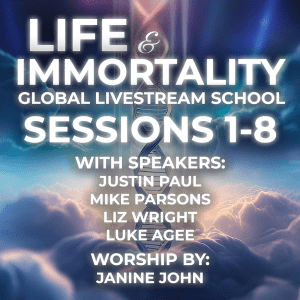
[Note: this was the Life & Immortality conference with Justin Paul Abraham and others, held in November 2024 – click the image below for details of the audio recordings available from Company of Burning Hearts]

Relationships are important

Even if the others had decided to continue with the original idea, I would have stayed relationally connected to them because relationships are important to me. But I don’t think relationships can ever be used to manipulate someone into doing something. In this case, they weren’t doing that—I was the one who hadn’t taken enough time to reflect and check with the Father. I should have stepped back and thought it through rather than just jumping in. They did nothing wrong, but my response wasn’t the right one initially.

It’s always important to know if the Father is leading you into something. When I reflected, I realised He wasn’t. I should have been more open to that from the beginning. We should never feel obliged to do something just because others ask us or think we should. As soon as we’re doing something out of duty or obligation, we lose the passion for it.

If you enjoy these videos, please take a moment to like, comment, and subscribe—it really does help. Thank you very much.

401. Cardiognosis: Expanding Your Heart

Mike Parsons


A deeper knowing

I think cardiognosis is often perceived as being connected to the Father’s heart and, therefore, the knowledge of his heart. That is true, and a heart-to-heart relationship with him will give us an unfolding knowledge of his heart. However, it’s not necessarily a cognitive process where he tells us things directly. Rather, it’s about knowing—a deeper knowing.

To truly feel the heart of God, our own hearts must expand. We cannot contain the fullness of God’s heart if our own is fractured, damaged or broken. Wholeness is essential. Beyond that, our hearts must grow in their capacity for compassion and love as we grow and mature. This level of love requires an expansion of our heart.

We also have a choice—we can open our hearts towards certain things, or we can close them. To open our hearts means giving access to those things God is working with or for. When we feel his heart, God desires that we respond out of his heart, motivated by his compassion, rather than out of duty or obligation. It’s not about thinking, “Oh, God has shown me something, so I suppose I’d better do this.” Instead, it’s about being moved by his desire and compassion as we come to know and discern his heart. This process is an intimate cardiognosis—a heart-to-heart revelation.

Engage with creation

We can also open our hearts towards other things. For example, there have been times when I’ve engaged with creation, and my heart has expanded. I’ve felt the sadness, loneliness and disconnect of creation, which stirred a deeper desire for its restoration and freedom. Engaging with a situation in such a way allows our hearts to expand and to develop a greater love, compassion and connection than we might have experienced before.

As we operate in sonship and the desires that come with it, we begin to see, feel and sense things differently. This awareness prevents us from becoming oblivious to what’s happening around us. Instead, we engage it. I can reach out to creation and engage in cardiognosis with it. I can open my heart to feel what creation is experiencing.

Similarly, I can open my heart towards others. When I speak at conferences, I choose to open my heart and spirit to the people there. I surround the space—wherever it might be—with my spirit to create a safe environment where people could engage with me. In doing so, I become more aware of their needs and am drawn to speak about what is most relevant to them.

In the past, I engaged my spirit to create a safe place, but I’ve since learned to engage my heart as well. It’s not just about creating a safe space but about making it a place of real connection. This requires a willingness to feel.

Open our hearts to experience

Years ago, empathy was often encouraged. Some would intercede for others by empathising with their pain, sometimes expressing this through wailing or outward emotional displays. I don’t think that is really what it is talking about. It is not about feeling someone’s pain and becoming emotionally broken. Instead, I would focus on relating to where someone is and being motivated to engage with them for their good, rather than simply sympathise with them. Some of what I saw in intercession didn’t sit well with me. Perhaps it’s because I’m not mercy-gift oriented, but I felt that all they were doing was wailing without actually achieving anything. Did it achieve anything? Maybe it did. But it didn’t feel like where I was, and I certainly didn’t respond in that way very often.

But I do feel I can choose to open my heart. I can choose to engage my heart and my emotions to feel and sense and be more connected to a
person, or a situation, or creation itself; and this is what I believe cardiognosis to be. It’s not about intellectual knowledge but experiential knowledge—knowing through experience. If we don’t open our hearts to experience something, we won’t truly know it; we’ll only have information about it. True knowledge comes through personal testimony and encounter, not just information.

Engaging heart-to-heart

I believe God calls us to be holistically involved in situations. Sometimes, even our physical bodies can react or sense the dynamics of a situation. It’s about engaging with the whole of who we are—spirit, soul and body. In the past, I relied more on engaging with my spirit because I was more comfortable with that. Over time, however, I’ve allowed my emotions and heart to become more involved, engaging heart-to-heart in a way I hadn’t before.

This change has come as I’ve connected more deeply with the heart of God. That connection inspires and moves me in a way it never did before. I believe this is part of growing in true knowledge.


If you enjoy these video blogs, please take a moment to like, share, comment and subscribe. It really does help. Thank you very much.