

Get more from Mike when you join any tier at patreon.com/freedomarc.
If you do not see the video below, please click here.
Mike Parsons
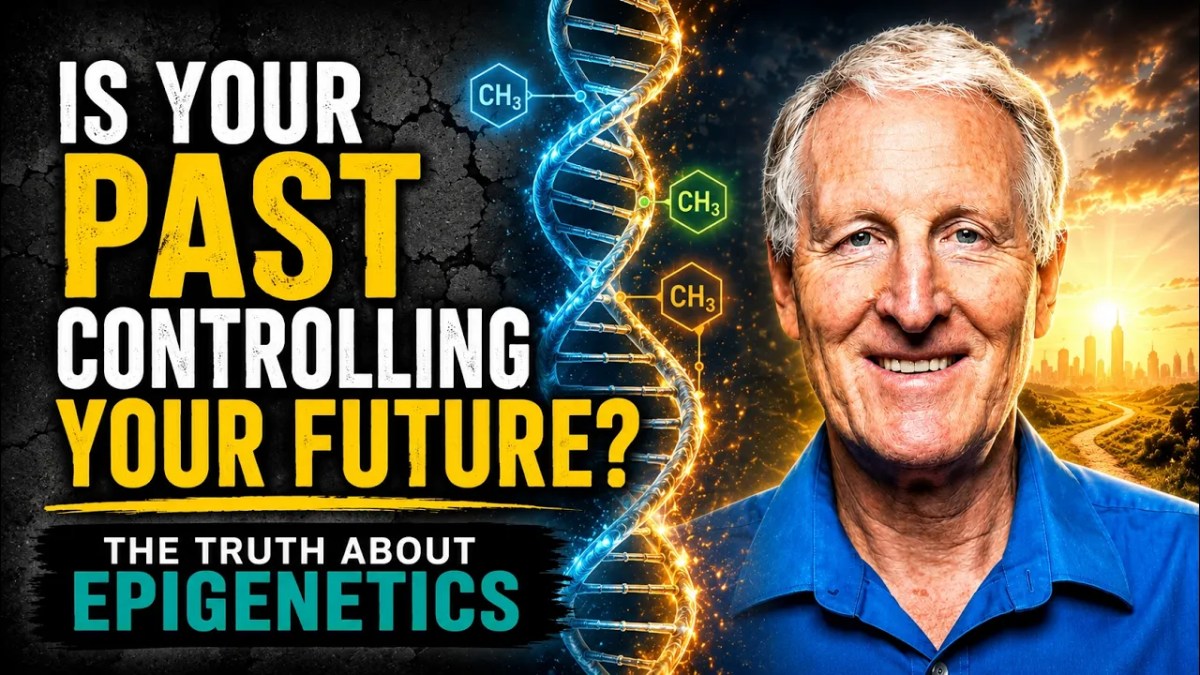
Epigenetics, Behaviour, and the New Creation: What Gets Passed On?
At the end of the day, if the Father shows you something, then yes, you can deal with it. It is not automatic. But the question would be why did he do it, what was going on in his mind, and from that perspective, can it have an effect?
Epigenetic factors are factors of behaviour that are passed on to the next generation, but they cannot be passed on purely spiritually. What a father did after a child’s birth could not be passed on to that child attached to their genetic material. Genetics is an attachment of sulphonated groups to the genetic material. It is not our gene sequencing, which makes up what we look like and all of that, but it is an effect upon it. So if your father was an alcoholic, that could be passed on epigenetically, not genetically, but epigenetically, because it is a behavioural system. A lot of people can have behavioural factors passed on to them through genetic material, but not through the genes themselves. And that can happen within one generation. Something happens to a parent that can be passed on to the child because it affects their epigenetic factors, and that can then be passed on.
There has been a lot of psychological research into epigenetics to identify certain traits that are passed on, and they usually start off in mice or similar, where certain behavioural programming is applied to the parent, and then the offspring carry that programming. It did not change their genetic material, but something was attached to their genetic material that then influenced the offspring in some way. Epigenetic transformation or mutation normally takes a long time, whereas this can be instant. It can affect the genetic material epigenetically in an instant and then be passed on to the next generation, but not once that generation has already been born, because it cannot be attached to them at that point. They would have to create it themselves.
Now, behavioural example through nurture can cause a person to respond out of seeing their parents and behaving like them, and that can then also become attached to them as an epigenetic factor in them, which could be passed on to the next generation. But they created that by following the example of a parent. And sometimes you can get what is called bitter root judgment: if you judge a parent over something and do not forgive them, that can cause the very thing you judged to come upon you. Certain people have judged their parents for alcoholism and then found themselves drawn to alcohol in their own lives, not because of epigenetics but because of the judgment. So these issues of nature and nurture are complex, and they do affect people.
You can take identical twins and separate them at birth, and there will be some things that are epigenetic and will be exactly the same in both. But if one is brought up in a very rich home and one is brought up in poverty, that will have an effect on the way they think and what their belief systems are. A lot of issues are nurture as opposed to nature, and some are nature as well.
But these are influences that God can undo. That is where taking communion and dealing with the effect that there may be in our genetic and epigenetic material comes in, and actually seeing that we are new creations in Christ. That needs to renew our minds and bring us into alignment with who we really are, and not have us believe the lies of what we thought we were or who we thought we were.
Help take the message of God’s unconditional love to all his children when you join any tier at patreon.com/freedomarc.
If you enjoy these videos, would you please take a moment to like, comment, and subscribe? It really does help. Thank you very much.


