365. I Don’t ‘Believe’ In Unconditional Love

Mike Parsons

I don’t believe in God’s unconditional love

When I’m talking about the unconditional love of God, it’s my personal experience that God loves me unconditionally. That doesn’t mean things don’t go wrong. His love for me is His love for me as a person, and therefore, no matter what happens to me, or what I’ve done, or what’s been done to me, His love doesn’t change. But that doesn’t mean He can step in and change everything for everybody. We live in a world that is fallen, a world that is broken. It’s being restored, but it’s not yet fully restored, so things do go wrong.

I don’t have an answer, obviously, as to why some prayers seem to work, and some prayers don’t. We do things that we think are right, yet things don’t always work out. There’s no real answer to that. But when I have experienced God’s unconditional love—and it is an experience, not just a belief—I don’t believe in God’s unconditional love; I know His unconditional love through experience. God loves you as an individual, and that love is unconditional.

Difficult things happen

Unconditional love keeps no record of the past and wants to bless you for the future. In the context of free will, which God has given everyone, we live in a world where difficult things happen and people make choices. We live in a world that is not yet fully restored. When I look at sickness, disease or tragedies, whether they be earthquakes or other disasters, because I know God loves me in that way, and I have that face-to-face relationship with Him, it doesn’t cause me to doubt God. I realise that God can’t stop everything; otherwise, there would be no free choice, and therefore no love. You can’t love someone by force, and God doesn’t want us to be forced to love Him. He wants us to choose to love Him.

Unconditional love goes both ways, of course. In fact, love has to be unconditional, or it isn’t love. If God puts a condition on His love, then I’m earning a reward for my behaviour. If I put a condition on God, then I’m also only loving Him because He’s done something good for me. I love God inherently because He’s my Father; I’m in relationship with Him, I know His goodness, and I choose to love Him. But I also feel that love because I’ve felt His love for me, and He’s always been there for me, no matter what has happened in my life.

Where can we go?

When I find myself in a difficult situation, unsure of what to do or think, I go to God and ask Him to reveal what He wants to reveal to me. Sometimes He provides a direct answer to my questions, and sometimes He doesn’t. But I’ve learned to trust Him. When it comes to trusting God, I think of when Jesus said to His disciples, “Are you going to leave me?” I believe this was after He talked about “Eat my flesh and drink my blood” in John 6. And the disciples said, “Where can we go? You have the words of eternal life.” For me, it’s like that: there is no one else. There is no other option. I trust God, and I know God is good.

If you enjoy these videos, would you please take a moment to like, share, comment and subscribe? It really does help. Thank you very much.


364. The Hidden Texts

There were lots of writings that the early church had that were destroyed by Constantine. So, Constantine, in the Nicaean Council in 325, got all of the writings and letters that had been written, that they were using to preach from, took them all to that Council, decided which ones were acceptable, and then burnt the rest. Then they selected from the remaining writings during the Council of Carthage in 385, determining what they considered acceptable, which later became what we now know as the Bible, τὰ βιβλία, a library of books and letters. I don’t believe that God made the choices; I believe they did.

In the original version, there were different numbers of books. For example, what Protestants now refer to as the Apocrypha included 11 additional books. Some of the books Jesus quoted from, like the Book of Jasher, the Book of Enoch, and the Book of Jubilees, were among those not included in the final selection. I believe there were several such books that were referenced but ultimately left out.

Now, why didn’t they include them? Why did they include certain other things? Well, there seemed to be a bartering going on, from what I can understand, that there was a “Well, I want this one, and I want—well, if you’re having that one, we’re not having this one.” It wasn’t an inspired selection, that God told them to put these books in and take those books out. The Ethiopian Bible has 84 books, I think, and that’s one of the oldest recognised Bibles. The Protestant took all of those others out. Even the original King James had the Apocrypha in it, and then they took it out.

So, which books were the books that were in the Carthage one? Well, more than the 66 books that are in the present one—that’s the Protestant version. I remember asking people, “Well, why are these books not in the Bible?” and they were like, “Well, they’re not inspired.” That’s just nonsense. That’s just an excuse for saying, ‘Well, we don’t want these books because…’

And some are letters or documents that were written that were too controversial or complicated for them to accept. Because remember, why were they making a Bible? Because people couldn’t read, generally. You know, probably like less than 10% of the population could read. So, someone had to read it. So, why were the letters read out in the church? Because most people couldn’t read. That’s why they read them out.

So, they weren’t producing a Bible so people could read it. They were producing a Bible so they could actually say, “This is what we are going to tell people,” and they can’t hear anymore. Because, essentially, then what happened was, “Well, we’ve got a Bible, we don’t need to hear God anymore. God doesn’t speak anymore. He’s spoken through the Bible.” That’s what happened primarily.

And then, because most of the Bibles, in the Roman aspect of things, were done in Latin, they were written in another language, which most people couldn’t read because they didn’t really speak Latin. It was a written language, but it wasn’t the common language of the early church. Greek was, but it became the Roman language. And who could read that? Priests. So then it became a priestly thing to tell people and mediate. So it became a mediatorial system to control people because people couldn’t read it for themselves.

So someone had to read it. Well, what are they going to read? They’re going to read the bits [they like]. And well, then, how do people know what it’s saying? Well, because they’re telling them what it’s saying. So then you’ve got doctrine and theology being set by the Pope, effectively, who is “God’s vicar on Earth,” who has the divine authority to say what’s right and wrong. Which, seemingly, for me, is the Holy Spirit’s job, to guide us into the truth and lead us into the truth.

If you enjoy these blogs and videos, would you please take a moment to like, share, comment and subscribe? It really does help! Thank you very much.

363. Deconstructing the Pillars of Your Mind

Video summary

The Word of God

The traditional Evangelical view of the Bible as the inerrant and infallible word of God is problematic. The  true “Word of God” is Jesus, the Living Word, and direct experience of God through the Holy Spirit takes precedence over scriptural interpretation.

Biblical passages often used to support legalistic or fear-based theology, including those about the “deceitful heart” and “missing the mark,” point to humanity’s lost identity in God rather than inherent wickedness or behavioural failures.

Redemption

Jesus’ sacrifice on the cross was not to appease an angry God but to restore humanity’s true identity as children of God. Redemption is not earned through religious practices but is a free gift received through recognizing our inherent union with Christ.

Religious Conditioning and Personal Experience

Religious indoctrination, particularly within Evangelicalism, parallels cult-like control through fear and guilt. Personal experience with God, guided by love and discernment, is preferable to blind acceptance of religious dogma and trusting external authorities (including charismatic figures and self-proclaimed prophets).

Nine Pillars

In my personal journey of deconstruction, I once viewed the world through a framework of nine “pillars,” primarily rooted in Evangelical doctrines but also influenced by cultural and scientific conditioning. The process of each pillar being challenged and ultimately dismantled led to a transformed mind, grounded in love and direct relationship with God.

The Role of Love

Prioritise direct relationship with God through the Holy Spirit over rigid adherence to scripture or religious systems. Love is the ultimate measuring stick for discerning truth and evaluating personal experiences. Actively seek God’s guidance in a process of ongoing deconstruction and renewal, leading to greater intimacy with God and a more accurate understanding of our true identity in Christ.

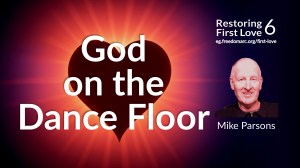
362. Romancing with God on the Dance Floor

Lakah

The Gardens of Lakah showed me how much God, who is Father, Son, and Spirit, loved me and desired a deeper relationship with me, restoring me to be part of a family. I didn’t really understand family, because my own experiences didn’t give me a full understanding of what family and relationship really were in my childhood. Now, as an adult with a family, I looked to my work and what I then discovered in that relationship, but I wasn’t always successful. The Father, however, desired to reveal to me my sonship identity within family – not independently, not just between me and God, but within the family of God. There was only so much I could handle at that stage, so God revealed the amount of truth I could bear, while mysteries that I couldn’t yet handle would be unveiled to me in the future.

That’s what happened in that dance-floor experience, similar to what Jesus said to his disciples in John 16:12: “I have many more things to say to you, but you cannot bear them at the present.” All of us have the Spirit of Truth within us, guiding us into all truth, but we may not always be able to handle that truth. Like in the famous film quote, “You can’t handle the truth,” I couldn’t handle it all at once. Some truths were unveiled gradually, allowing me to handle more and more until those truths deconstructed the lies I had believed. My experiences were progressive, often mysterious, but that’s okay – we don’t have to understand everything.

Segullah

God brought me into the Segullah relationship – a deep, treasured connection where He declares, “You are my treasured possession; you are the apple of my eye.” This was the revelation I received through these dance-floor encounters, showing me who God is and revealing my true identity and destiny as a son. I didn’t fully understand sonship initially, but through these dances with God in my heart – a place of intimacy and revelation – I became entwined with Him, moving deeper into union and unveiling who I really am. This slow, intimate dance, moving between light and darkness, wasn’t about fear, but about trust in the Lover of my soul, who was capturing my heart more and more.

The song “Behold, you have come over the hills upon the mountains, to me you will run, my beloved, you’ve captured my heart” perfectly captures what God did in the garden – He captured my heart. He desired this deeper intimacy, and I pursued more of Him. The romance of this relationship continued as we danced to the song of all songs, not one I heard with words, but one I felt – a frequency resonating with the truth of my origin in Him. This dance revealed my identity, my DNA as a son of God, and the very essence of who I am. Through this, I began to go beyond into the mystery of sonship – far beyond what I could imagine – but God danced me into it, and later I would resonate with what I’d experienced there.


[This is an except from Mike’s current teaching series, Restoring First Love. Get the full length videos every month, only at eg.freedomarc.org/first-love]


Darkness and light

Psalm 139:10 says, “Even there your right hand will lead me, and your right hand will take hold of me.” At first, I found it difficult to understand why there was darkness, but then I came across this verse. Jesus is at the right hand of the Father, symbolising where we sit in a position of authority beside the Father. He holds our left hand with His right, giving us authority and guiding us. He led me in the dance – I wasn’t leading, I was following Him.

When I felt overwhelmed, as if the darkness was too much, I remembered Psalm 139:11-12: “If I say, surely the darkness will overwhelm me, and the light around me will be night, even the darkness is not dark to You; the night is as bright as the day.” This isn’t about physical darkness, but about revelation and the illumination of truth. There were things not yet illuminated to me, mysteries I couldn’t comprehend. Even though everything is known to God, to me, many things were still unknown. Yet God prepared me, placing the frequency of those experiences within me so that the mysteries would eventually lead me into the light of revelation.

Psalm 139:13 is a passage I’ve meditated on a lot: “For you created my inmost being; you knit me together in my mother’s womb. I praise you because I am fearfully and wonderfully made.” The psalmist could declare this with confidence, but I struggled to say it because I viewed myself through the lens of my humanity and failures, rather than my sonship. But this was what God wanted to engage me in – the truth of who I am as His creation, even though I couldn’t fully accept it at first.

Psalm 139 continues: “Your eyes saw my unformed body; all the days ordained for me were written in your book before one of them came to be.” This doesn’t mean we have a limited number of days, but that our ordained days as sons of God were written and belong to us in our sonship. It speaks of the eternal nature of who we are in God. God’s thoughts towards me, as it says in verse 17, are vast, beyond my ability to think for myself. But over time, He revealed them to me, helping me to see myself as He sees me.

So, I humbled myself under God’s mighty hand, accepting His view of who I am, rather than trying to validate myself through my own works. I was danced into the light of revelation and also into the darkness of mystery – those things I couldn’t yet comprehend with my mind, but which my spirit resonated with and was drawn to. Later, these mysteries were unveiled as I grew in understanding.

Activation

So, get relaxed. Begin to focus on your breathing. Breathe in very, very slowly, hold that breath, and then begin to let it out. As you’re breathing in, you’re breathing in the unconditional love of the Father. That unconditional love is filling you, touching every fibre of your being. It’s flowing through you.

Picture that door in your spirit and choose to open the door. Your choice is an invitation to the Father, for Him to come and hug you. Hear His words: “I love you. I love you, my son, my daughter. I love you.”

Hear some of the vast sum of His thoughts. Let them restore you to His original desire for you. Maybe you’ll resonate with them in your spirit. Be open to an infusion of His thoughts about you—of who you really are.

Now, let the Father take you by the hand and lead you. Maybe He’ll lead you to the dance floor, entwine with you heart to heart, and dance with you into the light and into the mysteries. As He dances with you, allow your spirit to draw from Him. Let your spirit resonate with that truth. Let even the mysteries be deposited within you—the truth of your identity, the mysteries of your destiny.

Go wherever God takes you. Maybe you can dance with the Lover of your soul. Let Him romance you. Let Him sing the song of your life over you. Feel the rhythm, feel the frequency, feel the life that it activates within you.

Click the image above to subscribe to Mike’s YouTube channel!


361. Quantum Entanglement | Face to Face with God

Mike Parsons 

A State of Being

When it comes to engaging with God throughout my day, much of it is more of a state of being rather than actively going and doing something. I find myself face to face in the spirit realm with God, heart to heart, all the time. It’s a multi-dimensional way of living, where you’re not always consciously doing something with your soul or mind. However, that doesn’t mean you aren’t spiritually engaged constantly. My soul is quantumly entangled and connected, so at the core of my being, I’m always connected to Heaven and to God.

Sometimes this connection is a cognitive engagement where we talk and share. But more often, it’s just a heart-to-heart connection—what I call ‘cardiognosis’, or knowledge of the heart, where I’m in tune with Him. My spirit is engaged, and I benefit from the flow of life, energy, revelation and truth by simply being with Him, rather than by doing many things. I actively enjoy life here, whether I’m working outside, talking to people, or doing my daily tasks. I draw on the Spirit within me, without feeling the need to do something specific to connect with God.

Resting in God’s Presence

This way of being is never a religious chore; there’s nothing I ‘have’ to do. I enjoy being in that state of rest and peace, and I remain consciously sensitive to the Father’s presence or Jesus within me, no matter what I’m doing. Whether I’m gardening, working in my workshop, or out in the fresh air, I find joy in these activities because I know God loves them too. After all, God is a great gardener, and Jesus was a carpenter. Sometimes I feel inspired, and sometimes I just sense that they’re enjoying my company as I go about my day.

I don’t engage in a lot of religious practices; instead, I enjoy just being. I enjoy hanging out, chatting and taking walks. Even when doing something mundane, like you testing milk or other routine tasks, I can still feel that connection to God’s peace and rest. The religious system often tries to convince us that we’re not doing well enough, but the truth is, God’s love is unconditional. He doesn’t place conditions on His love; He wants us to know that we’re approved and affirmed just as we are.

God simply wants relationship

God doesn’t see anyone as more important than another. He loves us all equally, even though we each have different roles in life. From God’s perspective, we are all His children, and if we can truly grasp that, we can free ourselves from the pressure of trying to serve or please God out of obligation. Jesus only did what He saw the Father doing—there was no list of tasks. Instead, He was in constant relationship with the Father. This is what Jesus was describing in John 14 when He said, “Where I am, you may be also.” He was talking about an intimate relationship of rest.

Jesus invites all who are weary and burdened to come to Him for rest. The world and the religious system often push us towards stress, striving and worry about whether we’re doing enough. But God simply wants a relationship with us. He doesn’t want servants or slaves; He wants to share life with us, enjoying our common interests.

Thankful for God’s presence

I love sharing my life with God, sensing His joy in being with me, without feeling the need to do religious tasks. I encourage you to relax, enjoy life, and take moments throughout your day to centre yourself and refocus on that place of rest. I know that when you’re busy, you need to stay focused on what you’re doing. But every now and then, it helps to pause and be thankful for God’s presence. When I first started doing this, I set my watch to ping every hour, reminding me to refocus, be grateful, and acknowledge God’s presence with me.

This practice helped me to approach my work, not as something I ‘had’ to do, but as something I did with joy. If you are testing milk, you are serving others; I see it as a way of blessing people. Everything I do is done as before God, and that makes it a blessing. I don’t worry about whether I’m doing enough because I know God’s love is unconditional. If I did nothing, He would love me just the same, and if I were busy all day, He wouldn’t love me any more.

My identity comes from being in Him, not from what I do. No matter who you are or what you do, God sees you as He created you to be. He wants us to discover our true selves, freeing us from the sense of duty and religious obligation. God doesn’t want us to do things for Him; He wants us to do things with Him. Living in that place of rest, in partnership with God, is a completely different way of being.

[Mike was answering a question from a Patreon ‘Ask Mike’ tier supporter whose paid work involves testing milk].

If you enjoy these blogs and videos, please take a moment to like, share, comment and subscribe—it really does help. Thank you so much.

360. The Reality of Unconditional Love (Meditation)

Mike Parsons
with music by Samuel Lane

A tranquil remix of a Mike Parsons’ activation taken from his 2022 Unconditional Love series, session 5, with a binaural beats soundscape by Samuel Lane https://linktr.ee/smlmusic

I encourage you to close your eyes.

Come to that place where you start
to focus your thinking and your intention
on engaging with the Father,
engaging Jesus,
engaging unconditional love.

It might help to slow your breathing down.
Begin to relax.
Start thinking and focusing on God, who is love.

Breathe in deeply the unconditional love of the Father.

As you breathe in slowly,
as you open up your heart,
open up your mind,
open up your whole being,
let unconditional love flow over you.
Let it rest on you.
Be saturated in it, and let it flow through you.
Let it penetrate.
Let it be absorbed into you.

Be still.
Be still and let God love on you.
Let Him reveal that truth to you:

Love, unconditional love,
touching your heart
touching your mind,
every part of your soul.
Be still and truly know God as unconditional love.
Be still.

Hear God speak to you.
Be still and know that I am unconditional love.
Let those words sink in.

Be still and know that I am unconditional love.
Be still and know that I am abundant joy.
Be still and know that I am overwhelming peace.
Be still and know that
I am the way, the truth, and the life.
I am limitless grace,
and I am unconditional love
and triumphant mercy.

If you know that there are things in your past
that hold you back,
things that you still feel guilty over,
things that you still can’t forgive yourself for,
that you can’t let go,
just invite love, joy and peace to fill you,
to flow over you,
to flow in you,
and touch every particle of your being
with unconditional love.

And as that love fills you,
it can’t be contained within you.
Let it flow out of you like rivers of living water,
creating an atmosphere to live in of rest,
that you can bring that rest to others,
that you can bring that joy and peace to others.

Feel the unconditional love
flow through your whole being.
Be still.
Be still.

Let God’s love now touch you,
touch you in those areas
that it’s never touched before.
Heal you in those areas
that have never been healed before.
Free you in those areas
that have kept you in bondage to works.

You’re in a safe place.
Heaven is open.
The Father desires
that you would enter into His very heart.
Come face to face in love.
Find that place of restored innocence
in the realm of light.

Bathe in the radiance
of the light that’s coming from Him,
from His face:
the light of love,
the light of truth.
Let that go into deeper levels of your very being.
Don’t hold back through fear.
Let go.
Trust.
Trust in God’s goodness,
trust in God’s mercy.

That you can just live loved,
free from guilt,
free from shame,
free from condemnation.

All your old rags,
your dirty rags of your own self-righteousness,
let it go.
Let Him put new clothes on you,
the new ring of sonship on you.
Just as the prodigal came.
The father didn’t look at what he’d done.
The father celebrated his return
and rejoiced, to celebrate
that that which was lost has been found.

Let your identity be restored
so you can live in that place of love.
Then you can love living,
enjoy the joy of life.
Live loving: be merciful,
choosing to forgive and release all things.

Rest in love, joy and peace.
Wait in that place.
Be open to go deeper and deeper
and deeper into love.

If you struggle to believe,
let Him impart to you right now His faith,
His faith to believe who you truly are,
to believe the vast sum of His thoughts about you,
to believe that you are the apple of His eye,
the treasure of His heart.
You are precious, precious to Him.
You are uniquely, wonderfully made.
You are special.
Let that truth be imparted to your hearts right now.
Let Him give you the ability to receive it
freely, without cost.
Embrace the reality.

Receive all that you need
because He has an abundance,
exceedingly, abundantly
beyond all you ask or think or even dream.

Let Him expand your conscious reality to go beyond,
into the lavishness and abundance
of His unconditional love,
limitless grace,
and triumphant mercy.

If you are in that place, just rest there.
Stay there as long as you want.
You can’t exhaust the depths of it.
There are always deeper places to go into God’s love.

00:00 Focus
01:19 Be still
04:51 Let God’s love
09:10 If you struggle
10:36 Expand your reality
13:20 Stay

Sign up for Mike’s current ‘Restoring First Love’ teaching series at https://eg.freedomarc.org/first-love to receive a session each month as they are released.

Want to see our latest YouTube videos as soon as they are published?
Subscribe at https://freedomarc.org/youtube

Find more music by Samuel Lane (SML Music) at https://linktr.ee/smlmusic

359. Unlocking the Power of Angels

Mike Parsons

Mike explores the various ways angels assist us in our daily lives. From facilitating meaningful connections with others to providing support in everyday tasks, Mike shares personal anecdotes that illustrate the divine guidance we can receive. He delves into the concept of judging angels and emphasises the importance of cooperating with them to fulfil our eternal purpose.

Angels: Helping in Everyday Life

How do angels assist us? Well, they do so in various ways. Sometimes, they help us connect with people, facilitating seemingly coincidental meetings. There are moments when angels can communicate and help orchestrate these encounters. For instance, I’ve personally asked my angel to help me find a parking space. I imagine that the angel goes ahead and stands in the spot, and for some reason, no one else sees it or takes it. When I get there, there’s a space waiting, and I always thank my angels for their assistance.

This leads me to the concept of “judging angels,” which some people misunderstand. They think it means deciding whether certain angels are bad and should be punished, but in reality, judgment is simply a verdict. When angels do something for us, saying “well done” and thanking them is a form of judgment. It helps build a relationship with them. Angels aren’t our slaves; they’re here to work with us in fulfilling God’s purposes.

Engaging with Angels in Spiritual Realms

I’ve had personal experiences with heavenly angels. For a long time, I didn’t realise I had an angel assigned to my mountain and throne, spiritually speaking. We’re all seated in Christ in heavenly places, but it took me a while to truly engage with this reality. When I finally did, I discovered that I could sit on the throne, learning about ruling and decreeing from my heavenly position.

During an activation exercise, where I guided people to connect with their thrones and mountains, I noticed a large angel standing behind my own throne. It was the first time I’d truly seen this angel, even though it had always been there. When I asked what it did, the angel responded, “What do you want me to do? I’m here to help you.” This angel had been helping me all along, even though I hadn’t been consciously aware of its presence.

Angels and other heavenly beings

Angels often help us grow and mature, and my angel has been instrumental in that process. Particularly in my younger years, it guided me towards books and revelations that challenged and transformed my understanding of God. These revelations set me on a path of growth and change, often accelerating my spiritual journey. As I matured, I learned to engage these cycles of change myself, needing less direct involvement from angels.

But it’s important to note that angels aren’t just there for the early stages of our journey. I’ve worked with other heavenly beings, like Wisdom and Prudence, who’ve shown me more about how heaven operates. They’ve taken me to heavenly courts and assemblies, revealing how the government of heaven functions. In the beginning, angels helped me navigate these spiritual realms, but as I’ve grown in my relationship with the Father, I now receive revelations directly, through heart-to-heart connection with Him.

In my journey, angels have been incredibly helpful, guiding and supporting me as I’ve grown in understanding and maturity.

If you find value in these blogs and videos, please take a moment to like, share,  comment and subscribe—it really does help. Thank you!

358. Governing Time: Understanding God’s Seasons and Our Role

Mike Parsons discusses how seasons reflect God’s intentions and how we can align ourselves with these divine plans.

Astrological Control?

I’ve never bought into the idea that I’m controlled by some astrological setup of the stars or that I need to wait 2,500 years, or however long, for the next period of Aquarius, Aries or Pisces. Yes, I believe in immortality, but do I really want to wait two and a half thousand years for another season to come? I believe that seasons illustrate God’s desire to do something. For example, some people look at Aquarius, the water-pourer, and prophesy about living water coming, streams flowing, and revival waters emerging. Depending on what they’re tuned into, they’ll use Aquarius to justify all sorts of ideas. And then there’s the talk of transitioning between the ages and all that.

So, do I believe in times and seasons that God operates within? Yes. Do I believe God uses our times and seasons to help us relate to things? Yes. Sometimes He even says to me, “In three years’ time,” respecting the fact that we live in time.

Divine Timing and Seasons

Ultimately, am I subject to that? When it comes to legislating and governing the times and seasons that God wants to move in, it’s about agreeing with God and participating in the co-heirship to bring about His desires. That doesn’t mean I can govern or control someone else’s actions. I think the problem arises when people believe they know God’s heart and then try to enforce it by controlling others or legislating against them. That’s not how I believe God wants us to operate. Everything we legislate should be for blessing, never for cursing. We’re not meant to remove someone or cause harm where someone ends up losing their job or worse. That’s not the way I believe God works.

I’m not saying you couldn’t do it, especially if you have the authority as a son. But is it necessarily what God wants? I’m not convinced. I don’t resonate with the mindset that says, “I’m so concerned with what’s going on in the world that I need to change it.” That approach often translates into, “I’m going to come against this and that and the other.” I don’t think God “comes against” anything. God blesses to bring about change and transformation. I think the spiritual warfare mentality still operates in some people, making them view everything as a battle against the enemy. But often, they end up doing it in the same spirit they’re supposedly opposing. For me, it’s about governing in love.

Promoting Blessing Over Control

When I govern in love, it brings about change that blesses people’s lives and aligns them with who God says they are and what He wants for them. I can call that into being, decree and declare it, govern and legislate it. But I’m not controlling those people. They still have the choice to embrace God’s heart for them. And if they choose not to, I can’t control them into it. Similarly, I can’t control a government into changing a policy just because I think it’s not what God wants. I believe that many ideas people have about what’s right and wrong and just come from their own sense of justice, rather than God’s.

I’m totally in agreement that, as sons, we have the ability to cycle seasons or time to bring about change and transformation. That might seem like acceleration, but I’m not going to be controlled by the cosmic clock. I believe we’re here to govern times and seasons to fulfil God’s purposes, not our own or someone else’s, and certainly not in a negative way.

When we talk about governing time, what are we really trying to do? Control time? Control what happens within it? Time is also a being we can cooperate with, and I believe the process and journey are what really matter. People are on different cycles of journey and process. For some, it takes longer than for others. So, if you try to control time, you might make it too fast for some and too slow for others. Everyone needs to legislate for their own journey within the time they’re in. It’s complex, and I’m not convinced people fully understand what it means to govern space and time. And frankly, I don’t think it’s ever explained well enough for most people to grasp.

If you enjoy these video posts, please take a moment to like, share, comment and subscribe. It really does help. Thank you very much!

357. Faith IN Christ, or Faith OF Christ? What’s the difference?

Our True Identity

I believe our true identity comes from God’s faith in us, not our faith in God. So, what about the faith needed for our salvation? Where does faith come from? How much faith is needed? Whose faith saves us? These are all valid questions that many people ask, but I think they ask them because they don’t fully understand the reality of what God has done. They think we need to do something to make what God has done work for us.

I believe God wants us to understand that the very fabric of the universe is founded on grace and faith—but not ours, His. His grace is limitless. Ephesians 2:8 says, “By grace, you have been saved through faith; that is not of yourselves.” It’s very clear here: the faith through which we are saved is not ours; it’s the gift of God, not a result of works, so that no one may boast.

So, I can’t come to God and say, “Look at my great faith that saved me,” because I never had that measure of faith—and I don’t think anyone does. What we do have is the gift that enables us to come to the realisation of what the truth is, so it’s not by works. This is what defines the difference between the Old and New Covenants: how faith worked in the Old Covenant and how it works in the New. The key question is whether faith is a gift from God or something we try to generate ourselves through works or effort. The reality is that it has nothing to do with what we do at all—by grace, through the gift of God’s faith, not by our own faith or works.

Saved by Our Faith?

So, we are not saved by our faith in God but by the faith that comes from God. The meanings are slightly different. The faith of God means God has enough faith for our salvation, and the faith from God means He gives us the faith to come to the realisation of how He feels about us. It’s often translated as “our faith in God,” but it isn’t actually our faith—we didn’t create it; it was freely given to us by God.

God has an amazing way of looking at us, filled with wonderful thoughts, and each one of those thoughts is good. In English, it’s usually translated as “faith in,” but in Greek, it’s more accurately “faith of” or “faith from.” That small change in wording can make a huge difference to our experience, understanding, and daily walk with God.

One perspective drives us to constantly strive to have enough faith, often leaving us afraid we don’t. The other invites us to simply receive faith from Him and rest in the fact that His faith is enough for us. We don’t need to strive.

Let’s look at some Bible verses that address this. Philippians 3:9 says, “And may be found in Him, not having a righteousness of my own derived from the law, but that which is through faith in Christ.” That’s the usual English translation. If we read it as “faith in Christ,” it suggests that righteousness comes from my own faith. But if we change the wording to “faith from Christ,” it reads: “And may be found in Him, not having a righteousness of my own derived from the law, but that which is through faith from Christ—the righteousness which comes from God on the basis of the faith that comes from Christ.” That makes a huge difference in how we understand righteousness. It’s no longer based on our faith but on the righteousness Christ imparts to us.

‘In’ Fits a Works-Based Theology

The word ‘in’ fits with a works-based theology, but “of” or “from” fits with a grace-based understanding. Galatians 2:20 is another scripture: “I have been crucified with Christ; and it is no longer I who live, but Christ who lives in me.” Now, how many people have tried to crucify themselves daily, taking up their cross, trying to follow Him, and living in misery, wearied and burdened by the attempt to be good enough to please God or earn His love? So many are still caught in that trap.

We were crucified with Christ because when He died, we died with Him—not because we did anything, but because He did it on our behalf. It’s no longer I who live; Christ lives in me, and I now live as a new creation in Christ. The life I live in the flesh, I live by faith in the Son of God—or, more accurately, by faith from the Son of God. This changes everything. My relationship with God isn’t based on how much I can believe, but on His faith and the faith He gives me to enable that relationship.

The King James Version gets this right: “I am crucified with Christ; nevertheless I live, yet not I, but Christ lives in me: and the life which I now live in the flesh I live by the faith of the Son of God, who loved me and gave himself for me.” It’s all about the unconditional love of God and the gift of life through Jesus. Through Him, the world can rediscover its lost identity as children of God.

Who Is More Faithful: God or Me?

So, whose faith saves me and sustains me: my faith in God or God’s faith in me, given to me? Definitely the latter. Am I relying on my small measure of faith, or am I trusting in God’s faithfulness? God is faithful to do what He promised. He predestined us to a face-to-face, restored relationship in love, and this has always been His intention for each of His children.

So, does “in” or “of” really matter? Absolutely, it does. It makes a huge difference in how we live our daily lives. One places the burden of faith on us; the other reveals faith as a gift, enabling us to rest in God’s grace and faithfulness. So, who do you think is more faithful—Jesus or us? I know the answer to that, and I’m sure you do too.

If you have enjoyed this post, please take a moment to like, share, comment and subscribe. It really helps. Thank you!

356. Soul Healing: Embracing Wholeness with God

Mike Parsons

Video Summary

Becoming one with God involves the surrender of the soul’s control and its tendency to dictate our lives. The soul has been crucial in protecting us and shaping our self-awareness, but it often carries unresolved issues and unmet needs, leading to a fractured identity. When the spirit awakens and begins to reveal our true identity in God, the soul may resist this change, trying to keep us safe behind protective walls that can become prisons.

To heal, we must trust God enough to let go of control, allowing Him to separate and then reintegrate our soul and spirit from within. This journey involves engaging with God, recognising how our personality and experiences shape us. Many operate mainly from the soul, influenced by upbringing rather than intimacy with God.

Through my own experiences, I learned that God desires to meet our needs and provide love and acceptance, allowing us to love ourselves. I spent time resting in God, allowing Him to restore my soul. Once He separated and properly reintegrated my soul and spirit, my spirit could remain connected to heaven while my soul functions on earth. This integration fosters a continuous flow of revelation knowledge and understanding, and enables me to engage with both realms effortlessly.

Ultimately, union with God requires harmony between our spirit, soul and body. This relationship is not just theoretical; it’s meant to be experiential. By developing a relational trust in God, we can experience His presence and love fully, allowing our spirit, soul and body to work together as He designed us.

If you enjoy these blogs and videos, please like, comment, share and subscribe, whether here or on YouTube – it really does help! Thank you very much.