All those people who say they have been in hell for ten minutes, or whatever, are framing their experience through their theological understanding of hell rather than the truth. They see what they expect to see. That is the problem. We can be confirmation-biased and create our own scenario around what God is really trying to show us.
This is why we need to let God renew our minds and trust him in that process, rather than resisting him. At the same time, we should not be naive enough to think that everything we are thinking is already correct, because we are all still in the process. Even so, I would rather err on the side of love in everything I think than lean towards anything else. If I interpret everything through love, I will not go far wrong.
We should weigh the things that we feel and what we think God has said. We should weigh them. We shouldn’t just accept them carte blanche. We should weigh it.
What do we weigh it with? How do we measure it? I measure it with love. Is this loving? Is this going to help people experience God and experience His love? So I’m measuring it against that.
So I know that if I thought God told me to do something which was contradictory to love, I know it couldn’t be Him. And people say, but you’re now saying that God can’t do something! Yes, I am. He can’t contradict Himself as being love, and he wouldn’t ask us to contradict himself and contradict what love is either.
So whenever something we think God said is not aligned to true love – true unconditional love – then we’ve got to question it.
We are following a book which has been translated by people with an agenda and a preconceived confirmational bias, rather than out of relationship with Jesus. Yet Jesus said he would speak to us and that we could follow him. We have the Holy Spirit, the Spirit of Truth, within us. We do not need another teacher.
So why are we telling people they must follow a book, when they can be guided by the Holy Spirit and through Jesus, who is the Truth? Jesus is the Word of God. The Bible is not the Word of God. The problem is that we have been taught otherwise. I hear people say, “We are going to read the Word.” But they are reading a book, half of which was never intended for them, the other half written for people in the first century preparing for the end. We are not those people.
That does not mean God has not used the Bible. He has used it in my life, but it has also caused huge confusion. I was deceived into believing things simply because I was taught that was what the Bible said. Now, I go with what Jesus says. I will not live by an interpretation of a book; I will follow a person in relationship. He is the Way, the Truth and the Life. The Bible is not. Even if someone had never read a verse, never seen a Bible, they could still encounter Jesus and through him engage the Father.
This is why I would never encourage a new believer to start with the Bible. It will only confuse them, as they are faced with conflicting interpretations and even two seemingly different versions of God. But it was always just people’s limited view of God, not who he truly is. Relationship is what matters. I can walk in relationship even with those I disagree with, because I do not need to prove them wrong. My faith is grounded in personal experience and testimony, not in the teaching of a book.
I use the Bible only as a frame of reference, because that is how people have been taught. Yet I can count fewer than five times when the Father or Jesus has actually quoted a Bible verse to me. When they did, it was revelatory. For example, “Come to me, all who are weary and heavy laden…” was spoken to me when I was striving to be good enough and keep a behavioural standard. It showed me why I was weary and how I could come into his rest. The principle was what mattered, not the verse.
Jesus is quite capable of saying directly, “Follow me and enter rest.” He does not need to quote Matthew 11:28. People can and do go astray, but many have also gone astray while following the Bible. History shows how it has been used to persecute, to endorse slavery, the Inquisition and Christendom itself. The Bible is not safe. Only Jesus and the Holy Spirit, as the Way, the Truth and the Life, keep us on a safe path. If you use love as the plumb line, you will not go far wrong.
This is what God showed me when he challenged my views of the Bible. He brought me back to the relationship I had with him, and how he speaks directly. He weaned me off my need for Bible confirmation. I know many still need that, but their thinking must eventually shift. They were told “the Bible says this,” but that has to be undone if they are to truly follow God.
Some quote verses about people falling away from sound teaching in the last days. But those last days were AD 66 to 70, when many fell away under persecution. That does not apply to us in the same way today. And this is the issue.
If you enjoy these videos, would you please take a moment to like, comment and subscribe. It really does help. Thank you very much.
What you’ve experienced, no one can challenge—unless you let them. I don’t need to enter arguments or debates about theology because I’ve encountered the living God face to face, and I know him. No one will convince me of anything other than that God is love, no matter what theology or doctrines they use to try and challenge me. I know God is love.
Here’s a quote from Keith Giles—one of my favourites—from the Gospel of Philip. And yes, there are other gospels beyond what’s in the Bible. If you’re interested, I’d encourage you to explore some of them—with discernment, of course. These texts can offer insight into truths that aren’t necessarily in the canon of Scripture. That doesn’t make them wrong.
The quote says: “If you become whole, you will be filled with light. But if you’re divided, you will be filled with darkness.” That’s not a legalistic rule-following salvation message. It’s not a rule—it’s an invitation to transformation. As we are transformed, we are transfigured—filled with light. But if we’re broken, fragmented, divided, then we experience elements of darkness that limit who we really are. We are beings of light, made in the image of God—who is light.
The Gospel of Philip doesn’t offer easy answers, and that’s what makes it powerful. It invites us into the mystery. It invites us on a journey rather than offering a neat doctrine. Isn’t that what faith is really about? Don’t settle for doctrine or theology—go on a journey to experience the mystery, the intimacy of God himself.
He is the light that lights every man who comes into the world. That’s in the Bible. Everyone has the light of Jesus—the light of life. Some know it, some don’t. But the gospel is that all will know it. That’s the message we carry: that all will come to know. And we want them to know now—not to wait until their deathbed or even after they’ve died. We want them to step into the fullness of who they really are now, and to know that God is with them and in them.
If you claim to teach grace, but add a condition—a caveat that requires self-effort to receive it—you’ve left grace and entered the land of mixture. As Paul said, that’s another gospel. Don’t fall into it. Don’t believe a gospel that places conditions on grace or love. There is nothing we need to do to receive it. We simply accept it. There’s nothing we can do to make it true—it already is.
When people say the Bible is their authority, what they’re really saying is their interpretation of the Bible is their authority. That was me for much of my Christian life. I believed the Bible was my authority—but which version? Which interpretation? My own? Or what I was taught and conditioned to believe growing up?
SERIES INFORMATION: This video is an excerpt from Mike's current teaching series, Restoring First Love. Get the full length videos every month, only at eg.freedomarc.org/first-love
One of the saddest things
One of the saddest things I’ve seen on Facebook was a quote from Paul Washer, a pastor in the Southern Baptist tradition. He said, “The moment you take your first step through the gates of hell, the only thing you will hear is all of creation standing on its feet, applauding and praising God because God has rid the earth of you.” That, to me, is the saddest thing I’ve ever heard. It so completely contradicts the reality of who God is and what his love is like.
I looked the guy up. He pastors something called “Grace Community Church.” If that’s not the biggest oxymoron I’ve ever heard, I don’t know what is. Someone who read the quote wrote, “It’s not the guy I have a problem with—he’s sincerely saying what he believes to be true, and for him, it feels compassionate to share it that way. The issue is the distorted portrait of God being painted with these horrible words. Think about it: God is obligated to torture you forever because you’re worthless and unholy? A holy, just God must rid the earth of you—a divine image-bearer—and all creation will stand and worship when it happens? How could something be so utterly wrong?”
It’s wrong because the people who created that doctrine never met the Father face to face. They only studied the Bible and believed what they were told it says. But when the only thing you’ve received is the Father’s love, the only thing you can give is the Father’s love. No judgment. No hate. No “us vs them.” God treats you as his child, the apple of his eye, the treasure of his heart. You are loved unconditionally. You don’t have to perform to earn that love. And don’t let anyone tell you otherwise.
When the only thing you receive is the Father’s love, that becomes the key to everything. The Father’s love is what brings change and transformation in us so that we can love as we have been loved.
Here’s another quote, this time from Brian Zahnd: “We all make errors in our theology—you and me both. So my recommendation is to err on the side of love.” Why? Because God is not doctrine. God is not denomination. God is not war. God is not law. God is not hate. God is not hell. God is love.
Let’s focus on that reality: God is love. That is the truth. That is the reality. God is love. There is never a time when God isn’t thinking about you. You were on his mind before the foundation of the world. His thoughts toward you are always good.
Unconditional love doesn’t demand a choice or decision. It simply loves. It accepts. It includes. Jesus included everyone in his death so that everyone would be included in his resurrection. He saved the whole world—not just some, not just those alive in his time, but all of mankind. All who have lived, and all who ever will live. All died with him. All have been resurrected with him. That is the power of the gospel.
If we want to discover truth, we must be willing to set aside comforting illusions and traditional preconceptions. We must let truth declare itself to us. The whole truth. Nothing but the truth. As Don Keathley says, “Be willing for truth to challenge what you currently or previously believed.” Don’t cling so tightly to doctrine and theology that it keeps you from the truth—and keeps you in bondage
.
Mike’s latest book, Unconditional Love, is out now as an ebook on our website and will soon be available to order in paperback from your local or online bookseller.
People often ask doctrinal questions, but it’s important not to answer them with doctrinal answers, because doing so only reaffirms another doctrinal stance. What we really need to do is bring it back to the nature and character of God. Behind every doctrinal question lies an assumption about who God is and how He acts. The person asking the question might no longer resonate with that assumption, or they may be going through a process of having their previous beliefs challenged. For example, when God began challenging my own belief in penal substitutionary atonement—something foundational to my upbringing—it led to a cascade of further questions. Doctrines are interconnected. When one is questioned, others naturally follow, and this often challenges the very foundation of someone’s faith.
Some doctrines may seem less significant, but if someone is asking about them, there’s usually a reason. The real issue is not necessarily the question itself but why they’re asking it. Understanding the motivation behind the question can reveal where they are in their journey. Perhaps God is working in them, nudging them to reconsider something. If they’re asking just to win an argument or prove their own belief right, then engaging in debate is usually fruitless—they’re not really open to listening.
So when someone asks about theology, I try to understand what’s prompting the question. Is God speaking to them? Challenging them? What’s He doing in their life that might explain why they’re now curious about this topic? Once I get a sense of that, I can align with what God is doing in that person’s life. I don’t want to get ahead of where God has them. If I tell them something they’re not ready for, they may react badly and retreat from the journey they’re on. I try not to give people something ten steps ahead when they just need the next step.
I often won’t answer the question they’re literally asking. Instead, I try to give the answer they actually need at that moment. This can be frustrating—some will say, “But you’re not answering my question.” And that’s true, but if God doesn’t want me to answer it right now, then I won’t. I want to share what God is saying to me to say, not just what I think I should say. The goal is always to discern what’s really behind their question, what’s in their spirit and heart, and then respond to that.
Rather than giving them answers, I try to point them to the Father. If they come to know who the Father really is, they’ll be better equipped to receive the answers directly from Him. That’s far more helpful than just believing or disbelieving something I tell them. Often doctrinal misunderstandings come from a distorted view of God, so pointing people to the true nature of God helps correct those distortions more effectively than tackling the doctrine itself.
In a recent Zoom on Patreon, I shared how mistranslations have distorted our view of God—how we see the cross, ourselves, and how God relates to us. These come from reading Scripture through doctrine instead of revelation. Take Isaiah 53:10—most English versions say it pleased the Lord to bruise him, suggesting God took pleasure in punishing Jesus. That paints God as abusive, which pushes people away.
But Jesus used the Septuagint—the Greek Old Testament—written between 300 and 100 BC. It reflects a shift in understanding. Earlier, people had thought everything came from God—good or bad—because they didn’t separate God from Satan. But over time, that changed. The Septuagint shows a growing revelation of who God really is—not a punisher, but a healer.
The Septuagint says the Lord wished to cleanse him of his wound—not bruise or crush him. That word cleanse is the same used when Jesus healed a leper. God didn’t punish Jesus—man did, inspired by the enemy. Jesus took on mankind’s wound so the Father could restore our identity. Penal substitution paints God as an abuser and makes love hard to grasp.
Similarly, Jeremiah 17:9 is mistranslated. It doesn’t say the heart is deceitful and beyond cure, but the heart is deep—who can know it? These distortions fuel a false view of humanity as wicked and unfixable, rather than whole, loved and made in God’s image.
Romans 5:9 is very often translated as saying we’re saved from the wrath of God, but “of God” is added by translators—it’s not in the original. The King James and Young’s Literal just say the wrath. So whose wrath is it? Not God’s—it’s the enemy’s. The one who comes to rob, kill and destroy. Jesus came to give life and to destroy the works of the evil one.
For then the blameless man made haste, and stood forth to defend them; and bringing the shield of his proper ministry, even prayer, and the propitiation of incense, set himself against the wrath, and so brought the calamity to an end, declaring that he was thy servant. So he overcame the destroyer, not with strength of body, nor force of arms, but with a word subdued him that punished, alleging the oaths and covenants made with the fathers. For when the dead were now fallen down by heaps one upon another, standing between, he stayed the wrath, and parted the way to the living. (Wisdom of Solomon 18:21-23 KJV).
So the Wisdom of Solomon, part of the original canon of scripture [and included in the King James Bible until it was removed in 1885] says it is “the destroyer“ who punishes and brings death, and Paul would have known this as scripture. So when he talks about ‘the wrath’, he is referring to the enemy’s destruction, lies and identity theft—not God’s supposed anger.
So, a few mistranslated verses have propped up an entire theology that presents a false view of God’s nature.
{The video continues]
Mike’s latest book, Unconditional Love, is out now as an ebook on our website and is available to pre-order in paperback from your local or online bookseller.
Another wrong interpretation of the Bible paints the picture of a God who is angry, full of wrath, and ready to torment and punish. But unconditional love does not fail or give up. It is faithful, persistent, and wins in the end. So, God has no reason to be angry. People often struggle with this concept, but the Bible clearly says that Jesus came to take away the sins of the world—in other words, our lost identity. He also nailed every accusation against us to the cross. They were defeated and finished. It also says that God was in Christ, in 2 Corinthians 5:19, reconciling the world to himself, not counting their sins against them—not counting their trespasses against them. So, if there’s nothing to hold against anyone, why would God be angry, and what wrath would he have to punish anyone with? He wouldn’t. He doesn’t. He hasn’t. Love keeps no record of wrongs.
Romans 5:8 in the NIV says: “But God demonstrates his own love toward us in that while we were still sinners, Christ died for us.” Which is absolutely true. Even when we were in our lost identity, Jesus died for us. He didn’t wait for us to recover our identity, sort ourselves out or be good enough. He died for us—as us. We died with him while we were still in that lost state. Then verse 9 says: “Much more then, having now been justified by his blood, we shall be saved from the wrath of God through him.”
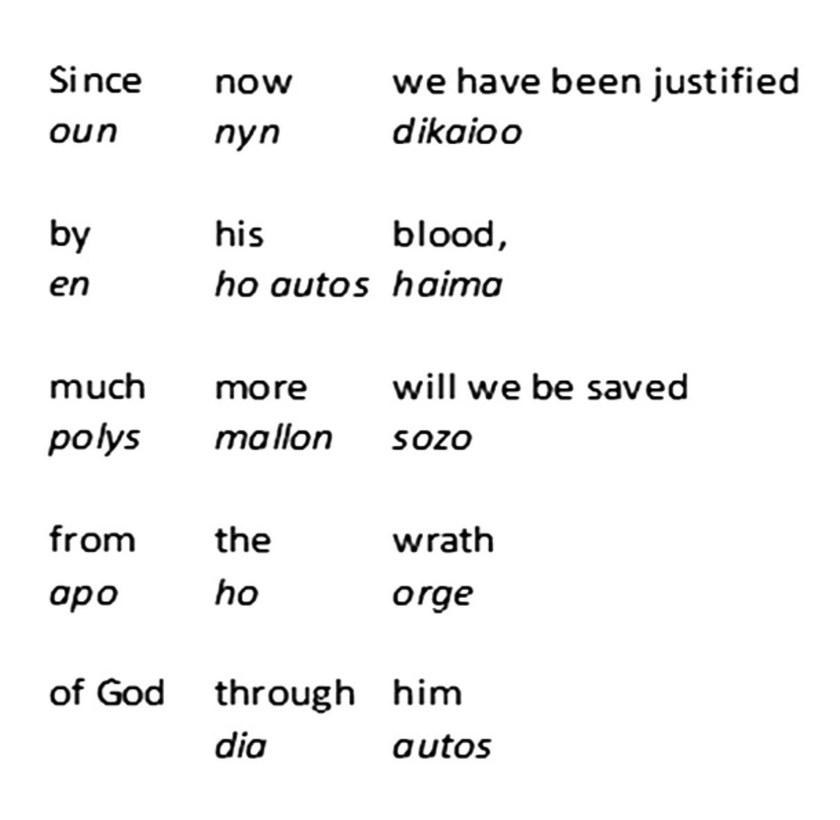
So this is saying, quite correctly, that we’ve been justified by his blood… but how much more shall we be saved from God’s wrath through him? Jesus came to save us from his Father’s wrath? No. That isn’t the truth. In fact, this verse does not say that. If you look at the original Greek, it does not say we are saved from God’s wrath.
So what is the wrath we’ve been saved from?
Not God’s! Does God store up his wrath to pour out on his children? Absolutely not—because he has no wrath to pour out. So does “the wrath” here have a different meaning? Because it’s talking about the wrath—a very specific wrath. Does it come from another source? Yes—and we’re going to look at what it is.
(A clue to this is found in who Jesus says comes to rob, kill and destroy. The thief. The accuser. The devil. And who is it that desires to give us abundant life? Jesus—the Good Shepherd. That comes from John 10:10.)
Romans 5:9 does not actually mention anything about God’s wrath. In fact, there are two Bible versions that include the phrase “wrath of God”, but put of God in italics, admitting that it was not in the original Greek: it was added to help the reader understand (or so the translator thought) but it has actually created a deception. They assumed it meant God’s wrath, since they didn’t know the love of God. They assumed that’s what it meant—but it wasn’t there at all.
For example, the NASB says: “Much more then, having now been justified by his blood, we shall be saved from the wrath of God through him.” But “of God” is in italics—because it’s not in the original. It was added. The NTE doesn’t put it in italics. It says: “Much more, because we’ve now been declared righteous by his blood, we shall be saved through him from God’s wrath.” But it does put a note: “Greek: the wrath (referring to God’s wrath as in verse 10).” So, what does verse 10 actually say?
For if, while we were enemies, we were reconciled to God through the death of his Son, how much more, since we have been reconciled, shall we be saved by his life? (Romans 5:10).
Where does it mention “God’s wrath” there? We needed to be reconciled to God—God did not need to be reconciled to us. He has never, ever turned from us. It’s we who turned from him. It was our wrath that God in Christ endured—not God’s wrath waiting to crush us. Because God has no wrath and no desire to crush anyone. He is a loving, restoring God.
So what is the correct translation?
Well, in this case, the King James Version actually gets it right. It says: “Much more then, being now justified by his blood, we shall be saved from wrath through him.” It doesn’t add “God’s”—just “wrath”. The Young’s Literal Translation says: “Much more, then, having been declared righteous now in his blood, we shall be saved through him from the wrath.” That’s what it actually says.
If the wrath we’re saved from is not God’s, then whose is it?
Paul was using the Septuagint translation, which also included a book called The Wisdom of Solomon. That book was in all Christian Bibles until the 1500s, when it was removed from most. It’s still in some. The Wisdom of Solomon—which Paul would have known and read—gives us insight into the wrath, and whose wrath it is. In writing what he did, Paul would have known this verse:
So he overcame the destroyer, not with the strength of body nor force of arms, but with a subdued him that punished, alleging the oaths and covenants made with the fathers. For when the dead were now fallen down in heaps one upon another, standing between them, he stayed the wrath and diverted the way to the living. (Wisdom of Solomon 18:22-3).
In other words, this was describing what God was doing to the destroyer—the one who was punishing—so that the wrath would be stopped, and people wouldn’t be killed.
So what is “the wrath” that God’s servant overcomes? The wrath—another name for the destroyer—who, by this point, the Jews no longer associated with God, but with Satan. (Remember, they had previously had an undifferentiated view of God in which they thought ‘the destroyer’ was God even though Satan may have been doing the work.)
Jesus saves us—not from his loving Father—but is sent by the Father to save us from the wrath. The destroyer. The accuser. Satan. That has a totally different connotation.
Which translation should I trust?
Revealing these differences in translation—where some words have been mistranslated—can cause confusion. People often ask: “Which translation should I read? Which should I trust?”
The answer, really, is to trust the Good Shepherd—Jesus—the Way, the Truth, and the Life—who said we can hear his voice and follow him. Follow Jesus. Don’t follow your interpretation of what you think the Bible might say. Yes, the Holy Spirit can bring us revelation of truth. But it’s difficult when we’ve already been programmed to believe we know what the truth is. We’re all confirmationally biased, which means it’s really hard to be deconstructed.
For me, it was such a hard process for God to deconstruct my mind from the things I thought were true—things I had never really questioned. I had some struggles, but I hadn’t questioned deeply enough to seek the real answer. It took experiences of unconditional love to bring that change. I believe we can use unconditional love as the plumb line to discern what is true. The gospel is good news—not bad news. If we know the true good news, we’ll be free from the deceptions that misrepresent God, misrepresent us, and misrepresent how God treats and loves us.
An “unbiased translator” is an oxymoron. In reality, everyone is biased by something. The question is: are you biased by love or by theology? Take the Mirror Bible, for instance—translated by Francois du Toit. His bias is love. He sees God as a mirror of who we are. I don’t mind that bias. But I struggle with a bias that translates things through a belief that God is angry and will punish his children forever.
Your ability to judge a translation doesn’t come from your linguistic skills or academic credentials—some people have those and some don’t. It comes from your personal knowledge of who Jesus is—the nature of God as revealed by him—and the gospel of unconditional love that he preached.
Unconditional love is the reality. God loves us in such an unconditional way that he continually seeks us out to reveal we have been saved from our lostness. In the YouTube video, The Gospel of the Chairs, by Brad Jersak, which I’d encourage everyone to watch, God never turns away from us—he always turns towards us—so that we can be restored to relationship.
God’s love is so unconditional that he designed us to be immortal—to have a continual, unbroken relationship with him. Death was the result of Adam—representing mankind—walking in independence, away from life. Jesus came to undo what Adam did, and undo the consequences brought by the enemy, including death—by taking back the keys of death and Hades, and revealing what was hidden—who we really are.
Mike’s latest book, Unconditional Love, is out now as an ebook on our website and will soon be available to order in paperback from your local or online bookseller.
As we have been created in the image of God, sonship is the key. Father, Son and Spirit exist in an eternal circle of relationship, a mutual exchange of love. This dynamic love is central, and although the Spirit represents a spiritual reality, God has also created the natural realm to interact with us as His children. This allows us to reflect, receive and extend that love to one another. Love is always key with God – He has created us both to be loved and to love.
We are included in the circle of relationship between Father, Son and Spirit. He has placed eternity in our hearts, so we are drawn back to that relationship, even if we are not fully aware of it. This pull towards worship and connection with God is by His design. In the realm of creation, God has created us as sons to operate in sonship towards creation, as creation was made for us, not primarily for Him. Creation exists so that, as His children and co-heirs and co-creators, we might mature, come into an ascended state and, like Him, become creative.
There are things God has chosen only us to do, as we carry His DNA signature. We are made in His image and likeness, and this distinguishes us as a race. Angels, for instance, are created as individual beings with unique purposes. Other dimensions contain races as well, but they are all connected to this dimension, as we are the reference point for them. This calling is not about arrogance or claiming superiority; rather, we have been chosen as His children to steward creation with Him, moving forward into ages to come. There is a joy in God’s heart for us, and He wants this joy to be in us so our joy may be complete.
This co-heirship leads to co-creatorship, and as sons and daughters, we become creative. We express this creativity in our daily lives, but there is also the potential to create as God creates, calling things into existence as if they are. This starts with choosing realities that align with the Father’s heart and His intentions for our lives. Creation responds to us, forming that reality as we collapse quantum possibilities into being. However, to understand His intentions, we need intimacy with the Father’s heart. Jesus only did what He saw the Father doing, and that is what God desires from us – a relationship that is face to face, heart to heart, mind to mind, in the light of His presence. As His children, we then work in collaboration with Him to realise His intentions, choosing realities aligned with His purposes willingly and cooperatively within this co-creatorship.
Of course, I do not have all the answers because I am not God. There may be many other reasons for God creating us in this way and for creating the physical, spiritual and dimensional realms. God is a creative being, but I know with certainty that His purpose in creating is rooted in love. The whole of creation is meant to experience His love. This is why creation is waiting and longing for the revealing of the sons of God so it may be set free from corruption into the freedom of the glory of God’s children. He has given us a glorious image, clothing us in sonship so creation can respond to us. When we speak with His voice, carrying out His intentions, creation responds.
Therefore, it is essential to know His heart and to carry out His purposes with love. We love because He first loved us, and we love one another as He has loved us. This also means we should respond to creation lovingly, bringing God’s kingdom – His rulership and dominion – through love and not through any other way.
I hope this provides a little more insight into who we are and our image. We can only truly see ourselves by looking into the mirror of His face and seeing what is reflected back, listening to the vast sum of His thoughts about us. God has made each of us with a particular purpose, both individually and collectively as His children.
If you enjoy these videos, please take a moment to like, share, comment and subscribe – it really does help. Thank you very much!
The traditional Evangelical view of the Bible as the inerrant and infallible word of God is problematic. The true “Word of God” is Jesus, the Living Word, and direct experience of God through the Holy Spirit takes precedence over scriptural interpretation.
Biblical passages often used to support legalistic or fear-based theology, including those about the “deceitful heart” and “missing the mark,” point to humanity’s lost identity in God rather than inherent wickedness or behavioural failures.
Redemption
Jesus’ sacrifice on the cross was not to appease an angry God but to restore humanity’s true identity as children of God. Redemption is not earned through religious practices but is a free gift received through recognizing our inherent union with Christ.
Religious Conditioning and Personal Experience
Religious indoctrination, particularly within Evangelicalism, parallels cult-like control through fear and guilt. Personal experience with God, guided by love and discernment, is preferable to blind acceptance of religious dogma and trusting external authorities (including charismatic figures and self-proclaimed prophets).
Nine Pillars
In my personal journey of deconstruction, I once viewed the world through a framework of nine “pillars,” primarily rooted in Evangelical doctrines but also influenced by cultural and scientific conditioning. The process of each pillar being challenged and ultimately dismantled led to a transformed mind, grounded in love and direct relationship with God.
The Role of Love
Prioritise direct relationship with God through the Holy Spirit over rigid adherence to scripture or religious systems. Love is the ultimate measuring stick for discerning truth and evaluating personal experiences. Actively seek God’s guidance in a process of ongoing deconstruction and renewal, leading to greater intimacy with God and a more accurate understanding of our true identity in Christ.
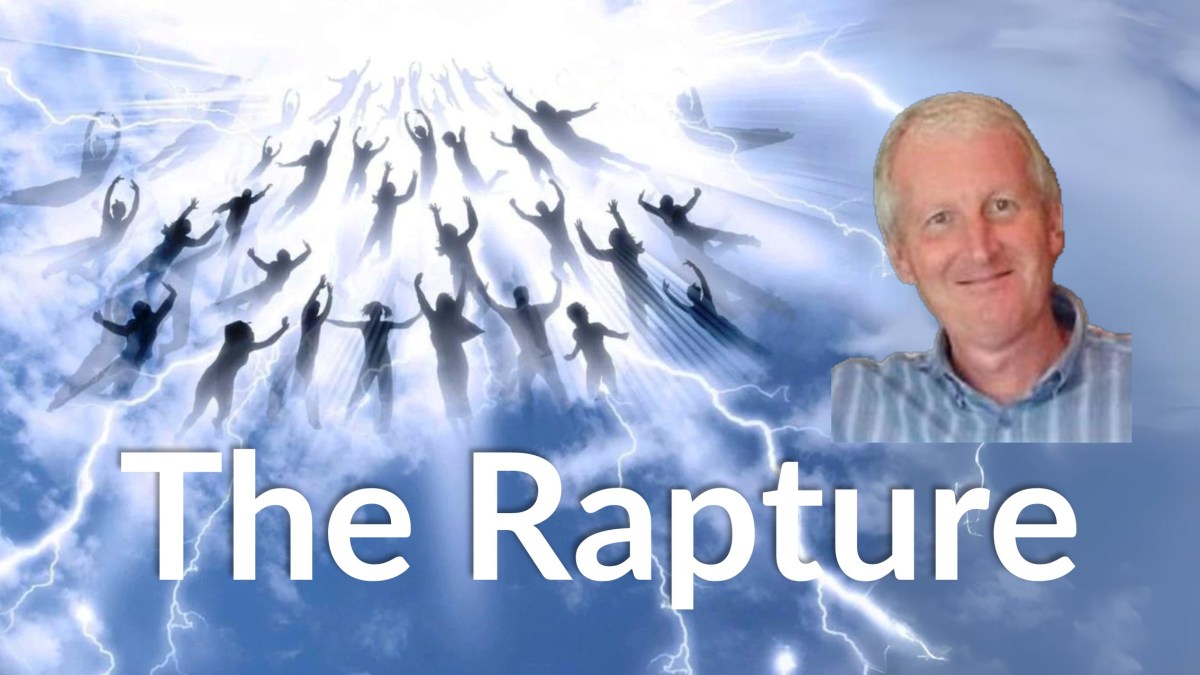
Every time there’s any sort of sign in the heavens, people say, “Oh yeah, the rapture’s coming, blah blah blah blah blah.” I mean, half the Amazon rainforest has been cut down to produce books about the rapture, and none of them came true. I’ve got a whole shelf filled with those books that people have either sent me or I used to have, that I keep just as a reminder that it’s never going to happen.
It won’t. It’s all based in a wrong understanding of God’s purpose, based in a theology which was a rejection of the Holy Spirit back in the 1820s. The Brethren – dispensation, millennialism, rapture theology all came from the same source. Zionism also. It’s all the fruit of a poisonous tree, sadly, but people buy into it hook, line and sinker. Any time there’s any sort of thing that happens in the world, you get all the crazies coming out, sadly. They’re well-meaning, a lot of them. It’s deceiving. It’s just a huge deception.
Whenever you reject the Holy Spirit, you’re opening yourself up for demonic deception. The whole Brethren movement, which was inspired by God for the priesthood of all believers, saw many believers come out of the institutions to look for a simpler way of engaging house to house. The Holy Spirit fell on them with prophecy, tongues, and gifts in the 1820s.
Ultimately, they rejected that, some of them. Deception came upon them, and then they needed a theology that explained why the Holy Spirit wasn’t for today, which they came up with: dispensationalism and cessationism as part of that. Then, along with that, came the rapture, the whole deception of it. Scofield was paid by a Jewish source to promote that because it plays into the hands of those who are looking for a one-world governmental system on earth. All it does is rob us of our authority to bring the Kingdom now and promotes fear.
Cult-like Deception
There was a lady in the States who killed two of her children because she didn’t want them to go through the [tribulation]. That was last year [2021] because it was supposed to be February the 24th that the rapture was going to happen. She actually killed two children because she did not want them to go through the tribulation. That’s how deceptive it was, but it becomes very cult-like because it’s a very controlling thing. We need to see it exposed; more and more people need to be set free from that deception. People will throw out the rapture, but they’ll keep the millennium because they’ve not yet realised it came from the same source. Or they’ll keep Zionism, not realising it came from the same source. That’s part of the problem: people are not discerning, and they don’t find out. They just believe what they’re told, and if you hear it enough, you think it must be true. That’s true. People do believe it because they’ve been told, and they kept being told.
I was brought up with it. I was in the Brethren Church. I know the roots of it. I researched it. I found all the books of the early Brethren fathers and what they shared, and how good it was in the beginning. But you could see when it went off, and you could see when deception came in because the writings changed. The tone of them changed. They became judgmental. The love went out of them. You can see it in just what was written, how it was written. Everything changed from the inspiration that they had.
If they had continued, you would have had Azusa Street-type revival 80 years before it happened. But they rejected it, and it took 80 years for that to come round again. The most ironic thing, and this is a huge irony, the Brethren movement does not allow women to speak, and they don’t believe in prophecy. But when the Holy Spirit was moving on that group, a woman called Mary Margaret McDonald prophesied a vision, and they based the rapture teaching on that prophecy. But they don’t believe women can speak, and they don’t believe prophecy, but they based the teaching on it and mixed it with a Jesuit priest’s teaching, and came up with that whole system of belief which hijacked the seminaries around the world for the best part of a hundred years.
Impact on Mainstream Christianity
It is still taught in most seminaries around the world, unless you come from a Reformed background. Most of the other charismatic seminaries teach it because they were totally hoodwinked by it. The Scofield Bible, which was commissioned and paid for with an agenda that wasn’t from a Christian, promoted that. The Scofield was a King James Version that contained all the notes related to the rapture, the seven dispensations and cessationism, all in the notes. That infiltrated the seminaries around the world, and then most of the missionaries’ teaching, and the evangelical movement were actually taught from those seminaries.
That’s why it’s so infiltrated mainstream because it got in through the seminaries, and then that went out through and infiltrated most of the evangelical movement. It wasn’t really until the charismatic movement started to bring people back to a restored relationship where they could hear God for themselves, that people started to question some of those things.
When I got baptised in the Spirit in 1986, the first thing God said to me was, “You need to understand kingdom and covenant.” Well, I thought I knew what kingdom and covenant meant because I’d been brought up in the Brethren movement. That’s all they talked about: the kingdom coming a thousand years after all this stuff. It took me three years of going back with God through the Bible, because He just did it. I didn’t read another book: I just went through the Bible. He showed me the whole error of all of it, and I found a whole different view of what is going to happen, which has led me and helped me to come and embrace restoration and everything else. But that was a long time ago.
I already had a lot of deconstruction from futurist eschatology 40 years ago. Now, it’s so easy to see how all this works together with what God is doing to restore. I didn’t have all of that negative stuff. I had a lot of demons cast out of me. I had a lot of religious spirits specifically from that movement. It was a deceptive movement: it was birthed in God – and rejected God for an error. When you do that, you open yourself up to deception. It has had probably the biggest deceptive influence on mainstream Christianity in the last 200 years. A huge deception.
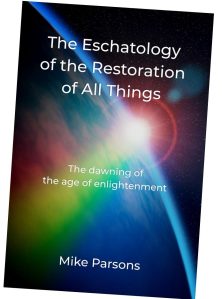
Mike goes into much more detail on these subjects in his book The Eschatology of the Restoration of All Things, available in paperback or as an ebook. Click here or on the image above for details.
Support Freedom ARC#
The ‘new’ Patreon page Mike spoke of in the video is now well-established. Find out more by clicking the image below.
Our Patreon patrons give a small amount each month and can join us for our monthly group Zooms, get exclusive or early access to Mike’s teaching and enjoy further patron-only benefits. Or you can use the blue button to support our work with a one-time gift*. Thank you!
Note: This donation is securely handled through PayPal but you do not need to have a PayPal account yourself to make a one-time donation.
For repeating donations, if you do not have (or want) a PayPal account please support us through Patreon instead.
Misunderstandings about God’s nature, such as this belief that He punishes those He loves, often stem from incorrect interpretations of scripture. Hebrews 12:5-6, commonly cited to support this view, is actually a misquotation of Proverbs 3:11-12, which speaks of God’s discipline as loving guidance, not punishment. Evangelical theology, influenced by doctrines like penal substitution and eternal conscious torment in ‘hell’, has misrepresented God’s character, which can distort our understanding of His love and lead to harmful practices such as corporal punishment.
When I reflect on my own experience with spanking, I acknowledge that it was based on incorrect teachings about God’s nature. True discipline from God is about correction and guidance, not punishment. God’s desire is to help us grow and align with our true identity in Him.
Finally, an activation exercise will help us connect more deeply with God’s love. By focusing on Him and breathing in His unconditional love, you can experience intimacy and healing. Visualise opening the door to your spirit and inviting the Father in, allowing His love to heal wounds and remove negative feelings. Rest in His presence and experience His love more fully.


















 Sons of Issachar