
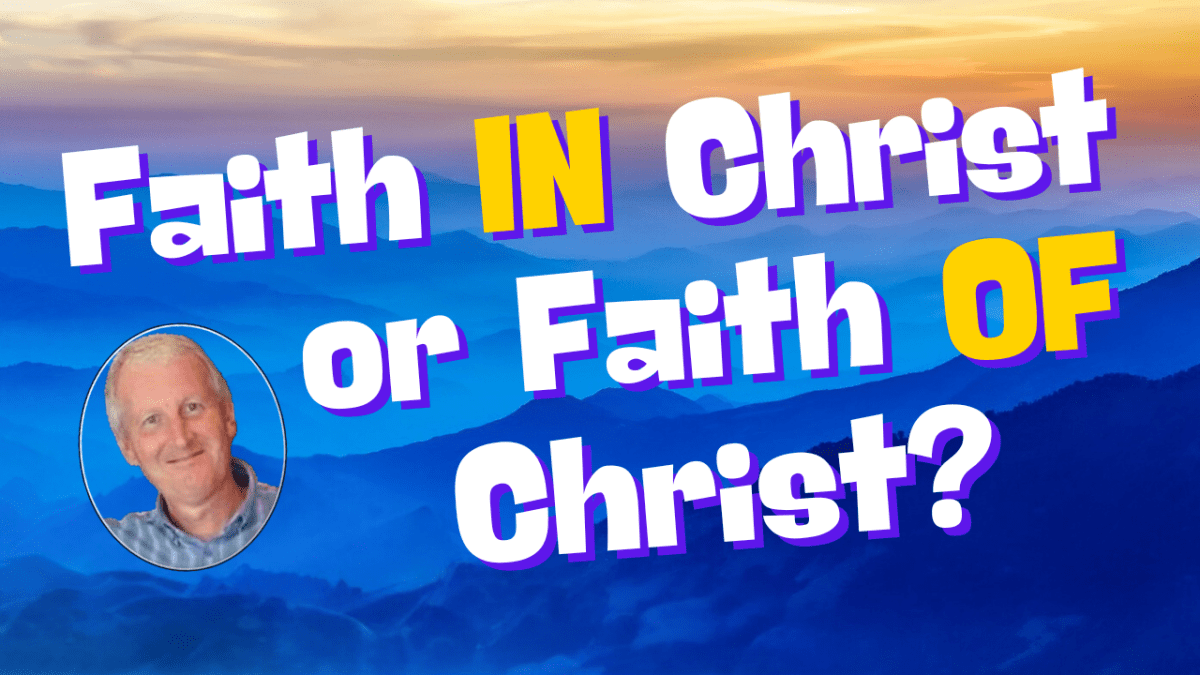
357. Faith IN Christ, or Faith OF Christ? What’s the difference?

Our True Identity

I believe our true identity comes from God’s faith in us, not our faith in God. So, what about the faith needed for our salvation? Where does faith come from? How much faith is needed? Whose faith saves us? These are all valid questions that many people ask, but I think they ask them because they don’t fully understand the reality of what God has done. They think we need to do something to make what God has done work for us.

I believe God wants us to understand that the very fabric of the universe is founded on grace and faith—but not ours, His. His grace is limitless. Ephesians 2:8 says, “By grace, you have been saved through faith; that is not of yourselves.” It’s very clear here: the faith through which we are saved is not ours; it’s the gift of God, not a result of works, so that no one may boast.

So, I can’t come to God and say, “Look at my great faith that saved me,” because I never had that measure of faith—and I don’t think anyone does. What we do have is the gift that enables us to come to the realisation of what the truth is, so it’s not by works. This is what defines the difference between the Old and New Covenants: how faith worked in the Old Covenant and how it works in the New. The key question is whether faith is a gift from God or something we try to generate ourselves through works or effort. The reality is that it has nothing to do with what we do at all—by grace, through the gift of God’s faith, not by our own faith or works.

Saved by Our Faith?

So, we are not saved by our faith in God but by the faith that comes from God. The meanings are slightly different. The faith of God means God has enough faith for our salvation, and the faith from God means He gives us the faith to come to the realisation of how He feels about us. It’s often translated as “our faith in God,” but it isn’t actually our faith—we didn’t create it; it was freely given to us by God.

God has an amazing way of looking at us, filled with wonderful thoughts, and each one of those thoughts is good. In English, it’s usually translated as “faith in,” but in Greek, it’s more accurately “faith of” or “faith from.” That small change in wording can make a huge difference to our experience, understanding, and daily walk with God.

One perspective drives us to constantly strive to have enough faith, often leaving us afraid we don’t. The other invites us to simply receive faith from Him and rest in the fact that His faith is enough for us. We don’t need to strive.

Let’s look at some Bible verses that address this. Philippians 3:9 says, “And may be found in Him, not having a righteousness of my own derived from the law, but that which is through faith in Christ.” That’s the usual English translation. If we read it as “faith in Christ,” it suggests that righteousness comes from my own faith. But if we change the wording to “faith from Christ,” it reads: “And may be found in Him, not having a righteousness of my own derived from the law, but that which is through faith from Christ—the righteousness which comes from God on the basis of the faith that comes from Christ.” That makes a huge difference in how we understand righteousness. It’s no longer based on our faith but on the righteousness Christ imparts to us.

‘In’ Fits a Works-Based Theology

The word ‘in’ fits with a works-based theology, but “of” or “from” fits with a grace-based understanding. Galatians 2:20 is another scripture: “I have been crucified with Christ; and it is no longer I who live, but Christ who lives in me.” Now, how many people have tried to crucify themselves daily, taking up their cross, trying to follow Him, and living in misery, wearied and burdened by the attempt to be good enough to please God or earn His love? So many are still caught in that trap.

We were crucified with Christ because when He died, we died with Him—not because we did anything, but because He did it on our behalf. It’s no longer I who live; Christ lives in me, and I now live as a new creation in Christ. The life I live in the flesh, I live by faith in the Son of God—or, more accurately, by faith from the Son of God. This changes everything. My relationship with God isn’t based on how much I can believe, but on His faith and the faith He gives me to enable that relationship.

The King James Version gets this right: “I am crucified with Christ; nevertheless I live, yet not I, but Christ lives in me: and the life which I now live in the flesh I live by the faith of the Son of God, who loved me and gave himself for me.” It’s all about the unconditional love of God and the gift of life through Jesus. Through Him, the world can rediscover its lost identity as children of God.

Who Is More Faithful: God or Me?

So, whose faith saves me and sustains me: my faith in God or God’s faith in me, given to me? Definitely the latter. Am I relying on my small measure of faith, or am I trusting in God’s faithfulness? God is faithful to do what He promised. He predestined us to a face-to-face, restored relationship in love, and this has always been His intention for each of His children.

So, does “in” or “of” really matter? Absolutely, it does. It makes a huge difference in how we live our daily lives. One places the burden of faith on us; the other reveals faith as a gift, enabling us to rest in God’s grace and faithfulness. So, who do you think is more faithful—Jesus or us? I know the answer to that, and I’m sure you do too.

If you have enjoyed this post, please take a moment to like, share, comment and subscribe. It really helps. Thank you!

351. God’s Provision: Living in Blessing

Mike Parsons

Asking and Receiving

The Bible talks about asking and receiving, and there’s nothing inherently wrong with that. However, it’s the manner in which we do it that matters. If you’re begging or praying in a way that disconnects you from God, our provider, it can be problematic. [His covenant name,] Jehovah-Jireh (The Lord our Provider), reflects His goodness, mercy, love and desire to bless us. When we embrace sonship, we recognise that we are blessed to be a blessing. This is integral to our identity as children of God, knowing who we are: blessed ones.

It is not something we strive to attain; it is who we are. God is within us, Heaven is within us, and we are connected to that realm at the core of our being. Rivers of living water flow from our innermost being, providing a source of life and energy. We drink from this inexhaustible supply, the spirit and River of Life within us, without needing to ask God for a drink.

Trust and Relationship

Cardiognosis with God involves a mutual knowing of hearts—His and ours—as one. Therefore, I know He is my Provider, and I trust Him. This trust manifests in the way I live, so I’m not constantly asking Him for things but living in a state of being blessed. I trust in His provision, protection and guidance. The more connected I am relationally to Him, the more everything flows from that relationship. I can access heaven’s resources, living in the conscious awareness of trusting my Father, who loves me. There is no doubt or unbelief in His provision as I seek first the relationship, and everything else is added to me.

Prayer and Covenant

Prayer, as Jesus spoke about it, was often in the context of the Old Covenant age, which is very different from the New Covenant—a covenant of grace, mercy and love. I would say prayer is less a skill to be learned and more a relationship to be had. The more time spent with God in relationship, without any agenda of asking for things, the more you will know His provision. He is a good God who wants you to be blessed. Therefore, sonship is a blessed state from which everything flows, because you know God is your Provider, and His provision shall be seen.

Rather than focusing on asking and waiting, consider your identity within your relationship with Him. Everything is provided to enable you to be who He made you to be. It is an outworking of being who you are, with everything you need already prepared. You simply walk it out and let it manifest in your life. There are things you can do, such as calling things that are not as though they are: if something has not yet manifested, you can call it into being. By brooding over [what is] the Father’s heart for you, you can incubate and then speak the manifestation into reality.

Acting in Faith

You are not passive in this process; you can rule and take action from a place of intimacy and heart-to-heart relationship with God. You will not act independently or with wrong motives but always align with His heart and desires for you. Your needs will be met according to His plans for your destiny. Acting independently, using your own strength and understanding, leads to depletion and striving. Flowing in your destiny with Him ensures that everything you need is manifested or can be called into being when necessary.

If you enjoy these blogs and videos, please take a moment to like, comment, share and subscribe, whether here or on YouTube. It really helps. Thank you very much.

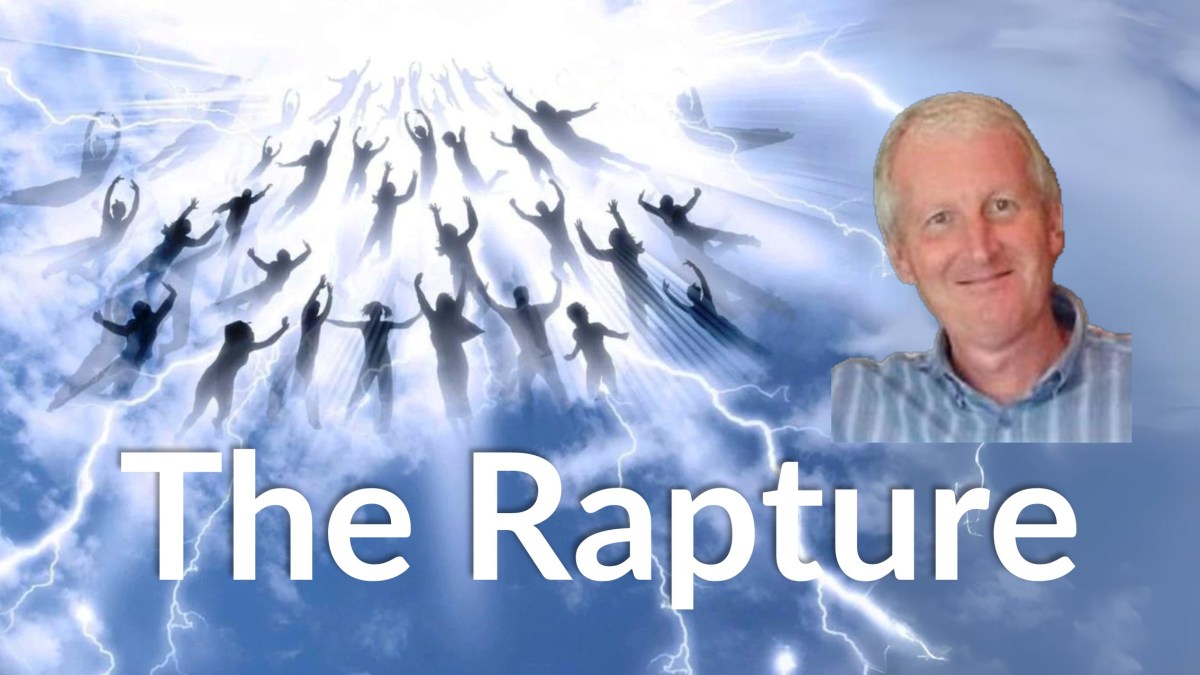
345. The Rapture of the Saints

Mike Parsons – 

“The Rapture’s Coming!”

Every time there’s any sort of sign in the heavens, people say, “Oh yeah, the rapture’s coming, blah blah blah blah blah.” I mean, half the Amazon rainforest has been cut down to produce books about the rapture, and none of them came true. I’ve got a whole shelf filled with those books that people have either sent me or I used to have, that I keep just as a reminder that it’s never going to happen.

It won’t. It’s all based in a wrong understanding of God’s purpose, based in a theology which was a rejection of the Holy Spirit back in the 1820s. The Brethren – dispensation, millennialism, rapture theology all came from the same source. Zionism also. It’s all the fruit of a poisonous tree, sadly, but people buy into it hook, line and sinker. Any time there’s any sort of thing that happens in the world, you get all the crazies coming out, sadly. They’re well-meaning, a lot of them. It’s deceiving. It’s just a huge deception.

Whenever you reject the Holy Spirit, you’re opening yourself up for demonic deception. The whole Brethren movement, which was inspired by God for the priesthood of all believers, saw many believers come out of the institutions to look for a simpler way of engaging house to house. The Holy Spirit fell on them with prophecy, tongues, and gifts in the 1820s.

Ultimately, they rejected that, some of them. Deception came upon them, and then they needed a theology that explained why the Holy Spirit wasn’t for today, which they came up with: dispensationalism and cessationism as part of that. Then, along with that, came the rapture, the whole deception of it. Scofield was paid by a Jewish source to promote that because it plays into the hands of those who are looking for a one-world governmental system on earth. All it does is rob us of our authority to bring the Kingdom now and promotes fear.

Cult-like Deception

There was a lady in the States who killed two of her children because she didn’t want them to go through the [tribulation]. That was last year [2021] because it was supposed to be February the 24th that the rapture was going to happen. She actually killed two children because she did not want them to go through the tribulation. That’s how deceptive it was, but it becomes very cult-like because it’s a very controlling thing. We need to see it exposed; more and more people need to be set free from that deception. People will throw out the rapture, but they’ll keep the millennium because they’ve not yet realised it came from the same source. Or they’ll keep Zionism, not realising it came from the same source. That’s part of the problem: people are not discerning, and they don’t find out. They just believe what they’re told, and if you hear it enough, you think it must be true. That’s true. People do believe it because they’ve been told, and they kept being told.

I was brought up with it. I was in the Brethren Church. I know the roots of it. I researched it. I found all the books of the early Brethren fathers and what they shared, and how good it was in the beginning. But you could see when it went off, and you could see when deception came in because the writings changed. The tone of them changed. They became judgmental. The love went out of them. You can see it in just what was written, how it was written. Everything changed from the inspiration that they had.

If they had continued, you would have had Azusa Street-type revival 80 years before it happened. But they rejected it, and it took 80 years for that to come round again. The most ironic thing, and this is a huge irony, the Brethren movement does not allow women to speak, and they don’t believe in prophecy. But when the Holy Spirit was moving on that group, a woman called Mary Margaret McDonald prophesied a vision, and they based the rapture teaching on that prophecy. But they don’t believe women can speak, and they don’t believe prophecy, but they based the teaching on it and mixed it with a Jesuit priest’s teaching, and came up with that whole system of belief which hijacked the seminaries around the world for the best part of a hundred years.

Impact on Mainstream Christianity

It is still taught in most seminaries around the world, unless you come from a Reformed background. Most of the other charismatic seminaries teach it because they were totally hoodwinked by it. The Scofield Bible, which was commissioned and paid for with an agenda that wasn’t from a Christian, promoted that. The Scofield was a King James Version that contained all the notes related to the rapture, the seven dispensations and cessationism, all in the notes. That infiltrated the seminaries around the world, and then most of the missionaries’ teaching, and the evangelical movement were actually taught from those seminaries.

That’s why it’s so infiltrated mainstream because it got in through the seminaries, and then that went out through and infiltrated most of the evangelical movement. It wasn’t really until the charismatic movement started to bring people back to a restored relationship where they could hear God for themselves, that people started to question some of those things.

When I got baptised in the Spirit in 1986, the first thing God said to me was, “You need to understand kingdom and covenant.” Well, I thought I knew what kingdom and covenant meant because I’d been brought up in the Brethren movement. That’s all they talked about: the kingdom coming a thousand years after all this stuff. It took me three years of going back with God through the Bible, because He just did it. I didn’t read another book: I just went through the Bible. He showed me the whole error of all of it, and I found a whole different view of what is going to happen, which has led me and helped me to come and embrace restoration and everything else. But that was a long time ago.

I already had a lot of deconstruction from futurist eschatology 40 years ago. Now, it’s so easy to see how all this works together with what God is doing to restore. I didn’t have all of that negative stuff. I had a lot of demons cast out of me. I had a lot of religious spirits specifically from that movement. It was a deceptive movement: it was birthed in God – and rejected God for an error. When you do that, you open yourself up to deception. It has had probably the biggest deceptive influence on mainstream Christianity in the last 200 years. A huge deception.

Mike goes into much more detail on these subjects in his book The Eschatology of the Restoration of All Things, available in paperback or as an ebook.  Click here or on the image above for details.

Support Freedom ARC#

The ‘new’ Patreon page Mike spoke of in the video is now well-established. Find out more by clicking the image below.

'Donate to Freedom ARC' button

Our Patreon patrons give a small amount each month and can join us for our monthly group Zooms, get exclusive or early access to Mike’s teaching and enjoy further patron-only benefits. Or you can use the blue button to support our work with one-time gift*.
Thank you!

Note: This donation is securely handled through PayPal but you do not need to have a PayPal account yourself to make a one-time donation.
For repeating donations, if you do not have (or want) a PayPal account please support us through Patreon instead.

328. Experiencing God’s Love: A New Approach to Evangelising Christians

Mike Parsons

If you are starting with people who are already professing to be Christians, you will begin in a different place than if you are engaging those who don’t.
I will get on to evangelising non-Christians in my next post. Ultimately though, both need to know the love of God and experience that love themselves, through a revelation of who He is, to fully come into the knowledge of who they are. 

Beyond Religious Conditioning

I would always start in an experiential way. If they are Christians, I will quote scriptures that point to the fact that Jesus and the Father very clearly desire an intimacy that is not religious and not based on works, performance or the old covenant. I would definitely look at the New Covenant wineskin for believers who may be conditioned or programmed by various religious beliefs. What did Jesus say we should expect? We should expect to be where He was, in the “I AM” relationship with the Father. He came and breathed on them to receive the Holy Spirit on the day of resurrection, affirming them as the new representatives of humanity: just as Adam was the first representative through whom all died, now they were the new representatives where all are made alive.

Experiential Encounters

I would emphasise that Jesus wanted them to experience His presence. Even when He told the disciples to wait in Jerusalem, it was so they would be clothed with power from on high – an experiential encounter affirming what they had already experienced in being indwelt by the Holy Spirit and received new life when He breathed on them, just as the Father breathed life into Adam. This challenges the idea of a certain number of people being “born again” at some future point, when the reality is that all were born again at that resurrection moment, affirmed when He breathed on them. As He said in John 14, “On that [resurrection] day you will know I am in you and you are in me, and we are in the Father.”

Challenge the conventional

I think always stressing the experiential side is key – that we have been called to hear His voice, come boldly to the throne of grace, and enter the realms of heaven experientially because they are open. Expressing this in a practical way removes the spiritualisation of the concept and sets the expectation for what our relationship with God should be. We can challenge the conventional vaguely hopeful expectations of ‘going to heaven when we die’ with affirmations of what Jesus said we should expect in this life – being in union with each other, our love relationship allowing the world to see what it means to be in relationship with God.

Summary

In conclusion, I would definitely give people an opportunity to have their own experience of God. Make it simple, easy and accessible – don’t complicate it. Give them the opportunity of encountering God through experience, and from that point, you can open the door for them to understand so much more.

Support us

'Donate to Freedom ARC' button
Our Patreon patrons give a small amount each month and can join us for our monthly group Zooms, get exclusive or early access to Mike’s teaching and enjoy further patron-only benefits. Or you can use the blue button to support our work with one-time gift*.
Thank you!
Note: This donation is securely handled through PayPal but you do not need to have a PayPal account yourself to make a one-time donation.
For repeating donations, if you do not have (or want) a PayPal account please support us through Patreon instead.

Mike’s YouTube Channel

These blog posts are based on videos posted on Mike’s YouTube channel. Want to see the latest ones as soon as they are published?
Click the image below to subscribe at https://freedomarc.org/youtube


320. The Signs of Jesus’ Coming

When you look at the beginning of Matthew 24, the chapter’s context is the question posed by the disciples to Jesus. They asked when these three things would happen: the destruction of the temple, the sign of His ‘coming’ (parousia = presence), and the end of the age (not the end of the world, but rather the end of the Old Covenant age, as Jesus brings an end to the Old Covenant).

These ideas are interconnected, and Jesus provides various signs of His parousia in this context. The ‘generation’ was that 40-year period and the ‘elect’ refer to Jewish believers who left Jerusalem, as Jesus had warned them. Leaving the earthly Jerusalem was also a symbolic act of leaving the Old Covenant and entering the New, the Heavenly Jerusalem. The ‘angels’ (angeloi = messengers) gathering the elect can be understood in the sense of human (and perhaps supernatural) messengers who had been sent out with the gospel during the period leading up to the end of the age; so ‘the elect’ are those who would be gathered during this time, the 144,000 of Revelation.

The lightning imagery can be interpreted in different ways. Firstly, it can mean that Jesus would come quickly at the end of that age, as lightning bursts suddenly. Secondly, the word lightning can also be translated as bright sunshine, which suggests that the light of the Gospel would be released during this period, as the messengers released that truth and the elect were gathered in.

All that Jesus says in this passage is perfectly consistent, but we may find the symbolism challenging to grasp fully due to our conditioning by modern teachings that associate these verses with the ‘rapture’ and the end of the world. But when Jesus talks about two in the field and one being taken, this is again a warning about the war and siege of AD 67-70 (nothing to do with a ‘rapture’), underscoring the importance of being alert and ready at that time. In the days of Noah there were those who were ready and entered the ark and those who were not ready and were lost: the same thing was true here. Of those who did not heed the warning to flee, some were ‘taken’ by the enemy army, and many were crucified and thrown into Gehenna during that period of the Siege of Jerusalem leading up to AD70.

Jesus’ parables have also been misinterpreted by the ‘rapture’ teaching. They are not analogies to be dissected for every detail, but rather stories used to convey a point. Terms like “outer darkness” and “weeping and gnashing of teeth” symbolise being outside the covenant and expressing anger towards the gospel: those who reject the light of the New Covenant dwell in darkness and respond with hostility.

Certain parables refer to the anticipation of Jesus’ first coming after a period of silence in prophecy. During this time, some were aware of the signs and awaited the Messiah, while others remained unaware or entrenched in a flawed religious system. When He did come they rejected Him, but then had a whole generation in which the light had gone forth, the messengers had gone out and the good news was being proclaimed. Yet still many rejected the good news and followed their old religious system rather than entering into what Jesus came to offer.

I can direct you to a whole blog post we wrote several years ago on the subject of the sheep and goats. In that parable Jesus was talking about nations, not individuals; and specifically about the treatment of the elect, the believing Jews, by their ‘brothers’ (the unbelieving Jews) during this time of covenant transition.

In reality, I believe it’s more important to seek the Father’s heart on these matters rather than attempting to dissect every scripture from a modern-day perspective. Understanding the nuances of Old Covenant language can be challenging, and without that context, passages may seem obscure.

Jesus cautioned his followers to flee Jerusalem when they witnessed certain signs, without even retrieving their coats. Historical records, such as the writings of Josephus, corroborate that Christians heeded this warning and fled to safety in the hills of Pella. While the entire region was impacted by the siege, those who followed Jesus’ advice were spared (‘saved’). The phrase ‘cut short for the sake of the elect’ indicates that even the survivors would be at risk if the tribulation continued. Ultimately, it did come to an end, signifying the conclusion of that age and its accompanying trials. We are not anticipating tribulation of this kind anymore!

Key takeaways

The signs of Jesus’ coming were for the first century believers, regarding an event in their future but in our past.

It is important always to seek the Father’s heart, rather than attempting to dissect every scripture from a modern-day perspective.

Eschatology of the Restoration of All Things

In the video Mike refers to this, his third book, which goes into a great deal of detail about eschatology and the background to the ‘rapture’ teaching.
Order the paperback from your favourite bookseller or get the ebook on our website.

Support us

'Donate to Freedom ARC' button
Our Patreon patrons give a small amount each month and can join us for our monthly group Zooms, get exclusive or early access to Mike’s teaching and enjoy further patron-only benefits. Or you can use the blue button to support our work with one-time gift*.
Thank you!
Note: This donation is securely handled through PayPal but you do not need to have a PayPal account yourself to make a one-time donation.
For repeating donations, if you do not have (or want) a PayPal account please support us through Patreon instead.

319. Face to Face with God

Mike Parsons

I am not against miracles, and God still does them: He works to bring people into a relationship with Him. I have experienced all sorts of amazing things, like rolling around on the floor and laughing, being translated in the Spirit and more. These experiences were part of my journey, part of my coming of age, or maturing; but they did not change me in any dimension compared to encountering God face to face.

I can do anything I see the Father doing, and if that’s a miracle or a healing, then that’s great. However, I wouldn’t do it just because I thought it was something I should do. I am only going to function out of what I know the Father’s heart is expressing. I will ask Him and be directed by Him on every occasion, rather than just doing something.

I am not trying to put you off ministering healing or other miracles to people. I would not say you need to do it as ‘gifts of the spirit’: your spirit is quite capable of operating in those things. Discernment comes through training our senses to experience how to see in the spiritual realm, and obviously I am not against engaging in the angelic realm or any of those activities. I just feel we have to be careful that we don’t create another mediatorial system which people need to enter God’s presence.

Let’s bring people directly to God and let them experience God for themselves: then they will find the power of His presence and His love transforming their lives. There is no need for a mediator or a third party. We have to be careful that we don’t become the third party that other people become dependent on.

The prophetic movement has created a “you need to come and have us prophesy over you” mentality, rather than teaching people how to prophesy themselves. We mystics need to teach people to be mystics, to be able to live in intimacy with the Father, to have an experience of Heaven and Earth. In that way they can demonstrate God’s power and love in that way to others by leading them into an experience of Him, rather than doing things for them.

There is a real a danger in mixing the covenants, and mixing what was in the transition (between the old and the new covenants, in the first century AD)  with what God wants for today: which is that Heaven is open, Jesus is the door; anyone can walk through that door at any time and experience God for themselves. Therefore they don’t need faith. Faith is the evidence of things not seen: I have seen God, therefore I don’t need faith. I experience Him. It’s His faith that I am living in, His faith in me. I live by the faith of the Son of God: who He says I am as a child of God. I don’t live by my faith in Him – that is all about works!
and it is no longer I who live, but it is Christ who lives in me. And the life I now live in the flesh I live by the faith of the Son of God, who loved me and gave himself for me. (Galatians 2:20 NRSVUE).
How much faith do I have? And some of the healing ministry, especially the Word of Faith movement, was about generating faith. I live in an awareness of my sonship; therefore I don’t need to have faith. All those people in Hebrews 11 died in faith, having not seen the promises. You don’t need faith when you have experience. When I encounter God, that experience brings a realisation of what is true. That generates faith, if you like; but in what is true, not how much faith I’ve got in something.
I live by the faith of the Son of God; I don’t live by my faith in Him – that is all about works!

Support us

'Donate to Freedom ARC' button
Our Patreon patrons give a small amount each month and can join us for our monthly group Zooms, get exclusive or early access to Mike’s teaching and enjoy further patron-only benefits. Or you can use the blue button to support our work with one-time gift*.
Thank you!
Note: This donation is securely handled through PayPal but you do not need to have a PayPal account yourself to make a one-time donation.
For repeating donations, if you do not have (or want) a PayPal account please support us through Patreon instead.

318. Not the End of the World

Mike Parsons – 

Realised eschatology, for me, is also heading for an understanding of Christian universalism. The same scriptures Jesus referred to concerning hell (Gehenna) are in the same passage as those that speak of the end of the age – not the end of the world, but the conclusion of their Old Covenant age. People faced being cast into Gehenna if they remained in Jerusalem when the Roman armies invaded. They would be crucified, and a few hundred thousand were thrown into the literal Gehenna.

This is the concept of hell, as commonly understood in English. Of course, Christian Universalists would say hell is a different thing, and some deny its existence altogether. Personally, I see it as a place where those who haven’t come to know Jesus in life still have the opportunity to choose him after death – death is not the end of choice. Rather than a realm of punishment and torment, I see it as the fire of God’s loving presence which purifies and refines.

The scriptures that mention Gehenna portray it as a consequence of staying entrenched in the old covenant ways, not some future judgment scenario. It was a warning of a physical manifestation of death. Jesus warned his followers to flee Jerusalem when they saw certain signs: they understood this and ran to the hills, to find safety in Pella. By heeding his words, they were physically saved from the destruction that befell Jerusalem.

Signs

All that being said, I believe God introduces concepts like this to steer the church back to first principles, into a deeper relationship in which we experience Him intimately, face to face. Once we do, we no longer need the signs which pointed us towards this reality.

Experiential connection

In my preaching of the gospel, I aim to introduce people to Jesus in a way that facilitates a tangible, experiential connection with the Father. It is only  through this intimate relationship that someone can truly understand and experience God’s unconditional love, find spiritual healing and wholeness, and embrace their identity and inheritance as a child of God. I believe God is gradually weaning us off an over-reliance on healings and miracles, so we can live in mystical experience with Him. This shift is not about abandoning miraculous manifestations altogether but that we use them for the purpose of outworking what God is doing in the earth.

We have the ability to govern and rule, to establish the Kingdom of God on earth as it is in heaven. This process begins first within our own lives, then thorough our lives, and ultimately leads to the creation of places on earth which do not operate under the government of earth but under the government of heaven. There will be no sickness there, no disease, no lack, no poverty: nothing contradictory to the fullness of life as children of God.

Cultivating relationship

In the Mystic movement, there is a shift away from seeking outward manifestations like healings towards cultivating a deeper relationship with God in which health and wholeness naturally flow, and the focus is no longer on individuals performing healing. God is our healer.

Early Christians underwent a profound shift in their understanding of God, moving moved away from viewing Him through the lens of an outdated religious and political system. Instead, Jesus revealed God as love incarnate, challenging their preconceptions and inviting them into a relational encounter with the Father. He came to undo their whole understanding of God from an Old Covenant mentality. This shift from a legalistic mindset to one grounded in relationship and experience to which Jesus is the door,  empowered them to operate in sonship, seated in heavenly places, and to manifest the Kingdom of God on earth as it is in heaven.

The God that we know

When we are introducing the reality of who God is, we do not need to do so through miraculous healing, but through introducing the God that we know. They can experience the God that they will then know, and then they can enter into that life themselves. Now I am not saying there are not amazing things. I have done all sorts of transrelocation, time miracles and other things; but in the purposes of outworking my relationship with God, not to prove who God is or to demonstrate to others how good God is. I can help them experience God themselves, so they are not dependent on me testifying by doing anything like that.

Key takeaway

Preaching the gospel is about leading people to encounter the God we know, so that they can embark on their own journey of discovering His love and life-changing power for themselves.

Want to learn more about ‘happy’ or realised eschatology? Get Mike’s book The Eschatology of the Restoration of All Things from your favourite bookseller, or download the ebook from our website at https://eg.freedomarc.org/course/eschatology-ebook

'Donate to Freedom ARC' button
Our Patreon patrons give a small amount each month and can join us for our monthly group Zooms, get exclusive or early access to Mike’s teaching and enjoy further patron-only benefits. Or you can use the blue button to support our work with one-time gift*.
Thank you!
Note: This donation is securely handled through PayPal but you do not need to have a PayPal account yourself to make a one-time donation.
For repeating donations, if you do not have (or want) a PayPal account please support us through Patreon instead.

299. PSA Sounds Nothing Like Jesus! (Penal Substitutionary Atonement [1])

Mike Parsons

Penal substitutionary atonement refers to the doctrine that Christ died on the cross as a substitute for sinners. God imputed the guilt of our sins to Christ, and he, in our place, bore the punishment that we deserve (Theopedia).

Penal Substitutionary Atonement (PSA) Theory faces a significant challenge when we consider it in the light of Jesus’ life and teachings. There is a stark disparity between PSA and the person of Jesus, who is the incarnation of God and the very image of the Father. PSA appears to align with the Old Testament perception of God from a Hebrew standpoint rather than embracing the New Testament revelation embodied by Jesus.

PSA’s assertion that God cannot be in the presence of sin (due to His holiness) may resonate with evangelical doctrine. But in that case, none of us could be in God’s presence and He would not be able to even look at us. The idea that God turns His back on the world is nonsensical. And if God could not be in the presence of sin, then surely Jesus could not be either? And yet He spent time around prostitutes, tax collectors and sinners!

PSA also says that God cannot forgive sin without some form of punishment, contradicting Jesus’ consistent demonstration of unconditional forgiveness. Even on the cross, when He was undergoing punishment (by men, not by God) Jesus forgave without demanding punishment for anyone: “Father, forgive them; they do not know what they are doing.” PSA argues that God’s standard of justice is higher than ours and demands payment. In reality, it is we who demand payment, in the religious systems we have created.

Jesus challenged prevailing Hebrew notions of justice rooted in violence and retribution. He urged a shift from an “eye for an eye” mentality to a radical perspective of love, turning the other cheek and extending kindness to enemies. Genuine forgiveness harbours no resentment against enemies; and God, in His mercy, holds nothing against mankind. Let us allow the discrepancy between PSA and Jesus’ person and teachings to prompt a critical re-evaluation of our theological perspectives, to ensure we are aligning with the profound love and forgiveness exemplified by Jesus, even if this challenges the preconceived notions deeply ingrained in our theological traditions.

To be continued…
This is intended to be an occasional series on PSA theory.
The video above is taken from a longer one already available on YouTube:

Discover the Chariot of Ascension | Unconditional Love (18)

H/T Bryan Finley

Key takeaway

Love and forgiveness: God, in His mercy, holds nothing against us – and never has. Let’s ensure we are aligning with His profound love and forgiveness as exemplified by Jesus, even if this challenges our preconceived religious notions.

Recent posts from Freedom ARC

298. Revealing the Function of the Earth Shield
297. Most people don’t want to know God – and I wouldn’t either!
296. A New Perspective on the Millennium (2)
295. A New Perspective on the Millennium (1)
290. Discovering the Reality of Salvation

'Donate to Freedom ARC' button
Our Patreon patrons give a small amount each month and can join us for our monthly group Zooms, get exclusive or early access to Mike’s teaching and enjoy further patron-only benefits. Or you can use the blue button to support our work with one-time gift*.
Thank you!Note: This donation is securely handled through PayPal but you do not need to have a PayPal account yourself to make a one-time donation.
For repeating donations, if you do not have (or want) a PayPal account please support us through Patreon instead.

297. Most people don’t want to know God – and I wouldn’t either!

Mike Parsons

God never does anything bad; that is the devil. Unfortunately, Christianity has often conveyed a distorted view of God, so that most people don’t want to know God – and I wouldn’t either, if that was what He is like!

The Old Testament introduced a system of sacrifices and offerings, which God never desired. Some Old Testament prophets even spoke against sacrifices and offerings, challenging the traditional belief that God mandated them. The confusion arises from perceiving God as angry in the Old Testament and happy in the New – and many contemporary prophecies still depict an angry God, which only perpetuates the confusion. The root of this misunderstanding is the pathway of the tree of knowledge of good and evil, which presents a false representation of God. When Adam and Eve went their own way, God sought to meet and reconcile with them, not to destroy them.

The problem lies in our reliance on the Bible for understanding God, rather than personal experience. The authors of the New Testament wrote from their experiences with God, not theoretical perspectives. Our focus should be on hearing God’s voice today through personal, intimate relationship, rather than relying on interpreting a book written for a different time and another people. We have the promise of hearing His voice directly, so we can enjoy a current, dynamic, intimate connection with God.

Key takeaway

The authors of the New Testament wrote from their experiences with God, not theoretical perspectives. Our focus should be on hearing God’s voice today through personal, intimate relationship.


Recent posts from Freedom ARC

296. A New Perspective on the Millennium (2)
295. A New Perspective on the Millennium (1)
290. Discovering the Reality of Salvation

'Donate to Freedom ARC' button
Our Patreon patrons give a small amount each month and can join us for our monthly group Zooms, get exclusive or early access to Mike’s teaching and enjoy further patron-only benefits. Or you can use the blue button to support our work with one-time gift*.
Thank you!Note: This donation is securely handled through PayPal but you do not need to have a PayPal account yourself to make a one-time donation.
For repeating donations, if you do not have (or want) a PayPal account please support us through Patreon instead.

296. A New Perspective on the Millennium (2)

Mike Parsons

The concept of a future millennial time period was not embraced by the early church fathers; and of those who authored the Bible, only John explicitly mentions it. The discussion around a literal Millennium gained traction only after the compilation of the biblical canon, when the Book of Revelation became a part of it. The Temple was still standing when the Book of Revelation was likely written around AD 66. Subsequently, as prophesied by Jesus in Matthew 24, it was destroyed by the Roman armies that surrounded Jerusalem.

I personally do not adhere to a belief in a literal Millennial period. The ‘second coming’ events described in the scriptures seem to point to a specific historical context rather than a distant future. We are currently in the period of the restoration of all things, during which the kingdom of God is filling the Earth. This perspective reassures us for the future; and eschatology, the study of the end times, becomes somewhat of an oxymoron. In reality, there is no end to the increase of God’s government and peace.

In my book, The Eschatology of the Restoration of All Things, I go into this topic in detail, tracing the roots of teachings like the rapture and millennial concepts back to dispensationalism, which also produced Zionism. The separation of God’s people into a heavenly and an earthly people, along with associated doctrines, has historically induced fear and foreboding, and is at the root of present strife in the middle east. However, I encourage you to seek God for yourself, maintaining an open heart and engaging in a personal exploration of these matters. While everyone is entitled to their views and opinions, I hold strong convictions based on what God has shown me, which reshaped my understanding of future events.

From a restoration perspective, I now see a clearer picture of God’s plan to restore all things, with us, the sons of God, actively participating in the process. This viewpoint challenges notions like the rapture as a rescue mentality: Jesus is already with us, enabling us to engage in the restoration of all things. The kingdom of God is not confined to the Earth but expanding into the cosmos, presenting an exciting prospect for the future which some are entering into even today.

Key takeaway

Focus on the present, not the future. Jesus is already with us, enabling us to engage in the restoration of all things.

Recent posts from Freedom ARC

295. A New Perspective on the Millennium (1)
294. To celebrate or not to celebrate?
293. Expanding God’s Government of Peace
292. Is God Shocking People into Embracing Love?
291. Can Yoga be ‘Christian’?
290. Discovering the Reality of Salvation

'Donate to Freedom ARC' button

Our Patreon patrons give a small amount each month and can join us for our monthly group Zooms, get exclusive or early access to Mike’s teaching and enjoy further patron-only benefits. Or you can use the blue button to support our work with a one-time gift*.
Thank you!Note: This donation is securely handled through PayPal but you do not need to have a PayPal account yourself to make a one-time donation.
For repeating donations, if you do not have (or want) a PayPal account please support us through Patreon instead.