

Mike Parsons
No video? Please click here.
 Join our Patreon patrons, who give a small amount each month and can tune in for our monthly group Zooms, get exclusive or early access to Mike’s teaching and enjoy many other patron-only benefits.
God’s Desire Is Always Good
God is good, and God wants to bring good into people’s lives, even out of the things they do which are wrong. He does not condone what they do, because what they do will often be negative towards themselves and towards others, and that is not something God desires. But God still wants to bring good.
It is the love of Christ that compels us. It is not fear of God’s judgment or anger. It is God’s love, and that is what we are meant to carry.
I know some people say that is all wishy-washy, and that you need to see God as this or that. But honestly, I do not think those people really know who God is if they believe He is angry, looking to punish people, or wanting to take people out. That is not who He is.
Identity, Not Condemnation
God wants people to find their identity as sons in relationship with Him, and to discover their place in bringing the kingdom of God on earth as it is in heaven. That is His desire for everybody. That is true for every single person on earth right now. No matter what they have done, Jesus has already died to forgive them. God does not hold it against them at all, because they are already reconciled to Him. They just do not know that, so they are operating out of a lost identity. They are doing things out of a lack of knowledge and experience of who they are.
We have all been there.
God did not judge me in a negative way. He graciously, with mercy and love, led me into discovering the truth. He did not come down and condemn me because I was believing lies, even though He knew I was believing lies about Him and many other things. He led me into an experience of truth which renewed my mind. I came to realise, I do not believe that anymore. There was no condemnation involved.
So we should not condemn people for where they are in their journey. They may still be operating out of a wrong identity, a wrong way of thinking, or a religious mindset, but so were we. Let us have grace and mercy for people, and help them find where the truth is. Not by condemning them, but by encouraging them to pursue God so they can find the truth in Him.
God Is Love, Fully and Consistently
God is love. I do not just think that, I know it. Therefore, God operates in love all the time. He is never anything other than love. People say, “Well, He is just and He is holy.” Of course He is. But that means justice and holiness are love expressed and outworked. They are not different.
We often create two versions of God when we compare what people think they see in the Old Testament with what Jesus revealed in the New. People end up operating in a mixture of those two ideas. But God is not two-faced. He has always been love. He has never been anything different. He was not operating differently in the Old Testament than in the New. People simply viewed Him differently.
They did not know Him. So they described Him out of their lack of knowledge, through their own religious mindsets, creating an image of God shaped by distance rather than relationship. That does not define Him. We have never defined God through our theology, beliefs or doctrines. God is not definable by us. He is God.
Therefore just because someone says God is like this, or writes something down and it is recorded in the Bible, does not mean it is true. If it contradicts the reality that God is love, then we know it is not true, because Jesus came to reveal who God really is. You do not see Jesus condemning people. He challenged people, but He did not condemn them. He did not judge them. He did not kill them. Even when people were killing Him on the cross, His response was, “Father, forgive them.”
That is God. He forgives. He is a loving God.
Awakening to Love
God has been misrepresented by all sorts of religions, including Christianity, as someone He is not. That is why people need to awaken to love. Many are doing that by leaving the conditional picture of God they encountered in church and finding Him outside of it. There are also people who have never been in church who are discovering that God is love, not through religion, but they are still coming through Jesus, even if they do not name Him.
He is the door to the Father. You cannot find the Father any other way, but that door is open. It has always been open. Jesus is the door; He has opened the way, and He has kept it open. He is not as precious about how people come through that door as we often are. When people find the Father, they will have come through Jesus the Son. They may not describe it that way, but that is the reality.
So we need to help people come through that door, to find Him, to experience the love of God, and to discover their identity in Him. Not to try to conform them to a religious system. In reality, more people are finding God and His love outside of Christianity than within it.
Already Reconciled, Already Included
I am not against people coming to Jesus and accepting what He did on the cross. That is how I would present the gospel, helping people discover who God is in love and experience that love; that Jesus loves them and has made a way for them. But I would not be prescriptive and say there is no other way people can come and experience the love of God. It will be through Jesus, but it may not be through the religious Christian way that we have described how Jesus saved people.
People are already saved, already included. Already reconciled, already accepted. They are already forgiven. They do not know it, and sometimes the way we present the good news does not help them know it. So let us help people find God, and let God bring them into the relationship and reveal Himself to them. That is not our responsibility. That is His.
Let us remove the hindrances and obstacles that may have been placed in people’s way, especially the harsh, judgmental message that says they will be condemned to hell if they do not accept Jesus. That is not true. Love is powerful: love never fails, love never gives up.
And death is not the end of choice.
Love Beyond Death: A Personal Testimony
Even if someone chooses to reject God in this life, God does not reject them. There is still opportunity beyond this life to embrace Him.
I have a testimony of that recently, though I have never done this before.
Last week, I went to a celebration of someone’s life. It was a man I had met through a school reunion. He was the husband of one of Debbie’s school friends, and we had met several times over the past months. At those gatherings, the husbands are often spare parts, left figuring out what to talk about. But over time I got to know them. One of the men was a Christian, and we had some great conversations about grace, love and the mystic side of things. This other man was not interested at all. He was a nice man, funny, but not open to any of it.
We met in April, and in June we heard that he had been diagnosed with a disease, and then he died in July, suddenly, very quickly. It was sad for his wife, for his family, and for his children. We were invited to go to the celebration of his life, which was totally non-religious, because he was totally against organised religion, as I found out when people were telling stories about him.
I sat there listening to the stories and people’s recollections, and I started to feel sad. I felt sad for the people who did not seem to have any hope. In their view, he was dead and gone. Life after death did not exist as far as he was concerned, and probably that is what his family felt too. There was no expectation of seeing him again.
While they were playing some music he liked, some Beatles music and other songs, I thought, “Okay God, is there anything I can do about this? Is there anything that you want me to do?”
Then I felt God say, “Well, you know what to do about it.”
So I thought, “Can I?” And then I decided, okay, I am going to be bold. While everything was quiet and the music was playing, I went to the fire of God’s love and I called him out. I did not know whether he was going to be there, because sometimes people accept Jesus on their deathbed. But he was there.
He came, and I felt the emotion. I felt that he was feeling condemned, not by God, but by self-condemnation and self-anguish, because he realised that his belief systems were not right. He was still alive, not dead. His consciousness was still living. For people who do not believe there is life after death, when they die and discover they are still alive, it is a shock.
So I preached the gospel to him. I shared that God’s love never fails. That even though he had rejected God while he lived, and did not accept that there was a God, God still loved him. God had never rejected him. God still wanted a relationship with him.
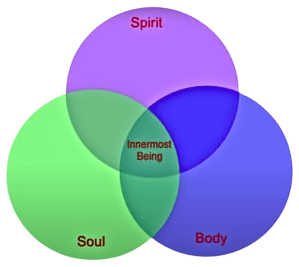
I shared that good news, and I offered him that opportunity, to which he responded and accepted. He followed me, and I introduced him to the Father. The Father brought his spirit and soul back together, unified him, clothed him with glory, and placed a ring on his finger of sonship. It was wonderful to see.
I did not stand up and tell people what I had done. That would not have fitted the framework of the meeting. They would probably have thought I was very strange. But now he has a relationship with God.
And death is not the end. It is another opportunity, in a different way, to experience God’s love.
Death Is Not the End of Choice
I know people will say you cannot talk to dead people. But they are not dead. A person’s spirit and soul do not die. Their body may be dead, but they have moved into another realm. We still have an opportunity to share the good news with them, even if they have chosen to reject Jesus and God in this life.
Then I started to feel really happy. There was a sense of joy in what he was now experiencing. Of course, I would want his children and his friends to feel that same joy, and to be awakened to God’s love. But at least for him, he is now out of the consuming fire, out of that refining process, and he is now receiving and accepting God’s love.
Now he knows who he is. And now he is going to go on to fulfil his destiny in that realm. That is good news. These are tremendous opportunities of sharing God’s love. Death is not the end of choice, as I experienced in that testimony. I am not saying I will ever do that again: I do not know. I felt moved by compassion, and God gave me permission.
It shows what is possible.
Responsibility and Opportunity
All of us have the opportunity to preach the good news and help people embrace God’s love, even after they die. There may be family members. There may be situations where we can do this.
In this situation, I was surprised that I even thought about it. But I was feeling so moved, aware that something was missing, something that could have been there, so I chose to do something about it.
He still had the choice. He could have rejected what I shared. But his belief system had already been challenged, because he did not believe there was anything after death. Now he found himself in a place where he thought he was condemned to remain there forever, because he did not know anything different. Even though he had not believed in God, and had not believed in hell, he now assumed that must be where he was. He was full of self-anguish, believing that his decisions in life had placed him there.
But God still loves him. And the love of God can reach people even in that place. It is our responsibility to empty that place of people, to make sure no one is left there, and that they all find the love of God.
If you enjoy these video blogs, please take a moment to like, comment, and subscribe. It really does help. Thank you very much.
Join our Patreon patrons, who give a small amount each month and can tune in for our monthly group Zooms, get exclusive or early access to Mike’s teaching and enjoy many other patron-only benefits.







 Unconditional Love – new book out now




 Sons of Issachar