
56. Covenant Blessings, Covenant Judgments.

Mike Parsons
with Jeremy Westcott – 

In looking at Jesus’ teaching in Matthew 21-25, we saw last time that we need to understand covenant blessings and judgments. So today let’s consider Deuteronomy 28:1-14 (blessings) and 15-68 (judgments, or ‘curses’).

Above all the nations

Now it shall be, if you diligently obey the LORD your God, being careful to do all His commandments which I command you today, the LORD your God will set you high above all the nations of the earth… But it shall come about, if you do not obey the LORD your God, to observe to do all His commandments and His statutes with which I charge you today, that all these curses will come upon you and overtake you… (Deut 28:1, 15).

‘High above all the nations of the earth’ – doesn’t that sound like the mountain of the house of the Lord being lifted high above the other mountains? All the other nations were supposed to stream to them. They had a kingdom mandate. If they kept covenant and were obedient, they could expect blessings. But if they were disobedient, judgment would come.

Peace?

What would it be like when that judgment came? Deuteronomy 29:19-21 tells us:

It shall be when he hears the words of this curse, that he will boast, saying, ‘I have peace though I walk in the stubbornness of my heart in order to destroy the watered land with the dry.’ The LORD shall never be willing to forgive him, but rather the anger of the LORD and His jealousy will burn against that man, and every curse which is written in this book will rest on him, and the LORD will blot out his name from under heaven.  Then the LORD will single him out for adversity from all the tribes of Israel, according to all the curses of the covenant which are written in this book of the law.’

‘Peace’. The first time this covenant judgment came upon Israel was when they were exiled to Babylon. At that time their prophets were prophesying peace and blessing, when they should have been prophesying judgment. ‘Stubbornness’: that sums up the attitude of the Pharisees and Sadducees, the rulers of Israel, who didn’t expect Jesus and didn’t accept His coming. There were bound to be covenant consequences (variously called ‘wrath’, ‘doom’ and ‘woe’).

As the eagle swoops down

Not so for us. Let’s be clear on this. God’s ‘wrath’ is not aimed at us, ever. It is an expression of His burning passion for us, not against us. But we will see where that wrath did fall.

“All the nations will say, ‘Why has the LORD done thus to this land? Why this great outburst of anger?’ Then men will say, ‘Because they forsook the covenant of the LORD, the God of their fathers, which He made with them when He brought them out of the land of Egypt. Therefore, the anger of the LORD burned against that land, to bring upon it every curse which is written in this book; and the LORD uprooted them from their land in anger and in fury and in great wrath, and cast them into another land’” (Deut 29:24-28).

Initially this judgment was fulfilled in the exile to Babylon, but with a prophetic promise of return. After a time, God restored them to the land and gave them another opportunity to be obedient. If they continued to be disobedient, then further consequences were inevitable, and this is what Jesus is warning them about. He is referring to passages like these in Deuteronomy:

A people whom you do not know shall eat up the produce of your ground and all your labours, and you will never be anything but oppressed and crushed continually… The LORD will bring a nation against you from afar, from the end of the earth, as the eagle swoops down, a nation whose language you shall not understand … It shall besiege you in all your towns until your high and fortified walls in which you trusted come down throughout your land, and it shall besiege you in all your towns throughout your land which the LORD your God has given you (Deut 28:33, 49, 52).

legion-444126_640The final fulfilment of this prophecy was that Jerusalem was indeed besieged and subsequently destroyed. That happened at the end of the generation to which Jesus was speaking, in AD 70. And look at the phrase ‘as the eagle swoops down’: you can also see how that could speak of the Roman armies, which carried an eagle as a standard.

This was to be followed by spiritual restoration. There was a promise of physical restoration after Babylon, which was totally fulfilled, and they were brought back into the land. But afterwards, all the promises relating to the new covenant were of a spiritual restoration in Christ.

“Behold, days are coming,” declares the LORD, “when I will make a new covenant with the house of Israel and with the house of Judah, not like the covenant which I made with their fathers in the day I took them by the hand to bring them out of the land of Egypt, My covenant which they broke, although I was a husband to them,” declares the LORD. “But this is the covenant which I will make with the house of Israel after those days,” declares the LORD, “I will put My law within them and on their heart I will write it; and I will be their God, and they shall be My people” (Jer 31:31-33).

Restoration? Yes, for everyone, in Christ. This is new covenant language, and we see it again in Ezekiel. There would be a physical manifestation of this restoration, but it would be the kingdom of God filling the earth.

So much for the covenant background. Next time I want to consider in detail what Jesus said about all this, back in Matthew 21-25.

Related ebook

55. God’s Covenant Purpose

Mike Parsons
with Jeremy Westcott – 

Over the next series of posts I want to set out for you clearly what Jesus said. We have looked before at the passage in Matthew 24 where the disciples asked Jesus “Tell us, when will these things happen, and what will be the sign of Your coming, and of the end of the age?” What were ‘these things’ that they were asking about?

To find the answer to this we need to go back several chapters (remember that there were no chapters in the original scriptures). Wherever you start from, you are in a sense jumping into the middle of events which were already going on, but there is a clear development of ideas which begins in Matthew 21.

God’s people

Jesus said to them, “Did you never read in the Scriptures, ‘THE STONE WHICH THE BUILDERS REJECTED, THIS BECAME THE CHIEF CORNER stone; THIS CAME ABOUT FROM THE LORD AND IT IS MARVELOUS IN OUR EYES’? Therefore I say to you, the kingdom of God will be taken away from you and given to a people producing the fruit of it. And he who falls on this stone will be broken to pieces; but on whomever it falls, it will scatter him like dust” (Matt 21:42-44).

Jesus was talking about Himself, that He would be rejected and that there would be a consequence of that rejection for Israel. The mandate to be God’s people would be taken from the people who rejected the Stone, and it would be given to people who accepted the Stone. That Stone was to become the chief cornerstone of the church. In verse 44 we see that the Stone will fall on those who reject Him, and in due course we are going to see what happened when that Stone fell.

Let’s understand this: God’s covenant purpose has not changed. We can read it in Genesis 12:2 where God makes covenant with Abraham, “And I will make you a great nation, And I will bless you And make your name great; And so you shall be a blessing… And in you all the families of the earth will be blessed.” globe-328140_640There is continuity here, you only have to look at passages like Gen 1:28, where God made covenant with Adam, in Gen 9:1 with Noah, and in Matt 28:18-20, where the church was sent out to take the gospel to the whole world. It is the same covenant purpose: to bring the kingdom of God to the earth.

We read in Galatians, The Scripture, foreseeing that God would justify the Gentiles by faith, preached the gospel beforehand to Abraham, saying, “ALL THE NATIONS WILL BE BLESSED IN YOU” (Gal 3:8). The gospel we preach has the same covenant purpose: to bring God’s kingdom to the earth. There is a unity in God’s purpose that we have not always understood.

For the promise to Abraham or to his descendants that he would be heir of the world was not through the Law, but through the righteousness of faith (Rom 4:13).

Abraham’s promise was not a small package of land in the Middle East. It was supposed to start there, but from there to spread, filling the whole earth with God’s kingdom. And it did not come by keeping the Law, even under the old covenant, but through the righteousness of faith. It was always by faith. You never could have a relationship with God other than by faith. The Law was only a tutor to protect that covenant until Christ would come and fulfil it. No-one could keep the law, so you never could be justified by the law, only by faith. The covenant with Abraham was made 430 years before the Law was given, and it was not nullified by that Law. In fact, it is still in place today – and that is why we are here.

A light to the nations

God’s covenant purpose through Israel was stated in very similar terms: just look at the language. “Now then, if you will indeed obey My voice and keep My covenant, then you shall be My own possession among all the peoples, for all the earth is Mine and you shall be to Me a kingdom of priests and a holy nation” (Exod 19:5-6).

That is still the promise to God’s people today, by the way.

I am the LORD, I have called You in righteousness, I will also hold You by the hand and watch over You, And I will appoint You as a covenant to the people, As a light to the nations…” (Isa 42:6). They were supposed to be a light to the nations, but they weren’t. They kept it all to themselves and stopped anyone else receiving it.

“I will appoint You as a covenant to the people” (Isa 42:6). Time and again, we keep coming back to this: we need to understand covenant. In particular, we need to understand covenant blessings and covenant judgments, because those are what Jesus is going to refer to in this passage. We can see those concepts most clearly in Deut 28:1-14 (blessings) and Deut 28:15-68 (judgments, or ‘curses’), and that is where we will pick up next time.

Related articles from Freedom ARC

Related articles from others

54. Salvation and Judgment

Mike Parsons
with Jeremy Westcott – 

Stone and Mountain

I want to begin today by looking again at two scriptures we have seen before:

Now it will come about that In the last days
The mountain of the house of the LORD
Will be established as the chief of the mountains,
And will be raised above the hills;
And all the nations will stream to it (Isa 2:2).

You continued looking until a stone was cut out without hands …But the stone that struck the statue became a great mountain and filled the whole earth (Dan 2:34-35).

This Stone and Mountain are very important: Jesus taught about it, and so did the apostles. The Stone is Jesus and the Mountain is His kingdom; the house of the Lord is God’s people. The kingdom is manifest (or demonstrated) through the church as God’s people, not through the institution called ‘church’.

The kingdom of God is going to fill the earth, in our time. As we have seen, tares have been sown into the church in terms of false doctrine which has put that off to another time or another people.

There has only ever been one people of God: people of faith. Faith is the key: it is not about being born into a Christian family. It was never even about being born into a Jewish family: you were not of the true Israel unless you had faith. It really wasn’t a national thing, as we will see.

‘Two sides of the same coin’

When God comes in righteousness, He often comes in judgment as well as in salvation: they are two sides of the same coin.

‘Righteousness and justice are the foundation of Your throne (Kingdom); Lovingkindness and truth go before You’ (Ps 89:14).

lumberjack-199694_640

“The axe is already laid at the root of the trees; therefore every tree that does not bear good fruit is cut down and thrown into the fire… He will baptize you with the Holy Spirit and fire. His winnowing fork is in His hand, and He will thoroughly clear His threshing floor; and He will gather His wheat into the barn, but He will burn up the chaff with unquenchable fire” (Matt 3:10-12).

  • The Flood brought salvation for Noah and his family, but judgment for the world.
  • In the Exodus, in the crossing of the Red Sea, there was salvation for Israel, but judgment for Egypt as all their army was swept away.
  • At the Cross there is salvation for believers, and it is open to everyone. But if you do not receive it, there is judgment.
  • In fact in all Jesus’ comings – and there are many comings of Jesus, ending with his Last Coming – there is both salvation and judgment.

Speaking of that Stone again:

This precious value, then, is for you who believe; but for those who disbelieve, “THE STONE WHICH THE BUILDERS REJECTED, THIS BECAME THE VERY CORNER stone,” and,  “A STONE OF STUMBLING AND A ROCK OF OFFENSE”;  for they stumble because they are disobedient to the word, and to this doom they were also appointed (1 Peter 2:7-8).

The Stone, we know, was Jesus. Those builders who rejected Him were the Jewish people at the time. Not all of them rejected Him of course: the earliest church was made up of Jewish believers. But for those who did reject Him, those are strong words. ‘Doom’, like ‘woe’ in Matthew 23, is a covenant word.

No peaceful co-existence

Jesus ascended back up to heaven in around the year AD 30. The destruction of Jerusalem and its temple happened in AD 70. That 40-year period was a generation in which the old covenant people co-existed with the new covenant people. It was not a peaceful co-existence. Saul, before he met Jesus and became Paul, was sent out by the Jewish leaders to persecute Christians. They were trying to stamp out what they saw as heresy. Later on, in every city where (as Paul) he went to preach, he spoke to the Jewish people there first as God’s people and inheritors of God’s promises. When he showed them that these could only be received in Christ, most of them persecuted him, though some believed. That is why he was beaten and stoned.

So in this period the Old Covenant (with its Natural Country, City and Temple) was still in existence alongside the New Covenant (with its Spiritual Country, City and Temple). Much of the New Testament was written from the perspective of the persecution which arose because of this.

In particular, the whole of the book of Revelation was written about the covenant judgments (‘doom’) that were to come at the end of this period, the consequences of Israel’s rejection of the Messiah and their persecution of the church. It was written to provide comfort to those Christians who were suffering that intense persecution, to reassure them that God had a plan in it and that it would come to an end. It was not written about ‘the end of the world’. We need to get that out of our thinking, and then look at these scriptures for what they actually say.

That is a process we will begin in the next post. I want to look at the whole passage which leads up to the disciples’ question in Matthew 24, because that is essential if we are to properly understand the answers that Jesus gave them.

Related articles from Freedom ARC
Related articles from others

53. Breaking off the Greek Mindset

Mike Parsons

Last time I shared with you a couple of tables relating to the Greek (Western) and Hebrew (Eastern) mindsets. In this post I want to look just a little more closely at the contrast between them, and then I would like to pray for God to reveal where we are being robbed by our Western way of looking at things, and break it off us.

Separation vs unity

Here is the first of those tables again:

Greek Mentality

Hebrew Mentality

The goal of salvation is to escape this world and go to God’s dwelling place in heaven The goal of salvation is to prepare a place fit for God’s dwelling here, among His people
The kingdom of God exists in heaven, not upon the earth The kingdom of God is God’s reign among people here on earth
Jesus is coming to take us away from this world Jesus is coming to reign over us and through us in this world
Message: “Get your ticket now, or you might miss the train!” Message: “The kingdom of God is coming! Get ready to serve the King and manifest the kingdom.”

Let’s take these one line at a time.

In our Greek understanding, the goal of salvation is to escape this world and go to God’s dwelling place in heaven. So everything is focussed on what will be: very little about what is now. In Hebrew thought, the goal of salvation is to prepare a place fit for God’s dwelling here, among His people. He wants His kingdom to come on earth.

Linked with that, where does the kingdom of God exist? The Greek view says it is in heaven, not on the earth, whereas the Hebrew view is that the kingdom of God is God’s reign among people here upon the earth.

So is Jesus coming in order to take us away from this world? No, Jesus is coming to reign over and through us in this world. We need to focus on God’s kingdom being ‘now’, not separating it out. “Get your ticket now or you might miss the train”: that may have been what we were told, but do we really want to carry on presenting the gospel that way?

And then: “Now you have your ticket, just hold on tight. In the end Jesus will come and rescue you”, rather than what Jesus preached: “The Kingdom of God is coming! It’s right here, right now! Get ready to serve the King and manifest the kingdom”.

Do you see how each misunderstanding arises from the previous one? Once you begin to go down the route prescribed by Western thought, you find there is more and more separation becoming entrenched in your thinking, and less and less of an understanding of the unity of God’s purpose.

Form vs purpose

If we look at the second table, we can see how this works out in practice:

Greek mindset

Hebrew mindset

Form Function
What I do How I do it
Secular/Religious Unified
Heavenly/Earthly Dual
Knowledge Experience
What I know Who I know
Works Grace
Creed Deed
Analyse Live – Be and Do

The Greek mindset looks at the form of something. For example, let’s take a tree. It has roots, a trunk, branches, leaves – that is what I mean by looking at its form. In the Hebrew way of thinking, it is more about what it is for. What is the purpose of a tree? To bear fruit. They are really not interested in the fact that it might have roots, a trunk, branches and leaves. Does it bear fruit? If not, it is of no value at all. Remember how Jesus cursed the fig tree that was not producing any fruit? It is the difference between an actual, practical outworking and just a mental, theoretical understanding.

So: Greek: what I do; Hebrew: how I do it. We can do lots of things from the wrong motive – but we know that God looks on the heart.

Greek thinking separates out our religious life from our secular life. Family, work, school, friendships on the one hand; and church on the other. But God wants His kingdom to be flowing through all of our lives, with no separation. There is no secular for us. Our lives are a whole, they are unified, and we bring the kingdom of God into everything.

In Greek thinking, the heavenly was separated from the earthly. There was no overlap. Bill Johnson wrote a book called ‘When Heaven Invades Earth’. Bottom line is, that is impossible in Greek thinking. But for us, we can live in both places: we live in the realms of heaven, and we bring that spiritual realm into our lives on earth, at the same time: not in the future but now.

‘Knowledge’ to the Greek mind is information. But to the Hebrew, you cannot know anything without experiencing it. It is all about knowledge through spiritual encounter. If all I am doing in this blog is imparting information to you, we are missing the mark. That is why from time to time I also include praying for you, which gives you the opportunity to encounter Him through the Holy Spirit and experience the reality of His truth for yourself (of course you can always pray these things through even when I don’t specifically include a prayer).

It’s not what you know, but who you know! We know God, but it is perfectly possible to read the Bible from cover to cover and have all the information, but never actually know Him. We need to encounter everything in the Word of God for ourselves.

Works, or grace. A creed or the deed. Stating what you believe, or actually living that way? Faith without works is absolutely dead. Jesus said, “If I do not do the works that my Father does, don’t believe me” (John 10:37). You don’t hear too many sermons on that verse.

We don’t analyse: we live. It is about who we are and what we do. God Himself says He is the I AM.

I want to pray now. If you think you may have any mindsets, any of the Greek way of thinking, we want to break that off right now.

[If you would like to hear an audio version of this prayer, click here.]

Father, I pray that the power of Your Holy Spirit will come.
Break any deception off our mindsets
Any way in which we have come under false doctrines,
False teachings, mindsets of the enemy,
Greek thinking that would cause us to separate our lives out.

I come, Lord, with the sword of Your Spirit,
To break that off our mindsets right now
In Jesus’ Name.
To be loosed from any control that the enemy has had over us
Through traditions of men and demonic doctrines
That put things into the future instead of the present;
That put things into heaven instead of on earth;
That have separated us out;
That have caused us to believe and not do.

I break those mindsets right now.

I break any doctrines over us that would hinder Your church
From pursuing and seeing the kingdom of God fill the earth
As it is in heaven.
Holy Spirit, come and reveal to anyone reading this
Anything which is a hindrance, an obstacle, a stumbling block
To our being able to fulfil our destiny as God’s people.
I pray that You would send gathering angels into our lives
To gather any stumbling blocks from us.
Gather them from our mind, gather them from our heart,
So that we believe and stand on the truth of Your Word
That through kingdom and covenant,
You are going to fill the earth with Your kingdom.
You are going to come back for a victorious, overcoming church
That has risen above every other thing.
Because ‘of the increase of Your kingdom there is no end’.

Empower us with the power of Your Holy Spirit
To take Your kingdom
And manifest Your kingdom through our lives,
Every day of our lives:
In work, in home, in our neighbourhood.
That we would manifest Your kingdom in power and authority
Doing the works that Jesus did.

I loose us from everything that would hinder us
From that fulfilment of Your purposes for our lives
In Jesus’ Name.

Amen.

Related articles from Freedom ARC
This article is available in other languages
Related articles from others

52. Wheat and Tares

Mike Parsons
with Jeremy Westcott
 –

We have been considering the disciples’ question about Jesus’ return and the end of the age. It is essential to view all this through covenant eyes. God has always worked through covenants with men, and every time it was men who broke them. But they were all fulfilled in Jesus: every promise God ever made finds its ‘Yes’ and ‘Amen’ in Him. There are not two covenants in operation in our day, just one. And it is one which we cannot break, because it was not made with us, but with Jesus.

AD 70

We have seen that Jesus’ answer in Matthew 24 (at least up to verse 34, but probably the whole chapter) refers to the end of the Old Covenant age and the destruction of Jerusalem, especially its temple. “Truly I say to you, this generation will not pass away until all these things take place”. AD 70 would have been the end of that generation of disciples Jesus was talking to. The main fulfilment of all those prophetic words happened in that period. That is not to say that we cannot see further examples of them in our day – and throughout church history – but we are not waiting for them to happen as signs of the end. The end that Jesus was talking about already came.

We looked briefly at the decline and revival of the church over the centuries, how the Holy Spirit began to break back in once the scriptures were available in the common language again. I would encourage you to read the ‘God’s Generals’ series of books by Roberts Liardon, and see how God began to restore truth to the church through some amazing godly men and women. But as God sowed wheat, the enemy also sowed tares. Tares look just like wheat, and you can only tell the difference because tares don’t produce a harvest. So in the very period when God was working in revival and power, we also see the birth of Darwinism, Marxism, humanistic philosophy – false systems of belief sown into the world. And not only into the world – into the church too. Mormons, Jehovah’s Witnesses, and Christian Science all started around this time. Some of them looked like the truth, and people are still deceived by them today.

False doctrines

In 1826 the Brethren movement rejected the gifts of the Holy Spirit, and put back the purposes of God for another 80 years. In rejecting the truth, they also embraced deception, as often happens. And the enemy was able to use this to sow in false teaching and false doctrines which have plagued the church ever since. This is what God is starting to challenge and remove so that we can regain a true perspective of His kingdom.

What were some of those things?

  • Dispensationalism. Separating up scripture into particular periods of time in which God works in different ways. That breaks up the continuity of scripture and prevents people seeing the whole picture of God’s plan and purposes through the ages.
  • Cessationism: The belief that gifts of the Holy Spirit are not for now, that they stopped in the New Testament when the last apostle died.
  • Pre-Millennialism: Jesus was going to come back before the Millennium. Up to that time the only people who taught that were the Jesuits. No-one else believed it. Now it is prevalent among large sections of the church.
  • The Rapture: God would come for His people in a ‘secret rapture’, take them and leave everyone else behind. That doctrine only arose in this same period. And now it is the subject of a whole series of best-selling Christian books and accepted without question by much of the church as being what the Bible teaches.
  • Seven Years of Tribulation on the earth: this belief only started to appear at this time.
  • The separation of Israel and the church.

This was all so insidious that it spread like wildfire. The Schofield Bible came out of all this, robbing the church of authority by promoting an eschatology of defeat and rescue rather than of victory and of the increase of God’s kingdom to fill the earth. All of a sudden it was maintenance, put the walls up, protect your beliefs, have nothing to do with the world. The Brethren church was so exclusive you were not even allowed into their meetings unless you could prove that you came from another Brethren Assembly. I was brought up in this, and when I got baptised in the Spirit, God just challenged my whole theology. I have had to re-examine everything I believed: even now I have to be continually open for God to show me the truth.

Greek and Hebrew mindsets

The background to this is that there is a difference between the Greek and the Hebrew mindset. We have briefly touched on that before. Let’s be clear, I am not talking about reading scripture in the Greek and Hebrew languages, but about our way of looking at things when we approach scripture. Here are a couple of tables I often use to illustrate some of that:

Greek Mentality

Hebrew Mentality

The goal of salvation is to escape this world and go to God’s dwelling place in heaven The goal of salvation is to prepare a place fit for God’s dwelling here, among His people
The kingdom of God exists in heaven, not upon the earth The kingdom of God is God’s reign among people here on earth
Jesus is coming to take us away from this world Jesus is coming to reign over us and through us in this world
Message: “Get your ticket now, or you might miss the train!” Message: “The kingdom of God is coming! Get ready to serve the King and manifest the kingdom.”

Greek mindset

Hebrew mindset

Form Function
What I do How I do it
Secular/Religious Unified
Heavenly/Earthly Dual
Knowledge Experience
What I know Who I know
Works Grace
Creed Deed
Analyse Live – Be and Do

You will recognise many of the approaches in the left hand columns. They sum up how most of us have been taught, and have affected how we view everything. God is removing stumbling blocks, and we are going to find that the Greek mindset is increasingly going to be challenged.

This article is available in other languages
Related

51. Leaven In The Lump

Mike Parsons
with Jeremy Westcott –

In this post we are going to begin by looking at some very familiar scriptures. We have been taught that they speak about the days we are living in, as the return of Jesus gets ever closer. But, understanding covenant thinking and covenant language, are they in fact referring to a future time, or are they a description of the days in which they were written? Are they yet to be fulfilled, or has it already happened? What should we be expecting?

The persecuted church

We need to understand to whom these things were written. The whole New Testament was written to a church under persecution from the Jews and the Romans, often working together. Persecution designed to coerce the believers into denying the truth and go back to their old way of thinking.

  • But the Spirit explicitly says that in later times some will fall away from the faith, paying attention to deceitful spirits and doctrines of demons (1 Tim 4:1).

That scripture is nothing to do with the times before Jesus’ return. That deception is intended to get us to think that in our days things will get worse and worse – and just to accept it as normal, instead of expecting to see the Kingdom expanding (and it really is, just as Jesus actually promised). No, this is talking about the persecution that was going on in the first century church.

In the last days

  • But realize this, that in the last days difficult times will come… holding to a form of godliness, although they have denied its power; Avoid such men as these… these men also oppose the truth, men of depraved mind, rejected in regard to the faith (2 Tim 3:1, 5, 7)

If  you do not know when the last days are, you will not be able to interpret this passage properly. This gives rise to a whole lot of confusion, stirred up by the enemy, so that we will be misled about what to expect. The religious spirit will try to get us to accept and believe things which will block our blessing. After all, how can the Kingdom of God fill the earth if everything is going to be so miserable?

  • At that time many will fall away and will betray one another and hate one another. Many false prophets will arise and will mislead many (Matt 24:10-11)

It already happened.

Antichrist

So what about the Antichrist? Is he not to come to power before Jesus returns?

  • Children, it is the last hour; and just as you heard that antichrist is coming, even now many antichrists have appeared; from this we know that it is the last hour. They went out from us… (1 John 2:18-19).
  • Many false prophets have gone out into the world… this is the spirit of the antichrist, of which you have heard that it is coming, and now it is already in the world (1 John 4:1,3). The word ‘spirit is not in the original Greek. It has been added by the translators. The actual text simply says ‘this is the antichrist which you heard is coming and is now in the world’ (see it here on Biblegateway.com).
  • For many deceivers have gone out into the world, those who do not acknowledge Jesus Christ as coming in the flesh. This is the deceiver and the antichrist (2 John 7:7).

These are the only three scriptures that actually mention the antichrist. They interpret each other. And they all, without exception, say it has already happened.

1 John 2:18 is pretty clear: the time he was writing in was the last hour. We have already seen that in Matthew 24:11, Jesus was talking about things that would happen during the lifetimes of His disciples. That time came to a close in AD 70 with the destruction of Jerusalem, an event which saw the fulfillment of all the prophecies of which we have been speaking.

If you read Revelation chapters 2 and 3, the letters to the churches in Asia, you will find that all this evidence of the antichrist at work was already there. They were already dealing with all the false words which had been sown in, and all the false teachers that had gone out from among the believers.

If you are looking for that one person to arise at the ‘end of the age’ and do all this evil, you are going to be looking in vain. It has already happened.

Legalism and licence

Legalism and licence were two parts of that antichrist spirit. The church has had a continual battle with those who would bring it back under the law. It has also had trouble from those who say sin is not important – you can do what you like because grace will cover it. But those battles are nothing new: look at these passages from Galatians and Revelation:

  • You foolish Galatians, who has bewitched you? This is the only thing I want to find out from you: did you receive the Spirit by the works of the Law, or by hearing with faith? (Gal 3:1-2).
  • But I have this against you, that you tolerate the woman Jezebel, who calls herself a prophetess, and she teaches and leads My bond-servants astray so that they commit acts of immorality and eat things sacrificed to idols (Rev 2:20).

Separation of leaders from laity was another aspect of legalism. That was the teaching of the Nicolaitans. God hates that because it takes all responsibility away from us as believers but it was all around in that first century church. It was what Jesus called ‘the leaven of the Pharisees and of Herod’ – religious and political manipulation of the church – working its way through the whole lump (Mark 8:15).

The enemy intended to undermine God’s kingdom purposes for His people by these means. And he enjoyed a good measure of success in bringing us to a place of powerlessness, of ineffectiveness and irrelevance.

Church history

Think about the whole history of the church, about Constantine making Christianity an established religion; the translation of scripture into the dead Latin language that only the priests could read; the dark ages and the rise of Islam; Christendom; the crusades; the Holy Roman Empire – the light was almost extinguished.

Then the Holy Spirit began to break through. The Word was translated into everyday language. That led to revelation of truth that had long been forgotten: the Reformation;  justification by faith; believers’ baptism, Quakers, Moravians, Wesley and Whitfield, revival and restoration, Pentecostals, the faith movement, healing, charismatics, apostolic understanding – in the 20th century there was more revelation restored than in the whole of the previous 18 centuries. The pace is accelerating. God is restoring truth, bringing back light.

What will happen in our century? Who knows? Discipleship, doing the works of Jesus, the greater works? The Spirit and the Word coming together again, as they were in the early church, and as Smith Wigglesworth prophesied? Restoration of all things, the Kingdom of God filling the earth? Early rain, latter rain?

One thing is certain: we cannot continue living and operating at the level we have been. We must go higher.

Related articles from Freedom ARC
This article is available in other languages

50. And Then The End Will Come

Mike Parsons
with Jeremy Westcott

I suggested to you last time that Matthew 24 is one of the most misunderstood and misinterpreted of all chapters in the Bible. This is because people read into it what they expect to see, and do not come with an appreciation of covenant language and covenant understanding.

Good news?

We will look at the whole of Matthew 24 in due course, but for today I want to concentrate on two particular sections. Here is the first:

Many false prophets will arise and will mislead many. Because lawlessness is increased, most people’s love will grow cold. But the one who endures to the end, he will be saved. This gospel of the kingdom shall be preached in the whole world as a testimony to all the nations, and then the end will come (Matt 24:11-14).

This is Jesus prophesying, and He is talking about an awful time. False prophets, people being misled, lawlessness, love growing cold, needing to endure. Then He says, “This gospel shall be preached…”. And I thought the gospel was supposed to be good news! If this is how it is, then no wonder some Christians are so miserable and pessimistic. No wonder some have a siege mentality and are just holding on, waiting for Jesus to come and rescue them.

And verse 14, I have heard that preached on so many times. We have been taught that Jesus cannot come back yet, because not every people-group has heard the gospel. The end cannot come until we have preached the gospel to every nation.

The end of what? That is the question we ought to be asking. The end of the world? The end of time?

Clearly not, because we’re still here. Why do I say that? Let’s look at the second passage I want to highlight today.

Amen, Amen

So, you too, when you see all these things, recognize that He is near, right at the door. Truly I say to you, this generation will not pass away until all these things take place (Matt 24:33-34).

“So you, too…”- Jesus is speaking to his disciples directly here – “this generation will not pass away until all these things take place” (my italics). That phrase ‘Truly I say’ is the ‘Amen, Amen’, the ‘Verily, verily, I say unto you’ of the older versions, and it means ‘Listen carefully and pay special attention to what I am about to say – this is particularly important.’

‘This generation’. That means a period of up to about 40 years. You really have to twist the meaning of the word to make it mean anything else, which hasn’t stopped some people doing exactly that.

So everything that Jesus talked about in Matthew 24 right up to verse 33 – ‘all these things’,  including preaching the gospel to the whole world –  were to happen in the next 40 years or so, during the lifetime of most of those disciples. False prophets, people being misled, lawlessness, love growing cold, enduring to the end – it has all already happened. Now, there is an application of that, and in a sense of course it is always happening, has happened throughout the history of the church.

But the fact is, it happened already. And the end came.

Now that has blown many of your theologies right out of the water. Around the world, prophetic people are struggling to fit what God is showing them into an eschatology that simply doesn’t work, because it is based on a false premise, and a misinterpretation of this passage of scripture, amongst others. As I say, that is because people have not approached it with a proper understanding of covenant and covenant language.

Next time, we will look at how ‘all’ was fulfilled in that generation, and explore the question ‘the end of what’? Once again, we will be looking at some very familiar scriptures, and you will likely already have a very clear understanding of what they mean, because of what you have always been taught. And once more, I’m going to ask you to look again…

Related articles from Freedom ARC
This article is available in other languages
Related resources from others

Are you part of the Joshua Generation?

We developed this just for you:

eg-homepage-crop

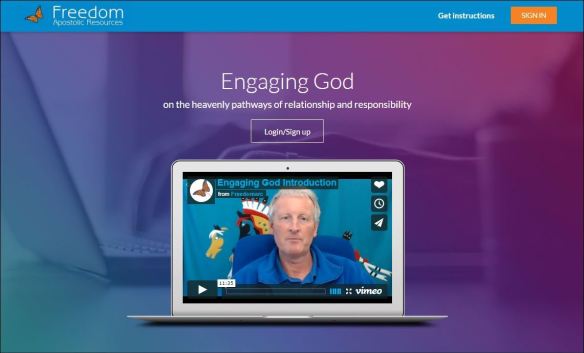
Engaging God on the Heavenly Pathways of Relationship and Responsibility
Equipping a Joshua Generation of supernatural sons of God to live according to the order of Melchizedek

Get started today!*

To find out more about the Engaging God programme, click here…

*Technology permitting: automated process on receipt of payment and completion of online registration form. Terms and conditions apply.

49. Jesus, the Centre of all History

Mike Parsons
with Jeremy Westcott – 

Jesus is the centre of all history

Take eschatology, the study of the last things: it is all about Jesus. It is not about us, it is not about the church, it is not about the world – it is about Jesus. He comes to sum everything up. He holds everything together. All the Old Covenant looks forward to Jesus. All the New Covenant looks back to Him. So every time we look at a scripture, we must interpret it through Jesus’ message and His Person. You cannot take it in isolation.

Some people say, ‘Paul said this in the epistles, and it contradicted Jesus’. No. it did not. It can never contradict Jesus. What Jesus said, what Jesus did, that is it. And we need to understand that, and interpret everything in that light.

All history was consummated in Jesus and it will be consummated in Him. Therefore, for as many as are the promises of God, they all find their ‘yes’ in Him  (2 Cor 1:20). Every single promise you can find in the Bible finds its answer in Christ. Every single one is fulfilled in Jesus. That is a really important principle to get hold of.

I want to give you some scriptures now which are foundational, and which will help us as we go on to look at some more complicated and difficult questions – in particular when we look at Matthew 24, which is Jesus’ teaching about what was to come.

That He may send Jesus

… and that He may send Jesus, the Christ appointed for you, whom heaven must receive until the period of restoration of all things about which God spoke by the mouth of His holy prophets from ancient time (Acts 3:20-21).

So everything that has been prophesied through the mouth of a prophet, including everything we have written down as prophecy in the Bible, it will all come about before Jesus leaves heaven. Until everything is restored into the order God intended, until all the prophecies are fulfilled, Jesus will remain in heaven. And only when it is will He come back.

He cannot come until all that has been done. He is not going to come, and then do it after He has come. He is going to do it before he comes. He is going to fulfil and restore all things before He comes.

“He must be received into heaven”. Now, what does that mean? So then, when the Lord Jesus had spoken to them, He was received up into heaven and sat down at the right hand of God (Mark 16:19). When He was received into heaven, He was enthroned: He sat on the throne. When you sit on a throne, it means you are ruling, you are reigning from that place of ultimate authority and power. That is where Jesus is. And He will remain in that place until He has restored all things.

Reigning

For He must reign until He has put all His enemies under His feet. The last enemy that will be abolished is death. For He has put all things in subjection under His feet… (1 Cor 15:25-27). Jesus will return to abolish death. Death is the last enemy.

Here is another scripture which talks about all things being in subjection:

…which He brought about in Christ, when He raised Him from the dead and seated Him at His right hand in the heavenly places, far above all rule and authority and power and dominion, and every name that is named, not only in this age but also in the one to come. And He put all things in subjection under His feet, and gave Him as head over all things to the church” (Eph 1:20-22).

So that is where Jesus is, right now, in this age. He is reigning in authority and power. If Jesus is the Head, and we are His body on the earth, then His feet are our feet. And if all things are in subjection under His feet, then they are under our feet too. God gave Him as Head over all things to the church. I don’t have the space to go into every detail of this here, but you can follow it through in the psalms, look at what it means to be a footstool, begin to get familiar with this prophetic language and see what it is saying.

Through the church

We read in Ephesians 3:10 …that the manifold wisdom of God might now be made known through the church…’  I love that word ‘manifold’, because it means multi-coloured and multi-faceted, all expressing who God is; all expressing the wonderful wisdom of God. Being made known through… us, through the church. Being made known to whom? It continues: … to the rulers and authorities in the heavenly places. This was in accordance with the eternal purpose which God carried out in Christ Jesus. So His eternal purpose was to manifest, to demonstrate, His wisdom. And He accomplished that in Christ and through the church.

Are you starting to grasp how all this hangs together? Is it starting to challenge some of the underlying assumptions you have been making?

It gets harder! Next time, as I said, we will begin to look at Matthew 24. That is a scripture which has been completely misinterpreted and misunderstood by the church, probably more so than any other chapter in the whole Bible. That is because it has been interpreted by Greek (western) logic and by people trying to make it fit with events they see happening around us today. As we shall see, that is a mistake.

This article is available in other languages

Are you part of the Joshua Generation?

We developed this just for you:

eg-homepage-crop

Engaging God on the Heavenly Pathways of Relationship and Responsibility
Equipping a Joshua Generation of supernatural sons of God to live according to the order of Melchizedek

Get started today!*

To find out more about the Engaging God programme, click here…

*Technology permitting: automated process on receipt of payment and completion of online registration form. Terms and conditions apply.

48. A Thousand-fold Increase?

Mike Parsons
with Jeremy Westcott

Kingdom and covenant

Our prophetic understanding must come in the context of God’s Kingdom and of covenant. Kingdom and covenant are two sides of the same coin. In order to get understanding of the purposes of God, we need understanding of both. Right from the very beginning it was God’s purpose to have a people who would demonstrate His Kingdom ‘on earth as it is in heaven’; and covenants were the agreements He initiated with men to enable that to take place.

In 2011, when I first spoke about this subject, quite a bit was said and written about it being ‘year 11’. In particular, some people felt God was highlighting Deuteronomy 1:11 which says, “May the LORD, the God of your fathers, increase you a thousand-fold more than you are and bless you, just as He has promised you”. Some began to see ‘111’ everywhere as they began to focus on what God was saying. They got hold of that scripture and encouraged us to believe God not for a hundredfold increase, but actually for a thousandfold.

Does it mean that?

Firstly, of course, it is possible for the Holy Spirit to take that scripture and speak it to us personally and say ‘This is for you’. But if we don’t hear it that way, how do we approach the questions which will come up: ‘Is that right? Does it say that? And if it does, is it intended for us?’

Notice that it speaks of ‘the God of your fathers’. That is covenant language. ‘The God of your fathers’ refers back to Abraham, and how God made a covenant with him through which all families on the earth were to be blessed. Deuteronomy 8:18 tells us that it is to confirm that covenant that God gives us the power to make wealth. In light of that, I would say that yes, we can claim Deuteronomy 1:11 as a promise that God will increase us a thousandfold.

But is that exactly 1000, or does it just mean ‘a lot’? Let’s consider the scripture which says that God ‘owns the cattle on a thousand hills’ (Psalm 50:10). Does He not own the cattle on the 1001st? I think we know the answer to that. So a thousand is not necessarily exact, it is a large number – and in this case it really stands for ‘everything’.

Limiting God

My point is that if we are going to understand prophecy correctly, we cannot simply take everything literally and so limit God. People raised the objection that when Deuteronomy 1:11 was written, there weren’t actually any chapter or verse numbers: they were added later. That doesn’t stop God using them to illustrate something to us.

This is part of approaching scripture and prophecy with a Hebrew (eastern) rather than a Greek (western) mindset. Literal, deeper, personal, and hidden meanings – all can be true, and all found within the understanding of one verse of scripture.

Related articles from Freedom ARC
This article is available in other languages

Are you part of the Joshua Generation?

We developed this just for you:

eg-homepage-crop

Engaging God on the Heavenly Pathways of Relationship and Responsibility
Equipping a Joshua Generation of supernatural sons of God to live according to the order of Melchizedek

Get started today!*

To find out more about the Engaging God programme, click here…

*Technology permitting: automated process on receipt of payment and completion of online registration form. Terms and conditions apply.

47. Just One Answer?

Mike Parsons
with Jeremy Westcott – 

Interpreting the times

Maybe you are old enough to remember all those books about the supposed significance of the Common Market being 12 countries, or about Communism and the USSR? Well, we can see now that none of it was true. Today those books are just gathering dust on people’s bookshelves, and if they were to read them now they would laugh. Dates, times, everything seemed so very plausible. But it didn’t happen.

That came about because the authors of those books just looked at the world around them, and tried to fit their own understanding of scripture with those events. We need instead to get revelation of what scripture is really saying. As I mentioned before, that involves seeing things from a Hebrew rather than a Western viewpoint.

Covenant

Take Biblical symbolism and covenant language. The whole Bible is written in terms of covenant. We even speak about the Old Covenant and the New Covenant. If you have never considered covenants then I do not have space to go into the whole subject here, perhaps the best advice I can give is to get hold of some of Ian Clayton’s teaching on covenants.

In short, covenants are binding agreements, and they are something that God has always used in interacting with people. God initiates covenants, and He makes them in blood. He always upholds His part of the deal. The sad fact is that the human race never upheld their part: at least, not until Jesus came and made a new covenant of blood with God. That covenant is unchallengeable because Jesus cannot fail: His blood is eternal. So we now receive all the benefits, all the promises, because of what Jesus has done.

The Old Covenant was all about what we had to do to be acceptable to God. That is no longer the case. But covenant is still the basis on which God works, and to understand the Bible we need to understand covenant language and how that covenant language is used.

Personal revelation

Again, because Jesus is the Living Word, He can give you a personal revelation of any word, any passage, any part of Scripture that He chooses. It may be completely out of the context it was originally written for, but He can still speak it to your heart and speak to you in it. That may be for you and you alone, in your situation and circumstance, and it may apply to nobody else. But it is vital that you have a proper overall understanding of the purposes of God. That will safeguard you from error so that whilst God can give you things like that, you won’t completely go off at some tangent because of some fanciful thing that you have made up.

For example, if you get what you think is a revelation that tells you to go off and rob the person down the road, you will know it is not God. You need to have understanding of the nature and the character of God, of how God works, so that you don’t go off the rails completely. You have to realise that not every voice you hear is God. Sometimes our soul can speak to us, particularly if we have a deep desire, and it can convince us that it is God telling us to do something, or that what we want to do is all right, when in fact it isn’t. Jesus can take His Word and apply it to us as He sees fit – we just need to be careful that it really is Him.

Plan A

My point here is that we need to understand the context of the eternal purposes of God. He hasn’t changed His plan. He has no Plan B, C or D.

Now, there is a teaching which says He has. You have heard it, maybe been influenced by it. You may not have thought of it in quite that way though. It is the teaching that prevailed in the town I grew up in, as I have written about previously. It divides up scripture into blocks and periods in which God works differently. It says ‘that is not for now’, and it denies the continuity of God’s purposes from Genesis to Revelation. If you read those two books, so much of the symbolism is the same. What it is in the beginning, it is in the end, and that is why it is so important to get understanding of it.

1 + 1 = ?

Our Western mindset is based on Greek, linear logic. For example: ‘1 + 1 = 2’. That makes sense to us. How could it equal anything but 2? Hebrew logic doesn’t see things the same way. In Hebrew logic (also called ‘open block logic’) there are multiple understandings which can all be true even if they seem contradictory to the western mind. And that is how God works. So in Hebrew logic, 1+1 can equal 11. It is the same proposition, but a different way of looking at the answer. And in Hebrew context, 11 is actually a much more likely answer than 2.

If that makes no sense to you, look at it this way. There can be layered truth. There is the obvious thing that is on the surface, but there can be layers of truth underneath, which may not be so obvious. The first layer of truth may be literal: Joseph was given a word that God’s people would be 430 years in Egypt and then they would be set free, and history tells us that was how it was. That is very straightforward for us to understand. But that word may also have further meanings, and they can be equally true, and equally valid.

There may be different fulfilments of prophetic words in scripture. Often there is an immediate or initial fulfilment that we can see, for example in the life of Jesus, and there is also a progressive fulfilment that goes on happening. Now this is not true of every single prophecy, but it is true of some. Therefore you cannot just read something, see how it was worked out once, and think that because of that is it over and done with. It may happen again, in a different way.

So which meaning is correct? What did God intend us to get from a particular scripture? The fact is, you do not always have to choose just one answer.

Are you part of the Joshua Generation?

We developed this just for you:

eg-homepage-crop

Engaging God on the Heavenly Pathways of Relationship and Responsibility
Equipping a Joshua Generation of supernatural sons of God to live according to the order of Melchizedek

Get started today!*

To find out more about the Engaging God programme, click here…

*Technology permitting: automated process on receipt of payment and completion of online registration form. Terms and conditions apply.