If you are believing for something, you cannot be negative about it or double-minded. You need to live in the reality that you have already received it. Jesus said to pray believing that you have received, and you will receive.
Of course, this can easily drift into selfishness. Bigger house, bigger car, better job, more of this and more of that. The real question is why we want something. Is it simply for ourselves, or is it so that it can be a blessing? God wants to bless us so that we can bless others. There is always a receiving so that we can give.
Some approaches to manifesting reality are rooted in self-centredness. The principles may appear to work, but they do not bring joy or fulfilment. People can have more possessions and still be no happier. Materialism cannot meet a spiritual need. At best, it offers a temporary fix. God is not opposed to blessing us, but the purpose of blessing is always relational and outward-facing.
Everything operates at a frequency. Matter, thoughts, intentions, desires, all of it carries energy. When you intentionally release a desire aligned with God’s heart and purpose, that intention carries a frequency. It can connect with another person who is aligned in spirit.
This is something I experienced personally. When God spoke to me about having another relationship, it was not even on my radar. I was content living on my own and thought I did not need the complexity of relationship. When God challenged me, I initially questioned it. But then I realised my thinking had been centred on my own contentment rather than on being a blessing to someone else.
If I am loved unconditionally by God and I do not share that love, then I am actually withholding something that was never meant to be kept to myself. My thinking shifted. The question then became how this could even happen, since I had not dated since I was sixteen, which was many decades earlier.
When I asked God how this would work, He reminded me that I already knew how to connect. That meant I had to act. I chose to release my intention, carrying the frequency of a desire to love someone, to bless someone and to make them happy. That intention connected with someone whose spirit was open to receiving love.
I am not saying there is only one possible person, but I did find the right person for me. When we eventually met, I knew in my spirit that this was the person I had connected with through intention and desire. I did not explain that on the first meeting, of course. That would not have gone down well. But within minutes, we were talking about deep things. There was an ease and depth that was unusual.
I engaged her at a spiritual level, even though she did not initially know that was what was happening. She felt it. She sensed a level of connection she had not experienced before. What I was doing was simply mirroring what God had done with me.
God had drawn me into first love, into my origin and identity in Him. That restoration opened the door for me to love another in the same way. I never believed God could restore my ability to experience first love. I thought that part of me had been lost through pain and disappointment earlier in life. I had closed down emotionally to protect myself.
God brought healing. Then He restored my capacity for first love. I fell in love, but I fell in love after choosing to love. That was the difference. I did not start with physical attraction or emotional intensity. I engaged first in the spirit.
When we met again, we sat by a lake and talked for hours. Time disappeared. I could see into her heart, the hurt, the caution, the pain from past experiences. In that moment, I knew I had a choice. I could choose to love her unconditionally and create a safe environment for her to heal and open again.
That is what God does with us. He chooses to love us. I chose to love her. I gave her time and space, creating safety rather than pressure. As I engaged her spirit with mine, she gradually opened. I fell in love, and with that came the emotions of first love, but without the immaturity, fear or hormonal confusion of adolescence. It was purer.
God restored my ability to love fully. I opened the garden of my heart and shared who I really was. She felt it, even before she understood it. At one point she said, “You are getting under my skin in a good way. What are you doing?” I explained that I was engaging her spirit, something she had never experienced before.
What had died in a previous relationship was awakened again. I discovered who I truly was. Romantic, expressive, affirming, generous, desiring to bless and serve. I realised those qualities had always been part of me, but they had been buried.
This restoration began with a simple question: how do I connect with the right person? The answer was intention. I released desire, purpose and frequency, and I trusted that connection would happen.
If you enjoy these videos, please take a moment to like, comment and subscribe. It really does help. Thank you very much.
All of us, every single person reading or listening to this now or in the future, are children of God. You are the apple of God’s eye, the treasure of His heart and the object of His desire.
For some people, that is very hard to believe. The way they have been taught through religion, family upbringing or personal experience has shaped how they think about themselves and how they think about God. Many people struggle to accept that they are loved unconditionally, or to believe that God truly thinks about them in this way.
To know the truth, we need to stop trying to set our own course. We need to stop rowing the boat, even when we have no oars and try to make something work anyway. Instead, we are invited to jump into the vast ocean of unconditional love and allow ourselves to be consumed by it. What that love consumes is everything that hinders us from discovering the truth of who God is and who we are.
So who are you?
I would encourage you to go on a journey of discovery, to discover who you truly are as you walk through the garden of your heart towards intimacy. This was the path that I took, though each of us will engage this journey in different ways.
When I first began to engage God more intimately, and in what some might describe as a more supernatural way, I also became aware of something happening within me. I discovered that I had a garden in my heart. I did not know it was there, although Scripture is full of imagery that points to this. God began to show me this garden, and that marked the beginning of a deeper relationship that led me into greater intimacy with Him.
From there, you can step onto the dance floor of discovery, enter the soaking room of transformation, and eventually engage the bridal chamber for the consummation of first love. This is where we begin to experience, in a much deeper way, a heart-to-heart, face-to-face encounter with true reality.
Restoring first love restores our true identity. It restores our origin and our sonship, both in relationship and in position. This is where first love is found, at our beginning, our true origin. From that place, we begin to recover our inheritance and our authority as sons of God and co-heirs of creation.
There is a vast realm still to be discovered concerning creation and our role within it, as God always intended. We are rediscovering this as we come to identify ourselves as sons. It is essential that we embrace this reality.
Restoring first love restores our creative power and our position within the order of Melchizedek. This order restores our identity as priests, kings, oracles and legislators. It is a governmental function that flows from relationship with God, restoring our destiny and our true creational purpose as sons.
Our sonship is meant to reflect our Father. We are not called to independence, but to reflection, to reveal the nature of our heavenly Father as His sons.
Unconditional love is meant to be experienced, not merely believed or understood intellectually. My hope is that after many sessions, people are moving beyond simply believing that God is unconditional love, and that He loves us unconditionally, into actually knowing this through personal experience.
We are invited to move beyond intellectual and theoretical knowledge into experiential truth. True knowledge is experiential. It was never meant to be information alone, but lived experience, grounded in reality. This is what we call testimony. The power of testimony is that it is something we have truly experienced.
The Holy Spirit testifies with our spirit about who we really are, enabling us to grasp this truth in a much deeper way.
Ephesians 1:4 tells us that God chose us in Christ before the foundation of the world, that we would be holy and blameless before Him in love. This was something God initiated. He was proactive. He did not wait for us to realise that we needed restoration. From the beginning, He had already set this in motion within His heart.
The Mirror Bible expresses this by saying that God associated us in Christ before the fall of the world. Jesus is God’s mind made up about us. In His love, He always knew that He would present us again face to face with Him in blameless innocence.
This is the state to which we are being restored. It is the state of first love, where we fully embrace how God felt about us and engaged with us before we ever entered this physical realm.
God is not passive. He is active and proactive, continually reaching out to restore us to first love. He is not waiting for us to make the first move. He is already acting, already pursuing, already inviting us into this restoration.
If you enjoy these videos, please take a moment to like, comment and subscribe. It really does help. Thank you very much.
What is love? If we are talking about first love, we need to ask what love actually is, and what makes first love different. Why is first love so important?
Our eternal destiny is established on the restoration of our first love experience with our heavenly Father. We will never fully become who we truly are unless we know who we truly are. That makes it essential that we discover our true origin and our true identity.
Praying a prayer?
First love, in this context, is not the emotional state we may have experienced when we first encountered salvation. Some people have very emotional conversion experiences. I did not. I had no emotions or feelings associated with praying a prayer and asking Jesus to come into my life. That was shaped by who I was at the time, my relationship with my own father and my life experiences, even though I was only twelve. Those things had already shaped and programmed me.
I prayed the prayer believing it was the right thing to do, but there was no emotion, no ecstasy and no sense of exhilaration. Later in my life, I did have many profound experiences that helped me understand love at a deeper level, so I know that I am loved. But at the beginning, I simply prayed a prayer.
You may have had a very emotional and dramatic salvation experience, and that is wonderful. But when I speak about first love, I am not talking about going back to those initial emotions. Emotions can be valuable, but that is not what first love truly means.
First love is our origin in God before we ever lived in a physical body. First love is our eternal identity, originating in the Spirit of God. In Revelation 2:4, speaking to the church in Ephesus, it says, “You have left your first love.”
The Ephesian church may have once had a powerful and emotional experience of God’s love, grace and mercy, but over time they fell into the trap of religion, works, duty and obligation. Their relationship with God was no longer the priority. Duty replaced intimacy. They were no longer in love with God but were working for Him, almost as if it were a family business. That is not how God intends relationship to be.
Whatever our initial experience of God, He wants to take us beyond it into a deeper reality, one rooted not just in emotion but in depth of relationship. The intention is that we never leave it.
Do you remember?
Do you remember your own first love experience with God? Was it dramatic or deeply emotional? Did it feel like a completely new life? What about your first love relationship with another person? God designed us for depth, passion and intimacy in relationship.
In my own upbringing and insecurities, I never really had a true first love experience, because my understanding of love was distorted by emotional needs, physical needs and teenage hormones. I felt cheated of what love could be. God restored that for me, and I believe He can restore it for anyone.
When we experience first love, whether with God or with another person, there is passion, desire and fascination. Our minds are captivated. We long for connection. My salvation experience was not like that, so God took me into something I had never experienced, at a level I had never imagined.
There are many words associated with first love: besotted, infatuated, enamoured, love-struck, smitten, passionate, consumed with desire, captivated, enthralled, devoted. It is like springtime, when life begins to emerge again after winter. There is freshness, newness and vitality.
I had never felt that towards God, nor believed He felt that way towards me, until He took me on a journey of restoring my first love relationship with Him. That restoration enabled me to understand how that depth of love could also be expressed in human relationships.
So what does first actually mean? It means coming before all others in time and order. It is paramount, supreme and preeminent. It is above every other kind of love. When I consider that, I realise that this is the love God has for me, and it is the love that enables me to love Him and others in the same way.
The priority in my life
First love comes before family, relationships, work, leisure, needs, worries, anxiety, fear, depression or despair. It precedes everything, both in priority and in time. It reaches back to our origin and brings healing and restoration to everything that has happened in our lives. Even painful experiences can be healed when our spirit reconnects with its origin in God.
If first love with God is the priority of my life, everything else flows from that relationship.
In Luke 14:33, Jesus said that no one can be His disciple without giving up all they possess. He was not talking about literal possessions in every case, but about priorities. When God becomes our highest priority, everything else finds its proper place. Earthly possessions and relationships pale in comparison, but they are also enriched by our relationship with our Father, enabling us to love others more fully.
If you enjoy these videos, please take a moment to like, comment and subscribe. It really does help. Thank you very much.
If you do not see the video entitled The Dark Cloud, Part 4. Breakthrough Day—From Grief to Glory, please click here.
The text below is a condensed version of the video content.
Wait expectantly
I got through November, December and January—but I was in a bad way emotionally. Then came February, and all I felt was: wait expectantly. This was the dark cloud again, but now with the sense that hope would return. Still, I was frustrated. Why wait? What for? When would something actually happen? I sensed—not in words, but inwardly—that I should fast for 20 or 21 days, and then breakthrough would come. That gave me something to hold on to, a flicker of hope.
So I started fasting. Eight days in, I poisoned myself with contaminated water. I had not cleaned out the water cooler properly. For five days after that, I could not even keep water down. I had already gone over a week without food, and now no sleep, no hydration. I was delirious. Physically, emotionally, I was running on empty. I did not do what I would advise anyone else to do. I did not call the elders; I did not ask for prayer; I did not go to the doctor. I just let it happen. I suppose I embraced it, though I did not really know why.
My soul had had enough by that point. I said to God, “I surrender”—just to make it stop. I did not mean it, and it did not stop; it intensified. For another two weeks or more, I was at the absolute end of myself. My soul gave up. It stopped asking. I had no more questions. I could finally be still—because I had no strength to be anything else. I could wait, I could rest, because I could do nothing else. I could not even think.
It was my ‘Garden of Gethsemane’, in a way. Every part of me—body, soul, mind, emotions, will—was spent. I got the faintest glimpse of what Jesus must have endured, though his was infinitely greater. He took on the lost identity of all of us. Every dark cloud, every wound, every bit of brokenness. He carried it all. That is how deep his love goes.
God reminded me of some scriptures—Psalm 22: “My God, my God, why have you forsaken me?” It felt like that. I was groaning and crying out, and God seemed miles away. But then, verse 24 says that he did not despise the suffering or hide his face. He heard. He heard me. He just knew I had to come to the end of myself.
Psalm 42 was another. “Why are you in despair, O my soul?” That was exactly how I felt—mentally exhausted, unable to focus, even to pray in tongues. I stopped trying. Emotionally I was wrecked. I started accusing God, and I received accusations—from myself, from the enemy. I felt I was a failure in every area: husband, father, leader, person. And I believed every word of it.
But God was using this. He was preparing me for what was ahead—for the criticism, the trolling, the accusations that would come. Nothing people might say could ever be worse than what I had already said to myself. Colossians 1:24 came to mind—Paul talks about rejoicing in his sufferings and filling up what is lacking in Christ’s afflictions. Not adding to them, because we cannot—but joining in that unselfish love that undergirds all true ministry.
That is what God was working in me: love, joy and peace that does not come from anything external, but only from him. And I had not fully surrendered, so I was still going through it. But even that was his mercy, drawing me deeper into his love.
All Mike’s books, including Into the Dark Cloud and Unconditional Love, are available to order from online and local booksellers; or you can buy them as ebooks and download them instantly from our website.
More info at eg.freedomarc.org/books
Rejoice – Again I say, rejoice!
Rejoice in the Lord always—again I say, rejoice. (Philippians 4:4).
It felt like I might just be getting there. I had no strength to give thanks, but something began to rise in me—not from my soul, but from my spirit. Hope started to return. 1 Peter 4:13 says, “To the degree that you share the sufferings of Christ, keep on rejoicing.” And something shifted. I began to rejoice. My attitude changed. Joy became strength.
And then came the shaking. Hebrews 12 talks about removing the things that can be shaken so only what cannot be shaken remains. That consuming fire—God’s presence—was burning everything up. And I chose to offer myself. I surrendered, even though I was burning inside and out. The fire of God’s love was testing what would remain. That was when I burned my ketubah—a contract I had written with 68 demands, all good things: to fulfil destiny, sonship, purpose. But it was my contract with God, not his. As I burned it, I felt each item die. And I grieved, deeply. Waves of loss rolled over me.
And then came the question: “Do you still love me?” If nothing I desired came to pass, would I still love God? Would I trust him, still rejoice, still believe he is good? Yes. My soul had finally surrendered. He searched and tested my heart—not to punish, but to purify. The pure in heart see God. That is what he wanted: face-to-face relationship.
I surrendered control. I no longer needed to know anything, see anything. If he never showed me another thing, I did not care. Could God trust me? That was the real issue—not what I could do for him, or him for me—but relationship. When I surrendered, he told me he trusted me. If he never did another thing for me, I would still love him. And if I never did anything for him again, he would still love me.
Those four months had been four phases: garden, dance floor, soaking room, dark cloud—be still, wait, rest, wait expectantly. They all turned out to be invitations by grace, but my soul had turned them into duties, burdens, performance. Until finally, I surrendered even my obedience. He freed me from needing to earn identity through duty. I saw that my redemptive gift is not what I do, but who I am.
And was it all worth it—just for relationship? Absolutely. It brought me to 2 Corinthians 7:16: I rejoice that in everything I have confidence in you. That night, when I surrendered completely and found joy, he separated and reintegrated my soul and spirit. I could never have done that myself—only he, the living Word, could. Everything changed. My soul and spirit became quantum entangled, re-joined from the inside out.
This blog is adapted from the recording of a group Zoom with our Patreon patrons in May 2025. Why not join them, and experience future sessions live with Mike Parsons?
Visit patreon.com/freedomarc for details.
The next day, I woke up totally restored. No symptoms. Physically and emotionally whole. I sat in my chair and re-engaged heaven. But now I was free—untethered. Not stepping in and out, but abiding. My spirit stayed in the heavenly realms. My soul no longer anchored me to the earth. I live in dual realms, connected, unified. Everything the Father wanted to show me became accessible. From that day, my spirit has never left that realm. My soul became a channel for heaven to touch earth. Joined to the Lord, one spirit. The gateway opened.
Looking back now, I can honestly say—I rejoice. I celebrate what the Father did in me. It was awesome. I am so deeply grateful. He loved me enough to take me through that fire, through that pressure, through the darkest cloud I had ever experienced—because he knew what was on the other side. He wanted me to be free. He wanted me to know the depth of his unconditional love. He wanted me to experience limitless grace, triumphant mercy—not just know about them, but live from them. And I do. That is where I live from now.
So now, I want to encourage you—just open your heart. Just be willing. Ask Jesus to take you wherever he wants you to go. Do not try to control the outcome, do not try to shape the experience. Just say, “Yes, I am willing.” Maybe he will take you into the dark cloud. Maybe it will be something completely different. But whatever it is, if he is leading, you can trust it. Trust him. You might not understand it at the time, I certainly did not—but he knows what he is doing. And if you are willing to say to him, “I choose to embrace this path of transformation,” then say it. Tell him. But do not try to make anything happen. Let him lead. Desire it, yes—but do not create the agenda. That was the biggest lesson for me: only he can initiate it, only he can take you through it.
And really, that is where this whole series began—right back at the beginning: to experience first love, we have to abandon our soul into the trust of the God who loves us unconditionally. That is what he wanted me to get to. That was my journey. That was how I got out of the boat. And we all need to get out of that boat. The boat of survival. The boat where we think we are in control, where we try to make everything safe and understandable. We have to get out of that boat, and sink into the vast, endless ocean of unconditional love.
Because only there—only in that place of absolute surrender, trust and intimacy—can we truly experience what it means to walk with God, to know him, to be known by him. That is what he is after. That is what this whole thing is about. It is not about doing anything for him. It is not about fulfilling a calling, or achieving anything at all. It is about being with him, loving him, and letting him love us. That is the invitation. That is the transformation. That is first love.
Activation (full version).
I encourage you just to close your eyes. Get relaxed. You may want to lie down. You can relax your body.
You may want to start by focusing on your breathing— breathe in slowly… hold it… and then breathe out slowly.
And as you are breathing in and breathing out, begin to focus your thinking on God the Father—who is love.
As you begin to breathe in, you are breathing in unconditional love— the love of the Father for you as a son, as a daughter, as a child.
Breathe it in. And as you breathe it in, that unconditional love begins to flow through your whole being— touching every cell of your body, your mind, your emotions, the whole of your soul, spirit and body.
Be still… and let God love on you. Let Him show you how much He loves you.
As His love fills you, let joy and peace come—overwhelm you, cocoon you. All of His being begins to flow in you. An atmosphere forms around you— a cocoon of love, joy and peace that you are simply resting in… relaxing in…
Be still. Wait. Just rest. Wait expectantly.
Whatever God wants to do with you right now— this is a safe place.
You can get out of that boat—figuratively. You can choose to abandon yourself— to sink into that vast ocean of unconditional love— where God’s love is so strong, so powerful, that you can trust Him.
He is a good God. He wants the best for you.
Just go deeper and deeper into that love, as He restores that first love to you.
You can sink deeper… and deeper.
There may be things around you that you sense or feel. Be willing to go deeper into that love.
You can stay in that place.
Maybe you want to get closer and more intimate with the Father— face to face with His presence.
You can fix your thoughts. Jesus wants to reveal the Father to you. The Holy Spirit wants to reveal Jesus to you. So they can reveal themselves to you— in intimacy.
Think about the Father meeting you. Fix your thoughts in your imagination. Picture a door in your spirit— and you can choose to open that door.
Invite the Father’s presence in— to hug you, to breathe His breath of life into you.
And as the Father embraces you in love, be open to wherever He wants to lead you— maybe to the soaking room, if that is where you are, maybe to the realms of heaven— where you can engage the judgment seat, or the altar of fire, or the river of fire.
Perhaps you want to take your scroll— to have it tested and purified by the consuming fire of His love.
Or maybe ask Him to take you into that dark cloud experience— if you are willing, if you feel the desires of your heart are set upon it.
Wherever the Father wants to lead you, just be willing to go— knowing that you can trust Him.
Because He loves you. He wants the best for you. He is a good God.
He wants you to truly know who He really is, so you can truly know who you really are— as a child of God.
Be open to wherever He takes you right now…
Feel free to stay in that place as long as you would like—a place of intimacy, a place of love, a place of rejoicing, where the joy and peace of God can just fill you and flood you.
During a dark cloud experience in worship in October 2011, the Father asked me if I would give Him four months. Now, I thought, wow—forty days was amazing—imagine what four months could do. He did not say a four-month fast (I think that might have been extreme, but I probably would have done it). Nevertheless, I was so excited. Of course I said yes to that invitation. I mean, it was like—wow—what was God going to do with me when I gave Him four months?
So I chose November 2011 to February 2012 for my four months. It was not a fast, but it was a time without journaling, without agenda—or so I thought. Well, I suppose I did: I wanted more. But He had an agenda. Wow. I was in for a shock, again, from that Jehovah-Sneaky. He tricked me into this—probably because He knew I might not accept if I knew what was going to happen. I do not know. But He got me into that place.
So—November the first, 2011. I got up, six in the morning, and I sat in my usual reclining chair, expecting something amazing to happen. Remember, I had had over a year of daily experiences and encounters in heaven, within my own spirit and soul—and now what happened? Nothing. Darkness. A blank, black screen. How confused I was! How shocked I was! How sad I was!
Now in hindsight, I can see what God was doing through those four months. Each month was a separate period. And I see He was taking me back to the garden, but I could not see it or experience it cognitively. He took me back to the dance floor. He took me to the soaking room, and into the dark cloud. But I could not see or feel anything—other than it was dark. Black. I could see nothing. I could hear nothing. It was horrible.
Be still
All I felt was, “Be still.” That was it. Be still. I had to be still. But I was so frustrated, confused, disappointed. My soul did not handle being still very well.
So there I am, November 2011, and God is taking me back into the garden so I could know God who is love. But that was tested, because I could not see it, and I could not feel it. All I had to do was be still. Psalm 46:10—“Be still and know that I am God.” That was the first verse I ever meditated on. I had meditated on that verse for years. And now God had asked me to be still, and I could not.
Another version of that verse says, “Step out of the traffic. Take a long, loving look at Me, your high God.” I could not see Him. It was like—how unfair is that? I had no problem being still until I was invited to be still—and my soul reacted to that darkness. I kicked off.
Now, there are other verses.
He who dwells in the shelter of the Most High will abide in the shadow of the Almighty. I will say to the Lord, ‘My refuge and my fortress, my God in whom I trust.’ (Psalm 91:1).
But I could not trust Him. In fact, I did not trust Him. God is love—but would I trust Him without seeing and knowing what He is doing? My soul failed that test miserably. I had to know what He was doing. I bombarded Him with questions. I needed to know. Why was He doing this to me? What was happening?
See, if I knew what He was doing, I felt secure—and I could trust Him. But I did not trust Him as much as I thought, obviously. My soul kicked off. I really needed to know. I had to know. And of course—God did not tell me. Which was so frustrating, and so annoying. And I got so angry with God, I said things to Him which I am not proud of now. Of course, He was smiling all along. I could not see Him, but He was smiling, because He knew what this process was going to do in me.
I remembered that God once said, “I do not need your assistance, just your surrender.” I remembered that—but I could not do it. My soul could not surrender. And I think I did not really know God’s unconditional love. I knew God is love. I knew God loved me. But actually, was it unconditional? I do not think my soul accepted that that was the truth.
This recording is from a group Zoom with our Patreon patrons in May 2025. Why not join them, and experience future sessions live with Mike Parsons? Visit patreon.com/freedomarc for details.
So—November was a miserable month. I went through a terrible struggle. I was hoping that December would be better. So—the first of December—I get up. I go back, I sit in my chair. Nothing again. Blank. All I felt was: “Wait.” Looking back, I can see that God was taking me on the dance floor. There would be joy. But I had to wait. Why did I need to wait? What was I waiting for? Isaiah 40:31—Those who wait on the Lord shall renew their strength. Great. But I could not see what He was doing, so I could not wait. I wanted to know.
Another version says, “Those who wait for the Lord, who expect, look for, and hope for Him, shall change and renew their strength and power.” I think that is the Amplified version. Nehemiah 8:10 says “The joy of the Lord is your strength.” So God wanted me to experience joy based on nothing other than Him. So I was waiting. Do nothing, see nothing, know nothing. That was not joy. I did not feel joyful, or blissful, or any other description of joy. I was miserable.
Could joy come from no external circumstances, only from my relationship with the Lord? Well obviously, yes. I discovered that in the end. But while I was going through it? Absolutely not. I felt no joy at all. I was miserable. Even Christmas was horrible that year, because inside I was in turmoil. I was so struggling with what was happening to me. It felt so unfair that God had made me this way—and now I could not be me. That is how it felt.
So—why do I have to wait? What am I waiting for? Why are You making me wait? Who am I waiting for? My soul was absolutely, totally out of control. And I believe the Father was showing me what I would be like without my spirit’s influence. Because when I came into relationship with God, and when the Holy Spirit was alive in me, and when revelation came, and when I was baptised in the Spirit, and filled with the Spirit, and all these amazing things—I had wonderful experiences of God. And it was great.
But now God was showing me what I was like on my own, following my own path, in my soul. Needing to know what God was doing, to even have a hope of joy. So why would I have to wait? It was so hard.
Rest
Then January came. The first of January. I was hoping—hoping—that this would be a new year and something would change. And all I felt was: rest. Rest. I could not rest. I was now in the soaking room. Rest. Peace. God wanted me to come into peace. I could not feel peaceful. I was anything but peaceful. I was riled. My emotions were high. My soul was in turmoil.
Matthew 11:28—“Come to me, all who are weary and heavy laden, and I will give you rest.” Well—I was weary and heavy laden at this point. I really felt my soul was carrying this weight of producing my own identity from what I was doing. “Take my yoke upon you and learn from me; I am gentle and humble in heart, and you will find rest for your souls.” I did not find rest for my soul. I could not enter rest.
I had been at rest for a whole year. Wonderfully at rest. He had taught me from that scripture. He opened it up so I could know what it was to come into rest. And now He invited me to rest—and I could not rest. Do nothing, see nothing, know nothing, be nothing. More frustration.
I could not do it. I could not rest. Which was the point. Because He was basically saying, you do not have to try to create rest. You come to Me. Being gentle and humble in heart is true peace, where identity and destiny are accepted and surrendered for God’s glory. But I could not do it.
So was I willing to take the yoke of Jesus, even when it made no sense? When I did not understand? When I could not figure it out? When I did not know what God was doing? Could I do it? No. I could not. Absolutely no way. So would I follow His lead and be His disciple in pure trust? Which is exactly what He wanted me to do. But I could not. Not at that point. I could not do it.
Why do I need to rest? What am I resting for? What are You doing, making me rest? Who am I resting for? What is it all about? My soul just asked question upon question upon question. I could not be still. I could not wait. I could not rest. I was in turmoil—continually. I was asking those questions—but really they were accusations. I was accusing God. What are You doing? Why are You doing this to me? It is unfair. I have done nothing to deserve this. I do not like it.
But—I got through November, December and January. I got through it. But I was pretty bad—emotionally. And then I got to February. And all I felt was: wait expectantly. Now—I was going to go into the dark cloud. Now—hope would return.
All Mike’s books, including Into the Dark Cloud and Unconditional Love, are available to order from online and local booksellers; or you can buy them as ebooks and download them instantly from our website.
More info at eg.freedomarc.org/books
Activation (excerpt)
I encourage you to just close your eyes. Get relaxed.
You may want to lie down. You can relax your body.
Begin by focusing on your breathing. Breathe in slowly… and hold it… Then breathe it out… slowly.
And as you breathe in… and breathe out… Start to focus your thinking on God the Father, who is love.
As you begin to breathe in, You are breathing in unconditional love— The love of the Father for you, As a son, As a daughter, As His child.
Breathe it in.
As you do, that unconditional love begins to flow Through your whole being— Touching every cell of your body, Your mind, Your emotions, The whole of your soul, spirit, and body.
Let yourself be still, And let God love on you. Let Him show you how much He loves you.
As His love fills you, Joy and peace come— They overwhelm you, They cocoon you.
All of His being begins to flow in you. An atmosphere forms around you— A cocoon of love, joy, and peace.
You are just resting in it. Relaxing in it.
Be still. Wait. Rest. Wait expectantly.
Whatever God wants to do with you—right now— This is a safe place.
You can get out of the boat—figuratively. You can choose to abandon yourself, To sink into that vast ocean of unconditional love, Where God’s love is so strong, so powerful— You can trust Him.
He is a good God, And He wants the best for you.
Just go deeper and deeper into that love As He restores first love to you.
You can sink deeper… And deeper…
There may be things around you that you sense or feel. Be willing to go deeper and deeper… Into love.
God does not want to keep us at a distance. He wants us to be safe and secure in His presence—but that requires transformation.
Of course, Jesus wanted to share many things with His disciples, just as the Father desires to reveal amazing things to us. But we may not yet be ready to experience them. In John 16:12, Jesus said, “I have many more things to say to you, but you cannot bear them now.” That was certainly true for me. God wanted to reveal so much, and eventually He did, but at the time I simply could not bear it.
There is revelation, truth, and encounter available to us—but, like the disciples, we may not be ready. It is not because we are unworthy or not good enough, but because our minds need renewing. There are still things in our souls that need to be dealt with so that we learn to trust God—not based on what we see or understand—but simply because He is God. Our relationship with Him must be based on who He is, not on what He does for us, nor on what we do for Him.
Visiting or Dwelling?
God prepares us to dwell with Him in face-to-face intimacy—not just to visit from time to time. At one stage, I was visiting His presence. I was engaging with the realms of heaven, but I was not able to engage with His person—at least, not until I had been through this process.
My encounters in the dark cloud were preparing me for what was to come, though I was completely unaware of that at the time. I did not know what He was doing, or what He was going to do. I thought I had experienced everything there was to experience—how wrong I was!
Once, during one of those dark cloud encounters, I saw my destiny scroll. There was an event marked on it by a blue flame. The Father called it the eternal flame. I was deeply curious—why was I being shown this? At the time, I had no idea it would relate to what I was about to walk through. I saw my life flash before me, leading up to that moment within the flame. I just knew that nothing would ever be the same again. But I did not know what it meant, or how it would unfold. God was showing me something important, something intriguing—an invitation. And, as I sometimes say, Jehovah Sneaky knew I would not be able to resist.
He did not tell me what He was going to do—He simply invited me to engage the eternal flame for a life-changing experience. A friend of mine later painted a picture of someone in a blue flame. When I saw it, it resonated so strongly—it felt as though she had painted me, right there in the midst of that flame that had changed my life.
True Identity and Redemptive Gifts
As part of that process, the Father wanted to reveal my true identity to me—an identity closely linked to my redemptive gift. That redemptive gift is how the Father has wired me, as a son, to engage with the world around me and to mature into His fullness. It is how I see, perceive, and interact with life.
My true identity is connected to my redemptive gift, but it needed to be freed from the performance-based, soul-driven tendencies that had developed through my life experiences. Trauma, nurture, and upbringing can all shape how that gift functions—often making it impure.
In my case, I was using my redemptive gift to create and validate my identity. My redemptive gift is prophet–teacher. That is not the same as the spiritual gift of prophecy. This kind of “prophet” describes how I perceive and process the world. And I am almost equally prophet and teacher—every redemptive gift survey I have done reflects that. That is how God wired me to function as a son: curious about how things work, with the ability to explain them to others. That is probably why He chose me to be a forerunner in heavenly engagement—to open up that realm for others. Hopefully I can share my experiences in a way that is not too weird, so that people can see what is available to them too.
But I had gained my identity and security from the knowledge I received by doing that. I was using my soul to engage heaven—to see and know what the Father was doing, which in itself is good. But my soul would not allow my spirit to engage heaven on its own. Though we are seated in heavenly places, the consciousness of my soul was limiting my spirit’s ability to dwell and remain there. I was tethered to myself, and to the earth.
The Surrender of Self
So the essence of who I was, redemptively, was being used to create a false identity—and to bring me security and independence from my spirit. What I discovered was that me, myself, and I had to surrender. My soul and spirit had to be separated so that they could be reintegrated into oneness—spirit, soul, and body—joined and one with God. From His perspective, we are already one with Him.
As it says in 1 Corinthians 6:17,19-20: “But the one who joins himself to the Lord is one spirit with Him. Do you not know that your body is a temple of the Holy Spirit who is in you, whom you have from God, and that you are not your own? For you have been bought with a price: therefore glorify God in your body.”
This is what God desires: union so complete that we are one. But I could not experience that union—because my soul would not allow it. In my own understanding, I was alienated.
The Mirror Bible puts it beautifully: “In our union with Him, we are one spirit with the Lord. Do you not realise that your body, by design, is the sacred shrine of the Spirit of God echoing within you? You are not the sole owner of your life—you are bought and paid for. All of you is His. Live your life conscious of how irreplaceably priceless you are. You host God in your skin.”
Gifted by Design, Not Performance
God wants to free us from the need for our soul to find identity in works—what the Bible calls the tree of the knowledge of good and evil, the path most of the world is on.
The purity of who we are redemptively must be tested and refined by fire. I believe our redemptive gifts will grow beyond just one or two, eventually reflecting all seven—to become more like Jesus. As the fruit of the Spirit matures in us, we will function more fully as sons—engaging not just in one way, but in every way.
The redemptive gifts listed in Romans 12:6–8 are prophet, servant, teacher, exhorter, giver, ruler, and mercy. These are not spiritual gifts for ministry. They are who we are. We are God’s gift to the world. The refining process reveals those gifts and frees us from the need to earn our identity through our own works. We can finally be who God intended—no longer performance-driven, trying to earn His favour.
That testing will look different for each of us. When I first studied redemptive gifts—through the teaching of Arthur Burk—I began to see how God uses testing to purify each one. When I taught on the ketubah in church, I warned people: If you go down this road, you will be tested.
I knew ruler-gift and servant-gift friends who had their ability to rule or serve removed—just like that. Then they had to face the question: Who am I without that? Who was I, without being able to see, understand, and teach?God was trying to show me: I am not who I am because of what I do, but because of who He made me to be. Even if I never did any of those things again, I would still be who I am.
A Restoration of Original Design
God took me through the dark cloud because He loves me.
He wanted to restore me to my original condition—so that I would know myself as He made me.
He wanted to bless me fully.
He wanted to reveal my heavenly identity and position as a son.
He wanted to release me into the fullness of sonship authority to engage creation.
But to do that, He had to do something quite drastic -it may be easier for you than it was for me.
All Mike’s books, including Into the Dark Cloud and Unconditional Love, are available to order from online and local booksellers; or you can buy the ebooks and download them instantly from our website.
More info at eg.freedomarc.org/books
Activation: Resting in Unconditional Love
I encourage you to just close your eyes. Get relaxed.
You may want to lie down. You can relax your body.
Begin by focusing on your breathing. Breathe in slowly… and hold it… Then breathe it out… slowly.
And as you breathe in… and breathe out… Start to focus your thinking on God the Father, who is love.
As you begin to breathe in, You are breathing in unconditional love— The love of the Father for you, As a son, As a daughter, As His child.
Breathe it in.
As you do, that unconditional love begins to flow Through your whole being— Touching every cell of your body, Your mind, Your emotions, The whole of your soul, spirit, and body.
Let yourself be still, And let God love on you. Let Him show you how much He loves you.
As His love fills you, Joy and peace come— They overwhelm you, They cocoon you.
All of His being begins to flow in you. An atmosphere forms around you— A cocoon of love, joy, and peace.
You are just resting in it. Relaxing in it.
Be still. Wait. Rest. Wait expectantly.
Whatever God wants to do with you—right now— This is a safe place.
You can get out of the boat—figuratively. You can choose to abandon yourself, To sink into that vast ocean of unconditional love, Where God’s love is so strong, so powerful— You can trust Him.
He is a good God, And He wants the best for you.
Just go deeper and deeper into that love As He restores first love to you.
You can sink deeper… And deeper…
There may be things around you that you sense or feel. Be willing to go deeper and deeper… Into love.
Not able to see the video above? Please click here.
Where do we get our value from? Where do we get our identity from?
What I discovered on this journey of restored first love and identity was that I had been getting my value, worth and identity from what I was doing. And therefore, if I was not doing those things, I struggled with how I felt about myself.
Lessons from Hebrew Marriage
We have been exploring the restoration of first love through the lens of the six aspects of Hebrew marriage found in the Old Testament. God revealed to Israel that He desired a marriage relationship with them. However, they failed to accept that invitation. Instead, they set up their own system of Hebrew marriage, based on what they believed God had done—but something was missing: relationship.
It became a relationship based on contract, not covenant.
We looked at:
The Garden (Lakah) – God drawing us into intimacy and revealing His love
The Dance Floor (Segullah) – where He entwines with us, revealing our identity and destiny
The Mikveh – the soaking room of preparation and transformation, where He prepares us to come into His presence
The Ketubah – the covenant of relationship (which, in my case, I initially misunderstood and approached from the soul)
The Kiddushin – the betrothal, the dark cloud of surrender
The Huppah – the bridal chamber, the consummation of deeper union
False Identity
I was on a journey to have my first love identity revealed, which meant my false soul identity had to be exposed. I did not know who I truly was, and therefore, I was operating in the power of the soul. The soaking room began that process; the dark cloud completed it.
Today, I want to talk about that dark cloud experience—what led to it, how it unfolded, and how it changed everything. The Father’s goal was intimacy and union—symbolised by marriage and consummation in the bridal chamber—which would lead to a face-to-face experience of God’s person, far beyond experiencing His presence.
Into the Dark Cloud
I reached a point on my journey where the soaking and fire of preparation were drawing me towards the bridal chamber—to that consummation, to deeper intimacy, truth and knowledge than I had ever imagined. But first came the dark cloud of separation and reintegration of soul and spirit, which brought about total surrender of the soul. That was, without doubt, one of the hardest things I have ever gone through in my life—but also the most beneficial.
If you enjoy these video blogs, would you please take a moment to like, comment, share and subscribe – it really does help! Thank you.
Exposing the Thoughts and Intentions
This transformation revealed the need for that separation and reintegration. It exposed the thoughts and intentions of my heart, which were so soulish that I was shocked by my own reactions when God tested me. But He did it for my good, knowing that it was the only way to bring me into my true identity and reveal His true nature to me.
It was incredibly hard. The motives of my heart were mixed. Some of my intentions were shaped by the programming of wrong religious belief systems. Those flawed intentions were exposed when I attempted to make a ketubah—a marriage contract—with God, instead of entering into the new covenant that had already been prepared for me to be included in. The whole process had been flawed from the beginning, and it brought to light the root of my soulish motivations.
The Father used those stages to help me see the false perspective of the soul, in contrast with my true identity—created in His image and likeness, as a son. The flaws in my thoughts and intentions became apparent when I tried to make demands of God—rather than surrendering to relationship and trusting Him.
Contract vs Covenant
That is the problem with a contract—it does not rest on trust. A contract says, “If you do this, I will do that.” These are your demands; these are mine. And if one party fails to meet those conditions, that is seen as marital unfaithfulness and could bring the relationship to an end—because it was never based on trust.
That is what I discovered. I might have claimed I trusted God, and believed I did, but the truth was my relationship with Him was not built on trust. It was built on reward: being rewarded for what I was doing and drawing my identity from my works for God.
Now, none of the things I was doing were wrong in themselves—but I was doing them from the wrong motivation. I was driven by a need for self-validation. I found that I could trust God only when I understood what He was doing. If I did not understand, I could not trust. I did not realise that until He revealed it to me—and when He did, it absolutely shocked me.
Some of my intentions were definitely performance-driven, not pure.
The Nature of the Dark Cloud
My dark cloud experience will be different from yours. You might not go through the same darkness and inability to see that I did. Others have shared different stories of how God brought them to deeper relationship. But I do believe we all must experience a separation and reintegration of soul and spirit.
We are all born into this world with our souls shaped from the outside in. Everything we learned about ourselves, the world and even God came through our physical senses. Our soul interpreted that data and built a worldview, a belief system, based on upbringing, experience and, often, religious or educational systems.
God wanted to bring me—and wants to bring each of us—into the bridal chamber for consummation, into a face-to-face encounter with the Father’s person. For that to happen, He must reorient our inner being so that our relationship is led by the spirit and not the soul. It must move from spirit to soul, not the other way round—so that we can be joined to the Lord and become one spirit with Him.
The Season of Preparation
After a period of soaking and fire around August 2011, in which I had some profound soaking room experiences, then between August and October 2011, in times of corporate worship, I began to experience what felt like a thick, dark cloud. I did not understand what it was. I was not afraid—but I was confused and disoriented. What was going on? Why was I having these experiences? What was happening? I asked a lot of questions.
Why Would God Hide?
So I began to look into it—what are dark clouds all about? I started exploring the significance of dark clouds in Scripture, and what I found was that God hides within a dark cloud to protect us from the intensity of His presence before we are fully prepared and ready to meet Him face to face.
This is not God keeping us away—this is God protecting us, but also preparing us. He draws us into His presence by leading us through a dark cloud of trust. The question becomes: will I trust Him enough to go through that dark cloud to enter into His presence—or will I back off, be afraid, and run from the experience?
Israel’s Encounter
In Deuteronomy 4:11, we read about Israel’s experience:
“You came forward and stood at the foot of the mountain. The mountain was burning with fire to the heart of the heavens—darkness, cloud and thick gloom.”
Of course they were afraid. They had spent 400 years in Egypt, in bondage, with little to no real relationship with God. And when they came out of that, they carried so much of Egypt with them—control, manipulation and fear. So, when God invited them up the mountain to meet Him, they were afraid. They drew back, and they failed to accept that invitation.
The Glory in the Cloud
In 2 Samuel 22:12, it says:
He made darkness canopies around Him, massive waters, thick clouds of the sky.
And in 1 Kings 8:10,
When the priests came out of the holy place, the cloud filled the house of the Lord, so that the priests could not stand to minister because of the cloud, for the glory of the Lord filled the house.
Now, when we think of the glory of the Lord, we usually think of light—but actually, God had to protect them from the fullness of His glory, from the intensity of His essence, from the blinding light of His presence. Solomon understood this. In verse 12, he said,
“The Lord has said that He would dwell in the thick darkness.”
So Solomon recognised that this thick cloud was not hiding God out of reluctance, but protecting the people. Even in that cloud, they could not stand—the weight of God’s presence was too great. But within that dark cloud, when God came to occupy the Holy of Holies, He was actually shielding them from the light of His presence—until Jesus came to reveal the light as the Light of the World, to reveal the true nature of God.
All Mike’s books, including Into the Dark Cloud and Unconditional Love, are available to order from online and local booksellers; or you can buy the ebooks and download them instantly from our website.
More info at eg.freedomarc.org/books
Hidden in Mystery
Psalm 18:11 says, He made darkness His hiding place, His canopy around Him, darkness of waters, thick clouds.
The Passion Translation renders it this way:
Wrapped in thick cloud-darkness, His thunder-tabernacle surrounded Him. He hid Himself in mystery-darkness. The dense rain clouds were His garments.
This is an invitation. God is calling us into that mystery—to see whether we will trust Him. Are we willing to go through the dark cloud in order to encounter His person?
Psalm 97:2: Clouds and thick darkness surround Him; righteousness and justice are the foundation of His throne.
So why does God hide in a dark cloud? Because without it, He is unapproachable light. But He desires to prepare us so that we can approach Him in that light.
From Cloud to Light
Eventually, when I went into that light—having been prepared and having passed through the dark cloud—I could not remain there for even a fraction of a second. It was far too intense for me at that time, because the process of deconstruction and the renewal of my mind was still ongoing.
But I returned—and now I dwell in that approachable light. I dwell in the realm of light, in perfection. I abide there. It is my home, constantly, continually. And that was only possible because I went through the dark cloud. My soul and spirit were separated, then reintegrated. I was reconnected. And now, I can dwell in the realms of heaven continually.
Hidden Until We Are Ready
Interestingly, the Hebrew word for thick and dark is the same. It means that God is unseen or hidden from our direct sight—until we are ready, until we are prepared to meet Him face to face. And that is our destiny. That is the purpose of restoring first love. God does not want to keep us at a distance—but He wants us to be safe and secure in His presence. And that requires transformation.
Activation: Guided Meditation
I encourage you to just close your eyes. Get relaxed.
You may want to lie down. Just begin to relax your body.
You may want to start focusing on your breathing. Breathe in slowly… and hold it… Then breathe it out slowly.
And as you are breathing in and breathing out, Begin to focus your thinking on God, The Father, who is love.
As you begin to breathe in, You are breathing in unconditional love— The love of the Father for you As a son, as a daughter, as a child.
Breathe it in… And as you breathe it in, That unconditional love begins to flow through your whole being— Touching every cell of your body: Your mind, Your emotions, The whole of your soul, spirit and body.
So you can be still… And let God love on you. Let Him show you how much He loves you.
As His love fills you, Let joy and peace come and overwhelm you— Cocoon you. Let all of His being begin to flow in you. An atmosphere forms around you— A cocoon of love, joy and peace That you are just resting in, Relaxing in.
Be still. Wait. Just rest. Just wait—expectantly— For whatever God wants to do with you right now.
This is a safe place. You can get out of that boat—figuratively. You can choose to abandon yourself: Sink into that vast ocean of unconditional love, Where God’s love is so strong, so powerful, That you can trust Him— That He is a good God— That He wants the best for you.
Just go deeper and deeper into that love, As He restores that first love to you.
You can sink deeper… And deeper… There may be things around you that you sense or feel. Be willing to go deeper and deeper into love.
If you do not see the video above, please click here.
God just wanted relationship. He did not make a contract but invited them into a covenant relationship. He did not want a business arrangement—He desired a relationship of love.
In the context of Hebrew marriage, the bride and her father, and the groom and his father, would come together to make an agreement. This agreement defined the boundaries of the marriage. The bride could include anything she wished in the ketubah, as long as the groom agreed, and vice versa. Once both agreed, the contract became binding. These were the terms of their union, and to break them was considered ‘marital unfaithfulness’.
Marital unfaithfulness was not limited to adultery. It meant breaking the agreed terms of the contract, which is why people could issue divorces for such breaches. This was a contractual arrangement—not a relationship. Once the agreement was made, the couple would stand and face each other. The groom would say to the bride, “I go to prepare a place for you, that where I am, you may be also.” He was referring to preparing a new room at his father’s house, a place for them to live, joined to the family home. This is the context we see reflected in John 14.
The bride would then ask, “When will you come back to receive me unto yourself?” The groom’s response would be, “I do not know the day or the hour, but when my father approves the wedding chamber, he will send me back to receive you unto myself.” These words should sound familiar—Jesus used them (in John 14).
These words place Jesus’ death on the cross within the context of marriage and covenant. “In my Father’s house are many dwelling places…”—this is all part of the same imagery. The new covenant is a preparation for us to become a place of intimacy, a marriage dwelling, so that God can live in us. On the day of resurrection, they would know that Jesus was in the Father, they were in Him, and He in them—this wonderful union that was to take place.
So what Jesus taught, as recorded by John, would have been clearly understood in terms of covenant. They would have recognised that God still wants to marry us. That is such an amazing truth.
This is an excerpt from Mike’s current teaching series, ‘Restoring First Love.’ Get the full series up to date, plus a new session each month as they are released, at eg.freedomarc.org/first-love
The ‘Ten Commandments’ as Covenant Invitation
Now think about the ‘Ten Commandments’ as a marriage invitation. The ketubah was God’s promises to His people—not His expectations of them. Have we made vows or promises to God as if entering a contract? Do we have expectations of God based on that contract? I did—wrongly. I made my ketubah with wrong intentions and motivations.
If you have made vows to God based on performance, I encourage you: retract those vows. Do not let those past vows become a hindrance or restriction to your future. God is not looking for vows. He is looking for relationship.
We need to see the Ten Commandments from the right perspective, and understand ketubah and our relationship with God. Many people still live under a mistaken Old Covenant view of God. The commandments were never meant to be a restrictive set of rules—they were the foundations of a relationship intended to bring freedom.
From Slavery to Sonship
Remember, these people had been slaves for 430 years—a heritage of slavery where their opinions did not matter. Every day for 430 years they rose to make bricks, beaten at their masters’ whim, treated as inhuman. Seven days a week, twelve hours a day, every single day of the year. They had no human rights. They were property.
The Ten Commandments were God’s way of helping a nation of slaves rediscover their true identity. He was not trying to control them. He was forming a culture based on His way of living—a culture so attractive that the world would look at it and desire it for themselves.
It was also a wedding proposal. God was proposing marriage to a people who still thought like slaves. In this new culture, God respected their dignity—unlike Pharaoh or their former masters, who could abuse or kill them at a whim. God honours His image in us. But it is very difficult to live as a son while still thinking like a slave or an orphan. God wants to heal us from these ways of thinking, from these internal emotional bondages.
The Ten Commandments were truth given to free them, not laws designed to control them. That is still true today. God does not want us to live in fear, under a legalistic system. After centuries of oppression, this was a radical shift.
“You shall not steal.” No one thought of that as a restrictive rule. In the new culture, it meant you cannot take things from me just because you can. That alone would have been an incredible revelation. But there is an even deeper meaning to these stipulations within the ketubah. It carried the implication: You do not need to steal—this relationship contains all your needs and provision.
That beautiful verse in 2 Corinthians 9:8 says, “God is able to make all grace abound to you, so that in all things at all times, having all that you need, you will abound in every good work.” That is God’s provision within the relationship. He wants us to be blessed—empowered to prosper and succeed in every area of life.
This remains true under the new covenant. Matthew 6:33: “Seek first the kingdom of God and His righteousness, and all these things will be added to you.” If we simply pursue God in relationship, everything we need will be added. There is no need to strive in our own strength.
All they knew was four hundred years of slavery. When they heard “You shall take a day off,” imagine how that must have sounded. They had not had a day off in 430 years. Yet God was saying, Take a day off every week! He was teaching them that their identity and value did not come from how many bricks they could make or how productive they were. Their worth was rooted in the relationship. But sadly, they did not value themselves as He did.
“You shall not lie.” In the new culture, integrity in business and relationships mattered. Corruption was not good trade, because no one wants to deal with someone they cannot trust.
God was not trying to make them good by restricting them. He was trying to make them free.
He was showing them that there was a different way to live—freedom, not bondage. He was not presenting conditions for His love. You do not propose to someone you do not already love. This was God’s marriage proposal, His invitation to a love relationship with Him.
Unconditional Love – new book out now Mike Parsons’ new book, Unconditional Love, is out now. Order it from your favourite local or online bookseller today, or get the ebook instantly from our website. More details at eg.freedomarc.org/books.
A Relationship Built on Love, Not Law
God is not and was not trying to make us good. Compared to whom—Him? He was and is trying to make us free. His whole goal was to deliver people from slavery, from whatever held them captive, and to bring them into freedom. He was not offering a list of requirements for acceptance, not a series of how-to steps to qualify for heaven one day. This was about enjoying relationship with Him now—in all its wonder, freedom and joy.
God never intended to establish a relationship through fear and guilt. He is not saying, You must marry me whether you love me or not. We love because He first loved us.
The law says, “Love the Lord your God with all your heart, mind and strength, and your neighbour as yourself.” Jesus says, “Love one another as I have loved you.” Just allow Him to love you. That love will empower you to love others.
God has always wanted to form relationship out of freedom, not restriction. His laws, rules and principles were not conditions for relationship; they were confirmations of His desire for us to live our best life within that relationship. Relationship establishes relationship. You do not establish a relationship through rules. If you do, it is not a true relationship. True relationship is always built on love. God’s grace promises keep us safe and secure within that covenant of love.
This was a radically new concept for them—and perhaps even for us. It certainly was for me.
The First Word: Intimacy and Increase
“I am the Lord your God. You shall have no other gods before me.” In Hebrew, this begins with the words Anokhi Yahweh Elohim.
God wanted to create a culture in which everyone possessed basic dignity, as children made in the image of God. A culture so good that the whole world would desire what they had. He was establishing a community of people who would become a light to the Gentiles and would one day bring forth the Messiah through a new covenant.
Of course, they got it wrong—completely. They did not enter into a relationship of grace and love. Instead, they entered a system based on rules and law, in which they believed they had to earn relationship with God by making sacrifices and offerings.
God wanted a culture and values in place so salvation would come to the whole world; to establish a kind of life in a community of people so the world could see what God’s love is really like. I do not believe the church today has truly presented to the world who God really is and what his love is like.
So the first word of the ‘Ten Commandments’ is anochi. Four Hebrew letters: alef, nun, chet and yod. Hebrew was originally a pictorial language. Each word is like a comic strip of images. Alef is the image of an ox-head in a yoke—representing strength and authority. Nun is a fish—symbolising multiplication and fruitfulness. Chet is a fence or hedge—indicating boundaries, protection, or separation. Yod is an upraised hand—the first letter of Judah, meaning praise or submission.
So the very first word of God’s covenant invitation, anokhi, communicates this: Your authority will increase inside the hedge of praise and submission.
“I am the Lord your God. You shall have no other gods before me.” Why would they want other gods, when He was offering them a relationship where their authority would grow within the protective hedge of praise and trust? That single phrase sums up the invitation of the ketubah—an invitation into covenant relationship. I am the Lord your God, choosing to bless you with freedom from slavery—not because of anything you have done, but because I love you. And I want the whole world to know that I am a loving God.
Reclaiming the Heart of the ‘Commandments’
This is the power contained in the very first word of what we now call the Ten Commandments. Religion has turned it into “Thou shalt not…” But what if we reimagined that? What if our lives became a response to anokhi?
If we truly knew that we have authority within the wonderful hedge of God’s love and protection, we would live differently. We would be a people who turn the world upside down by being authentic, generous, compassionate and kind—committed to helping the poor, the sick, the disadvantaged. And that was the early Church. That was their testimony. It changed the world. It spread across the known world within a generation. Amazing.
What would that look like today?
Activation: Let the Father Lead You
Some of you may desire to experience the Father and let the Father lead you. If so, begin to fix your eyes and thoughts upon the Father,
seeing him face to face.
Let those thoughts form in your imagination.
There is a door in your spirit.
Choose to open that door.
Invite the Father in—
to hug you,
to breathe his very breath into you.
Breathe in… and breathe out.
Breathe in deeply the unconditional love of the Father.
As you breathe it in,
just as oxygen is absorbed by the lungs into the bloodstream,
let the unconditional love of God begin to fill every part of your whole being, flowing through you.
You can just be still,
as God loves you and loves on you.
The Spirit of the Fear of the Lord led me to a waterfall so high that I could not see the bottom. I felt it was an invitation to go deeper. So, I stepped off. I took a step of faith and ended up gently floating down that waterfall. It was a wonderful experience, because I was again being soaked in love and in God’s voice—speaking words of affirmation over me—until I came down into a pool in the Father’s garden.
I entered that pool, and on the surface, it was very turbulent because of the waterfall pouring into it. I sank into the pool. I did not stop to think about it—I just sank. As I went down, I reached a point where I was suspended in the water, and it was as if grace and truth were swirling all around me, enveloping me. It felt as though something deep was happening in my life, although I was not fully aware of what it was.
Then I sank deeper. Again, I stopped—suspended—and other truths came around me and enveloped me. I went deeper and deeper, and each of these suspensions at different depths were stages I would later come to understand as steps of ascension into maturity. I was going through them, being prepared for the future. This was part of the process of coming into mature sonship.
It was an amazing experience. I can vividly remember it—the swirling energy, the life, wrapping round me and enveloping me—until I sank even deeper. Not to the very bottom exactly, but then I drifted off in a current that took me into a tunnel, right into the eternal perichoresis, the eternal now. That was the first time I had ever been there. A totally overwhelming experience. I could not stay there—my mind simply could not adapt to it—but it was wonderful. Again, it was preparation for what was to come.
So, God brought about such a transformation and such preparation for the future. It was wonderful.
2 Corinthians 3:18 says, “We are being transformed into the same image from one degree of glory to another.” This is God’s desire—that he would transform us, change us, and bring us out of the wrong ways we may have thought about ourselves, so that we would carry the weight of the glory of our true identity.
And it is step by step by step. For me, it was a long process of change in order to display my glory. For all of us, there will be a process. I do not know how long it will take for you—as long as it takes. But we are to display our glory, because creation will be set free from its corruption and bondage into the freedom of the glory of the children of God.
So, it is absolutely vital that we display our glory—not to puff ourselves up or become proud, but to simply be ourselves. Our glorious identity is the manifest presence of God on earth, as it is in heaven. In us, as his ambassadors, God displays himself. We are living epistles—living letters—representing him, demonstrating his love on earth as we have received it in heaven.
We can choose to embrace and pursue this process of change and become mature, or we can stay as babies, toddlers or infants—depending on what stage we are in—for as long as we choose. But I would encourage each of you: embrace the fire. Embrace the process. Do not hide from it—pursue it. Ask God to take you through whatever journey you need to be on, to bring you to the place where you really know the truth of who you are.
The truth of who we are
Our identity has been shaped by the realm we have lived in, and from the understanding we have received in the realm of our soul. That needs to be transformed so that the truth of who we are in the spirit can be revealed. This whole process gets us ready for the separation of soul and spirit, and their reintegration.
Hebrews 4:12–13 says, “For the Word of God—Jesus—is living and active and sharper than any two-edged sword, piercing as far as the division of soul and spirit, of both joints and marrow, and able to judge the thoughts and intentions of the heart. And there is no creature hidden from his sight, but all things are open and laid bare to the eyes of him with whom we have to do.”
God sees it all. Are we willing to see it as well? Are we willing to embrace this process, so that he can be living and active in our lives—dividing, judging the thoughts and intentions of our hearts?
The Mirror Bible puts it this way:
“The message God spoke to us in Christ is the most life-giving and dynamic influence in us, cutting like a surgeon’s scalpel, sharper than a soldier’s sword, piercing to the deepest core of human conscience.”
That is where it needs to go—to the dividing of soul and spirit—ending the dominance of the sense realm and its neutralising effect upon the human spirit, which suppresses our true identity.
In this way, a person’s spirit is freed to become the ruling influence again in the thoughts and intentions of their heart. So, we begin to take on our identity as sons, ruling in love—our thoughts and intentions motivated and directed by love.
The scrutiny of this Word detects every possible disease, discerning the body’s deepest secrets where joint and marrow meet. This is talking about going deep into our lives—to those hidden places—to reveal the truth of those places.
The moment we cease from our own efforts to justify ourselves—by yielding to the integrity of the message that announces the success of the cross—God’s Word is triggered into action. And that is what happens when we come to that point of surrender.
Unconditional Love – new book out now Mike Parsons’ new book, Unconditional Love, is out on 20 June 2025. Order it from your favourite local or online bookseller today, or get the ebook instantly from our website. More details at eg.freedomarc.org/books.
Ask yourself the question: are you living in, and have you experienced, the unconditional love of God? Has it transformed how you think about yourself and how you view God?
If it has not, embrace it again. Engage with it again. Ask God to reveal it to you, unveil it to you, show you the truth of who he really is. Because God wants to show you who he really is—so that you can really know who you really are.
Activation: Immersed in Unconditional Love
So I encourage you just to close your eyes.
Seek to come to a place of rest.
You may start to breathe more deeply, more slowly…
Think, and fix your heart and eyes and desires
upon experiencing God’s love— engaging first love.
Begin to breathe in…
deeply… and slowly…
And as you do, breathe in the love of God.
And hold that breath…
Let that breath—
and the love within it—
touch you deep within.
And breathe out slowly…
Breathe in…
and breathe out…
Breathe in deeply…
the unconditional love of the Father.
As you breathe it in,
just like oxygen gets absorbed by the lungs into the bloodstream,
let the unconditional love of God
begin to fill every part of your whole being…
Flowing through you…
And just be still
as God loves you
and loves on you.
This is a safe place,
cocooned within love.
You can make that choice
to abandon yourself to unconditional love…
sinking in the vast ocean of God’s love for you…
Deeper and deeper into love…
experiencing new levels of restored first love…
Sinking deeper and deeper into the truth
of who God is…
his unconditional love…
and who you are as his children…
Birthed in love,
created in love…
Vast sums of thoughts of love about you.
Feel free to stay in that place
as long as you want
Enjoying the joy of his presence—
and his unconditional love.
“To discover truth, we must be willing to put pleasant illusions and traditional preconceptions on the back burner for the sake of truth. We have to position ourselves to let truth declare itself to us – the whole truth and nothing but the truth.” – Don Keathley.
If we are going to receive that truth, know that truth, the truth that will totally set us free, then we must be willing for it to challenge some of the things we currently or previously have believed. Do not hold on to doctrine and theology so strongly that they keep you from the truth and keep you in bondage. On this journey, you will often have to leave what you know in order to walk through the door of what you do not know. Few are willing to do that. It is a risk. It is a challenge—to leave the comfort of what you believe and what you think you know to go through a door into something unknown.
The first time I started to engage in heaven, I did not know where I was. I did not know what I was doing. I did not know anything, other than the fact that the experience was so real, so life-changing, and I was so challenged, encouraged and overwhelmed by it that I wanted more. I pursued with all my heart more of that type of encounter with God because it was so powerful. But I had to be willing to leave behind what I thought I knew in order to continue having those experiences.
So God took me through a process to make me ready to live that way—not just to have one encounter. A couple of years later, I entered into deeper encounters.
Restoring First Love
I have been sharing about restoring first love—what it means to be restored back to our origin in God, who has loved us from the beginning and wants to restore us to our original identity in him—our true identity as sons of God, in relationship with him, within the perichoresis of God’s Father, Son and Spirit relationship.
So I have been sharing what happened to me on this journey. It began around 2010 to 2012, in this particular aspect of it. In 2008, I first encountered heaven, and God began to prepare me, even then, for what was coming. But I knew so little back then—when I think about what I know now. And that was a good thing, because it meant I could not try to help God out. I did not know what I was doing. I did not understand much of what I was experiencing. So I just went with it and let the experiences change me.
I have shared how God used that process to restore me to first love, to reveal my true origin—my true self, my authentic self. People call these things different names—in him, in eternity, before I was ever here.
And I thought I had gone as far as I could. I thought, Yes, this is it. How could there be anything more than this wonderful love that I am experiencing, this wonderful relationship that I am in? But there were always greater depths—more to go beyond into. And God challenged me never to be content with where I was, because there was always a beyond, and a beyond beyond beyond that beyond. God is able to do more—exceedingly, abundantly more—than I could ever ask or imagine.
So there were many areas where I entered in, but God always took me further. And I am so grateful for that, because if I had settled and been content with the wonderful things I had then, I would have missed out on the amazing things I have experienced since. But I had to go through a process to enable me to go beyond and into those depths. I surrendered all.
Mike’s latest book, Unconditional Love, is out now as an ebook on our website and available to order in paperback from your local or online bookseller.
I do not know if you have ever sung that song—I Surrender All. I have sung it many, many times. I have said to God, I surrender all. I want you to be Lord of my life. I want you to be Lord of everything. And I meant it. But I found there was always more to surrender. There was always more that I did not know, but God did. And God was never going to leave me in that place, because he wants me to fully embrace who I really am—who he made me to be.
So God took me through this process—the marriage, the wooing of the garden, the lakah, when he looked into my eyes; the revealing of the dance floor, segullah; the preparation of the mikvah, the soaking room. And then comes the ketubah, the huppah, the covering of the betrothal, and finally, the consummation huppah, in the bridal chamber. And when I entered that place, so much into the very person of God—nothing was ever the same again.
But this was a journey. It did not happen overnight. I did not understand it all at the time. But now I realise what God was doing. And I am so grateful for the refiner’s fire I went through to prepare me to enter into the dark cloud. I had experienced God’s presence. I had engaged with Jesus. I had engaged with the Holy Spirit. I had engaged with the Father. But this was to go into a place—in the light of God’s person—face to face. I had no idea what that meant. But the preparation eventually took me there.
The Father continually led me to encounter various places of fire to prepare me: the fire stones, the river of fire, the altar of fire, the judgment seat of fire. They were all experiences like being in a crucible.
Refiner’s Fire
Now, a crucible is where precious metals are purified and refined. In the soaking room, the fire of love judges us to life—testing the quality of our identity and revealing our true destiny. Our soul is purified of the wood, hay and straw of dead works, revealing gold, silver and precious stones—our true sonship identity. It is a purification process of love.
Hebrews 12:29 says, Our God is a consuming fire. Relationship with love always transforms us—if we stay in the place of heat and do not try to escape the crucible.
Refining with fire is one of the oldest methods of refining metals. In ancient times, this involved a craftsman sitting next to a hot fire with molten gold in a crucible, being stirred and skimmed to remove impurities—the dross that rose to the top of the molten metal. Flames would reach temperatures exceeding 1,000°C. It is hot. And it was hot. And what comes to the surface? All the dross. As it heats up, more and more impurities rise to the surface.
If you want to be nine-carat gold, then you get out of the crucible after a while. If you want to be eighteen-carat gold, you can stop the process a bit later. Or if you want to be pure gold—when that surface becomes like a mirror that totally reflects what the craftsman is looking for—then you stay. Pure gold.
Are we willing to be refined and purified? Are we willing to be metamorphosed into our true identity as sons of God? It will require heat. And that may be restrictive. It may be difficult for the soul to experience. The refiner’s fire works through the crucible. The more the wind blows—the wind of the Spirit—the hotter the flames burn. To enter glory, we must go through the fire of transformation.
Are we willing to look into the fire in his eyes? Are we willing to embrace the fiery sword of judgment in his mouth? Not judgment to death, but to life. To engage with the fiery words that pass loving verdict on the dross in our lives, so it can be removed—so we can be free, whole.
Are we willing to be living sacrifices? Are we willing to embrace the altar? It can be really difficult. But the fire from the altar can touch our lives and change us. When Isaiah describes his experience, he says, I am a man of unclean lips among a people of unclean lips. But the coal purged his lips. And what did he say in the end? Here am I. Send me.
That is what God desires—to bring us to a place where we are so in love with him that we are willing to say, Here am I. Send me. Our focus and purpose shift, so that we become an expression of sonship for God’s glory, led by the Spirit—not driven by the soul. Not putting ourselves first, but embracing the reality of who we truly are. Embracing first love. Embracing the true reality of our true identity.
So I surrendered.
Embrace Love’s Fire
Spend just a couple of minutes thinking about this, because it is not an insignificant thing. You cannot go into it half-heartedly—because who knows what the fire might do? Ultimately, it is going to purify and refine, and it will be good. But it might be difficult when we have to face the reality
of the things that have been hidden in our lives, things that need to come to the surface, things that need to be purified and refined.
So I just encourage you to close your eyes, come to a place of rest,
where you begin to focus your thinking on God’s love, on the fire of God’s love—that God’s unconditional love is his purifying, consuming fire.
Now if you are willing to be that living sacrifice, to embrace the fire, then just tell the Father. Tell him that you are willing to be a living sacrifice, that you want him to place you on the altar, put you in the crucible, that you are willing for the fire of his love to transform you, change you.
He is love.
You are surrounded by his love right now.
It is a safe place.
You can choose to embrace the fire.
Father, I would just ask right now
that you would take each of us by the hand and lead us,
lead us into the realms of heaven that are open,
lead us to a place of engaging your fire.
Lead us to the river of fire where we can be baptised in fire.
Lead us to the altar where we can be a living sacrifice.
Lead us to the judgment seat
where our scroll can be opened
and we can look into the fire of your eyes.
Father, just lead us to the place that we need to be.
Put us in the crucible and let the fire increase —
the heat of your presence.
Let the Spirit, the wind of the Spirit, would blow,
that it heat up as bellows would heat up a furnace,
that everything in our lives that is not of you
would be consumed by this fire.
That things would begin to be released
from the very deepest depths of our soul.
Father, we surrender and embrace the fire.
Let your fire consume us,
consume everything of self in our soul.




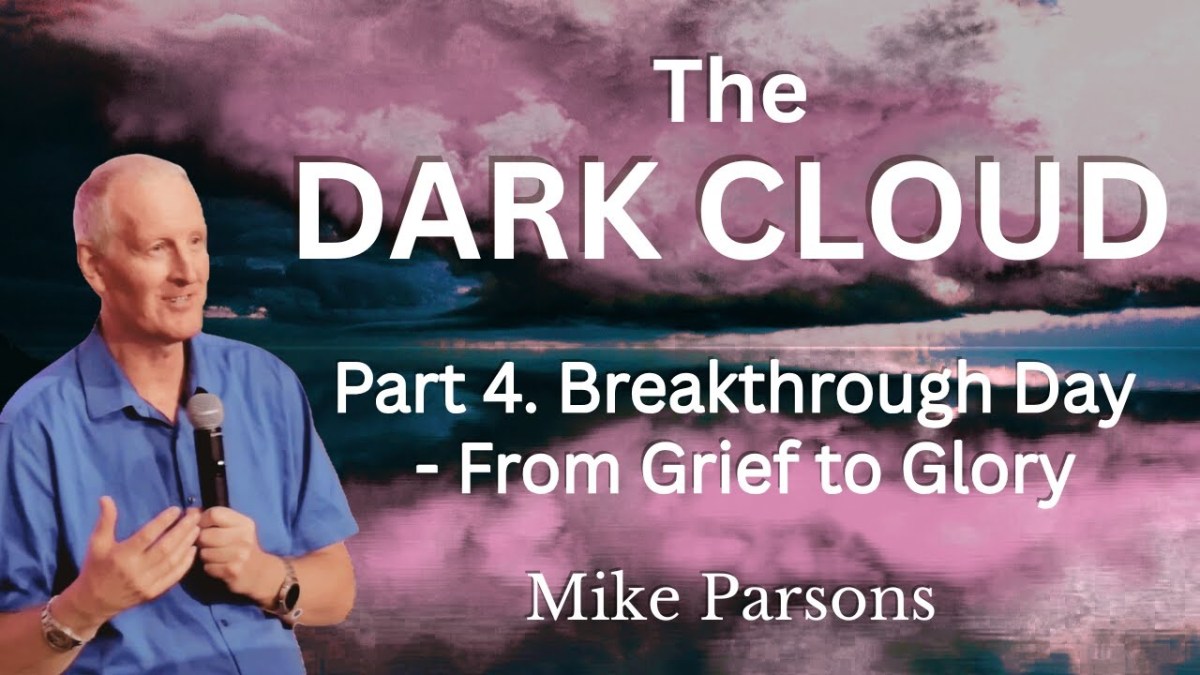
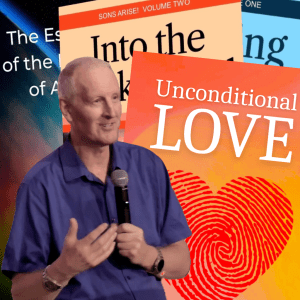



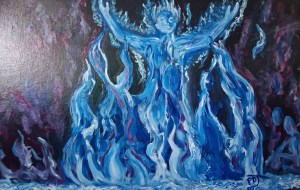


 Unconditional Love – new book out now



 Sons of Issachar