Mike Parsons
The Lamb slain from the foundation of the world
All who dwell on the earth will worship him, whose names have not been written in the Book of Life of the Lamb slain from the foundation of the world. (Revelation 13:8 NKJV).
Before the foundation of the world, Jesus did not physically die; rather, he offered himself in identification with humanity, should we fall into a state of perceived separation from God. His self-offering was not about death itself but about fully embracing our condition so that we could ultimately live. The phrase “the Lamb slain before the foundation of the world” speaks to this identification. However, since God never desired sacrifices or offerings, he did not orchestrate Jesus’ death in a punitive sense. Instead, Jesus willingly gave himself so that we would always be restored.
Jesus came as a man to redefine our understanding of God. To accomplish this, he had to fully identify with us in the flesh, living as we do. By experiencing our humanity, he took on our death, not as a punishment from God but as an act of love. Humanity, not God, put Jesus to death. Yet, through his death, he overcame its power, bringing about the resurrection that includes us all. His coming was essential—not to appease divine wrath but to restore our lost identity and reunite us with the Father. While he did not die before the foundation of the world, he committed himself to our redemption from the very beginning, ensuring that no matter what, we would always be restored to relationship with God. Ephesians 1:4 (Mirror Bible) affirms this, stating that God’s plan has always been to restore us to face-to-face innocence.
So some are excluded?
However, you are not in the flesh but in the Spirit, if indeed the Spirit of God dwells in you. But if anyone does not have the Spirit of Christ, he does not belong to Him. (Romans 8:9).
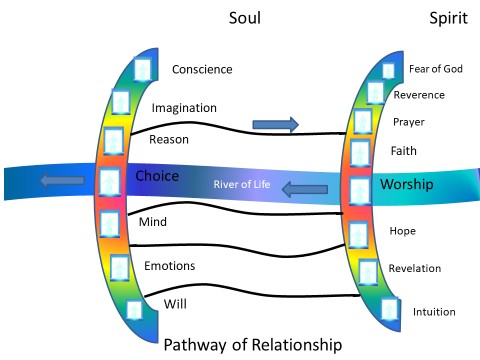
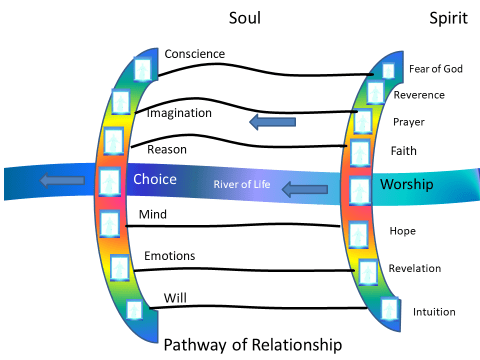
The passage in Romans 8:9 must be understood in context. It speaks of the mind and spirit and our choice to identify with either life in Christ or the law of sin and death. If our mindset remains focused on sin and death, we live as if we do not belong to Christ. When Jesus said, “Depart from me, I never knew you,” it was not about literal ignorance but covenantal relationship. If people continued living under the old covenant, refusing the relationship Jesus offered in the new, they remained unknown to him in that sense. The passage does not imply that some are excluded from Christ, but rather that those who think and live according to the old ways act as if they are outside of him. In reality, the Spirit is in all, breathed into humanity just as he was into the disciples, making all people part of the new creation. The issue is not whether we belong to him, but whether we recognise and live in that truth.
The issue is not whether we belong to him, but whether we recognise and live in that truth.
As Proverbs states, “As a man thinks in his heart, so is he.” If our thinking remains rooted in the law of sin and death, we experience separation—not because Christ is absent, but because our mindset does not align with the truth of who we are in him. We are not cut off from God; rather, we live as if we are. The passage emphasises the importance of shifting our perspective, rejecting the old covenant mindset, and embracing the truth of life in the Spirit. When we do, we experience the reality that Christ is in us, and we are fully his.
Lost?
Being lost does not mean being disowned. The parables of the lost sheep, the lost coin, and the prodigal son illustrate this truth. The lost sheep still belonged to the shepherd; the lost coin was still owned by the woman, though it was temporarily out of reach; and the prodigal son remained a son, even though he had distanced himself from his father. The problem was never one of ownership but of connection. Likewise, all people belong to Christ, but those who do not recognise their identity in him live as if they are lost. The solution is simply to awaken to the truth and return to that place of belonging.
The key is to remain in a place of rest—resting in the knowledge that there is no condemnation for those in Christ Jesus. We have been set free from the law of sin and death, and we are called to live in the fullness of that freedom. Rather than striving or struggling, we are invited to abide in this truth, resting in the life Christ has already secured for us.
If this blog and video have helped you, please share, like and comment. That brings it toothers’ attention. Subscribe too, whether here or on YouTube – then you won’t miss any!













 Sons of Issachar