420. The Power of Resurrection: Our Union with Christ

Mike Parsons

Click here to view the video on YouTube


When he was resurrected, I was resurrected

When I used to think about the resurrection, my focus was very much on what Jesus did—overcoming death and defeating sin, and all of that. But as I’ve experienced more of what Jesus did, and my part in it, I’ve come to realise that I was included in it. So when Jesus died, I died. When he was buried, I was buried. When he was resurrected, I was resurrected.

I’m the same as the whole of mankind in receiving what happened at the resurrection. It wasn’t just an individual thing for people who would, in the future, accept what Jesus did on the cross and through the resurrection. It happened as Jesus was resurrected.

I am going to prepare a place for you

He promised to come back and bring people into a resurrection relationship with the Father. I think John 14 is the best illustration of that—Jesus promising that he was going to go away, go to the cross, come back and take them to be where he was. “Where I am,” he said, “you may be also.” Now, “I am” was not a physical location. It wasn’t a spiritual location either—it was a relational position.

In John 14, Jesus talks about “I am in the Father and the Father’s in me.” But people have taken John 14 to mean, “Oh, Jesus has gone into heaven, and one day he’s going to build a house there for us, so we can all go and live in that house—in our house in heaven. He’s going to come back and take us there.”

That teaching has placed what Jesus did in the resurrection solely in the future, after we die, when we get physically resurrected. So we expect death and resurrection in the future, based on what Jesus did. But actually, that’s a completely wrong understanding of that passage. The passage is really talking about the union of relationship we have within “I am.”

It was a union thing, because John 14:1–3 is a marriage statement. In the Hebrew marriage tradition, when a couple got betrothed, the bridegroom would go and build a house—usually attached to his father’s house. He would say, “I am going away to prepare a place for you,” to his future wife. And she would say, “When are you coming again to take me to yourself?”

Now, this was a well-known understanding at the time. But we often read John 14 in today’s culture and completely misunderstand it. Jesus was basically saying, “I am going to the cross, and through the cross I’m going to prepare you to be a place where I can dwell—where you will be in ‘I am’ just as I am in ‘I am’ with the Father.”

On that day

Later on in the chapter, he says, “On that day you will know that I am in you, and you are in me, and we’re in the Father.” On that day—that was the resurrection day. He literally came back, went into heaven, received the kingdom and then came to his disciples and breathed onto them, saying, “Receive the Holy Spirit.”

That was the moment where the disciples became representatives of the new man in Christ. Whereas Adam had been the representative of the old man when God breathed into him — everyone died in Adam. When Adam walked into death, everyone died in him. But everyone has been made alive in Christ.

So the whole of mankind was represented in Christ when he went into death, into the grave, and was resurrected. And when Jesus breathed onto the disciples, they experienced the Holy Spirit filling them, or coming into them. The whole of mankind had the Spirit come into them, but they didn’t know—because they didn’t have the relationship with Jesus or the Spirit that the disciples had.

The disciples already had a relational connection, which became very different, because God came to dwell in them. But God came to dwell in all mankind. Most of mankind has not come into a knowledge or experience of that, even though it’s true. But God is at work in everybody to reveal that truth.

Resurrection applies to everyone

So the power of the resurrection over physical death applies to everyone. If we embrace what Jesus did and partake of it, then we also don’t need to die. Jesus basically said, “If you eat my flesh and drink my blood”—in other words, if you partake of me—then you won’t die.

Immortality is a consequence of embracing the power of the resurrection. Jesus overcame death, and we were in him overcoming death. Now, to start with, you could say that was spiritual death, but it didn’t stay spiritual. Jesus’s death wasn’t just spiritual—his body died. That meant that when his body was resurrected, it was the firstfruits of our resurrection.

The teaching of the church over the last thousand or so years has lessened what Jesus said and made the power of the resurrection only really about salvation. It hasn’t applied it to wholeness, health or immortality. So the thinking has become: “Well, I get spiritual life. But I’m going to die again, and I’ll go to heaven, where the resurrection will take place for me.”

Whereas actually, it is designed to take place now. Jesus being transfigured before he went to the cross was an illustration of that—that we are to be transfigured and become who God intended us to be—as light, if you like, as God is light.


Mike’s latest book, Unconditional Love, is out now as an ebook on our website and will soon be available to order in paperback from your local or online bookseller.

More details at eg.freedomarc.org/books


Please remember to like, share, comment and subscribe, either here or on YouTube – it really helps us get the message out!

Related posts

339. Universal Inclusion in Christ

387. From Sickness to Health… to Immortality

311. Death Has No Hold Over Me

289. One New Man in Christ

410. Mastering Energy Generation

Mike Parsons –


Fatigue and creative energy

Many people don’t know how to generate the energy needed to live day to day. They feel tired, weary and drained, lacking both creative energy and the vitality required for their daily lives. This happens because they don’t know how to focus the abundant life that exists at the core of their innermost being. They don’t know how to generate, activate and channel that energy effectively.

We have energy gates within our body that can facilitate this process, but most people are unaware of how to open and activate them. This isn’t something commonly taught—especially within Christian circles. In fact, many evangelicals would be horrified at the mere mention of “energy gates,” dismissing it as New Age or something strange they want nothing to do with.

Yet, in reality, they are missing out on a crucial part of how we were designed to function. Learning to generate and direct energy isn’t some mystical or foreign concept—it’s about understanding how to channel living water, or what some might call light energy, into our daily lives. There are many analogies for it, but we are talking about spiritual life—abundant spiritual life—flowing from within us.

Energy gates

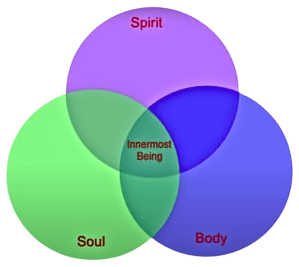
Most people don’t even realise that they have gateways within their spirit, soul and body that are designed to allow this life force to flow freely. Instead of experiencing the full flood of abundant life, they live on a trickle—because they’ve never been taught how to open these gateways. In fact, many Christians have been taught the exact opposite, which is why so many struggle to understand the flow of life and energy within them.

They’ve never been taught that they are a tri-part being—spirit, soul and body—and that all three must function in union. They don’t know how to activate and open these inner doors so that they can live in a continuous state of being in communion with life itself.

Jesus is in us, the Spirit is in us, and the Father dwells within us. But are we truly embracing that? Or are we searching for an external source—for someone else to give us what we feel we lack?

A critique of traditional teachings

Many people seek healing by looking for an external impartation—someone to lay hands on them and transfer an anointed charge of energy that will heal them. But what happens afterwards? Many people who receive healing end up sick again or even dying later because they don’t know how to sustain the healing they received. They never learned how to generate and maintain that healing within themselves. They relied on someone else to provide it, so they never developed the ability to keep it. The majority of people who minister healing don’t teach others how to maintain health and well-being—they simply move on after laying hands and praying.

There are genuine people who operate in these gifts, and they see real miracles and healings. But how many of those healed return a year later to testify that they are still well? If the root causes of their sickness remain unaddressed, the healing is often temporary. Unless they deal with the underlying factors—whether physical, emotional or spiritual—the illness can return.

Unlocking abundant life energy

What we really need is to teach people how to live in abundant life, how to embrace well-being as a way of life, rather than just seeking instant healing. Abundance isn’t just about financial wealth—it’s about emotional, spiritual and physical wealth. It’s about living in a state of fullness.

Jesus promised us abundant life, but the enemy seeks to rob, kill and destroy. If he can keep people from knowing the truth, if he can convince them to believe lies, then they will never live in the abundance that is already theirs. They have been robbed without even realising it.

It all comes down to our relationship with God as the source of life. What source are we drinking from? Are we drawing from the eternal fountain of life within us, or are we relying on external sources? Are we looking to church, ministries, or Christian teachings instead of directly connecting with Jesus?

Jesus said, “If you drink the water I give you, rivers of living water will flow from within you.” He was speaking about the Spirit—the very life of God within us. That is the source we need to draw from. It’s not about following techniques for healing or looking for external solutions—it’s about living in the overflow of life itself.

And that is only possible through relationship. It’s not a formula. It’s not a ritual. It’s a relationship—a deep, ongoing connection—with the source of life.


Related posts by Mike Parsons

387. From Sickness to Health… to Immortality

Mike Parsons

It has been a long journey—from discovering how to receive healing, to living in health, to embracing an immortal perspective. Over time, I have had to learn how to navigate the difficulties of sickness in the world. This included ensuring that sickness had no access to my life. Whenever I entered an environment where sickness was present, my mindset and belief system were focused on the fact that sickness could not touch me.

I began taking communion many years ago as a way to address issues within my DNA and other areas of my life that required the love, power and life of God. Through communion, I invited God’s transformative work into my being. I would take communion and make declarations—specifically ones addressing DNA, as shared in my earlier teachings and in the Engaging God materials. Over time, this practice became a part of who I am, allowing me to fully receive the life that communion offers.

The Importance of Mindset

I began to approach communion from the understanding that health is my inheritance in God. Health represents how God originally intended me to be. By taking communion, I cooperated with God’s purpose to restore me to his original intention. In doing so, I began to receive life, not just to avoid death but to live in health. This required removing any associations with death from my mind, emotions, and body. Whether these associations were rooted in fear or ingrained belief systems, they had to go.

Through communion, I allowed God to address these areas. Eventually, he led me beyond the traditional practice of communion with bread and wine or juice. I began to view every meal as an opportunity to receive the life of God. Over time, this perspective shifted further—I no longer needed to make specific declarations because they had become a natural part of me.

Living in a State of Communion

This shift culminated in understanding that every breath I take is an act of communion with God. I draw life from him with every breath, living in a constant state of refreshing. The rhythm of breathing—Yod-He-Vav-He—became a representation of this communion. This perspective transformed my state of being: I moved from doing communion, to receiving it in daily activities, to becoming communion itself. Living in this state of oneness with God, health is no longer something I fight for; it is the natural outcome of my existence.

Through this journey, I experienced the cleansing of my DNA and severed connections to aging as tied to the passage of time. My body is continually replenished and restored as I cooperate with the renewal process. I consciously agree with my body’s restoration, allowing each cell to repair, renew, and align with God’s intention.

Overcoming Associations with Death

To move from health to immortality is not a large step when your body is continually renewing itself. This process requires a mindset rooted in the understanding that health is our inheritance. Any symptoms of illness or decay must be rejected. I refuse to accept sickness, ill health, or even genetic issues as my own. Instead, I focus on the life of God and the DNA of Jesus to address these areas. By targeting specific genetic issues with the life of God, I align myself with my true identity as a new creation in Christ Jesus: “The old is gone, the new has come.”

To fully live in this reality, I embraced a state of unwavering belief. Doubt, unbelief, and double-mindedness have no place in this consciousness. I live in the truth of who I am: immortal, drawing on the life of God. Practices such as drawing energy from quantum fields and activating life within me are no longer tasks I perform daily—they are simply part of who I am.

Daily Practices for Renewal

Living this way means my spirit, soul, and body exist in complete union and harmony. My emotions, physical body, and mind are in sync, creating a state of rest and alignment. This harmony allows the life I continually receive from God to restore and renew me, bringing complete wholeness.

As I embrace immortality, I put on the reality of sanctification—spirit, soul, and body—fully and entirely. Renewing my mind is key to this process. From a place of rest, I allow the life of God to transform me, enabling me to live in the fullness of health, wholeness, and immortality as God intended.

If you enjoy these blog posts, please take a moment to like, share, comment and subscribe—it really helps. Thank you!

382. Understanding Immortality | Beyond life and death

Mike Parsons


I think people understand one aspect of immortality—that you don’t die—but they often relate it only to a spiritual sense, like, “When you die, you go to heaven.” But that’s not immortality. That’s just your spirit and soul continuing to exist in another place. Immortality, as Jesus described in John 6, is physical. He said, “Eat my flesh, drink my blood, and you won’t die.” He made it clear it referred to physical death because he contrasted it with the bread eaten by the ancestors in the wilderness, who still died. He said, “This is the bread that’s come down from heaven. If you eat this bread, you won’t die.”

Now, obviously, many people who’ve eaten that bread have died, so there’s a disconnect between what Jesus said and our experience. That creates a problem for many because they see the countless Christians who’ve died since then and think, “Well, it didn’t work.” But the reality is, they didn’t believe it applied to physical death. Instead, they made an agreement with death, believing that dying was the path to heaven. For centuries, Christians have desired to die to reach heaven.

But if we go back to what Jesus said, the purpose of immortality becomes clear: God loves us unconditionally. He doesn’t want that love to end because “our time’s up.” Immortality is rooted in that unconditional love, enabling us to continually experience it here on earth and, eventually, in a fully reconnected heaven and earth. When that relationship is restored, we’ll no longer be limited to earth. We’ll have the freedom Adam would have had if he had continued ascending into maturity.

Jesus came to undo the works of the evil one, to destroy what robs, kills and destroys life. He didn’t destroy the evil one himself, but his works—anything that contradicts abundant life. Eternal life isn’t just about living forever; it’s about the quality of that life. Who’d want to live forever without the fullness of health and healing? Immortality must include healing, wholeness, and the vibrant quality of life God designed for us.

Eternal life reflects the life that flows from God’s eternal nature. It’s not just an endless number of days but the richness and multidimensional aspect of life. It’s about being unrestricted by time and space, not tied to Earth forever. The biblical terms translated as “forever” or “everlasting” don’t always mean what we assume. In the Old Testament, olam refers to a distinct period, an age. Similarly, the Greek term aion implies a defined era. So, when we understand these words correctly, immortality doesn’t mean stagnation—it allows for transformation and progression across ages.

This body, as God designed it, can be transformed to fit the requirements of each age or stage of existence. Immortality is about quality, capability, and the ability to live multidimensionally, not limited by earthly constraints. It’s about experiencing time differently, where time serves us rather than binding us. As we live in this reality, we’ll discover more of who God created us to be, moving into the abundant life Jesus promised.

I don’t want to live anything less than that abundant life. Jesus said we could have life in abundance, and I believe that promise will continually expand. It’s about living in the fullness of what God intended, fulfilling our destiny in this age and those to come. As we draw closer to God, who is light, our relationship with time and space will shift. We won’t be bound by current limitations.

Jesus demonstrated this multidimensional reality. He walked on water, passed through crowds, multiplied resources, and displayed mastery over creation. He operated from a place of complete understanding of how creation works, at a quantum level. We, as children of God, are called to be like him, made in his image and likeness. Jesus said we’d do everything he did and greater. To embrace this, our minds and consciousness must expand, enabling us to live in the fullness of who God designed us to be.

If you enjoy these blog posts, please like, share, comment, and subscribe—it really helps. Thank you!


376. Unlocking Abundant Life

Mike Parsons  

Misunderstanding and mistranslation

Isaiah 53 is a widely misunderstood and mistranslated passage. Often, the concept of the “suffering servant” has been used to support the idea of penal substitutionary atonement, suggesting that God punished Jesus. However, that was not the case; it was people who inflicted that suffering. Jesus frequently referenced the Septuagint, the Greek version of the Old Testament, which presents these scriptures differently. For example, in Isaiah 53:10, the traditional Hebrew text states it was the Lord’s will to “crush him with pain” by making his life a reparation offering. But in the Septuagint, it reads that it was the Lord’s will to “purify him” or “heal him of pain”—the pain we placed upon him. Therefore, Jesus did not die for our sins but rather because of our sins. The wages of sin led to death, and Jesus took on death to overcome it and bring life.

In the New Testament, Peter affirms that Jesus carried our sicknesses and went to the cross not only for our lost identity but also to deal with sickness. He addressed the consequences of sin that resulted in death, as “the wages of sin is death,” not punishment. This is relevant to the passage in Isaiah, which states that “by his scourging we are healed.” The scourging, or whipping, was not inflicted by God, but by people. This suffering enables us to be fully restored and healed. Reading Isaiah 52 alongside chapter 53 highlights the travesty of justice that Jesus endured, a profound injustice as an innocent person was punished by human hands, not by God. This passage, misinterpreted through the lens of penal substitution, truly reveals that God was not inflicting punishment on the suffering servant; rather, Jesus’ suffering was an act of injustice inflicted by others.

Continual communion with God

Years ago, I explored the Bible to understand its teachings on healing and health. I discovered that God is my healer, and Jesus’ actions on the cross made healing possible, allowing me to experience health and wholeness. Over time, I have come to see that I can be healed, live in health, and even transcend death itself. Jesus’ work on the cross means I am not just spiritually saved to reach heaven but can also live free from physical death. This realisation shapes my daily practice: I take communion, symbolically taking on the life of God, and receiving it as a cleansing and transformation. By living in communion, I partake in this life continually. Rivers of living water flow within me, providing health and wholeness from the Tree of Life.

I draw from this life force, a quantum field that God has created to sustain the entire universe, which in turn sustains me. I could see this as rivers of living water, light energy or spirit, reflecting my existence within an environment meant to be self-healing, self-restoring, and self-repairing. This aligns with God’s original design for the body, which should be able to restore and repair itself. However, because of death’s presence in the body, ageing results, disrupting its natural function. Ideally, the body would communicate within itself, signalling the immune system to identify areas needing repair, restoration, or replacement. This process operates within the mitochondria of the cells, yet that communication apparently slows down or fails to work as we get older. So, we need to make sure that our cells are communicating. I can communicate that to my body, and I can communicate with the cells of my body and remind my body of its immortal state. I can speak to my body in that way, live in that communion and fellowship of life and immortality, and live in that atmosphere. That will be my thoughts, my intentions aligned to God’s thoughts and intentions.

Transition

There are also things you can do to help with that. There is a liquid you can drink called ASEA, which actually restores the cell’s ability to repair themselves. You can also get a gel called Renew, which I have seen miraculously restore burns and do things very quickly, because it is designed to cause the body to self-repair and self-heal efficiently and effectively. Now, that is a transitionary thing until we can begin to think and function in health and immortality in our own thinking and begin to live in that environment where health, wholeness, life, and immortality are the norm.

Breathing in life

So, you know, I have had various stages along the way of realising that God desires me to live in health, that God desires me to be immortal, and to have that function. Therefore, I take on that life, so now every time I breathe, communion for me has gone from something I did to something that I now am. So I am in communion with life; I am partaking in life. When I breathe in, I am breathing in life, just as God breathed into Adam, and he became a living being. I am breathing in the life of God. I am living in rarefied air, if you like; I am breathing in life, breathing in energy, breathing in wholeness. That is the fellowship I live in—that is, in a sense, where I live in communion with life, and I have no communion or agreement with death, sickness, or disease. I know it takes time for this to become something we live in and not try to attain. This is my reality; this is the reality I live in.

Accidents

Now, of course, at times I have to focus that intention in my body, like when you mentioned accidents. I have had accidents. In fact, I had an accident this week in which I slipped on a slippery paving stone, went up in the air, came down, and my whole side landed on the edge of a railway sleeper and really hurt. Therefore, I am having to focus on basically apologising to my body for that accident. Although I could not say it was my fault, and I was not in any way careless, it was just slippery, and I did not realise. But I still engaged my body. Now, I am communicating with my body for the removal of the pain.

Now, pain, in a sense, is something that says something is wrong. So, at the moment, my ribs and all the way down my back are—well, my ribs are very, very sore, but I am working with my body for its restoration. But I have to be sensible. There are some things that I think, okay, I am going to push through this, and I am just going to ignore it, and I am going to get on with it. Then, there are times where I think, no, I need to rest now, I need to give my body time to repair and to restore itself and to repair the damage done to my ribs, intercostal muscles, and all around that area. So, I focus my intention on that area, and I begin to choose the reality that my body will come into a restored, repaired, healthy state. Sometimes it takes time; you can have a miracle in which all of the pain goes and all of the problem goes, or you can work with your body in your thinking and in your positive mental attitude in choosing restoration and choosing health and wholeness, and choosing the reality that you will come into a whole state.

Jesus healed in different ways

Jesus healed people in different ways. One of the words used for healing was “therapeuo,” which is where we get “therapy” from, and that indicates a process. So, sometimes there is a process, sometimes it is instant. Obviously, we would all prefer it to be instant, but sometimes we have to work through the process, coming to agreement. Yes, I have done court cases and things with my body years ago, apologised, and did all that, so that my body would have no offence against me, and therefore, my body would be working in cooperation with me because I am one—body, soul, and spirit. I am one, you know.

Abundant life

But it is a process and a matter of thinking and realising that what he did on the cross was to bring me into the wholeness of life. What happened on the cross was an injustice because he did not deserve to go to the cross, and God did not do any of that to him on the cross; man did. But he was representing man and taking man’s desire for punishment, and thereby brought about the resurrection and overcame death. Therefore, to overcome death, you have to overcome sickness, and he overcame sickness so that we could live in the abundance of life.

So, I would encourage you to continue with communion. See communion as a state of being, so that with every breath you take, you are receiving life, energy, health, and wholeness. Just see that begin to bring about the changes in your physical body to align with the truth of Him actually taking on all the associations of death and giving us abundant life.

If you enjoy these videos, would you please take a moment to like, comment, and subscribe? It really does help. Thank you very much.

371. Mindset of Immortality

Mike Parsons

Physical age

Your age does not have to dictate a decline in energy or health. In fact, I have more energy now than I did in my twenties. I can manage my energy because I generate what I need to do whatever I need to accomplish. This highlights that physical age is not the same as how one feels or lives. For instance, I am 66 years old, but how I feel and how I live are what truly matter. While it is true that everyone gets older with each passing day, this does not necessarily lead to decline, either in health or vitality. Ageing does not have to bring deterioration to the cells, as my own cells are functioning perfectly well.

From this perspective, it is about mindset rather than appearance. There are people—like desert fathers or ancient ones—who, while they may not look young, possess the ability to choose how they experience life. For example, a friend of mine encountered someone ancient in spirit, and at different times, this person appeared both young and old. When asked how this was possible, the person replied that they could choose how they appeared.

Sometimes, people associate wisdom with age or appearance, while others see youth as a purely physical attribute. However, it is actually the mindset by which one lives that determines the true measure of vitality, not how one looks. This ancient person explained that they could appear a certain age to some, and another age to others, depending on what they wished to convey. I believe that when we embrace the mindset of immortality, we are no longer controlled by age; instead, we rule over it. Immortality becomes an expression of our state of being and consciousness, rather than just physical appearance.

For example, Jesus appeared differently to different people after His resurrection. When He appeared to Mary, she did not recognise Him as Jesus and mistook Him for a gardener. Some may say that she was crying and thus could not see clearly, but that is not the case. Similarly, on the road to Emmaus, Jesus walked with disciples who knew Him, yet they did not recognise Him either. His appearance must have changed, only revealing Himself to them later in a form they could recognise. When He appeared to Thomas, He allowed him to see His wounds as proof of who He was. I do not think He carried those wounds everywhere, but He revealed them specifically so Thomas could see and believe.

I firmly believe that, as we live more fully in this reality of sonship, we will be able to choose our appearance. Personally, I do not worry about how I look, as I know how I feel and how I live. I do not need to look twenty; that would be quite odd for my family and those around me. While it would not bother me to look twenty, I am content with my 66-year-old appearance. More importantly, the cells in my body are not decaying, because ageing is not synonymous with death.

Jesus aged from infancy to His thirties, and had He not given Himself up to death, He would have continued ageing without succumbing to natural causes. He chose death so He could take on our mortality and bring us life through His resurrection. Therefore, it is all about the mindset we choose to live in. I live in a mindset of immortality, where physical ageing is irrelevant.

I have no desire to be alive at a hundred if I am not fully healthy and able to fulfil my purpose. What is the point of living if one is not enjoying life, full of energy and vitality? This is why many people do not consider immortality; they do not want to continue living the kind of life they currently lead. But for me, I am fully at peace with my life and I enjoy it. I believe we will learn to live in this world without being subject to it, focusing on the quality of life rather than merely its duration.

Quality of life

The quality of life, not just the fact that it will not end, is what defines true immortality. You could live for 500 years, but if you are bedridden and immobile, the quality of life is lacking. Immortal life is more about the quality of existence than the simple fact of not dying. The key question is, what quality of life would you choose to have, and can you maintain it despite the pressures around us that encourage the acceptance of death?

From a young age, people are programmed to see ageing as leading inevitably to death, rather than to wisdom or maturity in sonship—the state of living as a fully realised child of God. This mindset must shift to one of immortality, where age is irrelevant and eternal life is defined by the abilities and opportunities it offers. These abilities include the capacity to dwell in both spiritual and physical realms, travel by thought, and exist in multiple dimensions. Immortality is far more than the absence of death; it is about living life in its fullest, as God intended.

Many people have different views on immortality. Some might think it simply means not dying, but in reality, it requires preparation for a long and fulfilling life. How will you live if death is no longer a concern? Jesus promised abundant life, yet the enemy seeks to rob, kill, and destroy. The focus should not be on avoiding death but on embracing the abundance of life that Jesus promised.

Consider this: if you were to live for the next hundred years, would you continue working to earn a wage, or would you find a way to provide for yourself supernaturally? These are important questions because our current financial systems are not designed to last for centuries. Most pension schemes are built on the assumption that people will live for a few decades beyond retirement, not a hundred years. If your pension pot runs dry, what then? The financial systems of the world, which rely on electronic money with no real assets behind them, are fragile. When they collapse, we will need a new way of living—one that is not dependent on these systems.

God will give us insight into how to prepare for this future, so we can live free from the world’s control. Jesus, after His resurrection, was able to manifest food and ate with His disciples. There are even people today, known as breatharians, who believe they can survive on air alone. These are just some examples of how we might live differently if we embrace a mindset of immortality and prepare for the changes to come.

As systems collapse—financial, political, and otherwise—people will need to look for solutions beyond what the world currently offers. This could be a manifestation of God’s Kingdom on Earth, as it is in Heaven. Those who trust in today’s systems will find themselves needing to transition to something new, and we, too, must find a way to live in alignment with Heaven’s reality.

So, it is not enough to say, “I will not die.” The real question is, “How will I live?” Abundant life is our focus, not merely the avoidance of death. We should be asking ourselves what that abundant life looks like and preparing for it now, with a perspective that enables us to choose our reality. Many people are not yet thinking this way, but it is a mindset we can all embrace.