They didn’t believe it in the early church. There was no penal
substitutionary atonement. The atonement, or what Jesus did on the cross, was Christus Victor, mostly. Christ victorious over what? Our lost identity, our death, over everything. A very different view of what Jesus did.
But Protestantism very quickly picked up on penal substitutionary atonement and it became the cornerstone of Calvinism and lots of other streams of thought. When that got removed, and when that evangelical pillar crumbled, all the other pillars started to wobble.
So sola scriptura was the second pillar. Well, without evangelicalism holding it up, that went over, which is why it changed my whole view about the Bible, the way I see the Bible, and the Bible being ‘the word of God’ and all that stuff: “It’s got to be in the Bible!” and all the challenge that came
with that, because God totally took me to task over it.
We are following a book which has been translated by people with an agenda and a preconceived confirmational bias, rather than out of relationship with Jesus. Yet Jesus said he would speak to us and that we could follow him. We have the Holy Spirit, the Spirit of Truth, within us. We do not need another teacher.
So why are we telling people they must follow a book, when they can be guided by the Holy Spirit and through Jesus, who is the Truth? Jesus is the Word of God. The Bible is not the Word of God. The problem is that we have been taught otherwise. I hear people say, “We are going to read the Word.” But they are reading a book, half of which was never intended for them, the other half written for people in the first century preparing for the end. We are not those people.
That does not mean God has not used the Bible. He has used it in my life, but it has also caused huge confusion. I was deceived into believing things simply because I was taught that was what the Bible said. Now, I go with what Jesus says. I will not live by an interpretation of a book; I will follow a person in relationship. He is the Way, the Truth and the Life. The Bible is not. Even if someone had never read a verse, never seen a Bible, they could still encounter Jesus and through him engage the Father.
This is why I would never encourage a new believer to start with the Bible. It will only confuse them, as they are faced with conflicting interpretations and even two seemingly different versions of God. But it was always just people’s limited view of God, not who he truly is. Relationship is what matters. I can walk in relationship even with those I disagree with, because I do not need to prove them wrong. My faith is grounded in personal experience and testimony, not in the teaching of a book.
I use the Bible only as a frame of reference, because that is how people have been taught. Yet I can count fewer than five times when the Father or Jesus has actually quoted a Bible verse to me. When they did, it was revelatory. For example, “Come to me, all who are weary and heavy laden…” was spoken to me when I was striving to be good enough and keep a behavioural standard. It showed me why I was weary and how I could come into his rest. The principle was what mattered, not the verse.
Jesus is quite capable of saying directly, “Follow me and enter rest.” He does not need to quote Matthew 11:28. People can and do go astray, but many have also gone astray while following the Bible. History shows how it has been used to persecute, to endorse slavery, the Inquisition and Christendom itself. The Bible is not safe. Only Jesus and the Holy Spirit, as the Way, the Truth and the Life, keep us on a safe path. If you use love as the plumb line, you will not go far wrong.
This is what God showed me when he challenged my views of the Bible. He brought me back to the relationship I had with him, and how he speaks directly. He weaned me off my need for Bible confirmation. I know many still need that, but their thinking must eventually shift. They were told “the Bible says this,” but that has to be undone if they are to truly follow God.
Some quote verses about people falling away from sound teaching in the last days. But those last days were AD 66 to 70, when many fell away under persecution. That does not apply to us in the same way today. And this is the issue.
If you enjoy these videos, would you please take a moment to like, comment and subscribe. It really does help. Thank you very much.
The God I thought I knew twenty years ago—or even twelve years ago—is now a distant memory. He is not what religion taught me He was. He is not what I was conditioned to believe by church or anything else—He is so much better than that. He is so much better. He is so good, so loving, so kind, so thoughtful, so passionate—beyond what I could ever have imagined until I met Him face to face and began to experience how He revealed Himself to me.
Thankfully, He did not do that all in one go, because it would have completely shattered my mind, I expect. But the Father has deconstructed my thinking and expanded my consciousness beyond what I could ever have imagined or thought possible. God is so much bigger, better, further—and creation is beyond what I ever could have imagined. I was conditioned, like most people, to believe you went to heaven when you died. But when God opened up that realm to me, and the dimensions and all those things to engage with Him and to experience—it is just so awesome.
So many of the things I believed about God were programmed into me by religious doctrines and theological understandings that I now know were never true. But I believed they were true, because that was the stream I was in at the time. I started off in the Methodist Church, went to the Brethren Church, eventually started a charismatic church—and I have been on a journey of discovering things. But that was nothing compared to engaging God in the realms of heaven, face to face, or engaging God within me in a place of intimacy.
All the doctrines that were programmed into me about who He was—the angry God, the God who needs appeasing, the Old Testament God as opposed to the New Testament God—all those confusing things, I realised I believed were true because I had never actually met Him. One day, He said to me, “How much of what you know about Me comes directly from Me, and how much of it has come from reading, listening to sermons and other people?” I had to admit—probably ninety-nine percent of what I thought I knew was not from personal experience. Therefore, it was only information, not true knowledge.
All of us have been programmed by the things we have been taught and the things we have received. You could be programmed into a non-religious mindset that is just as religious. You could be in an atheist household and be programmed to believe God does not exist. Or you could be brought up in religious settings, church settings, that have, in a sense, determined what you believe about God, and the Bible, and everything else.
For me, this has been a long, sometimes arduous journey to come to the knowledge of the truth and come to the realisation that, actually, God is love. His love is unconditional. Experiencing that is what He wants us to do—so that we can come into a reality where we love as He loved.
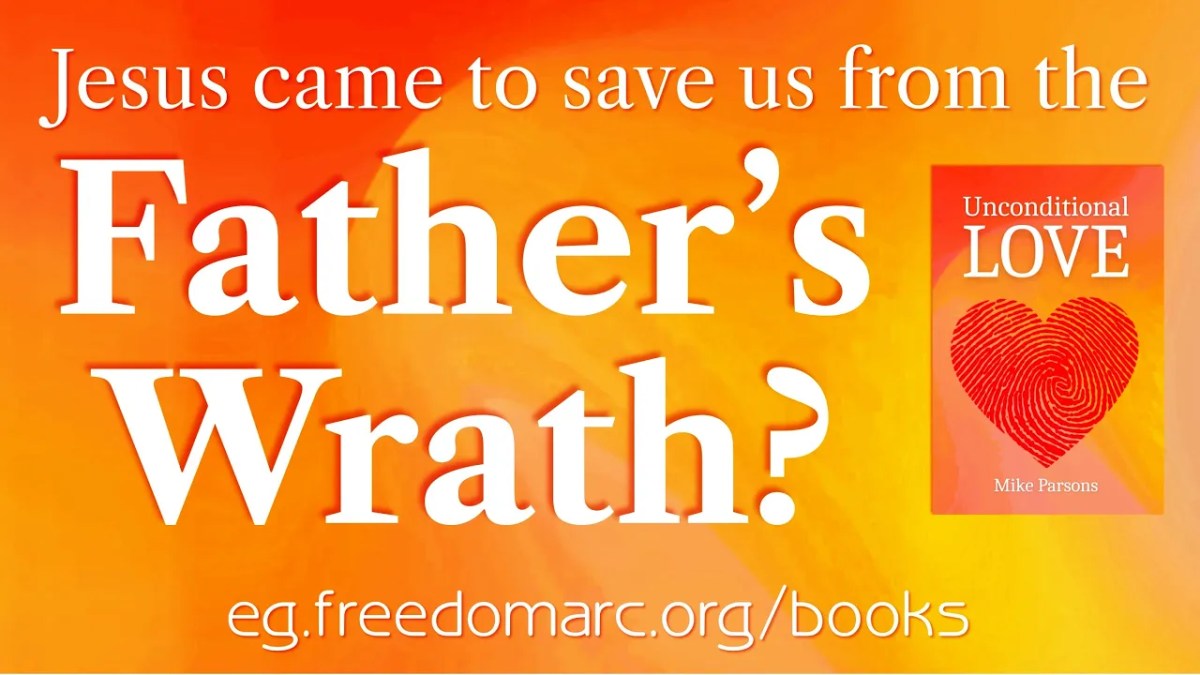
This teaching forms part of Mike Parsons’ new book Unconditional Love, which is out in print on 20 June 2025. Order it from your favourite local or online bookseller today, or get the ebook from our website. More details at eg.freedomarc.org/books.
Unconditional love is hard to grasp. It is so difficult for people to understand because of the way we have been programmed. For me, if God is love, and He is not unconditional love, then He is not love at all. Because if love is conditional, it cannot be love. You cannot earn love.
Understanding unconditional love—and the nature of it, and why it is so often challenged—is really, really important. I believe this is probably the most important and the biggest key truth that has made the most impact in my life over the last ten to twelve years. The truth that God is unconditional love has been attacked; it has been twisted in many different ways. That is because it is so important that we understand it and experience it. When we experience that unconditional love, it brings freedom. It releases us to be ourselves. It stops us from having to perform to earn it or deserve it.
A phrase any of you familiar with me for any length of time will have heard me say a lot—because the Father said it to me—is: “Live loved, live living, and live loving.” He has said that so many times as an encouragement and a motivation. This is simply how we can live: we can live loved. Now, that does not mean live trying to be loved, or trying to earn love, or deserve love, or be good enough for love. Just live loved. Just accept that we are loved in an unconditional way—in a completely unconditional way. That is the key to this understanding and this experience.
If we are living in that place of living loved, then we can love living. Life is joyous. I look forward to every day, because there is more to experience, more to explore, more to just resting—to just be. And then we can live loving. This is really where the rubber hits the road. To live loving means we have to demonstrate the love to others that we have received. Jesus said, “Love one another as I have loved you.” People strive to love other people—and it is hard sometimes—when they are not very nice to you, and they do things that really make you say, “Well, I do not want to love them. Look how they treated me. Look how they hurt me.”
Any of you who have been involved in church for very long will know how easy it is to be hurt by people—whether deliberately or by accident. It is hard in relationships to maintain a loving attitude to someone all the time and to everybody. That is really difficult. But it is possible, because that is the way God has loved us. God has loved us, and He wants us to love other people in the same way. So if God’s love towards us is unconditional, then our love towards other people should also be unconditional.
Now, I use the word should, and actually, that is a word I want to eliminate from my vocabulary when it comes to God, and relationship, and living life. I do not want to do things because I should do them. Who says I should do them? Did God say I should do them? If so, that is a condition—that I should do something. So what is the consequence of not doing something? If I do not do what God wants me to do, what will He do? So what sort of God do we believe in? What does He do when we do things that do not line up with what He wants us to do? Are there a whole load of things we should do?
On my journey, He has really challenged me about that word. So many of us have that word: “Well, I should do this… I should go to church, I should pray, I should read my Bible, I should witness… I should, I should, I should.” Why should I? Because I am conditioned to? Because I think it is the right thing to do?
God challenged me over things like obedience. Should I be obedient? And of course, I thought, “Well of course I should! Why would I not want to be obedient to God?” But He challenged me. My thinking around that was very old covenant. Because obedience is to something which is a law. God does not want us to obey Him. God wants us to have a relationship with Him in which we share, in which we cooperate with one another—and in which, of course, we would only want to do the things that we see the Father doing. But not because we should, but because we desire to. Because it is the desire of my heart to be in relationship with God, who loves me in such a wonderful way.
So many people accept that God is love—but there is always a but. Religion programmes buts. Yes, that is true, but… I had lots of buts myself in the past. Why? Because it is too good to be true for an independent, alienated mind to accept that God could love you without any condition. We have been programmed by religion to believe we have to do something to deserve or earn love, or to appease anger. That is what God really wants to change. That is the greatest deception. It fools people into trying to earn something that is already theirs by right of inheritance—because we are all His children. We are all co-heirs, whether we know it or not.
We are all God’s children and, therefore by definition, we are all loved unconditionally by a loving Father, overflowing in loving kindness. To experience that and to know that is life-changing.
Thank you to our Patreon patrons who help make my books and videos – and this blog – possible! Join them at patreon.com/freedomarc and partner with us in taking the good news of unconditional love to all creation.
Going in to meet the person of God—that is an experience beyond any other I’ve ever had. I could never have entered into that in the state I was in, but God began to change me, prepare me, in all those things in the soaking room, so I could get to that place where I was able to meet Him face to face. Now, I’d met God in many different ways, but there’s a difference between engaging the presence of God and engaging the person of God.
Metamorphosis
Metamorphosis is a process that produces transformation. Not only do things get removed, but things also get changed, added, to enable us to go into deeper levels of intimacy. So we have the ability to live in multi-dimensional realms, in the fullness of our eternal nature and identity.
An example in nature of metamorphosis is the transformation of a tadpole into a frog. It hatches from spawn and begins life restricted to water, breathing through gills—but that’s not God’s intention for it, that’s just the beginning. The tadpole eventually loses its gills and tail, develops legs and a new respiratory system, so as a frog it can be free from restrictions and live in both water and on land. A butterfly goes through a similar process—starting as a caterpillar, restricted to crawling on the earth, but changing through the chrysalis into something that is free to fly.
These are symbolic of the change and transformation that’s needed. We also go through a similar transformation that removes, adds, and restores abilities.
Many times in the Bible, you’ll find characters placed in a place of restriction to prepare them for their destiny. Now, sometimes people really struggle with that. They find it really difficult—to be restricted. They think God is putting that restriction on them in a negative way. But it is a positive thing when God places us in a position that brings about the change and transformation needed in our lives.
Some examples of that—Jacob under Laban, where he was looking to receive his wife, and there were all these conditions put on him, and tricks and everything else, but it produced character in him. Moses in the wilderness—he was called, but lived in the wilderness until he was able to take his position, after he had matured. David in Adullam’s cave—called for the kingdom, but in this place with a group of misfits, and God used that. Jeremiah was in anguish of soul, but came out into a place of fulfilling his destiny.
And then Joseph and Esther—they were also prepared. Joseph was prepared in the pit—his brothers threw him into the pit. How difficult must that have been? Then in slavery, in stewardship, and in prison—the prison of obscurity—until the time was right when his dreams and destiny would be fulfilled. Joseph, in his father’s house, was never going to fulfil his destiny. It was Joseph who’d gone through the process of change and transformation, who grew, who matured, who would end up in leadership in Egypt—in a way beyond what we’d have thought possible. But God prepared him, took him through seeming injustice and different situations that so challenged him—and yet he remained humble through those situations.
Esther went through 12 months of preparation before she could come before the king. That was so difficult. I’ve engaged Esther in the spirit—I’ve engaged her in the cloud of witnesses. I asked her, “What was it like?” And she said, “I didn’t want to be prepared to go and see the king.” That was not something a young Jewish girl would ever have wanted—to be a concubine of a king, a foreign king. But God had a purpose for Esther that would bring about the salvation of her people.
So it’s really important we don’t just look at the external circumstances of our life and think, “This is terrible. How can I get out of this?” We need to understand that sometimes, places of restriction are the places of greatest transformation.
For our soul to be prepared, there needs to be an identification of the things in our lives that are hindrances—coping mechanisms, defence mechanisms, trauma—and all of that leads us to a place of surrender. We surrender our independence. We learn to trust the Father for our provision, protection and direction in life. We’re no longer going to do it by the DIY tree path.
This video and blog post are taken from Mike’s current teaching series, Restoring First Love. Get the full-length videos every month, ad-free and with many extras, only at eg.freedomarc.org/first-love
Realign with our divine origin
Our spirits, souls and bodies realign with our divine origin—get realigned and brought into union and oneness with each other and with God. The identification of our false identity and any works- or performance-based orientation gives us the opportunity to find our true origin and redemptive gifts.
There’s preparation for glorious sonship in restored First Love, and creation is longing and waiting for the revealing of the sons of God—for the revealing of our true nature and how that can bring freedom to the whole of creation.
So the soaking room experiences began to engage my body, they began to engage my soul, to prepare my body to radiate glory and my soul to operate in light. This soaking begins to realign the frequencies of our being, to restore resonance with God, with our true identity—harmony and balance to our whole being.
We experience the sound and light frequencies of glory—God’s nature—for transfiguration from one degree of glory to another. We don’t stay the same. We increase in glory. So we increase in the full revelation of who we are, and begin to express that and live from that place.
Now literally, excitation of light waves of specific frequencies causes our DNA photons to be energised and transformed. That light is God Himself. We begin to be transfigured in light by God, who is light. We become sons of light, living in physical and emotional harmony, health and wholeness—and it all happens by the presence of God.
The symbols of the things in soaking are symbols of God’s presence—of God Himself. God as our Father is calling us to embrace the restrictions of transformation, to receive the freedom of our sonship. And it’s so important that we receive that freedom, so we can receive the full revelation of our eternal destiny—to live trans- and multi-dimensional existences, fully embracing all of the eternal characteristics of sonship that are our eternal identity, our true authentic self.
John 3:30 says, “He must increase, but I must decrease.” Now I’ve heard that preached as if it’s something we need to beat ourselves up about—as if we need to put ourselves on the cross every day. It doesn’t mean that. He reveals in me what is like Him—I embrace that. He takes away from me what is not like Him—I embrace that. It’s not something I have to try and do, like “I’ve got to decrease,” as if I’m nobody and nothing and with this sort of false humility. No—this is allowing Him to increase. Therefore, if He increases, then everything that’s not like Him falls away.
So I learn to surrender, where I can present myself to Him—I can be changed, conformed to sonship through this whole process by allowing Him to soak me in His presence.
So, what is soaking? Soaking is to make or allow something to become thoroughly wet by immersing it in liquid—that’s the dictionary definition: to immerse, to steep, to submerge, to submerse, to dip, to sink, to dunk, to bathe, to wet, to rinse, to douse, to marinate, to steep, to pickle. I mean, some of it’s really important.
To baptise in water, to baptise in the Spirit, to baptise in fire—in which we are immersed in those things which bring about the changes. I’ll go into that in more detail in a future session when I look at the heat and how heat transforms us. But the soaking room is the place of preparation that has parallel heavenly encounters in the River of Life, which is a river of energy—of Spirit—and in the river of fire.
God is a consuming fire. His love is a consuming fire. We can be baptised in the River of Life and in the associated waterfalls that cascade down. We can be baptised in the river of fire, engage the altars of fire, engage the process. See, the River of Life is Spirit energy—living water. It’s not H₂O, but the very essence of life, encoded with the frequencies of God—God’s essence. And when we are baptised into it, when we submerge ourselves into it, it begins to change and transform us.
The sound of many waters—it says God’s voice is like the sound of many waters. The sound of many waters are the creational frequencies of God’s voice that will realign us to who God created us to be.
I encourage you right now
just to close your eyes.
Get comfortable.
Begin to relax.
To focus your thinking on God.
Focus your thinking
on God’s love, grace, mercy for you.
Focus your breathing by slowing down.
Breathe in more slowly.
Breathe in more deeply.
And as you’re breathing in,
you’re breathing in
the unconditional love of the Father.
You’re breathing in love.
You’re breathing in joy, and peace.
And as you breathe it in, just receive.
Let it flow into your being.
Whether you feel it, or sense it,
just let it flow.
Continue to be still.
Breathe in
and breathe out slowly.
Breathe in slowly
and breathe out slowly.
Slow everything down and totally relax.
Just become mindful
that you’re cocooned
right now
in God’s presence.
As you are still,
He is cocooning you in love.
He’s loving on you.
Consciously invite love,
invite joy,
invite peace,
to come upon you,
to flow in you,
to flow through you—
to create an atmosphere of rest around you
that you are completely submerged in –
baptised into the higher frequency of love.
Vibrating in that energy.
Vibrating in peace and joy.
Overshadowed with the presence of the Holy Spirit,
energising you,
transforming you,
changing you.
Be open to that overshadowing.
For the presence of God
to rest upon you.
Another wrong interpretation of the Bible paints the picture of a God who is angry, full of wrath, and ready to torment and punish. But unconditional love does not fail or give up. It is faithful, persistent, and wins in the end. So, God has no reason to be angry. People often struggle with this concept, but the Bible clearly says that Jesus came to take away the sins of the world—in other words, our lost identity. He also nailed every accusation against us to the cross. They were defeated and finished. It also says that God was in Christ, in 2 Corinthians 5:19, reconciling the world to himself, not counting their sins against them—not counting their trespasses against them. So, if there’s nothing to hold against anyone, why would God be angry, and what wrath would he have to punish anyone with? He wouldn’t. He doesn’t. He hasn’t. Love keeps no record of wrongs.
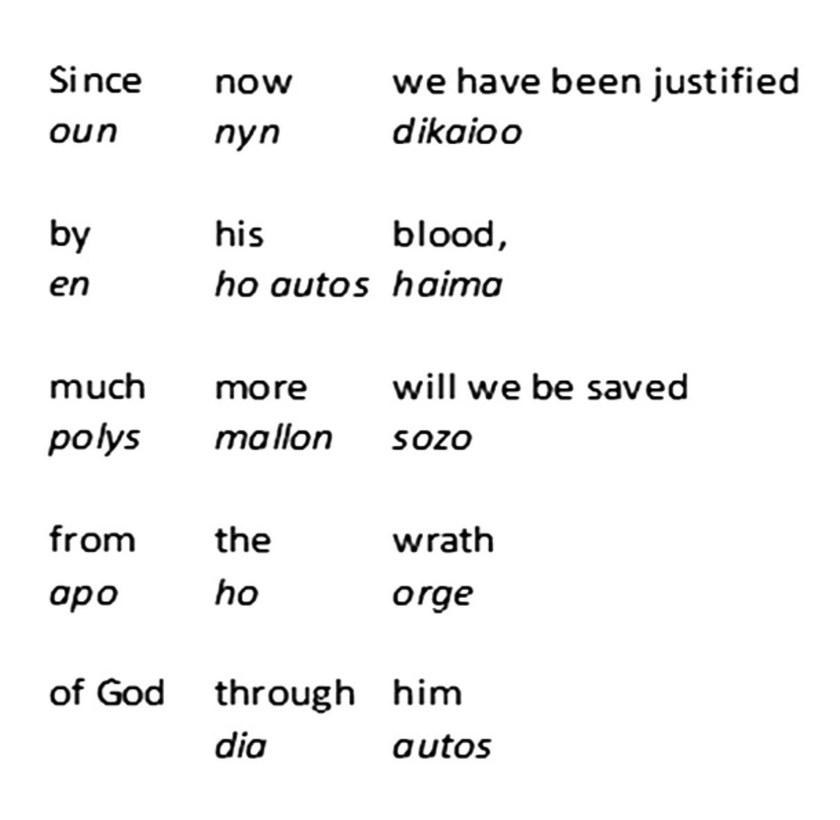
Romans 5:8 in the NIV says: “But God demonstrates his own love toward us in that while we were still sinners, Christ died for us.” Which is absolutely true. Even when we were in our lost identity, Jesus died for us. He didn’t wait for us to recover our identity, sort ourselves out or be good enough. He died for us—as us. We died with him while we were still in that lost state. Then verse 9 says: “Much more then, having now been justified by his blood, we shall be saved from the wrath of God through him.”
So this is saying, quite correctly, that we’ve been justified by his blood… but how much more shall we be saved from God’s wrath through him? Jesus came to save us from his Father’s wrath? No. That isn’t the truth. In fact, this verse does not say that. If you look at the original Greek, it does not say we are saved from God’s wrath.
So what is the wrath we’ve been saved from?
Not God’s! Does God store up his wrath to pour out on his children? Absolutely not—because he has no wrath to pour out. So does “the wrath” here have a different meaning? Because it’s talking about the wrath—a very specific wrath. Does it come from another source? Yes—and we’re going to look at what it is.
(A clue to this is found in who Jesus says comes to rob, kill and destroy. The thief. The accuser. The devil. And who is it that desires to give us abundant life? Jesus—the Good Shepherd. That comes from John 10:10.)
Romans 5:9 does not actually mention anything about God’s wrath. In fact, there are two Bible versions that include the phrase “wrath of God”, but put of God in italics, admitting that it was not in the original Greek: it was added to help the reader understand (or so the translator thought) but it has actually created a deception. They assumed it meant God’s wrath, since they didn’t know the love of God. They assumed that’s what it meant—but it wasn’t there at all.
For example, the NASB says: “Much more then, having now been justified by his blood, we shall be saved from the wrath of God through him.” But “of God” is in italics—because it’s not in the original. It was added. The NTE doesn’t put it in italics. It says: “Much more, because we’ve now been declared righteous by his blood, we shall be saved through him from God’s wrath.” But it does put a note: “Greek: the wrath (referring to God’s wrath as in verse 10).” So, what does verse 10 actually say?
For if, while we were enemies, we were reconciled to God through the death of his Son, how much more, since we have been reconciled, shall we be saved by his life? (Romans 5:10).
Where does it mention “God’s wrath” there? We needed to be reconciled to God—God did not need to be reconciled to us. He has never, ever turned from us. It’s we who turned from him. It was our wrath that God in Christ endured—not God’s wrath waiting to crush us. Because God has no wrath and no desire to crush anyone. He is a loving, restoring God.
So what is the correct translation?
Well, in this case, the King James Version actually gets it right. It says: “Much more then, being now justified by his blood, we shall be saved from wrath through him.” It doesn’t add “God’s”—just “wrath”. The Young’s Literal Translation says: “Much more, then, having been declared righteous now in his blood, we shall be saved through him from the wrath.” That’s what it actually says.
If the wrath we’re saved from is not God’s, then whose is it?
Paul was using the Septuagint translation, which also included a book called The Wisdom of Solomon. That book was in all Christian Bibles until the 1500s, when it was removed from most. It’s still in some. The Wisdom of Solomon—which Paul would have known and read—gives us insight into the wrath, and whose wrath it is. In writing what he did, Paul would have known this verse:
So he overcame the destroyer, not with the strength of body nor force of arms, but with a subdued him that punished, alleging the oaths and covenants made with the fathers. For when the dead were now fallen down in heaps one upon another, standing between them, he stayed the wrath and diverted the way to the living. (Wisdom of Solomon 18:22-3).
In other words, this was describing what God was doing to the destroyer—the one who was punishing—so that the wrath would be stopped, and people wouldn’t be killed.
So what is “the wrath” that God’s servant overcomes? The wrath—another name for the destroyer—who, by this point, the Jews no longer associated with God, but with Satan. (Remember, they had previously had an undifferentiated view of God in which they thought ‘the destroyer’ was God even though Satan may have been doing the work.)
Jesus saves us—not from his loving Father—but is sent by the Father to save us from the wrath. The destroyer. The accuser. Satan. That has a totally different connotation.
Which translation should I trust?
Revealing these differences in translation—where some words have been mistranslated—can cause confusion. People often ask: “Which translation should I read? Which should I trust?”
The answer, really, is to trust the Good Shepherd—Jesus—the Way, the Truth, and the Life—who said we can hear his voice and follow him. Follow Jesus. Don’t follow your interpretation of what you think the Bible might say. Yes, the Holy Spirit can bring us revelation of truth. But it’s difficult when we’ve already been programmed to believe we know what the truth is. We’re all confirmationally biased, which means it’s really hard to be deconstructed.
For me, it was such a hard process for God to deconstruct my mind from the things I thought were true—things I had never really questioned. I had some struggles, but I hadn’t questioned deeply enough to seek the real answer. It took experiences of unconditional love to bring that change. I believe we can use unconditional love as the plumb line to discern what is true. The gospel is good news—not bad news. If we know the true good news, we’ll be free from the deceptions that misrepresent God, misrepresent us, and misrepresent how God treats and loves us.
An “unbiased translator” is an oxymoron. In reality, everyone is biased by something. The question is: are you biased by love or by theology? Take the Mirror Bible, for instance—translated by Francois du Toit. His bias is love. He sees God as a mirror of who we are. I don’t mind that bias. But I struggle with a bias that translates things through a belief that God is angry and will punish his children forever.
Your ability to judge a translation doesn’t come from your linguistic skills or academic credentials—some people have those and some don’t. It comes from your personal knowledge of who Jesus is—the nature of God as revealed by him—and the gospel of unconditional love that he preached.
Unconditional love is the reality. God loves us in such an unconditional way that he continually seeks us out to reveal we have been saved from our lostness. In the YouTube video, The Gospel of the Chairs, by Brad Jersak, which I’d encourage everyone to watch, God never turns away from us—he always turns towards us—so that we can be restored to relationship.
God’s love is so unconditional that he designed us to be immortal—to have a continual, unbroken relationship with him. Death was the result of Adam—representing mankind—walking in independence, away from life. Jesus came to undo what Adam did, and undo the consequences brought by the enemy, including death—by taking back the keys of death and Hades, and revealing what was hidden—who we really are.
Mike’s latest book, Unconditional Love, is out now as an ebook on our website and will soon be available to order in paperback from your local or online bookseller.
‘Not having an agenda’ when you do have one is quite difficult, because you do have an agenda: you want to find healing.
The shift happens when you align with the Father’s intention. Instead of thinking, “I want to be healed,” you rest in the reality of “I am healed.” Symptoms may persist, but they will follow your position of rest.
Jesus said, “Pray, believing you’ve received, and you will receive.” When you truly know the Father’s intention and accept healing as your inheritance, your body will align with your belief. But this can’t come from striving—it starts with accepting what God has already declared true.
Most people believe it when they’ve received it, rather than before they’ve received it; and it works when you believe it before you have actually manifested it, because that is what brings the manifestation. And people get disappointed because the symptoms are still there. They may say “I’m healed,” but actually they’re in denial.
“Well, I’m healed,”
“Do you still have the symptoms?”
“Yes”
“Okay, so are you healed or are you not healed?”
“Well…”
And you get all this muddled mixture of thoughts and feelings around it. And I know when I speak to someone and they’re not in denial: they can honestly say “There are still symptoms in my body but my body is aligning with how I think.”
You can consciously choose to call that into being. Therefore the frequency of your words will begin to vibrate your body into alignment with it, when you’re at rest in it. So a lot of people say, “Renew your mind” and they confess scripture; they are just speaking, they are not actually renewing their mind. You can’t renew your own mind, your mind gets renewed when you agree with God’s mind.
Striving to believe often hinders the manifestation. So it’s getting that fine balance… it is the truth that you are healed, but it might not be the fact within your present situation. When the truth is more true to you than the symptoms that you might still have, that is the point where things begin to change.
My testimony of healing from Ménière’s disease
Years ago, I had Ménière’s disease, which caused vertigo and other symptoms. This was the 1early 1990s, and I went on a quest for healing, because I didn’t know what I believed about it. I’d been prayed for many times and received healing, so I knew God could heal. I knew people could lay hands on me – and I’d been healed. But none of that worked in this situation. God was trying to get me to look at “What do you really believe about healing?”
So I did what I knew to do, then: I went back and found every Bible verse on healing, and looked at them, and discovered some things that were different from what I’d believed. Because at that point I was believing that healing was in God’s Kingdom, but that we were still in the ‘now, and the not yet’ of God’s Kingdom; so sometimes God would heal and sometimes not. Well, that’s not really helpful, you know, because what if I am is the one where it doesn’t happen, and I’m stuck?
So I realised that no, God IS my healer, it’s one of His names. Jesus actually took my sickness and disease when He died so I don’t have to have it. That sickness died when I died with Him.
So why am I not just perfectly whole? Well, because even though I might actually choose to believe that, my physical body has to come into agreement; therefore some change needs to take place within my physical being to align with where I am in that place of rest, knowing the truth. The truth you know will set you free, and you have to know by experience.
Now, that doesn’t mean you have to experience the healing to know the healing; you have to experience what God says and where you are in the experience with God. So you are resting in that reality; it is the truth. There is no double-mindedness; there is no doubt or unbelief; it is the truth, and no one could convince you otherwise – even the symptoms that you might still have – and therefore you are at rest in it. “I’m not striving for it; I know it’s the truth that will bring about the reality.”
But it often takes some time to get to that point because we have to overcome the battle of the thoughts and the symptoms to get to that point where we “know that we know.” And eventually, after about three years of learning all about healing, learning about God, learning about what Jesus did on the cross, learning how that all applied, I got to the point where I was at rest.
I never said “Well, I am healed.” It is more that I was thinking, “That is the truth, so I’m going to focus on what is true rather than what might be the present fact.” So the present reality didn’t affect what I saw as being my true reality, which was to be whole, to be healed. And eventually, after resting in that place for quite a while, I was content in it. I was still taking medication, because it is dangerous to drive if you’re going to get vertigo attacks and things like that. It wasn’t pleasant medication, but I was taking it.
And one day I had the breakthrough, in that something changed physically in my ears. I had deafness and tinnitus in one ear – severely – and I could hardly hear anything other than muffled sound. The tinnitus was quite pronounced. And I was listening to some music – I was in a conference actually, in a worship conference, and all of a sudden it was as if “Who turned the PA up?” You see, it was as if the volume just went up and I thought “Wow!!!” And then I realised, “I don’t think anyone else is noticing this, it must be me!” And then I felt God say, “Now you can throw the medication away.” And I did. I never took another tablet and never had another vertigo attack or anything else, and my hearing was fine.
PLEASE NOTE: We strongly advise you to consult a suitably qualified health professional before discontinuing any medication that has been prescribed for you.
But it took a number of years to get to that point and then it took months living at that point until the reality was there. And, you know, for me it was a dramatic thing – it was like BANG! OH! It’s done! But it’s not always that way. Sometimes it’s just that the process gets to the point where you just realise “Oh, can’t hear anything wrong in my ear anymore,” or “my hearing’s improved.” Sometimes it just creeps up on you and sometimes it’s progressive in that it gets better and continues to get better until it’s completely healed.
You know, Jesus sent the lepers to the Temple to show themselves to the priests, and it happened along the way. As they were walking, they still bore the signs of leprosy. Perhaps it faded gradually with each step, or maybe they were simply walking when, all at once, they realised it was gone. But eventually they showed themselves to the priests… (we know one of them definitely did, because he came back and said thank you. We’re not really sure about the others – they may have been healed and just not bothered to come back and thank Jesus, or they may have not, because on the way they may have had doubt and unbelief and not followed through the process – who knows?) But we know definitely that the one person did: he was able to show himself to the priest and the priest pronounced him healed, or whole.
So it takes time, and no one can really determine exactly what the process is for every individual, but it does work.
If you enjoy these videos would you please take a moment to like, comment and subscribe? It really does help! Thank you very much.
This was originally an ‘early access’ video for our Patreon patrons.
Join them at freedomarc.org/patreon
At that time, the Bible was still the living Word of God for me—not Jesus. I saw the Bible as the Word that washed me, not Jesus. I relied on the Bible to separate my soul and spirit, rather than allowing Jesus to do it. I used the Bible as a mirror to see myself, rather than looking to Jesus or the Father.
Jesus, mediator of a New Covenant
During this process, I was presenting myself in the heavenly tabernacle as a living sahttps://freedomarc.blog/2014/01/21/present-a-living-sacrifice-3-practice/crifice, prepared by me, acting as my own high priest. Now, that might sound bizarre, but when I first received this revelation and began engaging in the heavenly tabernacle, this is what I thought I was doing.
I approached the laver—a basin used for washing—which I understood to have a bronze, mirror-like surface. I used it as a mirror to wash myself through the Bible, performing the role of my own high priest. I consumed the showbread as biblical food, again as my own high priest. I sought wisdom from the light of the menorah, the Bible, instead of Jesus. I engaged the altar, refining myself through the Bible, all the while acting as my own high priest.
In truth, all of this was a self-reliant, religious duty—a “do-it-yourself” form of faith. The reality, as I later came to understand, is that I am not my own high priest—Jesus is. Hebrews 6:20 makes it clear: “Jesus has entered as a forerunner for us, having become a high priest forever, according to the order of Melchizedek.” Jesus is the mediator of the New Covenant, not me. I made no covenant with God—Jesus did.
Deeply ingrained religious mindsets
My deconstruction was revealing God’s grace and the finished work of Jesus, and that was challenging my old covenant thinking. My “do-it-yourself” religious mindset had trapped me and severely limited my ability to truly know God and my original, authentic self.
Now, that might sound really odd to you, and you may never have approached things in this way. I would certainly encourage you not to. However, it shows how deeply ingrained these mindsets can be, distorting our view of God and His work. Only when those limitations and restrictions were removed could I begin to discover my true origin, identity and destiny as a son of God. It was then I began to see how powerful the finished work of Jesus truly is.
Jesus accomplished everything on our behalf so we don’t need to rely on our own efforts. He died for me, and as me, so I died. He was resurrected for me, so I was resurrected. He ascended for me and I ascended. Jesus established the New Covenant for me and included me in it. He is my high priest, he is my mediator—I don’t have to do it myself. Jesus did everything necessary to restore the whole cosmos, reconciling everyone, corporately. We are not required to achieve this individually in our own strength. He has accomplished it on behalf of all mankind; he took away the sin of the entire cosmos.
Renewing the mind
We may need to transition into a renewed mindset because most of us have likely been programmed by some form of works-based mentality. Even if it wasn’t specifically religious works, cultural influences can drive us to succeed and build our identity around what we achieve. Transitioning from an old to a new mindset requires a deep deconstruction—a process of renewing the mind. it is a process, that is the key.
It’s a process that God orchestrates and that he leads us through. It is relational, and through this relationship, our thinking about God—and everything else—begins to change. Old restrictive doctrines and theological mindsets need to be replaced by a relational lifestyle of face-to-face innocence with God. This is the amazing truth of the relationship He has invited us into.
No need to fear deception
Through this, we can learn to trust our Father to father us without fear of deception. Personally, I struggled with a deep fear of “getting it wrong.” This fear was instilled in me through the belief that everything had to be done strictly “by the Bible,” as the Bible was my sole source of security against error and deception.
The reality, however, is that every Christian sect or cult uses the Bible in some way, so relying on it alone for safety didn’t truly protect me from deception. I believed the Bible was God’s Word: all of it was infallible, inspired, and entirely inerrant, and I thought that following it would keep me safe. But whose version was I following? Whose interpretation of the Bible was I basing my life on?
These questions were hard to face because I had been conditioned to think otherwise. In truth, that belief system itself was the deception that was keeping me religiously bound in fear, unable to move beyond the Bible. I was afraid that if I went beyond its pages, I’d fall into some weird error or be led astray. This is a fear shared by many people I have spoken to: their families and friends often worry that they are going off into some error or cult-like movement, because they are no longer going to church or no longer reading their Bible in the same way they once did.
But the fear of deception is itself a powerful form of deception that keeps us locked up. We don’t need to live in fear of deception, because we have the Holy Spirit of Truth within us, guiding us. Jesus, who is the Way, the Truth and the Life, is also in us and with us, discipling us. Our loving Father is within us, fathering us into our true identity as sons and daughters. And if we measure everything against agape love, we won’t stray far. Love is the ultimate standard, and if we root everything in love, we can trust the process.
This video blog is an excerpt from Mike's current teaching series, Restoring First Love. Get the full length videos every month, only at eg.freedomarc.org/first-love
Rest in Love (guided meditation)
Close your eyes, Slow down your thinking, Rest—rest in love. As you are breathing in, And breathing out, The very breath of God.
And as you rest in love, Let the unconditional love of God Rest on you.
Open your heart, Open your mind, Ask the Father to reveal: “Are there any Old Covenant mindsets, Any Old Covenant belief systems, Still operating? Is there any mixture of covenants In your heart?
Open up your heart to listen That the Father could show you.
And if there is anything That’s a mixture of covenants In your experience Just hand it over to him.
Take off those old covenant mindsets And clothes, if you like, And hand them over to the Father.
And let Him clothe you In robes of righteousness, Let Him clothe you In new covenant grace, In mercy, In unconditional love.
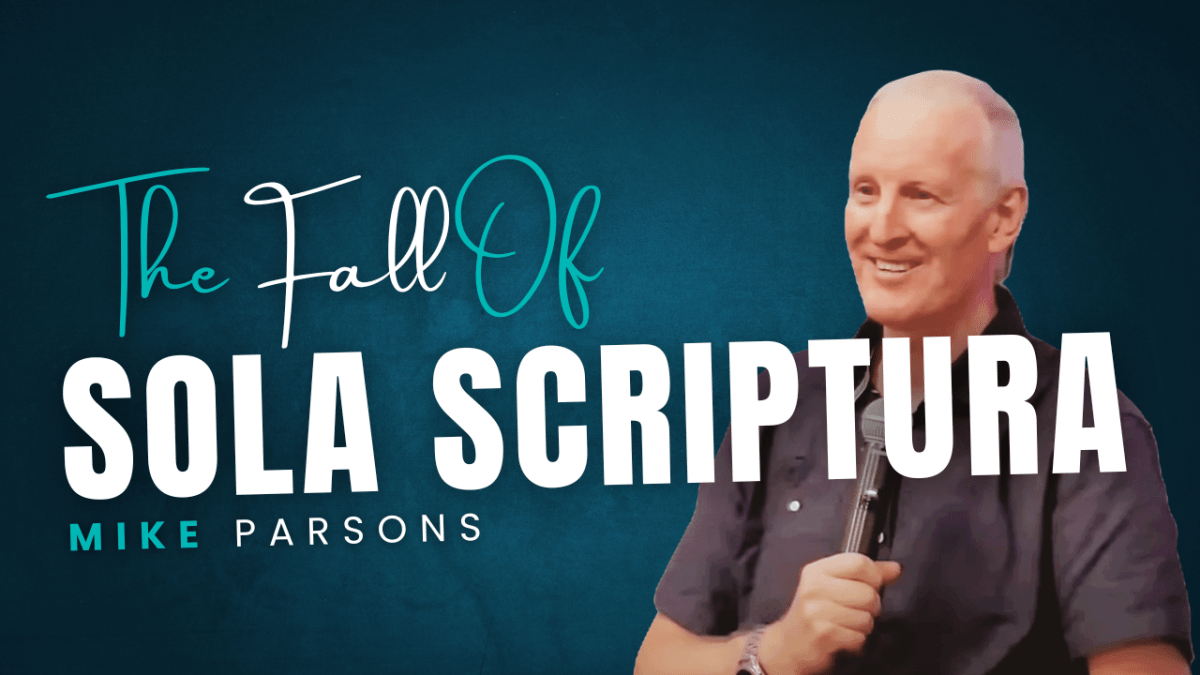
I couldn’t move beyond, as long as I was restricted by my mindset and belief system, which was deeply rooted in evangelicalism. For years, I held the absurd notion that certain Bible verses referred to the Bible itself as the “Word of God.” But none of those verses mean the Bible, even though my deceptive sola scriptura programming led me to believe they did. I read the text and interpreted it in the way I had always been taught.
The Bible is a collection of writings, compiled over centuries, that wasn’t formally assembled until around AD 385. It couldn’t possibly refer to itself as the “Word of God” because it didn’t exist in its current form. Those who wrote its books had no idea they would one day be gathered into a single volume called The Holy Bible. That title was given by man—not by the Bible itself, and certainly not by God.
Misunderstood verses
Here are some examples of verses I misunderstood because of my conditioning:
Psalm 119:105: “Your word is a lamp to my feet and a light to my path.” I immediately assumed ‘word’ referred to the Bible.
Ephesians 5:26: “That He might sanctify her, having cleansed her by the washing of water with the word.” Again, I thought ‘word’ meant the Bible—it doesn’t.
Ephesians 6:17: “Take the helmet of salvation and the sword of the Spirit, which is the word of God.” I thought of the Bible as the ‘sword of the Spirit.’ But in reality, Jesus is the Word of God, and the words He speaks are the Word of God. This verse doesn’t refer to the Bible. My children even played a computer game where you would ‘draw your sword,’ which was portrayed as the Bible. You’d take it out from under your arm and use it as the ‘Sword of the Spirit.’ That just reinforced the idea that the Bible itself was the weapon, which was completely inaccurate.
1 Timothy 4:5: “For it is sanctified by means of the word of God and prayer.” To an evangelical, as soon as ‘word of God’ and ‘prayer’ are mentioned in the same sentence, it automatically means the Bible and prayer—because that’s what we were taught.
2 Timothy 2:15: “Be diligent to present yourself approved to God as a worker who does not need to be ashamed, accurately handling the word of truth.” Again, I was conditioned to interpret ‘word of truth’ as the Bible. In the King James Version, it even says ‘study to show thyself approved,’ which led to the belief that studying the Bible was what made you acceptable to God. But that’s not what it means at all.
We need to embrace a deeper understanding. Jesus said, “My sheep hear My voice, and they follow Me.” He didn’t say, “By reading the words in the Bible.” It’s about hearing His voice and following Him. Of course, some of the words Jesus spoke might speak to us today, but not all of them were meant for us. Many were directed to the people He was speaking to at the time.
Hebrews 4:12: “For the word of God is living and active, sharper than any two-edged sword, penetrating as far as the division of soul and spirit.” I thought this meant I had to use the Bible to separate my soul and spirit. When I heard teachings about soul and spirit separation, I believed this was something I had to do. Thankfully, God had a completely different way. Jesus, as the living and active Word of God, was able to separate my soul and spirit and reintegrate me into wholeness.
2 Corinthians 3:18: “But we all, with unveiled faces, look as in a mirror at the glory of the Lord, and are being transformed into the same image from glory to glory, just as from the Lord, the Spirit.” When I read this, I had no idea it meant I could look into God’s face and see Him directly—face to face—and be transformed by the image reflected back to me. I thought it meant looking into the Bible and trying to identify the image of God in it so I could imitate it. I was so caught up in this evangelical belief system.
Hebrews 6:5: “And have tasted the good word of God and the powers of the age to come.” Again, I interpreted ‘word of God’ as the Bible. But I don’t see it that way now.
1 Peter 1:23: “You have been born again, not of seed which is perishable but imperishable, that is, through the living and enduring word of God.” Once more, I could only see this as referring to the Bible, rather than to Jesus—the living and enduring Word of God in me, bringing life.
1 John 2:14 says, “I have written to you, fathers, because you know Him who has been from the beginning. I have written to you, young men, because you are strong, and the word of God remains in you, and you have overcome the evil one.”
When preaching on this, I would have said something like, “You need the Word of God! You need to feed on the Bible! You need to read it daily so that it’s in you, and then you’ll overcome the evil one and grow strong.” But the reality is that the ‘Word of God’ in this verse refers to Jesus, who is in us. He has already overcome the evil one, and we overcome through Him. At the time, I would have thought John’s letters—now included in the Bible—were the key to their strength. However, their strength came not from intellectual knowledge, but from their personal, experiential knowledge of Him.
Titus 2:5, which instructs women “to be sensible, pure, workers at home, kind, and subject to their own husbands, so that the word of God will not be dishonoured,” was another verse I misunderstood. I was taught this meant wives needed to submit to their husbands to avoid bringing dishonour to the Bible. But let’s set the record straight. This isn’t about women submitting to their husbands in some rigid hierarchy. Instead, it’s about being in a mutually respectful and loving relationship. It’s about mutual submission in the context of Christ’s example. The focus is on living in a way that honours God, not enforcing roles for the sake of protecting a book. Jesus is the Living Word of God, and He calls us into relationship with Him.
When we talk about the ‘Word of God,’ it’s essential to recognise that this primarily refers to Jesus, not the Bible. God’s words, whether spoken directly to us today or recorded in Scripture, can be meaningful. But the emphasis must remain on Jesus, the Living Word, who is still speaking and guiding us. He wants us to hear His voice and follow Him.
All God-breathed writings
Now, let’s address 2 Timothy 3:16, a verse often quoted in evangelical circles: “All Scripture is inspired by God and beneficial for teaching, for rebuke, for correction, for training in righteousness.” This verse is frequently used to argue that the entire Bible is inspired, infallible, and inerrant. However, there are several issues with how this verse is traditionally interpreted.
First, the word ‘all’ doesn’t mean everything indiscriminately. Second, the term ‘scripture’ is often mistranslated with a capital ‘S,’ implying it refers to the entire Bible. The original text doesn’t imply this. In fact, when this was written, the Bible as we know it didn’t even exist—it wouldn’t be compiled for another 300 years.
Let me read this verse from Young’s Literal Translation, which translates it as: “Every writing God-breathed is profitable for teaching, for conviction, for setting aright, for instruction that is in righteousness.” Notice the difference? It says every God-breathed writing is useful—not that every part of the Bible is God-breathed, nor that it refers specifically to the Bible at all.
This means that writings inspired by God—whether ancient or modern—are profitable and beneficial. God is still breathing inspiration into people today, and those writings can be just as useful for teaching, guidance and correction as any ancient text. This isn’t about elevating the Bible to an infallible status but recognising the broader scope of God’s inspiration.
God is still breathing inspiration into people today, and those writings can be just as useful for teaching, guidance and correction as any ancient text.
Unfortunately, I was conditioned to believe that this verse proved the Bible was infallible, inerrant and the ultimate authority. The evangelical mantra reinforced this: “The Bible is inerrant, infallible, and inspired.” But when you take a closer look, 2 Timothy 3:16 doesn’t say anything about the Bible being inerrant or infallible. It simply states that inspired writings—those breathed by God—are beneficial.
We must break free from the deception of assuming these verses mean something they don’t. God is still speaking today, and the Living Word—Jesus—continues to guide and transform us through His voice and presence.
This video blog is an excerpt from Mike's current teaching series, Restoring First Love. Get the full length videos every month, only at eg.freedomarc.org/first-love
Activation
So let’s take a few minutes to engage with God, with unconditional love.
Close your eyes, begin to still your heart, and still your mind.
Start to slow down your breathing.
Focus your thinking on God. Focus your thinking on engaging unconditional love.
Breathe in deeply. And as you breathe in, you are breathing in the unconditional love of the Father for you as his child.
Wait in that place. Be still. Let the love of God, that unconditional love, rest on you.
Let Him reveal Himself as pure, unconditional love.
Perhaps now, you want to ask Jesus, as the Truth, to speak something specific to you?
“You have heard it said, But I say unto you.” Maybe some belief system, maybe the way you’ve looked at God, maybe the way you have been programmed with religious thinking, some mindset or belief system.
Open up your heart. Ask Jesus, as the Truth, the Living, Active Word of God, to show you something where is He saying, “You’ve heard it said, you believe this but I am saying unto you… this.”
Listen to His voice, revealing something at this moment that will bring truth to you. Just let that frequency of his voice engage you.
Mike: I don’t believe I’m out of the ordinary. I’m a normal sort of person who likes normal, everyday things. You know, I like sports, I like movies, I like normal, everyday stuff. I like making things, I like the garden. I’m not a mystic in a cave somewhere; I have a very normal, everyday life. If I can do it, coming from the background I’ve come from—which didn’t even believe in the gifts of the Spirit or anything, and had no real intimacy with God or any concept of what that might be—if God can do it with me and bring me to a point of dwelling in His presence and living this relationship, then I think that’s possible for everybody.
Mentoring participant: “Listening again to Kay Fairchild, her question this week was, What are we waiting for? She was speaking about Romans and the verse absent from the body, present with the Lord—and how we, as Christians, think we have to die and be absent from our body to actually be with God – and that’s not true. But she said our beliefs are the big picture, and what we believe determines our reality. That’s why people have believed they have to die to go to heaven. She believes we came here upright, that God had finished everything, and we were already upright but simply not aware of it. Because of that belief, these lies have dictated our lives, like penal substitution and other doctrines. She was using Romans 8:19, about the earnest expectation, and explained that our belief about waiting is wrong. There are different meanings of waiting, and essentially, we have to have the maturity to be the sons of God—we already have it.
Mike: Yes, there’s a sense that everything God has done—making us justified, righteous, reconciled, forgiven—all of that is already done from His perspective. But people don’t believe it, and because of that, people don’t experience it. We experience what we believe. So, while it is finished and the work is done, not everyone is living in that finished work because they either don’t believe it’s true or believe a twisted version of it.
Maturity is a measure of growth. You could say, “I’m a child, I’m not mature,” but you could also be an adult and still not mature. It’s not just physical but also about the knowledge of who we are and who God is. Maturity comes when we fully know who we are in the mirror of God’s face. If we have a distorted view of God, we’re not mature in knowing the reality of who we are, and we live in an immature state.
Now, if you think of maturity as growth, you’re not mature until you grow. I can’t say, “I’m 25 years old,” if I’m 3 years old. You have to go through the process of maturity, which is a relational process. In our relationship with God, the truth is unveiled and revealed, so we can then live in that truth. God has done everything for that truth to be outworked, but we don’t just know it as a programmed download.
While the work is finished, we’re not complete in the maturity process until all the things in our lives hindering us from knowing, understanding, and living that truth are removed. That’s a process of maturing, healing, and wholeness. I know some people will say, “Before the foundation of the world, I was perfect.” Yes, your spirit was, but when you came into this realm with a body and a soul, it was a less-than-perfect environment.
Our spirit is disconnected from what we learn in the soul through everyday life. We’re programmed by the life we live, not by what our spirit knows to be true. Until our spirit is reconnected to our soul through reconnecting with God, the spirit can’t bring the soul back into wholeness and agreement with what we always knew in the spirit. Cognitively, our soul doesn’t align with our spirit until this happens.
My soul has never been in the state that my spirit was before the foundation of the world. My soul was born with lost identity. Some say their soul was right, but I’m not talking about original sin or Adam’s loss—it’s lost identity. None of our souls know who we are because we’re born in a disconnected state from God, even though He remains connected to us, loves us, and wants us to know the truth.
That truth has to be relationally outworked on the journey to rediscover who we are from His perspective. Just because God says, “This is how I see you,” it’s not our truth until we mature into it. It is the truth, but it’s not yet true for me. There’s a distinction. What God says about me is absolutely 100% true, but it’s not yet the truth for me until I come into conscious awareness and it is outworked in my life.
This is a relational process that takes time. The time it takes depends on the relationship we establish with God. For some, their relationship with God is the absolute priority, and they spend nearly every day engaging with Him, knowing Him in ways most people don’t. Most people, however, have jobs, families, and responsibilities. These compete with their relationship with God. That’s not wrong. If you have a family, you need to be a good parent; if you have a job, you need to work well.
Still, our relationship with God should be prioritised. A young mother homeschooling four children will have less time than a retired person with no obligations. God understands this. It’s not about how much time you spend, but about the desire and intention. If my desire is for a relationship with God, I will pursue it to the best of my ability.
No one has more time than anyone else—we all have 24 hours in a day. It’s about what we do with that time. A parent may only have half an hour before the children wake up, but they can pursue God in that time.
The waiting isn’t about sitting back and hoping for the best—it’s about pursuing the relationship. It’s not about manipulating God through fasting or prayer. He’s already done the work. He wants us to relationally know the truth so it transforms us, renews our minds, and aligns us with the truth of who He created us to be.
There are various ways of looking at it. Some believe that the finished work of Jesus means everything is done, and therefore, it’s true in them now. However, I think those who teach that can inadvertently cause people to feel condemned when they don’t experience it that way, and many people, of course, don’t. It’s like saying, “I’m saved now because Jesus died for my healing,” and then assuming that everything in your physical body is instantly renewed and healed. But we know that’s not true for most people who have discovered a relationship with God. So, it’s not automatic—because if it were, there would be no relationship.
For me, the danger in allegorising everything in terms of the Bible is that it can make things seem unreal when they are, in fact, real, treating them as merely spiritual. For example, I’ve heard people like K. Fairchild say, “Heaven is in you,” and while there’s a sense in which the kingdom of God is within us, they almost suggest that there is no actual, real heaven to go to. Now, I know the presence of God in us is a manifestation of heaven with us, but it’s not heaven itself. The heavenly realms, the spiritual realms, and angels do not live within me. They exist in a spiritual dimension of a real place. It may not be physical as we know it, but it’s no less real.
The danger in saying that everything is allegorical or spiritual is that it could lead to dismissing literal realities, like angels, fallen angels, or even the devil, treating them as just accusations in our minds that cause us not to believe the truth. People who take that view don’t see angels as personal beings, and they miss out on a lot if they reduce everything to a purely spiritual matter between God and them.
There’s a balance to be struck. Often, when the pendulum swings back towards where it should be, it swings a little too far in the opposite direction before settling in the right place. Some people get caught in that swing, going too far one way. I believe in personal fallen angelic beings and literal angels, and I believe in a real heavenly realm that can be encountered. We are seated with Christ in these heavenly realms, and it’s not just figurative. While it’s true that we rule and reign with God in our lives, the heavenly reality is actual, and we must factor that in.
The reality of our relationship with God has to be balanced. There are extremes on both ends of the spectrum. On one side, there’s the belief that it’s all done, that we just have to believe, and that’s it. But most people who try to embrace that find that it doesn’t quite work that way. They struggle and feel guilty for not having enough faith to just believe that everything is done. On the other end, there’s the idea that it’s all about us, and we have to work out our salvation with fear and trembling, doing it all ourselves. There are extremes on both ends, but the balance is in the middle: God has done it all, and we must come into the reality of that.
Romans speaks of creation longing and waiting for the sons of God to be revealed, not talking about us waiting to be revealed, but creation waiting for us to mature enough that they can recognise our sonship, instead of seeing our childish immaturity. When we fully embrace who we are, creation will be set free into the glorious freedom of the children of God. That freedom is tied to our glory, the fullness of who we are in God’s eyes. If we don’t embrace who we truly are, creation won’t be set free in its entirety, because it’s ultimately down to us, with God, to express the oneness we have with Him. This is what allows creation to recognise our sonship in the union with our Father, not independently of Him.
When people allegorise too much, it’s easy to miss the literal realities, and this can be problematic. There are spiritual stories in the Old Testament, and while they can carry spiritual truth, the people who wrote them often did so from their own understanding, without a full knowledge of God. The Holy Spirit can certainly bring truth out of those stories, but you don’t need to make every story an allegory to understand it. If you have a relationship with the Holy Spirit, Jesus, and the Father, they can reveal truth directly to you. There’s no need to go through a mediator like a book to understand God.
Jesus is the truth, the living Word of God, and I think there’s been too much focus on finding God in the Bible through allegory or stories. Why spend time trying to understand God through these stories when you can meet Him, follow Him, hear His voice, and encounter Him every day? I don’t see the point of spending so much time trying to understand Him through a book when the relationship itself is where the truth is revealed. It’s about understanding God through relationship, not through a book.
Now, if people are used to the Bible and need it as a frame of reference, I understand that. But many teachers don’t have a personal experience of Heaven. They don’t engage with God on the inside in a deep, personal way, and they’re trying to explain the relationship using the allegories and truths found in the Bible. While the finished work of God and His grace are important, the relationship itself is the key. People who miss the mystical dimension of the relationship might use the Bible to explain things, but they’re not sharing their personal experiences of face-to-face encounters with God. They’re still making it about a belief system, not about a lived experience.
Believing what Jesus says is important, but it’s so much more meaningful when you experience Him face to face. It’s vastly different from just believing what the Bible says He said. You can resonate with the love and grace of God, but if you’re not encouraging people to have those real encounters with Him, you’re missing the point. It’s not just about believing a set of doctrines or ideas; it’s about living the experience of truth.
If you enjoy these blog posts, please take a moment to like, share, comment and subscribe—it really helps. Thank you!
When your faith seems weak or compromised, what do you do? Well, I think it goes back to the concept of labouring to enter rest. Now, you don’t actually labour to enter rest. That concept, shared in Hebrews, refers to the Old Testament and the old covenant, where people were striving to enter rest but were not succeeding. What it really says is: don’t do that. Don’t try to enter rest in the way they did. The reality is that you are in rest because rest is about trusting in the completed work of Jesus and living in that reality.
When you look at Hebrews and the message it conveys, it’s clear. Essentially, it’s addressing those who were still adhering to Old Testament, old covenant practices. They were striving—striving to enter rest, striving to take the land, fighting for what was promised. All of that was under the old covenant. But in the new covenant, we are already in rest.
Hebrews says: “Therefore, let us fear if, while a promise remains of entering His rest, any one of you may seem to have come short of it. For indeed, we have had good news preached to us, just as they also did; but the word they heard did not profit them, because it was not united by faith in those who heard.” For we who have believed, we enter that rest.
So, if we are operating with a new covenant mindset, we are already in rest. Jesus said, “Come to me, and I will give you rest.” Rest isn’t something you have to achieve or do; it’s something you receive through your relationship with him. And that’s the key many people miss—it’s already happened. Jesus has finished the work. It’s complete.
When your faith feels weak or compromised, you don’t have to do anything because it’s not about your faith—it’s about his faith. “I live by the faith of the Son of God, who loved me and gave himself for me.” It’s his faith in me, who he believes me to be. When I’m faithless, he remains faithful because he doesn’t change. The truth is, everything has already been accomplished. It’s not about me having enough faith; it’s about recognising that he has enough faith in me. If I can accept how he sees me, then that’s how I’ll live.
The relational aspect is simple: come to Jesus. Keep coming to Jesus. When you feel doubts or struggles, it’s often because you’re trying to set your own agenda about how things should be. Instead, just engage with God without any agenda. Don’t try to see anything or understand it visually. Instead, enter into a realm of perception where you know—you just know—the reality of the rest in him, a rest you’ve already received because of what he’s done.
I would encourage you not to focus on what you need to do but allow him to do what he wants to do. Create space for that relational connection where he can work in you. Look at Psalm 23: “He makes me lie down in green pastures; he leads me beside quiet waters; he restores my soul.” You don’t have to strive for rest; it’s already there. Just come to him, and he will give you rest.
Take his yoke upon you, learn from him. He is gentle and humble in heart. Being gentle is about knowing who I am in him, and being humble is about accepting who I am in him. I don’t have to strive or fight for it—I just have to be with him. Jesus says, “Come to me, and I will give you rest.” So, if you’re struggling with doubts or questions, forget about trying to figure it all out. Just keep coming to him.
When you surrender—when you let go of all your agendas and come to him as a living sacrifice—he will do what needs to be done. You don’t need to try to do anything. Trust him to restore you, to enable you. Life has its stresses, but you can choose to create space for God. Let go of your own ideas of what you need, and surrender fully. Say, “Here I am, Lord; you do what you need to do. I’m entering into your rest.”
As you stop trying to receive it and allow him to unveil it to you, you’ll begin to experience the reality of it. It’s already accomplished. You’ve already been included in him—actually, from before the foundation of the world. He simply wants to bring you into an experience of that rest. Stop trying to figure it out or work it out. Just come to him and surrender.
Psalm 46:10 says, “Be still and know that I am God.” In some translations, it says, “Cease striving.” Stop your works, and let him do his. The more you try, the harder it seems to get. God’s invitation is simple: stop, be still, and know that he is God. In that stillness, you’ll know by experience who he is and, in turn, who you are. Stop striving and let him work. The rest is already there, waiting for you to receive it.
If you enjoy these blog posts, please take a moment to like, share, comment and subscribe—it really helps. Thank you!


 This teaching forms part of Mike Parsons’ new book Unconditional Love, which is out in print on 20 June 2025. Order it from your favourite local or online bookseller today, or get the ebook from our website. More details at










 Sons of Issachar