God spoke to me and said, “I am really bored with this church stuff.” And I thought, you cannot say that. That cannot be you. How can you be bored with people worshipping you? But he was not saying he was bored of people, or of their desire to worship. He was saying he was bored of the format, the same things, week after week.
So I pressed him. “What do you mean, bored?” He said, “Why do you not ask me what I would like you to do?” I said, “We do. We ask you every week.” And he replied, “Yes, but you are only giving me a menu of five things to choose from. What you are really asking is: what order do you want to do those five things?”
I had to admit he was right. We claimed to be led by the Spirit, but only within the boundaries of those five things. That realisation shocked me. I kept quiet at first, because I knew it would cause an uproar. Instead, I began teaching the Engaging God programme in my office on Sunday mornings. The main meetings had to stay at a basic level for the newer people and those from the rehabilitation unit, so others handled that.
I would spend the first part of the service downstairs teaching, then went upstairs to join the main gathering. And when I did, I felt the same as God had said. This is really boring, is it not? I enjoyed myself more in the office than in the service. It was not the people—I loved the people. But while we were on the cutting edge of engaging God, with angels and portals into heaven, we were still doing everything in the same tired format. Someone would say something, we would sing, there would be ministry, and perhaps something else—but always within the same framework.
What is church?
I began to understand what God was saying, and I felt it too: this is not it, is it? He took me out of that scenario and began to press the deeper question: what is church? Why do we run a meeting? Because church is not a meeting. Church is people in relationship—with each other and with God. But what we had built, with worship, a preach and the rest, was the very thing God was challenging. “Why are you doing this? Who said I wanted you to?” And that challenge shook us.
It challenged people. What was this going to look like? So then we did not do any of that. We turned up on a Sunday and asked, “Oh, what does God want to do then? What do you want to do, God?”
God said, “If you had asked me before you got here, I would have told you I did not want you to come and do this today.” Ah. So it is not about meeting this way and turning up in a building then? No. Not every Sunday. No. If you had asked me, I would have told you I wanted you to go and do something yesterday, to go for a walk and enjoy the beautiful fresh air.
That was a very different challenge to our thinking. This was not just, “Oh well, we will turn up in the building and then ask you what to do.” This was actually, “Do you even want us to meet this way this week?” People struggled with that because they were so conditioned to being told they had to turn up on the day to do whatever was going to happen. That was ‘church’, and they were expected to be there if they were part of church.
What is the way forward?
So it was very challenging, and we got to the point where those who were meeting together began saying, “Well, let’s just seek God and ask Him to show us the way forward. What is the way forward?” This was November–December 2019. Then God used COVID to show us the way forward, because suddenly we could not meet anymore anyway. We had all the technology to meet online, but we asked God, “Do you want us to meet online?” No, because all you would be doing is recreating something online that you cannot do in person.
Eventually, people were weaned off church — the meetings, the format, the structure that we called church. They were still relating to one another, still building relationships, still pursuing the mission God had given to care for people. Some people could not cope with not having a church service, so they went off and found one that made them feel comfortable. Great. If that is what they want to do, no problem. They were free to do that. But some people were so free that they realised they did not have to go to a meeting on a Sunday — or two meetings, or whatever it might have been. They would never want to go back to that. They discovered that being church is very different to going to a meeting that we call church.
That deconstruction took place in people’s understanding of church over quite a long period. I did not turn around and say, “You can’t do this anymore.” I did not say, “You can’t meet this way anymore,” because that would have been forcing them. I said, “Okay, I am not making these decisions. I am not going to be a leader anymore who tells you what God might be saying or not saying. You are responsible to hear God for yourself. So you decide what you are going to do.”
An everyday relationship
When COVID came, with all the restrictions, we could not meet the way we had been meeting, and for a time, we could not even meet together individually. People realised their relationship with God was just as strong, if not stronger, after they stopped doing Sunday church meetings than it had been before. They found their relationship with God was an everyday relationship, not based on the structure we had put in place to ‘help’ them.
Some people struggled. Some wanted the fellowship of meeting together in a bigger setting, and they found that elsewhere. But others found their relationship with God growing anyway. They discovered that their relationship with others, if genuine, is not dependent on meeting on a Sunday. They still had relationships and friends.
It is very interesting to see the process God takes us through to challenge our preconceived ideas about the Christian life, about what church is, about what we ‘should’ or ‘should not’ do. And when we are free from it, we find freedom. Now, I am free to go, free not to go, free to do whatever I feel in God. And I know God enjoys me watching the football just as much as He enjoys it if I went to a home group!
If you enjoy these blogs and videos, would you please take a moment to like, share, comment and subscribe? It really does help. Thank you very much.
As a complete transcript, this is a long read… so first, here’s a summary. Scroll down for the full text.
Video Summary:
When it comes to knowing our true identity, it’s not about copying others or climbing some spiritual ladder—it’s about hearing God for ourselves. We’re not trying to fit into a religious mould or follow someone else’s journey; we’re learning to rest, to trust, and to grow in relationship. It’s not about striving or earning, but about realising we’re already included, already loved, already free. God never meant us to stay stuck in old ways of thinking or be limited by what others say about us. He wants to reveal who we really are through direct, personal relationship—and that’s something no one else can define for us.
A lot of the time, we’ve been taught to see ourselves through filters—through what others expect, or what religion tells us is acceptable—but God wants to strip all that back and show us who we truly are. It’s a process, often uncomfortable, but always leading to freedom. As we begin to engage Him more deeply, we stop needing external affirmation, because we’re hearing His voice. We learn to let go of the fear of getting it wrong, and instead walk confidently as sons and daughters who already belong. We don’t need to strive to become what we already are—we just need to live in the reality of it and let God continue the transformation.
The more we get to know God, the more we realise how much better He is than we ever imagined, and that makes the journey exciting. Everyone’s story is different, and I love hearing them because together they show the richness of God’s work in us. I never planned any of what’s happened in my life, but step by step, God led me beyond what I thought possible. It’s not about comparison with others—it’s about becoming fully ourselves, embracing who God made us to be. That’s where rest and joy come from, not striving. And as we live in that identity, we naturally bless others. We become rivers of living water, refreshing the people around us, not by trying to be anyone else, but by being exactly who we are in Him.
Mike’s latest book, Unconditional Love, is out now as an ebook on our website and will soon be available to order in paperback from your local or online bookseller.
I think when it comes to the relationship side of it, he’s on his own journey. So really, it’s about encouragement. If there’s an opportunity to practise something with him, then do something simple—like going to the throne of grace with a problem, or something basic that helps him engage with God on the inside. Where is God? Because a lot of people have never really considered the reality of that. They might say, “Well, yes, God is in me, the Holy Spirit is in me,” but where exactly? And how do we relate to that? How do you engage with that in any real sense? Rather than just saying, “Well, he’s there. I know the Holy Spirit is in me,” actually exploring where and how that works with our spirit and soul, and how that brings life.
You can also open up some other ideas—like Psalm 23, lying down in green pastures. Well, that could be the garden of your heart. There’s a scripture that says the heart is like a well-watered garden, so you can point towards both that inner relationship and the development of personal intimacy. But also you can say, we have access to be seated with God in heavenly places where Christ is. We can be seated there, which means a position of identity and authority. But also, intimacy—being with the Father, just as Jesus is with the Father, so are we.
So I think there are those two aspects you can begin to help someone engage with, if they’re on a journey—which obviously your son is, as he’s discovering things and having realisations. There still aren’t too many people who’ve put all of these elements together into one consistent whole. You know, Don [Keathley] has done the kingdom, the now, and the eschatology, but perhaps hasn’t quite touched on the intimacy and heavenly encounter aspects yet—or maybe he has and just hasn’t shared that. Who knows? But I imagine he’s on that journey, and the Father will be opening that door for him. That’s when it moves beyond just a theological belief system to a relational belief system—one that reveals the true nature of God.
Ultimately, I know he’s very much into love and the reality that God’s nature is love. I doubt that’s just a theory for him—I think it’s his experience. God’s got him on his own personal journey of experience. And I’d say, start with love. God is love—so how does he experience God as love? What does that mean? The unconditional nature of love can begin to deal with the religious obligations and duties that may have come from earlier experiences. Unconditional love brings a revelation of God that shows just how good he is—how kind, tolerant, patient and wonderful he is.
So help him experience unconditional love with very simple things—like closing his eyes, being still and knowing God. Be still and know love. Let love touch him. These small things can be really helpful for little breakthroughs, which then become a taste of something deeper, something that can lead further into the fullness of God revealing himself. And then your son can come to know who he is in God—free from any of the religious baggage we’ve all had to work through.
It’s the little things really. You want someone to always want more, rather than feeling overwhelmed. Like after a big meal when you feel so full it’s uncomfortable—you don’t want that spiritually. It’s tempting to give someone too much, but it’s better to offer just enough so they’re still hungry, still curious. Rather than thinking, “This might be my only or best opportunity, so I’m going to give them the whole lot,” it’s better to go bit by bit.
The idea of a “joy economy” speaks to me of how heaven functions—not based on duty, obligation or even money as we know it, but on joy. Having joy in something is worth more than the kind of economy that’s all about profit. Enjoying your work is better than just working to live. That phrase has all sorts of connotations. In an economic sense, if you’re serving someone in what you’re doing—whether that’s in a job or your own business—what’s your motive? Do you want someone to be blessed, to be happy receiving your product or service? That changes everything. The joy economy has a different motive behind it.
More broadly, God wants us to live with an attitude of thanksgiving and gratitude—which is joyful. Rejoice always, and again I say, rejoice. You can’t rejoice if you’re miserable and focused on what you don’t have. You rejoice over what you do have—what God has done, what Jesus did, your experiences, your testimony. That focus on the positive opens up even more in the future. Whereas the joy economy would not be based on warfare—there’s no joy in war. We don’t want to be at war with anything or anyone. That fits with a restorative view: I’m not going to fight against something, I’m going to restore—whether that’s a relationship or a person. Restoration, not opposition.
The Freedom of Sonship
So there are lots of different ways of looking at it, but joy is the predominant factor. Whether you’re thinking in financial terms or in terms of how things work, joy is foundational. And I’d say love, joy and peace all work together—they cement the whole thing. Then from that comes grace and mercy. The joy economy is living in limitless grace, triumphant mercy and unconditional love. These are aspects that deepen and broaden what joy really is.
If I don’t know I’m unconditionally loved, it’s very difficult to be truly joyful, because there’ll always be a condition I feel I have to meet—and I might fail. So unconditional love leads to joy, and joy leads to peace. And peace really comes when you’re at rest—when you’re not striving or struggling or constantly trying to tick boxes. It’s that place of rest, where you’re living in what God’s already done and who he already is towards us.
That can then start to shape the way we live—how we live in this world and how we stay peaceful even in hard times. Rejoicing, praising, being thankful—not just when life is wonderful on the surface, but also in the midst of difficulty. People often look at the world and feel despair—“It’s getting worse and worse.” But I look at the world and yes, I see what’s going on—but I also know the kingdom of God is filling the Earth. I believe God will restore everything eventually. So I’m not focused on how it is now—I’m focused on what it will be like when it’s restored, when the kingdom is functioning on Earth as it is in heaven.
It’s easy to become despondent when you focus on the negative, but I try to focus on God’s intention—his future. So what’s happening now is only temporary. I’m not going to let something temporary weigh me down or cloud my perspective. Yes, it might be a fact right now, but the truth is that everything will be restored to God’s original design, however long it takes. And while I’m here, I’m going to enjoy life and live in that truth.
To me, the economy of joy is how I live. It’s how I rejoice in things and stay thankful. I look out the window and the sun’s shining—I rejoice in that. It’s beautiful. Maybe I can’t be out there right now, but I rejoice that others are enjoying it—the garden, the wildlife, the birds feeding on the table—they’re enjoying it, and I rejoice in that too. Creation seems to be smiling.
And if it’s rainy one day—well, I’m inside, so that’s great. I can be thankful the rain is watering the earth, preparing the plants for spring. You can always choose to see something positive. For me, my attitude of joy is this: the glass is half full and getting fuller—or already overflowing. Rather than focusing on the negative. A lot of what we’ve been taught tends to focus on the negative—the enemy, the fight, the battle.
I’m not interested in the enemy or what he’s doing. Because of that, he generally leaves me alone. By and large, the enemy doesn’t want to mess with me—because I’d look to restore things, even for him. So from that perspective, I’m not coming from a place of focusing on warfare or negativity. I’m coming from a position of, this is where I’m seated, this is who I am. Everything is under my feet.
So, I ask, What is God’s intention in this situation? And I can rejoice in that, because I know God’s purpose is always to bring good out of it. I want to be part of that. I believe we have a mandate to live in joy and to be joyful. It’s not just a nice idea—Jesus said, My joy is in you so your joy can be full. That sounds like a mandate to me.
He also said, My peace I leave with you—not as the world gives. That kind of peace goes beyond understanding. Again, that feels like a mandate: live in peace. And then, Love one another as I have loved you—that’s not just a suggestion, that’s a commandment. It’s a new one. But in essence, the real commandment is: Let Me love you, so you can love others. That’s a mandate too.
God wants us to live in love, joy, peace and rest. And from that place of rest, everything else begins to flow. A group could absolutely have a corporate mandate to steward or administrate a “joy economy”—to live it out personally and also see how it might impact the world around them.
The medical profession is increasingly recognising the effects of gratitude and joy on the body and mind. It brings a sense of wholeness. It even boosts the immune system when we live in a state of thankfulness and joy, rather than under a cloud of doom, gloom and misery. Life is meant to be enjoyed, not endured.
Sure, we can look at the world and say, “It’s a mess,” but that doesn’t mean it has to stay that way—and it doesn’t mean we have to be affected by it. I believe the world does need to awaken, and the Church especially needs to awaken—big time—to joy. Too often it gets bogged down in negativity.
But the truth is, God is always working, always processing, always good. He’s always wanting to bring good out of every situation. And we get to cooperate with Him in that. Yes, sometimes we see things that we want to change, and it’s okay to bring those to God. We can work with Him on it. We can wrestle with Him. But at the end of the day, we trust Him. We trust that what He’s doing will ultimately work out for the best.
Sometimes we have to refocus our attention and actively engage God in the things we want to see change. God doesn’t want us to be passive. He wants us to be real, to share our hearts, to express our desires. We don’t have to pretend everything’s fine when it’s not. There’s a difference between wrestling with God and accusing Him. Wrestling says, “This is what I long for—this is my heart.” And then we rest in His goodness, trusting that His way will prevail.
So yes, we can wrestle—but not to force our own way. We wrestle so that God’s way can be released into our situations.
With your son—it’s been a long journey. You’ve seen things along the way. And you’re not giving up. I remember you saying he told you Jesus had agreed to his calling—and laughed, saying, “So did you.” That just made me smile.
It’s tough when you’ve got years of memories and patterns, but the small shifts and signs of progress are encouraging. They help you persevere. They remind you to be consistent. Ultimately, it’s about relying on the grace, mercy, love and goodness of God—for you, your son, your whole family.
And yes, it’s absolutely fine to remind God of His promises. He said them in the first place. You’re just reminding Him of who He is. That gives us confidence. We come boldly before the throne of grace. We don’t have to tiptoe. We can come with confidence because we know God is good.
When it comes to entering into the fullness of all God has for us, seeing ourselves the way God sees us is key. We have to come into agreement with God—aligning our minds and hearts with His. His thoughts about us are vast and loving. If our thoughts contradict His, it becomes difficult to receive and accept the wonder of who we are in His eyes.
So God wants us to step into the fullness of our relationship with Him—through intimacy, through the revelation of how He sees us, and how that reveals our true identity. If He loves me unconditionally but I don’t love myself the same way, then something’s out of alignment. And that causes problems.
Many people struggle with identity. They don’t see themselves the way God does. So we’re faced with a choice: do I believe what others have said about me? Do I believe what my past says? Or do I believe what God says?
Scripture says, Love one another as you love yourself. So if you don’t know how to love yourself, how can you love others properly? Loving yourself doesn’t mean being selfish. It means seeing yourself as God sees you. You are the righteousness of God in Christ. That’s the truth. And when you really believe that—when you stop striving and start accepting—it becomes your experience, your reality.
Knowing your identity also means facing what’s shaped your identity up to now. If your past contradicts what God says about you, you have to be willing to deal with that. Don’t ignore it or deny it. Face it with honesty.
You can say, “Father, I struggle to believe what You say because this has happened to me.” Maybe it’s rejection. Maybe people let you down. And then the Father says, “I’ve never rejected you—I accept you.” And then the choice is, do I forgive those who rejected me? Do I let God heal me?
Because emotional damage can make it hard to receive love, especially the kind God offers. But healing comes when you forgive those who hurt you and release them. Most people aren’t capable of loving you the way God does—because they’re not God. And that’s okay. But you can still choose to forgive.
If you try to build self-esteem from your own efforts—your works, your successes—then failure will knock you down hard. But if your worth comes from God, which is unchanging and unconditional, then even when you fall short, you’re still secure. It must come from God—that’s where the truth is, the Way, the Truth and the Life; that’s where love is, He is love. Ultimately that’s the key. It must come from Him.
Living Beyond Limits | Identity and Intimacy
It may not always be easy to accept that, but the more and more we get to know God, the easier it becomes to accept—because we realise he’s better than we could have ever imagined or thought. And it’s good to hear that. It’s just good to hear different people’s experiences. It’s good to share the journey with others. I love these sessions because I’m always meeting new people—people with different pasts, different identities—but they’re all sons of God. And within that, God’s relationship with each one is unique and wonderful.
We can celebrate and rejoice in the diversity of our lives and our journeys, and the fact that they can connect with others. I can’t relate to everyone, but someone else can—and that’s why it’s so important we all share our journeys and experiences together. It’s encouraging—yes, we’re encouraging each other in recognising that God is at work in all of us, in different ways. And that gives hope to everyone.
God just seems to go beyond anything you can imagine or think. That, to me, is such a great truth—God is always beyond what you can imagine or think. And that’s why I find it exciting. For me, every day is a day to learn something new, to experience something more. Every day is a good day—because God is so good.
When I think about the limitations of what I could ask or imagine, and then compare that to how good God wants things to be—I can ask for a lot, and I can think pretty big—but I’ll never exceed who God is. And it’s a wonderful thing to know that God will go beyond my limitations—about myself or about my life.
I look back at what’s happened and I think, “I never saw that coming.” I’d have never thought I’d end up doing the things I’ve done. It wasn’t on my agenda. It’s not like I had a life plan where I knew exactly how things would work. It was always just one step at a time—getting to know God, hearing from him, and actually believing some of the things he was showing me.
And a lot of the time, I didn’t even know how to think like that. I would never have imagined myself doing what I’m doing now. When I was working in a hospital—specifically, in a hospital lab—I would never have imagined that I’d go on to plant churches, that I’d be connecting with people all over the world, teaching, helping and encouraging. But God knew. And he led me, step by step.
Where I see limitations, God sees beyond. When I think, “How am I supposed to do that?” he already knows I can—if I’m willing to keep walking the journey. And even when things don’t go to plan—when they go wrong or don’t turn out the way I intended—I know God is good, and he wants to bring something better out of it. Even that is beyond what I can see in the moment. Because God is so much better, so much bigger, and has greater expectations than I do.
If I’d asked for what I thought would make me happy, I’d have asked for far less than what I’ve actually received in my life. So from that perspective, God really is so good. And the journey has been full of blessings—some of them unexpected, some of them way beyond what I could have imagined or thought. Because he’s able to do exceedingly, abundantly, above all that we could ask or think.
That fills my future with optimism. Whatever comes, God is bigger and more than able to handle it. And I know his goodness, grace and mercy are limitless and overflowing. His love is unconditional—and for me, that makes all the difference.
When God said to me, “beyond beyond,” I didn’t know what he meant. I had no idea. I could’ve tried to reason it out—“beyond beyond,” what does that even mean? But with God, it’s always beyond beyond. It’s beyond my wildest dreams, beyond my imagination, beyond my experiences, beyond anywhere I’ve ever been before. God himself is beyond anything I can imagine, think, reason or understand. He always goes beyond where I would put a limitation.
I ask myself, “Where else could this possibly lead?”—and there’s always a beyond.
In the past, our security and foundation were probably rooted in doctrine—those things we were certain of, that gave us identity, reputation, or a sense of how people viewed us. But once we start engaging God and seeing how he sees us, those things no longer matter. Paul called them rubbish—refuse, dung. Whether you call it a hill of beans or anything else—it’s all the same: none of it compares to the intimacy of knowing God and his love, and discovering who we really are.
And then it’s about living that out—becoming who we truly are. It’s great when people can point the way or encourage us—people who say, “Hey, there’s more.” People who share testimonies, or go ahead as forerunners and say, “There’s something over here.” Explorers who discover a new realm and invite others into it. That’s great—but then you become that to someone else.
That’s the reality. You know way more people than I do—you have your own circle, your own connections. I don’t know them. But you do. And God can open something up for you to be a forerunner in their lives. Your experiences then become a source of encouragement and inspiration for them.
That’s really what it comes down to. I’ve been blessed—and I’ve been blessed by others who’ve encouraged me, shared their journey, supported me. And I want to be a blessing in return. But you can only bless others if you yourself have been blessed.
I think God wants us to be blessed in the fullest sense—to be empowered to succeed and thrive in who we are, so that who we are becomes a blessing to someone else. I only need to be me. You only need to be you. You don’t have to be me—and thank God for that! That’s where comparison falls away. You can look at what I’ve taught and be encouraged, but you don’t have to be me. You can’t be me—you’re not me.
Some people try to be like someone else, but God just wants you to be you. And I think that’s the mark of someone who’s really discovered their identity—they’re not pointing people to themselves, but pointing them back to the source in their life: God. He’s the one who helps you become the best version of you. And that is what will bless others.
I can’t bless someone else by trying to be like Justin [Justin Paul Abraham]. I’m not Justin. I love Justin—I love who he is, and what he brings. He adds a flavour to the bigger picture that I never could—because I’m not like that. But I can be me. And I’ll be able to help people who maybe need something slightly different. And people can learn from both of us—because there’s no comparison. I don’t have to be like him, and he doesn’t have to be like me.
I can be content in who I am and rejoice in who he is. I can celebrate people’s differences—because it means I don’t have to be that way. Trying to be someone else is hard work! It really is. But God doesn’t want us striving—he wants us at rest. And real rest comes when we’re living in the truth of who we are, in that relationship with God.
So, we rejoice in it. We enjoy it. We go back to that joy economy we started with—this life is meant to be enjoyed. And I’ll never enjoy it if I’m trying to be someone else. But when I truly accept who he made me to be, and I live in that, that’s when my true identity shines through. And that identity only comes out of who I am in him.
So intimacy and relationship—that’s all I need. But it’s not selfish. It’s not self-centred. It’s always about being a blessing. That’s the key. If something isn’t flowing through me, then it’s stagnating in me. And stagnant water? Well, the only thing that likes that is mosquitoes!
I need rivers of living water flowing from my innermost being—so that I become a refreshment to others, and others can refresh me too. When we really celebrate each other, we learn from so many different sources. But ultimately, God is the source. He is the way. He is the Tree of Life.
That’s the key.
Please remember to like, share, comment and subscribe, either here or on YouTube – it really helps us get the message out!
Realised eschatology, for me, is also heading for an understanding of Christian universalism. The same scriptures Jesus referred to concerning hell (Gehenna) are in the same passage as those that speak of the end of the age – not the end of the world, but the conclusion of their Old Covenant age. People faced being cast into Gehenna if they remained in Jerusalem when the Roman armies invaded. They would be crucified, and a few hundred thousand were thrown into the literal Gehenna.
This is the concept of hell, as commonly understood in English. Of course, Christian Universalists would say hell is a different thing, and some deny its existence altogether. Personally, I see it as a place where those who haven’t come to know Jesus in life still have the opportunity to choose him after death – death is not the end of choice. Rather than a realm of punishment and torment, I see it as the fire of God’s loving presence which purifies and refines.
The scriptures that mention Gehenna portray it as a consequence of staying entrenched in the old covenant ways, not some future judgment scenario. It was a warning of a physical manifestation of death. Jesus warned his followers to flee Jerusalem when they saw certain signs: they understood this and ran to the hills, to find safety in Pella. By heeding his words, they were physically saved from the destruction that befell Jerusalem.
Signs
All that being said, I believe God introduces concepts like this to steer the church back to first principles, into a deeper relationship in which we experience Him intimately, face to face. Once we do, we no longer need the signs which pointed us towards this reality.
Experiential connection
In my preaching of the gospel, I aim to introduce people to Jesus in a way that facilitates a tangible, experiential connection with the Father. It is only through this intimate relationship that someone can truly understand and experience God’s unconditional love, find spiritual healing and wholeness, and embrace their identity and inheritance as a child of God. I believe God is gradually weaning us off an over-reliance on healings and miracles, so we can live in mystical experience with Him. This shift is not about abandoning miraculous manifestations altogether but that we use them for the purpose of outworking what God is doing in the earth.
We have the ability to govern and rule, to establish the Kingdom of God on earth as it is in heaven. This process begins first within our own lives, then thorough our lives, and ultimately leads to the creation of places on earth which do not operate under the government of earth but under the government of heaven. There will be no sickness there, no disease, no lack, no poverty: nothing contradictory to the fullness of life as children of God.
Cultivating relationship
In the Mystic movement, there is a shift away from seeking outward manifestations like healings towards cultivating a deeper relationship with God in which health and wholeness naturally flow, and the focus is no longer on individuals performing healing. God is our healer.
Early Christians underwent a profound shift in their understanding of God, moving moved away from viewing Him through the lens of an outdated religious and political system. Instead, Jesus revealed God as love incarnate, challenging their preconceptions and inviting them into a relational encounter with the Father. He came to undo their whole understanding of God from an Old Covenant mentality. This shift from a legalistic mindset to one grounded in relationship and experience to which Jesus is the door, empowered them to operate in sonship, seated in heavenly places, and to manifest the Kingdom of God on earth as it is in heaven.
The God that we know
When we are introducing the reality of who God is, we do not need to do so through miraculous healing, but through introducing the God that we know. They can experience the God that they will then know, and then they can enter into that life themselves. Now I am not saying there are not amazing things. I have done all sorts of transrelocation, time miracles and other things; but in the purposes of outworking my relationship with God, not to prove who God is or to demonstrate to others how good God is. I can help them experience God themselves, so they are not dependent on me testifying by doing anything like that.
Key takeaway
Preaching the gospel is about leading people to encounter the God we know, so that they can embark on their own journey of discovering His love and life-changing power for themselves.
Want to learn more about ‘happy’ or realised eschatology? Get Mike’s book The Eschatology of the Restoration of All Things from your favourite bookseller, or download the ebook from our website at https://eg.freedomarc.org/course/eschatology-ebook
Our Patreon patrons give a small amount each month and can join us for our monthly group Zooms, get exclusive or early access to Mike’s teaching and enjoy further patron-only benefits. Or you can use the blue button to support our work with a one-time gift*.
Thank you!
Note: This donation is securely handled through PayPal but you do not need to have a PayPal account yourself to make a one-time donation.
For repeating donations, if you do not have (or want) a PayPal account please support us through Patreon instead.
But God, being rich in mercy, because of His great love with which He loved us, even when we were dead in our wrongdoings, made us alive together with Christ (by grace you have been saved), and raised us up with Him, and seated us with Him in the heavenly places in Christ Jesus… (Eph 2:4-6).
When a king is ruling, he sits on a throne. That is where he has authority. Ultimately, God wants to enable us to be seated in authority in heavenly places so that we can then bring His kingdom into the earth:
Your kingdom come,
Your will be done
On earth as it is in heaven.
(Matt 6:10).
God’s kingdom is concerned with heaven being manifested on earth. Heaven and earth were originally in complete alignment, but no longer. The earth is fallen from that place and therefore needs to be restored. That is God’s desire, so restoration is about bringing His will and purpose from heaven into the earth; to manifest it, to see His will at work. He does not want to control everything Himself, He encourages us as His sons to participate with Him in the process.
When we are seated, we are in a place of rest within His will and heart. Then we are able to release His will, His governmental perspective, to everything on earth. That is why it is important for us to understand heavenly government.
In heaven first
If we are going to see something established on earth, it needs to be established in heaven first. How do we do that? By exercising our role in heavenly government.
‘Kingdom’ is not just an empty word, there is a reality to government in heaven. There is a whole governmental structure of angels, archangels and other beings (including the men in white linen) operating in the courts and councils of heaven to fulfil God’s will and purpose. And there is a place for us there too.
Government is relational
Heavenly and earthly government are designed to work together. Most of us are familiar with some form of earthly government in our nation, region or city. Whatever we think about political earthly governments, the reality is that God establishes government. And if we see that any earthly government is actually opposing heaven, then we can ask Him whether He mandates us to use our position in heaven to bring about change and transformation in that earthly government.
All government begins in the relationship that is Father, Son and Holy Spirit, because that is where everything starts. It is all coming out of His heart of love, out of His desire for restoration. All of it is based in who He is. Government is an expression of the intimacy that exists within God Himself. It is all about love because God is love.
He really is. You may have been taught that God brings judgment on nations through earthquakes and floods and so on. He does not: none of that is Him. Maybe those things are spiritual consequences, or maybe we just live in a fallen world which needs restoration and those adverse weather patterns and movements of the tectonic plates are creation groaning under the weight of our lack of sonship. In that case we need to get our act together and begin to bring order and government into it all as sons of God – but in love, not in frustration or anger or with any sense of retribution or vengeance.
The wrath of God is not poured out on people, because Jesus already dealt with death (the wages of sin). There is no need for God’s wrath to be directed towards anyone, because everyone is already forgiven. But there are things which restrict us from knowing who God is and who we are. The wrath of God is poured out on whatever hinders people from knowing and responding to Him and stepping into their inheritance as His sons.
The sons of the kingdom carry government and all of us are sons of the kingdom. We all have a governmental position, whether we like it or not. Whether we understand it or know it, we have authority because we are sons.
Relationship, not a formula
Governments operate according to various principles and protocols, but in heavenly government (and in earthly government where it is a true reflection of heaven) everything is outworked relationally with God and with each other. We do not want to get tied down to formulas. Once you formularise something, you remove relationship from the equation and everything becomes legalistic. For example, sowing and reaping is a principle, not a formula. As soon as you make it a formula, ‘I sow this and I automatically reap that’ then you have excluded God and suddenly it does not bring blessing anymore. God wants us to be involved with Him relationally in the sowing and the reaping so that we receive all that is on His heart for us, and enjoy it with Him.
So there are protocols for operating in the courts of heaven and it helps if you know how each court functions. But if we engage with God and with His heart, everything we need to know and everything we need to do will come from that relationship. And then we need to work those things out in relationship with one another. The government that we have in heaven and the government we need to have on earth as a foundation to all our ekklesias (and anything else we set up) must be relational because God is relational.
Agreement, cooperation and unity
We need to be relational not functional. Things do need to function, of course; but when you do business of any kind it has to be relational, otherwise it is not going to be a true reflection of God.
Agreement, cooperation and unity are all necessary in government: between God and us and between one another. If the relationship between us and God can be problematic, our relationship with one another is even more so. We are all imperfect and we are all in the process of change and transformation, therefore we rub each other up the wrong way. We will have relational conflicts which come up to the surface and we will have to work them through. Most people do not work them through, they sweep them under the carpet and the lump under the carpet gets bigger and bigger until everyone starts stumbling over it and they cannot ignore it any longer.
We have to work everything through relationally if we are going to see government work according to God’s original intent and purpose, so that what we build here is sustainable and effective, continually full of light and life, a reflection of heaven on earth.
Mike’s new book, ‘Engaging the Father’ is the first volume in the Sons Arise! series, due to be published on 7th June 2023. You can (pre-)order the paperback from your favourite local or online bookshop or get the ebook NOWfrom our website.
Our Patreon patrons give a small amount each month and can join us for our monthly group Zooms, get exclusive or early access to Mike’s teaching and enjoy further patron-only benefits.
Or you can use the blue button to support our work with a one-time gift*. Thank you!
*Note: This donation is securely handled through PayPal but you do not need to have a PayPal account yourself to make a one-time donation.
For repeating donations, if you do not have (or want) a PayPal account please support us through Patreon instead.
We are living in a key time to engage and move forward as the sons of God. In the global shift which has begun to take place, we have a window of opportunity to step into our sonship and not shrink back. Let’s press in and begin to affect our communities, outwork the kingdom, see heaven established on earth and demonstrate what God is really like. That is what the whole world really needs: they need to meet the true God, their loving Father. Then they will discover that as His children they too have a destiny to fulfil; that they too have been called for a time such as this.
Cities of refuge
Several years ago, when God wanted to get my attention to what He was doing on the earth, He used a biblical term I would recognise, ‘cities of refuge’. As I began to ask Him what He meant by ‘cities of refuge’, whether they were literal cities, or figurative, or representative of something, He then started to talk to me using the term ‘embassies of heaven’ instead.
A city of refuge was a safe place where individuals could go if they were being pursued for something, somewhere they could be safe from fear. There is an aspect to what God is doing which reflects that: whatever is going on in the world, we do not have to live under any sense of fear when we are living under the government of heaven on earth. But ‘embassies of heaven’ added another dimension to it: an embassy is a place where an ambassador lives and operates, a representative of one country living in another. If we are ambassadors of heaven, living in an embassy of heaven, then we represent heaven; and that piece of territory, even though it is on the earth, lives under the laws of heaven rather than the laws of earth.
Ambassadors of heaven
Each of us is an ambassador who represents heaven. We are of the order of Melchizedek, the royal priesthood of heavenly priests and kings who carry heavenly authority in government and then operate as oracles and legislators on earth.
As we open our gateway to heaven and invite the presence of God within us, heaven flows through us as rivers of living water from our innermost being and we begin to outwork our identity as sons and a reflection of God on earth. We become oracles: we carry the heart of God and express it in creative ways, just as Jesus did. This is how people can see what a relationship with God is like, outworked in and through each of us.
We will outwork that heavenly government through our own lives: firstly as individuals but also then corporately, with others who are called to a particular place, territory, region, people group or other sphere of influence. So those who share a particular mandate, blueprint, calling or destiny will begin to build relationally together, seeking to establish things ‘on earth as it is in heaven’ together and to represent heaven on earth together.
Real relationship, real connection
We are not necessarily talking about literal, physical cities but we are talking about real relationship and real connection. Many people are in the early stages of this, but not many are yet connecting at a relational level with others who share the same clear blueprint and mandate for a specific purpose which would enable them to establish a foundation of heavenly government together.
If we have a blueprint for an embassy of heaven, it will need to be established in a very different way to ‘church’. People are beginning to talk about ‘ekklesia’ instead of ‘church’, but we can still find ourselves creating from our own understanding of what we think it should look like. It is more than a change of terminology. An ekklesia will have a very clear heavenly mandate and probably not look like anything we would recognise as ‘church’ when it gathers. We have to be open for a deconstruction of our understanding of what ekklesia is, reflecting something which is more heavenly and less earthly.
Our experience at Freedom Church
Much of what we have tried to do is still a mixture of the old and the new. Here at Freedom, we attempted to transition ten years ago, with the best of intentions and to the extent of the knowledge we then had. The principles were right but we lacked the maturity of revelation and character, personality and identity that were needed. So once again we have now deconstructed everything in order to rebuild according to a new pattern that God will give. Although we have not been able to meet, even in homes, because of the Covid-19 restrictions, we have been continuing relational connection with a view to establishing something built upon a more relational foundation than we had before. Throughout this time, we continue to minister to our community through Freedom Community Alliance, which is itself an expression of heaven on earth, although it looks nothing like the religious version of ‘ministry’ that you might expect.
Please understand that I really do not want to create a pattern here that other people try to copy: that would be following the same franchise model that the church usually adopts (though we might call it a denomination, or perhaps a stream). Each ekklesia needs to be individual and personalised to the people God calls to establish it and function within it, with a blueprint which may be different to any other.
Connect in relationship
So God is beginning to position people individually to begin to connect in relationship. Those relationships will form the foundation of an embassy or ekklesia and when those relationships are strong enough He will add to them. For the moment, they are very small and very scattered. But if they have the foundation both personally and corporately in God and have a clear blueprint that they are pursuing, not trying to do things in their own understanding, then they have the potential to grow very quickly.
God is preparing them out of sight, just as Joseph was prepared in the dungeon then suddenly raised up to be second in charge of a whole nation, with a God-given strategy to ‘save the world’. I guarantee that plenty of people in Egypt were unhappy about Joseph taking 20% of their harvest in the plentiful years because they did not understand why he was doing it. A lot of what God is doing is still in the deconstruction phase and people do not necessarily understand it at this time (to the religious, it must appear alarming and extremely threatening). I have been prophesying for years – or really, declaring and decreeing – that there would be times of great shaking that would cause people to lose faith in the established norms and to pursue new things. That is happening today: people’s trust in the systems they have followed all their lives (both worldly and religious) is being shaken.
After God’s heart
Whilst I do not personally know of anything that really looks like heaven yet, there are certainly precursors who are carrying aspects of it and are pursuing it. You, too, are called to establish things on earth as they are in heaven. God is calling you as a man or woman after His heart to serve His purpose in this generation. Do not disqualify yourself from that, be willing to embrace it. I encourage you, engage with God for yourself to find out more about how He sees you and what He has in mind for you. Begin to believe about yourself what He believes about you, and prepare to arise and take your place in the heavens and on the earth.
Mike’s new book, ‘Engaging the Father’ is the first volume in the Sons Arise! series, due to be published on 7th June 2023. You can (pre-)order the paperback from your favourite local or online bookshop or get the ebook NOWfrom our website.
Our Patreon patrons give a small amount each month and can join us for our monthly group Zooms, get exclusive or early access to Mike’s teaching and enjoy further patron-only benefits.
Or you can use the blue button to support our work with a one-time gift*. Thank you!
*Note: This donation is securely handled through PayPal but you do not need to have a PayPal account yourself to make a one-time donation.
For repeating donations, if you do not have (or want) a PayPal account please support us through Patreon instead.
…and that He may send Jesus, the Christ appointed for you, whom heaven must receive until the period of restoration of all things about which God spoke by the mouth of His holy prophets from ancient time (Acts 3:20-21).
We are going to consider a number of questions which come up around what Peter said in this passage. As always, I am not asking you to believe what I say just because I say it, but to take your questions to God with an open heart and mind, and see what He has to say to you about them.
Before, during or after?
Is Jesus coming before, during or after the period of restoration of all things?
All three, I would venture to suggest. He has already come, He is continually coming as He promised, where two or three are gathered, and He is going to come.
So much of Christian expectation has focused on a future event which will change everything in a moment, and that event has usually been called the ‘second coming’ of Jesus. We are waiting for the ‘second coming’, and when that happens, then everything is going to be restored to how God wants it. However, it is not an event that is indicated here, but a period.
When is the period of restoration?
I have heard it suggested that we are in some special season now, in which it is possible for all things to be restored, and that this was not possible before. But there was one significant event in human history which made all kinds of things possible: the cross; the death, resurrection and ascension of Jesus. He took back everything Adam lost and restored it to us. We, though, have been very slow to realise and embrace the full extent of what He accomplished, or its implications.
The early church did a great job of taking this message and filling the known world with it, but then it was hijacked by religion. During the dark ages much truth was forgotten and lost. Everything became a matter of religious observance or duty for most people rather than the relationship of intimacy that God always intended. God has been restoring that, so we can now embrace that truth and continue with the process of restoration which has been going on all that time.
How far back?
How far back does the restoration of all things reach? Back to what?
Some will say, “We need to get back to the New Testament church. We need to get back to this amazing time when people were being added every day.” Others will say, ‘No, I want it to go back further. I want it to go back to the Garden. I want to go back to when Adam and Eve had this wonderful, intimate relationship with God, walking with Him in the cool of the day.” In reality, I believe God wants to go back even further than that, back to His original intent and purpose in creation.
And that is not the end, just the beginning. Think of all that is possible, if we co-operate with God as sons from that point on: it is beyond the scope of our imagination to conceive of, because what we can imagine is restricted and filtered by our pre-existing religious ideas and what we presently see. But when we engage in God’s heart outside of what we can already see, then our minds can be expanded. We are supposed to have the mind of Christ, which certainly contains everything that was God’s original intention. When we start to have that mind, it has the potential to explode the limitations and restrictions on our thinking.
What is restoration?
In English, a dictionary definition of ‘restoration’ is: ‘the action of returning something to a former owner, place, or condition; the act or process of returning something to its earlier good condition or position”. When we read ‘former owner’ we tend to think ‘God’, but actually creation has been given to mankind, to us.
Even the definition of the English word might limit our understanding. The biblical sense is ‘to receive back more than has been lost, to the point where the final state is greater than the original condition’. It means that someone or something is improved beyond their current or previous measure. We derive this from two Hebrew words and one Greek:
The Hebrew word chadash means renew, repair, restore.
Another Hebrew word, arukah, means restoration, recovery, repair, healing, health, perfected.
The Greek word apokatastasis is made up of two parts, apo meaning from and katastasis, meaning first or original order. Apokatastasis: restoration, restitution, reestablishment, reconstitution. Properly, restore back to original standing, i.e. which existed before a fall; re-establish, returning back to the (ultimate) ideal. Figuratively, restore back to full freedom (the liberty of the original standing); to enjoy again, i.e. what was taken away by a destructive or life-dominating power.
Restoration involves reconciling, renewing, repairing, rebuilding, returning, restitution, resurrecting, relationship, revelation, and even resting. We all need a cosmic makeover of eternal proportions:
Restoration of the identity that God intended us to have as sons, and of the revelation that flows from that intimate relationship
Recognising that we have a reconciled relationship to God, to each other and to creation
Returning to our original position of relationship and authority
Repair of everything broken, damaged or fragmented
Restitution of everything that has ever been lost or stolen
Renewal of our destiny scroll and our minds and thinking to the mind of Christ
Resurrecting our lives from all the effects of death
Resting in the intimacy of love, joy and peace
What are the ‘all things’?
‘All’ is a big word. The Greek word pas means the whole, every kind of, each and every part that applies; the emphasis is the total picture, made up of each of its elements, one piece at a time, viewing the whole in terms of all the individual parts.
It is a little like making a jigsaw puzzle. You do not make the whole thing in one go, you have to place each piece in the correct position. Normally, people do that by looking at the picture on the box. And if we are to be involved in the restoration of all things, we need to look at ‘the picture on the box’ if you like, at what was God’s original intent and purpose. Then we can realise that God has been at work in this all along, restoring us from the position we have been in (and the image we have had of ourselves) back to the image that He has of us.
And we, mankind, are only a part of the picture. If God is restoring everything back to His original intention, what else might He want restored? We know that all creation is groaning, waiting for the sons of God to be revealed. Are we only talking about the physical realm? Are there things – or creatures – in the heavenly realms which are not as He originally intended, and are they to be restored? Would we have a problem with that?
If the concept of the restoration of all things does not stretch us, I wonder if we have really grasped it!
Our Patreon patrons give a small amount each month and can join us for our monthly group Zooms, get exclusive or early access to Mike’s teaching and enjoy further patron-only benefits. Or you can use the blue button to contact us about making a one-time gift. Thank you! *Note Sadly, because of abuse by scammers we can no longer offer a ‘click to donate’ option. However, if you contact us, we will get back to you with a simple means of giving.
But no one puts a patch of unshrunk cloth on an old garment; for the patch pulls away from the garment, and a worse tear results. Nor do people put new wine into old wineskins; otherwise the wineskins burst, and the wine pours out and the wineskins are ruined; but they put new wine into fresh wineskins, and both are preserved (Matt 9:16-17).
In Jesus’ time and culture the old wineskins were not just thrown away but were renewed, restored and reconditioned to make them suitable to hold the new wine. They had invested a lot into those wineskins. God has invested a lot into the wineskin of church (ekklesia), and He is not just throwing it out.
I hear a lot of people talking about a new wineskin which is not the ekklesia. I do not accept that. The ekklesia is still what Jesus is building; He has not changed His mind. It is still the blueprint that has come from heaven. By all means let’s throw out the old concept of what has become known as ‘church’, with any negative connotations and past experience of hurt and oppressive controlling authority. But since the manifold wisdom of God is to be displayed to the usurping powers and authorities through the ekklesia (Eph 3:10), we need to recognise that without it we are not likely to see the kingdom fill the earth.
…you also, as living stones, are being built up as a spiritual house for a holy priesthood, to offer up spiritual sacrifices acceptable to God through Jesus Christ… But you are a chosen race, a royal priesthood, a holy nation, a people for God’s own possession, so that you may proclaim the excellencies of Him who has called you out of darkness into His marvellous light (1 Pet 2:5, 9).
So a new order ekklesia will comprise people gathered together around a heavenly blueprint. It will function as a heavenly royal priesthood bringing agreement between heaven and earth. It will be built on a foundation of servant leaders, a heavenly foundation of the agreement of heaven’s oracles and a form and style of government which is a reflection of heaven on earth.
It will demonstrate a heavenly pattern of government – bench of 3, bench of 7 and bench of 12. It will not be a copy of any other ekklesia but will be established from its own individual heavenly mandate and blueprint: this variety will demonstrate the manifold nature of God’s wisdom (Ephesians 3:10 again).
Its shape will be flexible, continuously determined by the living stones who grow and mature as they outwork their destinies within it, and by living stones added and taken away. Its objective is to bring agreement between heaven and earth, to contribute to the restoration of all things to God’s original intent and purpose.
Flexibility
Locally, we have been transitioning into such a new order ekklesia over a number of years. We are forerunners, and at times the experience can be very difficult, but we know we are on a journey. Over the years we have produced several different, updated diagrams representing our blueprint. Does that mean that the blueprint has changed? I do not think so, rather it is that God has revealed (and that we have become aware of) different aspects of it over time.
When I look back to our beginnings in 1994 and the revelation of Isaiah 61, a foundational scripture for us, my understanding of that now is totally different to what I understood then. The text is still the same, but God has progressively deepened and expanded the revelation of it which we have been able to receive; my perception of it has changed and so, I am sure, has everyone else’s in the ekklesia. Therefore we are not now doing exactly the same things we were doing in 1994, but we are still outworking that same scripture as we now interpret and express it.
We did have a saying, back in those early days: ‘constant change is here to stay’. Little did we know how true (or how important) that was! The structure of our ekklesia is flexible, and it is the people who are part of it who determine what it will look like at any given moment. as they find their place as living stones and outwork their destiny in it.
So although we have an overall blueprint which says ‘we are an ekklesia and we will be part of a city of refuge, an embassy of heaven’, the actual form it takes will be totally determined by those who are called to embrace it. And in ten years’ time, when new people have come along, embraced the vision and received revelation themselves, certainly they will see and express something new, and the shape of Freedom Church will look different then to what it is now.
God always requires a new wineskin for new wine, but it is a constantly refurbished one, not something that did not exist before. God will carry on progressively releasing new wine of revelation, and the wineskin of the ekklesia has to remain flexible and be continually renewed if it is to receive it. We must never become rigid and set in our ways.
So whatever we are doing now, I can guarantee that down the line we will be doing something different, because we will have received fresh revelation from God for that season. That is why the concept of being like the sons of Issachar is important: understanding that God operates according to times and seasons, and in each season we need to know what God is calling us to do and to receive the necessary provision from Him to accomplish it.
[July 2022: Freedom Church has been in its own season of deconstruction and looks very different now to when this post was first published in 2017. Our understanding of what ‘church’ is, and how it operates in the heavenlies and manifests on the ground continues to unfold – JW].
Angelic engagement
An ekklesia of gathered people will live under an open heaven with angelic engagement. Jacob saw angels ascending and descending at a place he called ‘Bethel’, saying it was a house of God and a gateway of heaven. Individually and corporately we are all ‘Bethels’ into the earth.
Each of us is always a representative or ambassador of the ekklesia 24/7, not only when we are meeting physically in the same location. We do not ‘go to church’, we are church. Our whole lives are an expression of being a house of God, an ekklesia. But when we do come together, that is multiplied exponentially. We need to understand what it is to be built together as living stones, joined in love to fulfil God’s purpose.
Shadow
An ekklesia both individually and corporately is a shadow of what is established in heaven. You have to have something with a light shining on it to produce a shadow on the far side of it. So we must be in heaven in order to cast a shadow on the earth. If we do not live in heaven there can be no shadow on the earth.
I used to go into heaven, try to produce a shadow on the earth, and then come back out of heaven and occupy that shadow. The trouble was that the shadow no longer existed because I was not in heaven any more. That is why we have to learn to live in dual realms of heaven and earth at the same time; things on the earth will change dramatically when we do.
Embassy of heaven
Here, we are developing into a resource for the local community as we expand our work and influence through Freedom Community Alliance. There is also a worldwide aspect outworked through Freedom Apostolic Ministries (Freedom ARC), of which this blog is just a small part. I believe that eventually every ekklesia will be a city of refuge, an embassy of heaven, either in itself or as part of something larger in its city, area or region. That will be a full reflection of heaven’s government, with the mountain of the house of the Lord raised up above all the other mountains as we are an expression of God’s household, God’s kingdom, God’s authority on the earth. All the nations will run to it.
This blog post is adapted from Mike’s teaching in the ‘Engaging God‘ subscription programme. Find out more…
Our Patreon patrons give a small amount each month and can join us for our monthly group Zooms, get exclusive or early access to Mike’s teaching and enjoy further patron-only benefits. Or you can use the blue button to contact us about making a one-time gift. Thank you! *Note Sadly, because of abuse by scammers we can no longer offer a ‘click to donate’ option. However, if you contact us, we will get back to you with a simple means of giving.
Whenever God does something new, it challenges what already exists, because we are so familiar with the old ways of thinking and doing things.
When Jesus came defying all the religious norms, He was rejected by the religious people and institutions of His time. He brought a radical new perspective, completely reinterpreting Old Testament scripture and revealing the truth behind it. He said things like “the sabbath was made for man, not man for the sabbath”, turning the external law on its head, making it into something that was to be used for people rather than to control or restrict them. Religion is all about keeping people restricted and under control, so this was never going to go down well with the religious elite. They quickly decided to do away with Him because they realised that the future of the whole religious system they depended on was under threat.
In the Sermon on the Mount, again and again He said “You have heard that it was said… but I say to you…”, shifting the focus from external religious observance to what really goes on in our hearts. True, He did not come to abolish the Law and the Prophets, He came to fulfil them – but in a totally unexpected way, in the context of relationship – love – rather than in legalism and religious duty. For religious people, brought up to keep every little rule and regulation, to be told that the most important thing was to love the Lord with all their heart, soul, mind and strength cut to the heart of everything they had ever known.
His new values and new ideals of the kingdom challenged all those external legalistic perspectives. This was a revolution of love, where the King came to serve and not be served, demonstrating an entirely new model of leadership and authority which had nothing to do with hierarchy and control.
Jesus gave the Pharisees, Sadducees and Teachers of the Law every opportunity to lay their preconceived notions aside and follow Him, yet most of them could not get past being offended and threatened by His demolition of the foundations of their world. Ultimately, those religious structures were swept away in AD70, and those who were determined to defend them met with a violent end at the hands of the Roman army. It cost them their lives, whilst those who had embraced the new and become disciples heeded Jesus’ warning and left the city.
New wineskins for new wine
But no one puts a patch of unshrunk cloth on an old garment; for the patch pulls away from the garment, and a worse tear results. Nor do people put new wine into old wineskins; otherwise the wineskins burst, and the wine pours out and the wineskins are ruined; but they put new wine into fresh wineskins, and both are preserved (Matt 9:16-17).
The old order was coming to an end. There was to be something new, something different from the old religious ritual of bringing sacrifices into the Temple. This issue of new wineskins for new wine is one we have touched on before and need to be continually aware of because in the religious mindset there is a deep-seated tendency to revert to the old wineskin.
The Old Covenant wineskin was one temple, in one city, in one nation; one king, one earthly priesthood from one tribe (Levites) and one High Priest from one family (Aaron’s).
Such a mediatorial system prevents people accessing God for themselves: only the priests could enter the tabernacle and only the High Priest could go into the Holy of Holies, and that only once a year. It encourages a ‘top-down’ model of leadership which is the exact opposite of Jesus’ own servant-hearted example. This is still operating today wherever we see division into clergy and laity, and in a more subtle form where family members inherit religious positions from generation to generation. If people are artificially restricted, it will hinder them from fulfilling their destiny.
David’s tabernacle
One person in the Old Testament caught a glimpse of the new, and as a forerunner he adopted it ahead of time, at least for a while. In David’s tabernacle there was open access to the arc of the covenant and the Presence of God in worship, and when you read what they did in those days it is an amazing thing when you consider what the Law prescribed. I have never really understood how they could go back to putting God in a box – perhaps it is proof of the strength of that religious mindset again – but the fact is, they soon reverted to the cycle of sacrifice and ritual in a brand new temple.
Heavenly royal priests
In the new covenant, we are all heavenly royal priests. Every individual one of us is a new wineskin, a house of God and a gateway of heaven. We operate from heaven, and we are the nation, city and temple. God is in us and we are in Him. In the old covenant the Holy Spirit came upon prophets, priests and kings but now He dwells within us. We all have access as priests of the heavenly order of Melchizedek, not of an earthly Aaronic order: when the old covenant was made obsolete all the former priestly functions and roles came to an end with it.
Each of us has a destiny, an earthly and a heavenly outworking of God’s kingdom and His government. Every one of us is a reflection of the four faces of God, the kingly, prophetic, priestly and apostolic, expressed and outworked in the proportions appropriate to fulfilling that destiny.
A heavenly blueprint
We are a new wineskin in a corporate sense too. Individuals can come together around a heavenly blueprint as living stones, being built up together on a foundation that reflects heaven’s government: foundational servant leadership which releases people into their destiny rather than imposing mediatorial coverings, restricting access to God and to the realms of heaven.
…having been built on the foundation of the apostles and prophets, Christ Jesus Himself being the capstone (Eph 2:20).
Ekklesia
“I also say to you that you are Peter, and upon this rock I will build My church [ekklesia]; and the gates of Hades will not overpower it. I will give you the keys of the kingdom of heaven; and whatever you bind on earth shall have been bound in heaven, and whatever you loose on earth shall have been loosed in heaven” (Matt 16:18-19).
I increasingly use the Greek word ‘ekklesia’ because the English word ‘church’ carries so much baggage in our thinking. The structures and institutions of what is known as ‘church’ are mainly man-made constructions based on old wineskins. They tend to look like the old covenant rather than the new. And this is not just a side-swipe at established denominations and streams – even in independent churches like Freedom we have done the same in the past: none of us knew any better.
Today Jesus is building His ekklesia with living stones of all shapes and sizes. Therefore all local ekklesias will be different, depending on the living stones built into it using the blueprint God gives. We cannot produce a formula or a template which we just duplicate. In the next post we will look at the characteristics of a new order ekklesia, but for now let’s just agree on this: anything which does not have a foundation which is a reflection of what is in heaven is an old wineskin.
This blog post is adapted from Mike’s teaching in the ‘Engaging God‘ subscription programme. Find out more…
Our Patreon patrons give a small amount each month and can join us for our monthly group Zooms, get exclusive or early access to Mike’s teaching and enjoy further patron-only benefits. Or you can use the blue button to contact us about making a one-time gift. Thank you! *Note Sadly, because of abuse by scammers we can no longer offer a ‘click to donate’ option. However, if you contact us, we will get back to you with a simple means of giving.
Please understand that, as we said before, He is always the same, faithful and full of lovingkindness, and He has never changed. But when we engage Him intimately, He reveals Himself in continually new, surprising and sometimes even shocking ways.
“Behold, the former things have come to pass, Now I declare new things; Before they spring forth I proclaim them to you”
(Isa 42:9).
“Do not call to mind the former things, Or ponder things of the past. Behold, I will do something new, Now it will spring forth; Will you not be aware of it, I will even make a roadway in the wilderness, Rivers in the desert”
(Isa 43:18-19).
God is revealing new things in our day, yet often we try to cling on to what is old, comfortable and familiar, just like the children of Israel did in the wilderness. Old forms of church wineskin, church government, ministry, prayer, evangelism, doctrine and theology are all being challenged by new, fresh revelation of truth.
Have you ever stopped to question how much of what we believe is because we have always believed it, based on what someone else has taught us, or from a religious construct, doctrine or theology? How much is derived from or influenced by our particular culture and society? And finally, how much is actually from revelation, coming out of our direct personal experience of relationship with God Himself? In short, how much are we ‘leaning to our own understanding’?
The Joshua Generation are forerunners of the new. We are finding a new level of experiential relationship with God, a new level of communication with Him, new ability to hear and see what He reveals. We are finding out what it means to have the mind of Christ!
God is calling us to let go of the old and embrace the new: new mindsets and new paradigms, new worldviews. We must not be surprised if we encounter great resistance to change, and not only from the quarters we might expect it. Certainly some people in the old established churches will oppose what God is doing, but the greater resistance will likely come from more recent moves of God which have settled into maintenance mode.
Deeply ingrained
Even within ourselves, we may struggle to overcome the comfortable inertia of wanting to keep things the way they are. We experienced some of this within the church here: for a while the old pastoral form of church government steadfastly opposed and resisted the new heavenly apostolic order. We discovered just how deeply some of these things are ingrained into our thinking and practice. But eventually we made an individual and corporate decision to step into the new.
“… The dynamic of our strategy is revealed in God’s ability to disengage mindsets and perceptions that have held people captive in pseudo fortresses for centuries! Every lofty idea and argument positioned against the knowledge of God is cast down and exposed to be a mere invention of our own imagination” (2 Cor 10:5-6 Mirror Bible).
God has begun challenging the very pillars of our minds. We find ourselves in a time of transition, of uncertainty and change, in which we cannot be sure of anything we thought we knew. He has even told us,
“You have been invited to know the real Me, so that you can be forerunners of the glory presence”.
If He is inviting us to get to know the real God, what God did we think we knew? Is it possible that we have been seeing and presenting a false image of Him all this time? If so, we have only been introducing new believers to the same false image we have been worshipping. And if the world has rejected that image of God (and often, it has), then what might happen when we present the true nature of God, when we ‘show and tell’ what He is really like?
We need to meet Him and experience Him for ourselves. Then what we are offering people will not be some theoretical, theological perspective and doctrine, but a real relationship with a living God. And that is what the world needs; like us it needs to meet the real God, not the image that has been painted of Him up to now.
Seen Me, seen the Father
Jesus is the radiance of God’s glory and the exact representation of His being.
“Jesus is the crescendo of God’s conversation; he gives context and content to the authentic thought. Everything that God had in mind for mankind is voiced in him. Jesus is God’s language. He is the radiant and flawless expression of the person and intent of God. He mirrors God’s character and exhibits his every attribute in human form. He is the voice of God announcing our redeemed innocence. This voice is the dynamic that sustains the entire cosmos. He is the force of the universe upholding everything that exists as the executive authority of God, enthroned in the boundless measure of his majesty” (Heb 1:3 Mirror Bible).
He declared, “If you have seen me, you have seen the Father”. As Mirror Bible translator Francois Du Toit says, “the best translation would always be the incarnation”. So Jesus has to be the lens through which we both see and project what God is really like.
Transformation
As ‘forerunners of the glory presence’, we must get to know that presence by our own experience. The glory is the glory of the true God, not some dim, fractured, distorted image of Him. The principle is that we will be transformed into what we behold: if we see God as angry and vengeful, looking for every opportunity to pounce on us and strike us down when we get out of line, then we will display the same traits ourselves. So even as we look to unmask what Brad Jersak calls ‘the toxic representations of God’ so prevalent in the traditional church (and therefore in secular western society), we have to be careful to operate in love towards those we enter into discussion with. We can only do this if we are beholding the real God. The leaven of the Pharisees and Herod is still working its way through the lump: religious and political spirits love dispute. By seeing and revealing the truth and operating in love we can help people to engage God themselves rather than feeling they have to engage in argument.
When Joshua led Israel into the Promised Land, there was first of all a time of consecration. Alongside new experiences, new thinking and new levels and patterns of authority, we must display new levels of openness, honesty, sincerity, honour, respect and commitment.
Sacred cows
The old, the comfortable and the familiar have to be left behind when God brings us into a new day. If we are to receive all that God has for us we will need to let go of those old familiar ways because they will no longer be effective. Two and a half tribes elected to forego their inheritance in the Promised Land. We are not to be tethered to the past: old ways must not become idols we will not abandon.
So what are your pet doctrines, ideologies, methods and other sacred cows? Are you willing to meet God as He really is and ask Him to expose, remove and replace them?
These blog posts are adapted from Mike’s teaching in the ‘Engaging God‘ subscription programme.
Our Patreon patrons give a small amount each month and can join us for our monthly group Zooms, get exclusive or early access to Mike’s teaching and enjoy further patron-only benefits. Or you can use the blue button to contact us about making a one-time gift. Thank you! *Note Sadly, because of abuse by scammers we can no longer offer a ‘click to donate’ option. However, if you contact us, we will get back to you with a simple means of giving.
…for through Him we both have our access in one Spirit to the Father (Ephesians 2:18).
Our destiny is to have access to heaven, where the Father is, and to have relationship with Him.
So then you are no longer strangers and aliens, but you are fellow citizens with the saints, and are of God’s household, having been built on the foundation of the apostles and prophets, Christ Jesus Himself being the corner stone, in whom the whole building, being fitted together, is growing into a holy temple in the Lord, in whom you also are being built together into a dwelling of God in the Spirit (Eph 2:19-22).
We are to be fellow-citizens with all those who have gone before us, that cloud of witnesses in heaven. Like them, we are citizens of heaven, but we are also ambassadors of heaven, representing heaven here on the earth.
Both corporately and individually we are a temple of God’s presence, with the Presence of God dwelling in and among us.
In this generation
…which in other generations was not made known to the sons of men, as it has now been revealed to His holy apostles and prophets in the Spirit (Eph 3:5).
God is revealing a heavenly blueprint to apostles and prophets in this generation so that a reflection of heaven can be established on the earth. That is what we at Freedom are called to do (it is why we are an apostolic resource centre: we are to bring that heavenly blueprint into people’s hearts and lives on earth), but this is not only for us – reflecting heaven is what all God’s people are called to do.
…and to bring to light what is the administration of the mystery which for ages has been hidden in God who created all things; so that the manifold wisdom of God might now be made known through the church to the rulers and the authorities in the heavenly places. This was in accordance with the eternal purpose which He carried out in Christ Jesus our Lord (Eph 3:9-11).
Manifold wisdom
“The manifold wisdom of God is like a multi-faceted, multi-coloured gem.”
The manifold wisdom of God is like a multi-faceted, multi-coloured gem, which we will spend eternity looking into without ever beginning to grasp its fullness. But it is our role to represent that manifold wisdom in creation and bring the heavenly places, the atmosphere of the earth, back into order. We are to manifest God’s power, God’s wisdom, God’s glory in these realms: that has always been His intention, His ‘eternal purpose’.
He is giving us an opportunity in this generation to be involved in something which sums up all the ages, which brings everything to a conclusion. Peter calls it ‘The restoration of all things‘ in Acts 3:21.
Unity
I… implore you to walk in a manner worthy of the calling with which you have been called, with all humility and gentleness, with patience, showing tolerance for one another in love, being diligent to preserve the unity of the Spirit in the bond of peace (Eph 4:1-3).
We are called to demonstrate heaven on earth, to walk in a manner worthy of our destiny: one heart, one mind, one purpose. If relational, corporate unity was easy, Paul would not be making such a big deal of it. We rub each other up the wrong way, and we cause each other problems, but God is calling us to work it out with each other in relationship. And sometimes, as our friend Mike Bryant is fond of saying, we just have to get over ourselves.
Jesus described it as being gentle and humble in heart, just as He demonstrated (see Matt 11:28). True humility is accepting our identity, accepting our calling and our destiny, not being fearful, and working it all out in our daily lives for the benefit of the world around us.
Gift
But to each one of us grace was given according to the measure of Christ’s gift (Eph 4:7).
Every one of us has been given grace: the divine ability to outwork who He called us to be. No-one is left out of that. Each person is able to do what Christ has called us to do. We are all individually called to play our part.
And He gave some as apostles, and some as prophets, and some as evangelists, and some as pastors and teachers, for the equipping of the saints for the work of service, to the building up of the body of Christ; until we all attain to the unity of the faith, and of the knowledge of the Son of God, to a mature man, to the measure of the stature which belongs to the fullness of Christ (Eph 4:11-13).
Those ministries are there to equip us to fulfil our destinies (not to rule over or lord it over us). We need to grow and become who we are supposed to be as sons of God, and as we individually come to maturity, so the church will come to maturity. We are to be like Him, conformed to His image, to the ‘measure of the stature which belongs to the fullness of Christ’.
Grow up
…but speaking the truth in love, we are to grow up in all aspects into Him who is the head, even Christ, from whom the whole body, being fitted and held together by what every joint supplies, according to the proper working of each individual part, causes the growth of the body for the building up of itself in love (Eph 4:15-16).
Those joints are our relationships, our connections in the kingdom, in the Spirit. If one of us does not fulfil our destiny and our calling, then we are lacking something. It is like someone who is missing a body part: they can find ways of getting around their disability, sometimes in quite inspirational fashion, but it is not ideal. When we all do our bit, the body will function properly. And each church, each congregation or ekklesia, has a destiny of their own to fulfil, and a redemptive gift to work out.
…for you were formerly darkness, but now you are Light in the Lord; walk as children of Light (for the fruit of the Light consists in all goodness and righteousness and truth) (Eph 5:8-9).
Jesus was the light of the world; but now He is calling us to be the light of the world. There is a glorified, shining light within us which we can manifest (something which most of us have never realised but are beginning to reach for in these days). We cannot hide that light, it must shine out of us.
Therefore be careful how you walk, not as unwise men but as wise, making the most of your time, because the days are evil. So then do not be foolish, but understand what the will of the Lord is (Eph 5:15-17).
We do not have time to waste. God wants us to use out time carefully to outwork His will.
God’s ultimate purpose
His ultimate purpose is…
…that He might present to Himself the church in all her glory, having no spot or wrinkle or any such thing; but that she would be holy and blameless (Eph 5:27).
When I look around (or in a mirror) there are a few spots, a few wrinkles! We are a work in progress, in a process which is ongoing. God still has work to do to get us the way He wants us, both individually and corporately.
He wants to bring us to a place of maturity where we know who we are. As our friend Lindy Strong says, ‘Life isn’t about finding yourself, it’s about becoming who God created you to be.’
SoundTrack:Identity in A (SML Music) – Engagement and meditation music composed and performed by Samuel Lane.
Support Freedom ARC
Our Patreon patrons give a small amount each month and can join us for our monthly group Zooms, get exclusive or early access to Mike’s teaching and enjoy further patron-only benefits. Or you can use the blue button to contact us about making a one-time gift. Thank you! *Note Sadly, because of abuse by scammers we can no longer offer a ‘click to donate’ option. However, if you contact us, we will get back to you with a simple means of giving.








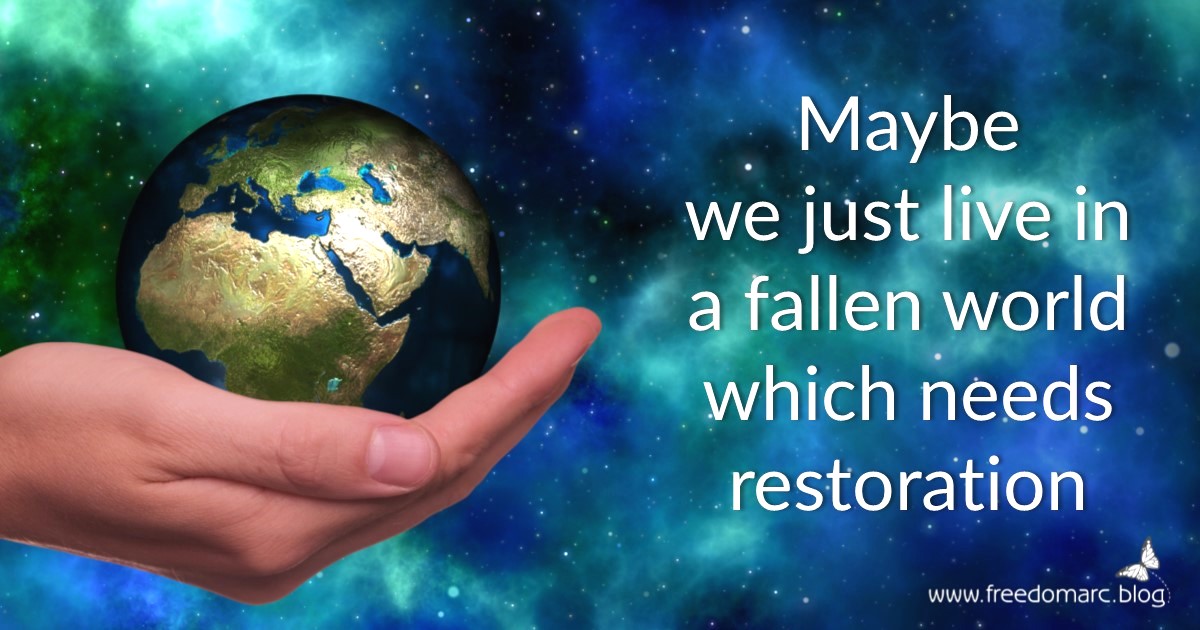
 Mike’s new book, ‘Engaging the Father’ is the first volume in the Sons Arise! series, due to be published on 7th June 2023. You can (pre-)order the paperback from your favourite local or online bookshop or get the ebook NOW


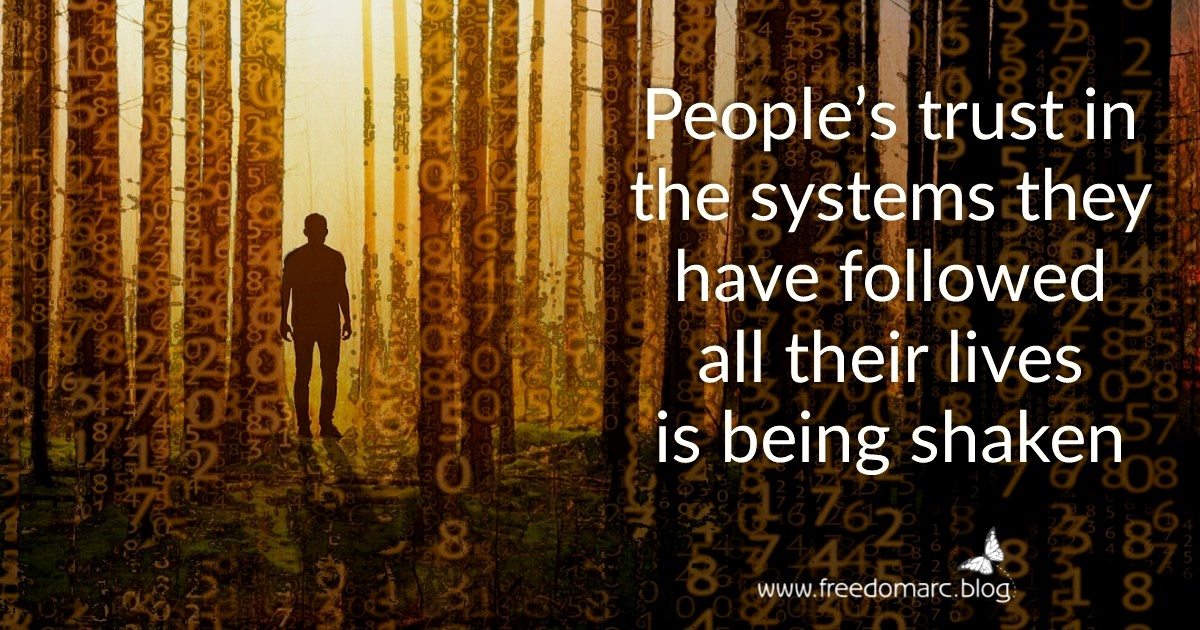




 Sons of Issachar