
Mike Parsons
Not seeing the video above? Click here.
Nothing can change God. He is love. He will never, ever be anything other than love. That love is always unconditional—it is never-ending, and totally unconditional.
So, if what you read about God—whether in the Old Testament, New Testament or anyone’s writings—appears to contradict or fall short of love, then either what is written is wrong, or your understanding of it is flawed. Most likely, it is the result of. This goes beyond religion—it is rooted in how different cultures have understood and presented God. Religion has twisted concepts like holiness and righteousness—true characteristics of God—so that they seem to trump grace and mercy. But they do not. They are equal. God’s grace and mercy are expressions of unconditional love.
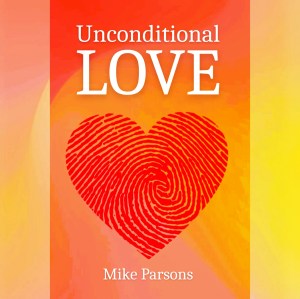 Mike Parsons’ new book Unconditional Love is out now. Order a print copy from your favourite bookshop or online retailer, or get an instant download from our website. More details at eg.freedomarc.org/books
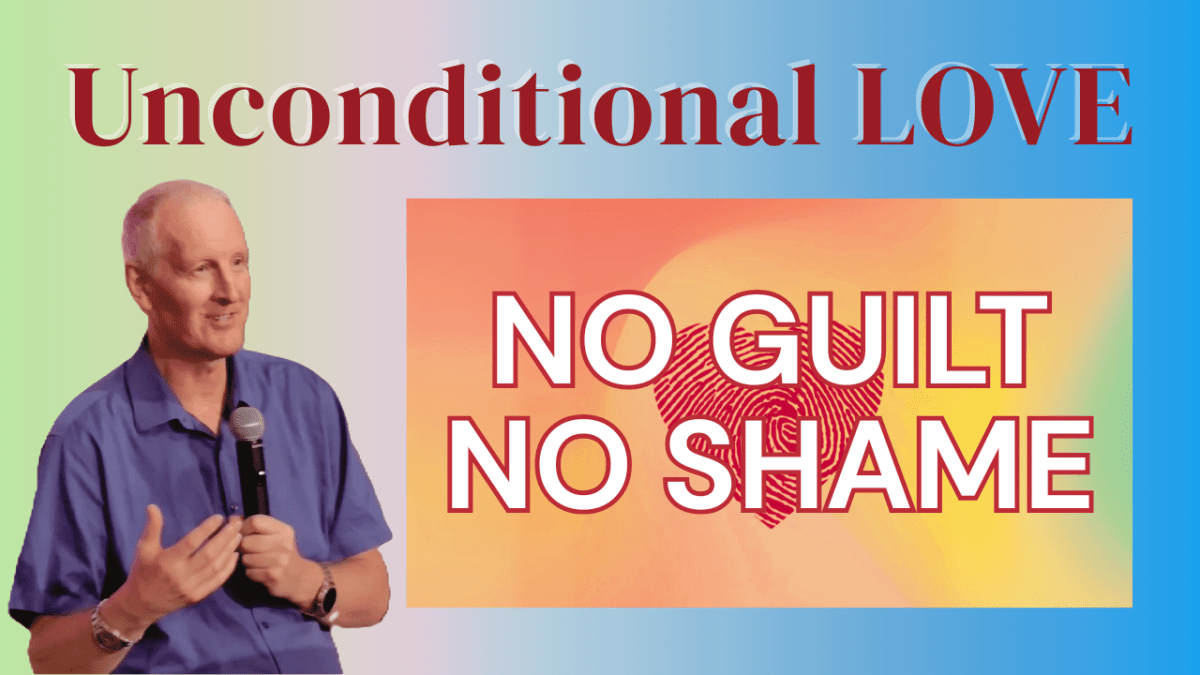
No guilt, no shame.
God is a righteous judge, and therefore He is a God of true justice. The problem for many is that religion has conditioned them to believe that judgment and justice mean wrath and punishment. But judgment, made by God our Father, is not based on human ideas of justice. It is grounded in loving kindness and in the fact that He has already reconciled the world to Himself, not counting anything against anyone. Every accusation against us has been nailed to the cross.
Judgment is a verdict, a decision—not a punishment. And the Father’s verdict is always made in love. That verdict is: not guilty. Innocent. You have been declared not guilty—innocent of all charges and accusations made against you. So if you hear accusing thoughts, reject them. They either come from your own mind, or from another source that thrives on guilt and condemnation. If you believe you are guilty or condemned, and not innocent, you will live a lesser life than the one God intends.
God so loved the world that Jesus came to reveal love. But that love goes even deeper and further back than the cross. Jesus offered Himself before the foundation of the world, so that love would always win, so that love would overcome. The Father’s judgement—’not guilty’—was agreed before we were ever created. All accusations were nailed to the cross. Nothing is held against us.
Jesus, the Lion, fully identified with humanity as a lamb—because all of us, like sheep, have gone astray. Each one of us follows our own way. He came to bring us back into relationship. We may be lost in our independence, but I believe the term “humanity” does not reflect the nature and character of God. It reflects a humanistic mindset that seeks to do everything in its own strength. But God, in Jesus, fully identified with us. Why? Because He loves us.
That “transaction”—figuratively compared to being slain—was a choice to identify with us so completely that He became one of us. In becoming us, He represented us entirely. He became not as Adam was, but as Adam became. He entered a fallen world and fully identified with our fallen nature. That is why He cried out from the cross, “My God, my God, why have You forsaken me?”
But that cry was, in reality, a lie—because God never forsook Jesus. God was in Christ, reconciling the world to Himself. God never rejected or forgot us. It was only how we thought of Him, through our guilt and loss of identity, after we chose independence. He became us so we could be restored to who He always intended us to be. And now we live in a new age, under a new covenant. A covenant Jesus made with the Father—and all of mankind is included in it.
Jesus warned us of the religious and political spirit, likened to leaven, that would permeate the whole lump. In my own experience—through churches and movements I have been part of—my understanding of the new covenant was tainted by old covenant ideas.
Unconditional love does not require sacrifices or offerings. But an old covenant mindset always demands something: our obedience, our obligation, our duty. These are dead works. They carry no value before the Father. He does not require them—and, in truth, He never did. That may come as a shock to many. We must be careful not to operate under an old covenant, works-based, performance-oriented mindset towards God. It will exhaust us. We will never find rest if we think we must earn God’s love or favour.
There is no guilt, no shame, no condemnation in unconditional love. Those things are religious constructs designed to keep us coming back for more religion.
If you enjoy these videos, please take a moment to like, share, comment and subscribe, here and on YouTube. It really does help! Thank you.
No Law, no punishment
Hebrews 6:1-2 are often misunderstood—and I misunderstood them for most of my life. I even taught them as foundations of new covenant faith. But what Hebrews 6 actually says is: “Therefore, leaving the elementary teachings about the Christ, let us press on to maturity—not laying again a foundation of repentance…”
The old covenant was immature. The new covenant brings maturity—but only if we do not lay again the old covenant foundation: repentance from dead works, faith towards God, instructions about washings, laying on of hands, resurrection of the dead, and eternal judgement. All of these are old covenant ideas. They have no place in the new. And yet these very things are what most churches teach as foundational. They were in our church’s foundational course too. But now I realise: these are the things we should not be laying again. There is no life left in the old system. It is dead. We have to move on.
That whole system was based on sacrifices and offerings, connected to the Law given through Moses—a law that was never God’s idea. I am not talking about the Ten Commandments, which actually describe what a good relationship with God looks like. They are not really “Thou shalt not…” They are: “You do not need to…” You do not need any other gods. You do not need to steal. You do not need to kill. Why? Because in this amazing relationship of safety and security, God provides everything. That was His offer.
But the people were afraid and sent Moses instead. So they set up a mediatorial system—the Law. It had 613 requirements they were supposed to keep. Jesus made it clear that it was impossible. Fail in one, and you fail in all. We cannot keep the Law. From the very beginning of the Church, there were attempts to drag people back under it. The religious spirit, working through the Judaizers—even within Jerusalem and the early Church—tried to impose the law of Moses once again.
John 1:17 says, “The Law was given through Moses; grace and truth came through Jesus Christ.”
God never wanted sacrifices and offerings. People will say, “Yes, but He accepted them.” Isaiah 1:11 says, “What are your many sacrifices to Me?” says the Lord. “I have had enough of burnt offerings of rams… I take no pleasure in the blood of bulls, lambs or goats.”
Jeremiah 7:22 says, “I did not speak to your fathers or command them… concerning burnt offerings and sacrifices.” So He never told them to make offerings. Yet they made a golden calf and sacrificed to it. Where did that come from? Their own understanding.
Of course God accepted sacrifices and offerings—because He accepts us. He also accepted their demand for a king, even though He was already their King. That does not mean it was what He wanted. But He works with us, even in our brokenness and our flawed position.
Psalm 40:6 says, “You have not desired sacrifice and meal offering… You have not required burnt offering and sin offering.” Then it says—prophetically of Jesus—“Behold, I have come… I delight to do Your will, my God; Your law is within my heart.”
And the law, when written in the heart, is not a ‘Thou shalt not’. It is a ‘You can’. Because when it is revealed from within, it gives permission to live as sons of God. Not ‘You shall not do this’, but ‘You can do all these amazing things’—as co-heirs and co-creators.
 Thank you to our amazing Patreon patrons who help make my books and videos – and this blog – possible!
Join them at patreon.com/freedomarc and partner with us in taking this good news of unconditional love to all creation.
304. Wrath is not the solution | Penal Substitutionary Atonement [2]













 Sons of Issachar