434. God’s Fiery Love

Mike Parsons

Not seeing the video above? Please click here.


The cross was a powerful point where God dealt with every accusation made against us, reconciled us to himself and didn’t count anything we may have previously done against us. So why do we—and why does religion—keep bringing it up? Because religion keeps reinforcing the need to maintain a certain standard of behaviour. You have to do this, and do that, and if you don’t, you feel guilty. Christianity has its own set of laws now—which is a mixture of covenants. Read your Bible, pray every day, witness, go to church—these become the Evangelical law. Catholics might have communion, confession, sacraments. It’s all performance-based.

But God’s fire is God’s love. People talk about God’s fire as punishment, especially in political rhetoric—like “they’re gonna pay the price now!”—but really, God is a consuming fire, and that fire is always for purification, never punishment. He has no punishment to give. We’ve made God out to be a judge who must punish sin, but that’s a misunderstanding. Fire, like a refiner’s fire, is about removing impurities—transforming, not destroying. He wants us to be pure gold, purely who he created us to be.


Mike’s latest book, Unconditional Love, is out now as an ebook on our website and will soon be available to order in paperback from your local or online bookseller.

More details at eg.freedomarc.org/books


We’ve been conditioned to think God punishes those who reject him. But what loving father does that? Instead, God makes every opportunity—even after death—for people to accept him. At the point of death, Jesus comes as light and invites people into that light. Some accept. Others, conditioned by other beliefs or guilt, reject it. They go into the fire of God’s love, which continues working until every hindrance is gone. The fire doesn’t destroy—it transforms. Even if someone knows God, they’ll still pass through that fire because he loves us too much to leave us incomplete.

Whether it’s the altar of sacrifice, or going through the river of fire, or the fiery furnace of Daniel’s friends, the fire never destroys. Even the Lake of Fire, when you examine the original Greek, is about testing, not torment. The word “brimstone” (theos) is connected to God’s presence. God’s wrath (orgē) means passion—passion against what harms us, not passion to punish.

For me, going through the fire has always meant transformation. Never punishment. Always love. Sometimes challenging, but always an invitation to change, not condemnation. When someone dies, if they’re a believer, their spirit and soul go into the realms and become part of the cloud of witnesses. If they’re not a believer, Jesus appears to them as light and invites them into relationship. Many accept. Angels take them, and train them. Others don’t—some feel unworthy due to guilt or religious conditioning. They feel they’re being punished, but it’s their own shame. God isn’t punishing them—they’re punishing themselves.

We can minister to those in that place—preaching good news even there. Some don’t believe they’re worthy of love because of their lives, but God never stops loving. Religion has turned the message of love into fear. “You’d better be sorry enough so God will forgive you.” But love is what transforms, not fear.

Religion has made “sin” a verb—wrong actions. But in the Greek, “sin” is a noun. It’s not about behaviour; it’s about lost identity. “The wages of sin is death” means the consequence of lost identity is a life less than what God intended. Jesus dealt with sin—our lost identity—on the cross. He reconciled all of us. God’s not holding anything against anyone. Christianity often says, “You’re saved by grace through faith,” but turns that into a requirement for your own faith to save you. Yet even that faith is a gift. There are no works involved. Repentance (metanoia) doesn’t mean “be sorry.” It means change your mind—agree with God’s perspective.

God has forgiven everyone already. Jesus took our death, gave us his life, and came to dwell in us. Many just don’t know it yet. Religion doesn’t lead people to freedom—it creates another set of rules, conditions and guilt. Every stream has its own standards, and if you don’t meet them, you’re condemned. But God has made us righteous. He sees us as we truly are. If we can see ourselves as he sees us, our lives will be transformed.

Even fallen angels lost their identity. I’ve heard of angels missing others—missing Lucifer and those who fell. I believe God will restore all things. Colossians 1 says all things were created by and for him and will be reconciled. Some fallen angels don’t believe restoration is possible because they’ve been told otherwise. But when we minister to them with love, it can stir their memory. Those who haven’t fallen probably know restoration is possible—thousands have already been restored.

Sometimes we hear only the reflection of our own voice when we ask God things. It’s easy to hear what we want to hear. That’s why we need to measure everything against love. If what you hear doesn’t align with love, it’s not God.

When I ask him about choices, like whether to go somewhere or do something, God often says, “Do what you want.” He wants us to mature into sons who can choose based on alignment with his heart, not just wait for orders.


Related posts

243. Not Counting Their Trespasses

406. Recognise the Finished Work of Jesus

316. The Purpose of the Fire

245. What Jesus Did

265. Love’s Good News


432. From Within: Cultivating Your Relationship with the Father

Mike Parsons

Not seeing the video above? Please click here.


Love begins to flow

If you start by developing your internal relationship with God—recognising that He dwells in you and allowing that relationship to expand within—you’ll ultimately discover the union of Father, Son and Spirit with your own spirit, soul and body at the core of your being. This forms the foundation for all other experiences. It’s the source of abundant life. You’re no longer just sipping from the well—it becomes a river that flows from within you. As that inner relationship grows, love begins to flow from you. The more you experience God’s unconditional love, the more you become unconditionally loving. What you’ve received begins to pour out of you.

My personal journey started with an unexpected experience. In 2008, I was simply sitting at my desk when I had a sudden encounter—I was drawn into heaven through what felt like a portal. It was overwhelming and surreal. The first thing I encountered wasn’t scenery or angels—it was love. A level of love I’d never experienced before. My whole being—spirit, soul and body—was immersed in it. I was completely saturated, and that moment transformed me. I knew there was something more than I had ever known, and I couldn’t ignore it. For the next two years, I kept seeking it, longing for that connection again. It ruined me—in the best way.

Eventually, in 2010, that experience became a lifestyle. My daily life began to open up to spiritual realities. I engaged with God, with heaven, with the garden, the River of Life, the Tree of Life—all these beautiful things. But the most important revelation was this: I was His dwelling place. And as I dwelt with Him, and He with me, I began to understand myself.

He showed me how my soul worked, how I had formed my identity around what I knew and did. Eventually, I surrendered. I stopped striving to know and control. I just trusted Him. And that trust opened the door to a deeper journey—one of daily, ongoing transformation.

Love began to expand

That intimate love began to expand within me. I experienced healing, not through ministry from others, but directly from Him. Inner healing became personal and profound. It was no longer something done to me—it was something He and I walked through together.

Over time, He led me into a union that felt like a marriage—something I never expected or imagined. And it all began from within. That’s the invitation: engage with what you already carry. Let it grow. Because it will not stay contained. It will flow into your relationships, into your life, and others will see the reflection of your relationship with God.

You don’t need to prove anything to anyone. It’s God’s job to reveal Himself. Our part is simply to love. Jesus said the world would recognise us by our love for one another. He didn’t say we’d be known by power or knowledge or supernatural gifts—but by love. And to love like Jesus, we first have to let Him love us. That means letting go of conditions and assumptions we’ve picked up—mindsets that need renewing. Many of us are deconstructing, but God may still want to go deeper within us.

Seated with Christ

Yes, there are external experiences—heavenly encounters, visions, spiritual senses being awakened—and I’ve walked in those. I can activate my spiritual eyes and see what’s going on in the spirit, but I rarely do that now. Not because I can’t, but because I don’t need to. I know where I dwell. I know where my spirit is—seated with Christ in heavenly places. You may not have caught up with that reality cognitively, but it’s true all the same.

Most people aren’t taught this, so they never fully grasp the reality of the spiritual realm or their identity in it. But Jesus ascended into that realm, and we ascended with Him. We’re seated there—not just in Him but with Him. We have a position of identity and authority as sons.

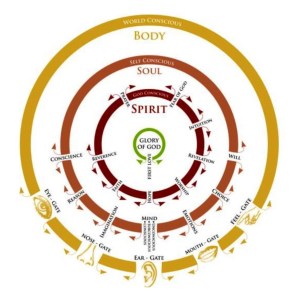
Part of my journey was discovering that, at the centre of my being, God has placed spiritual “gates”—like energy centres, if you will—connected to the River of Life that flows within us. They bring vitality, health and wholeness. This internal structure connects us to heavenly places, and it all flows from the relationship we nurture within.

Grounded in love

So, start there. Cultivate intimacy. Let His unconditional love dwell in you and grow in you. From that place, everything else will open up. Every journey is unique—God doesn’t deal with us like clones. But His work is always grounded in love. He always seeks our best. Even when we make mistakes, He brings good from them, because He is merciful and kind.

His mercy triumphs over all. His grace is without limit. His love is totally unconditional. And when we rest in that love, it opens us up to so much more within relationship.


Mike’s latest book, Unconditional Love, is out now as an ebook on our website and will soon be available to order in paperback from your local or online bookseller.

More details at eg.freedomarc.org/books


Related posts

396. Finding Balance: Spirit, Soul and Body in Union

407. Intentional Healing | My testimony of healing from Ménière’s disease

300. Be Transformed Through Intimacy

203. Manifesto of Love

418. Revelation of the Merkabah

427. Align with the Divine!

Mike Parsons

Not seeing the video? Please click here.

The person of God

Going in to meet the person of God—that is an experience beyond any other I’ve ever had. I could never have entered into that in the state I was in, but God began to change me, prepare me, in all those things in the soaking room, so I could get to that place where I was able to meet Him face to face. Now, I’d met God in many different ways, but there’s a difference between engaging the presence of God and engaging the person of God.

Metamorphosis

Metamorphosis is a process that produces transformation. Not only do things get removed, but things also get changed, added, to enable us to go into deeper levels of intimacy. So we have the ability to live in multi-dimensional realms, in the fullness of our eternal nature and identity.

An example in nature of metamorphosis is the transformation of a tadpole into a frog. It hatches from spawn and begins life restricted to water, breathing through gills—but that’s not God’s intention for it, that’s just the beginning. The tadpole eventually loses its gills and tail, develops legs and a new respiratory system, so as a frog it can be free from restrictions and live in both water and on land. A butterfly goes through a similar process—starting as a caterpillar, restricted to crawling on the earth, but changing through the chrysalis into something that is free to fly.

These are symbolic of the change and transformation that’s needed. We also go through a similar transformation that removes, adds, and restores abilities.

Many times in the Bible, you’ll find characters placed in a place of restriction to prepare them for their destiny. Now, sometimes people really struggle with that. They find it really difficult—to be restricted. They think God is putting that restriction on them in a negative way. But it is a positive thing when God places us in a position that brings about the change and transformation needed in our lives.

Some examples of that—Jacob under Laban, where he was looking to receive his wife, and there were all these conditions put on him, and tricks and everything else, but it produced character in him. Moses in the wilderness—he was called, but lived in the wilderness until he was able to take his position, after he had matured. David in Adullam’s cave—called for the kingdom, but in this place with a group of misfits, and God used that. Jeremiah was in anguish of soul, but came out into a place of fulfilling his destiny.

And then Joseph and Esther—they were also prepared. Joseph was prepared in the pit—his brothers threw him into the pit. How difficult must that have been? Then in slavery, in stewardship, and in prison—the prison of obscurity—until the time was right when his dreams and destiny would be fulfilled. Joseph, in his father’s house, was never going to fulfil his destiny. It was Joseph who’d gone through the process of change and transformation, who grew, who matured, who would end up in leadership in Egypt—in a way beyond what we’d have thought possible. But God prepared him, took him through seeming injustice and different situations that so challenged him—and yet he remained humble through those situations.

Esther went through 12 months of preparation before she could come before the king. That was so difficult. I’ve engaged Esther in the spirit—I’ve engaged her in the cloud of witnesses. I asked her, “What was it like?” And she said, “I didn’t want to be prepared to go and see the king.” That was not something a young Jewish girl would ever have wanted—to be a concubine of a king, a foreign king. But God had a purpose for Esther that would bring about the salvation of her people.

So it’s really important we don’t just look at the external circumstances of our life and think, “This is terrible. How can I get out of this?” We need to understand that sometimes, places of restriction are the places of greatest transformation.

For our soul to be prepared, there needs to be an identification of the things in our lives that are hindrances—coping mechanisms, defence mechanisms, trauma—and all of that leads us to a place of surrender. We surrender our independence. We learn to trust the Father for our provision, protection and direction in life. We’re no longer going to do it by the DIY tree path.


This video and blog post are taken from Mike’s current teaching series, Restoring First Love. Get the full-length videos every month, ad-free and with many extras, only at eg.freedomarc.org/first-love


Realign with our divine origin

Our spirits, souls and bodies realign with our divine origin—get realigned and brought into union and oneness with each other and with God. The identification of our false identity and any works- or performance-based orientation gives us the opportunity to find our true origin and redemptive gifts.

There’s preparation for glorious sonship in restored First Love, and creation is longing and waiting for the revealing of the sons of God—for the revealing of our true nature and how that can bring freedom to the whole of creation.

So the soaking room experiences began to engage my body, they began to engage my soul, to prepare my body to radiate glory and my soul to operate in light. This soaking begins to realign the frequencies of our being, to restore resonance with God, with our true identity—harmony and balance to our whole being.

We experience the sound and light frequencies of glory—God’s nature—for transfiguration from one degree of glory to another. We don’t stay the same. We increase in glory. So we increase in the full revelation of who we are, and begin to express that and live from that place.

Now literally, excitation of light waves of specific frequencies causes our DNA photons to be energised and transformed. That light is God Himself. We begin to be transfigured in light by God, who is light. We become sons of light, living in physical and emotional harmony, health and wholeness—and it all happens by the presence of God.

The symbols of the things in soaking are symbols of God’s presence—of God Himself. God as our Father is calling us to embrace the restrictions of transformation, to receive the freedom of our sonship. And it’s so important that we receive that freedom, so we can receive the full revelation of our eternal destiny—to live trans- and multi-dimensional existences, fully embracing all of the eternal characteristics of sonship that are our eternal identity, our true authentic self.

John 3:30 says, “He must increase, but I must decrease.” Now I’ve heard that preached as if it’s something we need to beat ourselves up about—as if we need to put ourselves on the cross every day. It doesn’t mean that. He reveals in me what is like Him—I embrace that. He takes away from me what is not like Him—I embrace that. It’s not something I have to try and do, like “I’ve got to decrease,” as if I’m nobody and nothing and with this sort of false humility. No—this is allowing Him to increase. Therefore, if He increases, then everything that’s not like Him falls away.

So I learn to surrender, where I can present myself to Him—I can be changed, conformed to sonship through this whole process by allowing Him to soak me in His presence.

So, what is soaking? Soaking is to make or allow something to become thoroughly wet by immersing it in liquid—that’s the dictionary definition: to immerse, to steep, to submerge, to submerse, to dip, to sink, to dunk, to bathe, to wet, to rinse, to douse, to marinate, to steep, to pickle. I mean, some of it’s really important.

To baptise in water, to baptise in the Spirit, to baptise in fire—in which we are immersed in those things which bring about the changes. I’ll go into that in more detail in a future session when I look at the heat and how heat transforms us. But the soaking room is the place of preparation that has parallel heavenly encounters in the River of Life, which is a river of energy—of Spirit—and in the river of fire.

God is a consuming fire. His love is a consuming fire. We can be baptised in the River of Life and in the associated waterfalls that cascade down. We can be baptised in the river of fire, engage the altars of fire, engage the process. See, the River of Life is Spirit energy—living water. It’s not H₂O, but the very essence of life, encoded with the frequencies of God—God’s essence. And when we are baptised into it, when we submerge ourselves into it, it begins to change and transform us.

The sound of many waters—it says God’s voice is like the sound of many waters. The sound of many waters are the creational frequencies of God’s voice that will realign us to who God created us to be.

Baptised into Love (meditation excerpt)

I encourage you right now
just to close your eyes.
Get comfortable.
Begin to relax.
To focus your thinking on God.

Focus your thinking
on God’s love, grace, mercy for you.

Focus your breathing by slowing down.

Breathe in more slowly.
Breathe in more deeply.
And as you’re breathing in,
you’re breathing in
the unconditional love of the Father.

You’re breathing in love.
You’re breathing in joy, and peace.

And as you breathe it in, just receive.
Let it flow into your being.
Whether you feel it, or sense it,
just let it flow.

Continue to be still.

Breathe in
and breathe out slowly.
Breathe in slowly
and breathe out slowly.

Slow everything down and totally relax.
Just become mindful
that you’re cocooned
right now
in God’s presence.

As you are still,
He is cocooning you in love.
He’s loving on you.

Consciously invite love,
invite joy,
invite peace,
to come upon you,
to flow in you,
to flow through you—
to create an atmosphere of rest around you
that you are completely submerged in –
baptised into the higher frequency of love.

Vibrating in that energy.
Vibrating in peace and joy.

Overshadowed with the presence of the Holy Spirit,
energising you,
transforming you,
changing you.

Be open to that overshadowing.
For the presence of God
to rest upon you.


Related posts

Into the Dark Cloud

281. Scroll of Destiny: Just Being

399. Become Acquainted With Perfection


421. Belief to Reality | Living in the Truth

Mike Parsons

Not seeing the video? Click here.


Quite a lot of deconstruction and renewing of our minds is needed to actually know the truth—and then to live in that truth. A lot of people will say, “Oh yeah, I can be multi-dimensional,” and then you ask, “Well, how does that work for you?” and they can’t really answer. Because although they believe it’s true, they’re not yet living in that truth. And that’s okay, because we’re all on a journey.

But God wants us to embrace the fullness of our sonship, which carries with it a whole different quality of life—what Justin (Justin Paul Abraham) would call “beyond human.” It’s beyond the limitations of humanity, because mankind was made in the image of God. We were never supposed to create our own image. Humanity, as we know it, is the image we’ve created for ourselves.

And I’m not going to be restricted by being human—because I’m not just human. I’m a son of God. I’m created to be beyond purely human, even though I’m living in a human plane of existence. I’m meant to live in a completely different realm—one of sonship. I believe that’s what the Father really wants to help us embrace and begin to live out. So yes, our immortality is definitely on the Father’s agenda—to get people to start thinking about the possibility, then embrace the possibility, and eventually go and live the possibility as a reality.

Of course, if you’re going to live forever, it raises a whole load of other questions: how, where, what are you going to do, how are you going to eat? All those questions. Some of the conferences Justin has been part of—and others as well—are beginning to ask these things. For example, what is the economy of immortality? Are we going to live on a financial plane, or are we going to rise above finances?

Are we talking about an economy of well-being, where simply being completely and utterly content and fulfilled in being me would free me from any need for recognition from others, or from the need to produce a self-image? Because I wouldn’t need that anymore.

Money is often tied to value and worth. If you earn more money, you’re seen as having more value to society. Your self-worth gets programmed into what makes you valuable—and often that boils down to money. In the world’s eyes, if you earn more, you must be more valuable. But actually, God wants us to see that it’s the image He made us in. He created us with value and worth intrinsically built in. I believe an economy of immortality is one free from money. That doesn’t mean there won’t be a functioning system—but if everyone is doing what they’re designed to do, no one needs to be paid for it, because we’d all support each other out of who we are and what we’re called to do.

If we were living in, say, a restoration city, and I’m doing what I’m meant to be doing while others are doing what they’re meant to be doing, then the whole thing functions. We don’t need a hierarchical system. I’m blessing someone, and someone’s blessing me—that’s covenant. The economy of immortality is covenant: what’s mine is yours, and what’s yours is mine. We’d all have enough for our needs and an abundance of overflow, because Jesus promised us abundant life—life in all its fullness.

So, what I see is that when we remove the limitations of identity that come through humanity, we also remove the programming that humanity has placed upon people—programming based on works, performance-driven worth, and earned value. All I need to do is be me. And if we’re all being who God intended us to be, then we’re not comparing ourselves with each other. I’m not saying, “I’m doing a more important job than you, therefore I’m worth more.” No—I only need to be me, and you only need to be you. That’s how we value each other—not by what we do, but by who we are.

That completely removes the need for financial remuneration. Money doesn’t have to make the world go round. And I think that’s where we’ll end up when we really start looking at the practical implications of living in immortality. What changes would that bring to the world if people began to live like that? I believe it would make a significant difference to our attitudes and our mindsets—towards each other, towards the world.

Because my sonship is connected to creation, and creation values me as a son. Creation gives me a place within its greater purpose, because creation is longing and waiting for the revealing of the sons of God, so that it too can be set free. There’s a vested interest, from creation’s point of view, in me being me—because that plays a role in creation’s freedom.

Please remember to like, comment, share and subscribe – it really does help!


Mike’s latest book, Unconditional Love, is out now as an ebook on our website and will soon be available to order in paperback from your local or online bookseller.

More details at eg.freedomarc.org/books


Related posts

363. Deconstructing the Pillars of Your Mind
398. Embrace Transformation and Renewal
332. Embracing Multi-Dimensional Living
371. Mindset of Immortality
369. Living in Abundance: The Wellbeing Economy
400. Living in Union with God: Embracing Our Original Design
202. Answer Creation’s Call

417. Awakening to Love | Finding Your Place in God’s Heart

Love is central

A mandate from God is relational. I used to ask God for a daily mandate, but He led me away from that approach and now I focus on spending time with Him heart to heart. When I align with His heart, I naturally sense His guidance throughout the day and in different situations. Knowing the Father’s heart gives me the freedom to express it creatively through who I am, so I no longer need to seek mandates directly; I engage with His heart and follow the desires He reveals.

You cannot force someone else to follow God’s will because God does not work that way. The key is creating an environment where people can discover God’s desire for themselves; it’s not about telling them what to do but encouraging them to find their own identity and path in God. Love is central to this—showing unconditional love helps people connect with God more easily.

Understanding God’s heart is the foundation of a mandate, which essentially grants permission to carry out His will. And a blueprint—a pattern for what God wants to build—may not arrive fully formed. Timing matters—just because God shows you something does not mean you should act on it immediately: preparation and personal growth are often necessary first.

Love is not passive; it sometimes requires speaking truth, even when that is difficult. I once helped two couples seeking to establish an ekklesia: they had received the same vision but interpreted it differently, and their misalignment ultimately meant they were unable to work together. Clear communication and alignment are essential at the beginning of any such joint venture: if you are working with others on a blueprint, you need a solid foundation based on relationship and shared understanding. If one group wants to build a car on a production line and another wants to craft it by hand, conflict is inevitable unless the approach is agreed upon from the start. Blueprints often involve multiple people because God rarely intends for us to work alone: though the spiritual side may be clear, the practical side can be complicated, because people are involved!

Unity, not uniformity

I tend to avoid elitist thinking. Ideas like being part of a special group or achieving a higher level of spirituality do not resonate with me. God loves us all equally and even if he has different roles for us, no one is more valuable than another. We are all on a journey, and different perspectives are best respected, not treated as inferior – so if a group starts excluding others based on beliefs or perceived superiority, that is a warning sign.

Love is the standard for measuring any group or movement. Love is unconditional, inclusive, and honours differences rather than creating divisions. A group focused on money or controlled by a dominating personality is another red flag. True leadership fosters accountability and allows people to express their beliefs without pressure to conform.

Even when we disagree

God’s desire is for unity, not uniformity. We are all part of one family, even if some people do not yet recognise it. Differences are to be valued, not erased: God’s design is multifaceted, and diversity reflects His nature. It is not about agreement on doctrines but about honouring relationship above  needing to be right. True maturity means maintaining connection even when we disagree, because relationship matters far more than winning an argument or proving a point.

Of course, God can transform us when there are things in our lives that cause harm, but acceptance of one another is not dependent on agreeing with certain doctrines or creeds. God’s covenant with Abraham, fulfilled through Jesus, was to bless all families of the earth—not just some. We need to treat everyone as family, even when we disagree.

Too often, people are treated as enemies over minor disagreements. Most major doctrinal issues were settled long ago, yet divisions continue over relatively small matters. Unity is the priority. Jesus said the world would recognise His followers by their love for one another, not their theological accuracy. Again, unity does not mean uniformity—it means valuing relationship over being right.

Revelation of the Merkabah

On my journey, I learned about the functions of my spirit, soul and body, but they initially felt separate. Over time, I discovered that at the core of my being there are portals that connect me to where I am in the spirit and to where God is in the spirit. This connection transcends dimensions and physical locations—wherever I am, I am instantly connected because my spirit, soul and body are entangled together. This quantum entanglement means that even if there are dimensional shifts, there is no actual distance. I am one and whole wherever I am, never separated from God or creation.

This understanding unfolded through the revelation of the Merkabah—not as a literal ‘chariot’ (though that is an accurate translation of the word), but as a symbol of a state of being that carries me into different dimensions, identities and positions. It is no longer about travelling externally to reach heaven but realising that I am already connected within. And it is my state of consciousness, awareness and identity that fosters that connection, not anything external.

God’s kingdom is filling the earth

This ties into the restoration of all things. Our normal view of life is in linear time, but I view it rather as a continuum where God’s kingdom has been expanding and filling the earth since Jesus established it. Like leaven working through dough, you do not see the rise at first, but the process is underway. God has been at work throughout history, even if the fullness is only becoming visible now.

Sons of God have been revealed throughout history, often labelled ‘mystics’, and known to us or unknown. Their connection to creation has helped keep things steady, even when the world seemed chaotic. We are now at a point where the leaven has begun to rise more visibly, but this is a continuation, not a sudden breakthrough. The responsibility we have is to engage with this revelation and steward it faithfully.

Our role is to respond to creation’s groaning by bringing it into greater freedom. This requires change and transformation—a process guided by Jesus as our High Priest. The fire of God’s loving presence is not destructive but refining and purifying, transforming us and shaping us into maturity. There is nothing to fear from this fire; it is a blessing that brings us into wholeness and deeper alignment with God’s heart and purpose.

[Note: you can choose to engage with the fire of God’s love in this recent activation that Mike led with our Patreon patrons]


Mike’s latest book, Unconditional Love, is out now as an ebook on our website and will soon be available to order in paperback from your local or online bookseller.

More details at eg.freedomarc.org/books


Related posts by FreedomARC

418. Revelation of the Merkabah (coming April 13th 2025)
415. Limitless Energy through the Merkabah 
396. Finding Balance: Spirit, Soul and Body in Union 
375. Discover the Secrets of the Merkabah
308. Energy Systems Within Our Being 


412. Beyond the Gospel | The mixture of faith and culture

Mike Parsons –


Mixture

The difficulty with what the Western world exported to Africa and beyond is that it was a mixture. We brought an evangelical gospel that wasn’t truly biblical, along with legalism, Victorian morality, and cultural traditions—things like formal Sunday attire and denominational structures. This mixture meant that alongside introducing people to Jesus, we also imposed religious systems and doctrines that were never part of the gospel.

Having spoken in Africa, I’ve personally apologised for this, recognising how British culture became entangled with the message of Christ, creating a rigid, legalistic system of religion. So I understand why people are challenging it—because I am too. I’ve been deconstructing my own beliefs, reassessing what I was taught, and recognising how much of it was shaped by religious programming rather than the truth.

But I’m not afraid of people questioning, because Jesus is the truth. He is the light, and he reveals himself. He has made himself known to people in places untouched by Western Christianity, even where his name was never spoken. Many missionary stories recount tribes saying, “We know him. He has visited us.” This proves that encountering Jesus is not confined to any one culture’s presentation of the gospel.

Religious baggage

So if people throw off religious baggage, I don’t fear they will lose their way. Truth and light always reveal who God truly is. And it doesn’t matter whether Jesus is seen as Black, White, Middle Eastern, or any other representation. Paul himself said he became all things to all people, and Jesus does the same—meeting people in ways they can relate to. Dr. O, for example, speaks of encountering Jesus as a Black man, which makes perfect sense in his context. Christ identified with all of humanity, taking on every identity to redeem us all.

Ultimately, these are external matters. Our true identity isn’t in race, culture, or background—it’s in being sons of God. When we fully know who we are, those externals no longer define us. It’s not wrong to celebrate them, but they don’t determine our worth. Who we are is the person God created, shaped and formed in his vast thoughts. That identity frees us from comparison, superiority or inferiority—we simply are who God made us to be.

Truth that transcends

God is restoring lost identity. Religion—and any system that tries to shape identity—inevitably distorts it into its own image. We must be shaped in God’s image, not by man-made constructs. Many seek their destiny, wanting to understand God’s plan for their lives. But your destiny scroll is simple: it’s you. Knowing who you are allows you to live out your purpose in any situation. There’s not just one predetermined path—many paths align with God’s heart, as long as they flow from true identity.

People want a detailed list of what they should be doing, because they are afraid of getting it wrong. They think God will be angry or disappointed with them, but he never is. He loves us and wants us to know and walk in the truth, living in daily relationship with him. That’s where our purpose unfolds—simply being who we are as sons, in union with the Father.

So I’m not concerned about cultural shifts or temporary changes. God is shaking man-made systems—religious, political, and otherwise—so that people stop placing their trust in them. The only unshakable thing is his kingdom, his rule, which is a rule of love. Seeing from a spiritual reality—God’s perspective—means embracing truth that transcends human constructs. And that truth will always challenge the perspectives we previously held.

Summary of the remainder of the video

True identity

We often define ourselves by circumstances or achievements, but our true identity is found in him. Transformation isn’t about striving—it’s about being. As we embrace intimacy with the Father, he reshapes us into who we were always meant to be. His thoughts lift us above earthly limitations, aligning us with his truth.

Romans 12 warns against being pressed into the world’s mould—letting external opinions and circumstances shape us. Instead, we are called to transformation (metamorphosis), like a caterpillar becoming a butterfly. We are not meant to stay bound in the cocoon; we are meant to fly. We are called to live from our true identity, fully aligned in spirit, soul and body.

Transformation isn’t about striving but embracing the Father’s revelation of who we are. God gently reshapes our thinking, freeing us from past mindsets and religious distortions.

I don’t want to be shaped by a religious mould any more than I want to be shaped by a worldly mould – I want to be shaped by what God says and by what his intention was for me.

As his presence dwells in us, we manifest his love on earth. We were made to bring heaven to Earth, not shaped by the world or religion but by God’s original design. I don’t want to be shaped by a religious mould any more than I want to be shaped by a worldly mould – I want to be shaped by what God says and by what his intention was for me. When we live in intimacy with him, we reflect his heart and purpose in all we do.

No separation

Our identity is key—when we embrace it, we align with God’s original design, living in wholeness, free from sickness and limitation. Instead of striving to believe, we rest in heavenly truth, allowing it to transform our reality. True transformation comes from intimacy with God, from aligning with the Father’s heart, feeling what he feels, and acting from that place. Jesus fully embraced emotion—he laughed, cried, and was moved with compassion. We are called to do the same, not suppressing our feelings or allowing them to control us, but being guided by them as they flow in harmony with God’s love.

Oneness with God means there is no separation between his thoughts and ours. We don’t act independently but in complete union, embodying his love and reflecting his nature. As we embrace this reality, we become true ambassadors of his love, prioritising others above ourselves and living in the fullness of our divine identity.

Unconditional love

Loving unconditionally in this way is difficult for us because we are conditioned by our experience of relationships that come with expectations. God loves us unconditionally, allowing us to make choices, even wrong ones, without control or condemnation. He always seeks to bring good from our failures, never standing over us saying, “I told you so.” In human relationships, our love is tested when mistakes are made. Do we choose grace and understanding, or pride and the need to be right? True love prioritises relationship over being proven correct. The more we experience God’s love, the more we can reflect it—just as Jesus intended.

God seeks relationship

Sin is lost identity, not wrong behaviour. Religion emphasises behaviour, insisting that change is necessary to be accepted by God. As a result, many who don’t conform are excluded from our churches, not because they are unacceptable to God, but because they don’t fit denominational or cultural expectations. God requires nothing—he simply invites us to come as we are, and transformation follows in relationship with him.

Religion focuses on actions, but the deeper issue is separation from God. Adam and Eve chose independence, losing their sense of who they were. Ever since, humanity has struggled with shame and the illusion of separation, though God has never turned away.

God seeks relationship, not behaviour modification

God’s love invites us to return, not by fixing ourselves, but by embracing the identity he has already restored. Religion seeks to control through fear; but God seeks relationship, not behaviour modification. Living in our true identity frees us from sin-consciousness, and transforms how we live.


If these blogs and videos are helpful to you, please like, share, comment and subscribe – that helps others to find them too!

Related posts by Mike Parsons

363. Deconstructing the Pillars of Your Mind

215. Revealing the Sons of God

281. Scroll of Destiny: Just Being

203. Manifesto of Love


399. Become Acquainted With Perfection

Mike Parsons

Acquainted with perfection

Become acquainted with perfection. To accommodate yourself to the delight and good pleasure of him will transform your thoughts afresh from within (Romans 12:2 Mirror Bible).

“Become acquainted with perfection…”
That can be challenging for many, as they struggle to see themselves as perfect. This is often because they view themselves through the lens of their present circumstances rather than seeing themselves as God sees them—as who He created them to be.

When we accommodate ourselves to his delight and good pleasure, it transforms our thoughts from within. By agreeing with who he made us to be and with who he is, our thinking is renewed. This transformation is not by an external but an internal process, where we embrace the life of God in us.

The word for transformation—also translated as transfiguration or metamorphosis—comes from the Greek word metamorphoō. It combines meta, meaning “change after being with,” and morphoō, meaning “changing form in alignment with inner reality.” True transformation happens after being with Him, as we are changed to reflect our authentic selves.

It’s important to realise that we don’t need to change ourselves through our own efforts. Instead, it’s intimacy with him that brings about change. This change flows from our inner reality—who we are, our true nature, our scroll, and our authentic real self. This is what will bring about the external transformation: realising that inner scroll of who we were made to be.

Jesus demonstrated this transformation in the Transfiguration.

And six days later Jesus took with Him Peter, James, and John, and brought them up on a high mountain by themselves. And He was transfigured before them; and His garments became radiant and exceedingly white, as no launderer on earth can whiten them (Mark 9:2-3).

This wasn’t about his physical garments; it was a revelation of his true nature as a spiritual light being. There aren’t any particularly high mountains in or around Jerusalem, so this could signify the heavenly Mount Zion that Jesus was introducing them to. Jesus was showing them who he really was. The word transfigured here is the same as transformed—metamorphoō. He gave them a glimpse of his true glorious identity, his true majesty in light. Seeing Jesus as he truly is also helps us see ourselves as we truly are—as sons of God. If we are willing to embrace this metamorphosis from lies to truth, we’ll understand that we’re not meant to remain earthbound caterpillars. We’re meant to be like butterflies—able to soar in the heavens and live in both realms (a butterfly can both land and fly). We are destined to live in a totally different dynamic, a spiritual dynamic that goes with the physical. Jesus demonstrated this reality to show us what is possible.

After being with God in an intimate, face-to-face relationship, we are transformed. And it is face to face: we are not going there hiding, walking backwards or afraid to face him. [Now, I was afraid to face him, and literally I couldn’t face him until I had gone through my Dark Cloud experience; but I did engage him in a relationship that brought about transformation.]

This relationship brings about inner change, aligning us with our true origin and who we are at our core. The third strand of our DNA reflects this inner reality, and when it comes into alignment, we are transformed through encounters with God.

This video blog is an excerpt from Mike's current teaching series, Restoring First Love. Get the full length videos every month, only at eg.freedomarc.org/first-love

Agreeing with God’s mind

Agreeing with God’s mind (metanoia) brings transformation through the renewing of our minds. This renewal allows us to know our true origin, aligning us with it. We are made in the image and likeness of God, which means we are designed and created to be Godlike—that is our true identity. Renewing our minds is key to transformation so that how we think about ourselves aligns with how God thinks about us.

The Greek word for renewing is anakinosis. Ana means “up” or “completing a process,” and it intensifies kainos, which means “make fresh and new.” Properly understood, this renewal refers to a new development—a transformation achieved by God’s power, not by our own efforts. It is not by self-help, self-improvement, or a makeover. Instead, it is allowing him to transform us through encounters that renew our minds.

But we all, with unveiled faces, beholding as in a mirror the glory of the Lord, are being transformed into the same image from glory to glory, just as from the Lord, the Spirit (2 Corinthians 3:18).

This means we don’t need to approach God with a covering—whether that covering is self-righteousness, offerings, or sacrifices. We come with unveiled faces, without fear, doubt, or unbelief. We can go and engage God as he is. When we look at the essence and character of God, we are being transformed into the image of what we are looking at. We look into the mirror of his face and look into his glory, so that we can see our glory reflected back. Through this, we are transformed from glory to glory and embrace who we really are.

This process happens gradually because if God showed us the full truth of who we are all at once, we wouldn’t be able to handle it. It would overwhelm us. So, he reveals it bit by bit, glory to glory.

To experience this transformation, we need face-to-face encounters with God. When we look into the mirror of his face, we see our reflection in his love. During these encounters, relax—don’t get tense or try to make something happen. Just allow God to do whatever he wants to do. Whether you feel it or not, God loves you and wants you to know that love. He wants you to know it in relation to who you truly are.

Face to Face with God (Activation)

I’d encourage you to begin now to relax as we enter into a short activation. Close your eyes and slow down your breathing. Start to focus on your breathing. Let it slow down. Begin thinking about God as love. Focus your thoughts on him loving you, wanting to show you his love.

Start breathing deeply. As you breathe in, know that you are breathing in the unconditional love of the Father. Breathe in, and breathe out slowly and deliberately. Consciously engage with what you are breathing—you are breathing in his essence, his love.

As you breathe in this unconditional love of God, feel it flowing through you, touching your innermost being. It moves in and around you, creating an atmosphere of rest. Rest in his love. Rest in his work. Rest in what he has done and in who he made you to be.

You are in a safe place—this is a safe place. In that safety, you have the choice to step out of the boat, to abandon yourself, sinking into the vast ocean of his unconditional love. He is there. Sink deeper, and deeper, and deeper.

As you sink deeper into his love, the Father longs to meet you. He wants to embrace you. Fix your thoughts on the Father’s embrace, on meeting him face to face, even in the depths of his love. The Father will draw near to you. You may sense it, feel it, or see it. He wants to hold you, to breathe his life into you so you can receive his living words, his living breath. He desires to be face to face with you in the intimacy of this wonderful relationship. You are safe in the Father’s arms of love. Secure. No fear. Perfect love casts out all fear.

As you are embraced within the depths of his love, listen. The Father may communicate his thoughts to you—those wonderful thoughts he has for you, his original desire for you. Allow yourself to be entwined with him, with the Father, in love.


383. Greasy Grace or Limitless Grace?

Mike Parsons

You’re on dangerous ground when you take the evangelical position that the Bible is inspired, inerrant and infallible. Nowhere in the Bible does it claim that all its writings are inerrant, infallible and inspired.

For example, where does it say in the book of Isaiah that it was inspired by God? It doesn’t. Do I believe Isaiah prophesied with the inspiration of the Spirit? Yes, I do. Did he write it as a direct dictation from God? No, I don’t think so. He wrote and expressed what he felt God was saying to him, filtered through his own understanding. Would Isaiah have understood that the suffering servant was the coming Messiah? I don’t think so. But he wrote it because God inspired him to, or spoke to him about it.

We don’t need another book of stuff to argue over, or create more doctrines of God about!

Too much grace!

Many preachers warn against “greasy grace” but rarely show the same concern for excessive legalism. They always seem more worried about too much grace.

When it comes to Limitless Grace, this is not just grace upon grace; it’s the divine enabling power that works within us. As we grow in the awareness of this limitless grace, it transforms how we think and live. Limitless Grace, alongside triumphant mercy, is rooted in God’s unconditional love. If God’s love is unconditional, as it is, then his grace must also be limitless.

Unconditional love is God’s desire to work out that love for our good, to restore us to the place he intended from the beginning—a relationship with him, face-to-face, in innocence. Ephesians 1:4 speaks of this restoration to face-to-face innocence in love. If God’s love were conditional, grace would be limited. But because love is unconditional, grace must also be limitless.

God’s grace empowers us to return to our original purpose and identity by removing every obstacle that hinders us. Often, we think of ourselves through the lens of our upbringing, experiences, or societal expectations, which impose limitations. But God’s grace enables us to see ourselves as he sees us, unshackled by those hindrances.

I used to try to renew my mind by sheer effort, but it never worked because I was trying to fix the problem using the same flawed thinking. God renews our minds by giving us transformative experiences, revealing his unconditional love and limitless grace. These experiences change how we see him and, in turn, how we see ourselves.

Some misunderstand grace as “greasy grace” or “cheap grace,” as if it excuses any behaviour. But grace isn’t a cover for wrongdoing; it’s the empowerment to live differently. Grace is limitless because our capacity to act contrary to God’s love is vast. Yet, God’s grace is greater, ensuring we can always be restored to that place of innocence and relationship with him.

Grace is not about what we deserve or earn—it’s about God’s love for us. Critics of grace often argue that it promotes permissiveness, claiming it suggests that “God will love us no matter what we do, so it doesn’t matter how we live.” While it’s true that God’s love for us never changes, our actions do have consequences. They affect us—and others. That’s why God empowers us to live according to who we truly are in him, rather than who we think we are.

Unfortunately, much of evangelical Christianity is focused on law rather than grace. They see grace as “cheap” or “greasy,” fearing it excuses behaviour. But grace is not about fear of consequences or external control. I once spoke to a very evangelical man who admitted that the only thing stopping him from certain actions was the fear of God finding out. He was operating out of fear, not love.

God doesn’t want us to act rightly because we’re afraid of punishment; he wants us to live from a place of understanding and embracing his love and grace. When we see things as God does, we won’t want to do things that harm ourselves or others. That’s the true power of grace—it transforms us from within.

Grace does not excuse sin

Grace empowers us not only to avoid wrong choices but also to refrain from actions that contradict love. This empowerment is essential, yet some misunderstand it, accusing those who teach about unconditional love of promoting “greasy grace.” They claim God cannot excuse sin because he is righteous and holy. But what they misunderstand is that grace doesn’t excuse sin; it forgives us for it—even before we’ve committed it.

Grace allows us to see our actions from God’s perspective, enabling us to choose differently when we recognise something is harmful to ourselves or others. God loves us so deeply that he doesn’t want us to remain in harmful patterns. His grace renews our minds, helping us think differently and act differently.

The legalistic mindset focuses solely on law-based consequences—what happens if you do or don’t do something. It misunderstands God’s grace entirely. Grace doesn’t “cover” sin in a superficial sense; it forgives sin and empowers us to live beyond it. Sin, in this context, is not merely wrongdoing but a loss of identity. God has already forgiven us for being in that lost state and wants to restore us to the reality of who we truly are.

Triumphant mercy works alongside grace to overcome everything we do that contradicts God’s love. Mercy doesn’t ignore or tolerate wrongdoing; it works to bring us into a new way of living. This is why grace and mercy are empowering—they enable us to move beyond harmful patterns, not by fear or obligation but through love and forgiveness.

Evangelical perspectives

The idea of “greasy grace” reflects a complete misunderstanding of grace. Critics often claim that teaching about unconditional love and grace gives people an excuse to do whatever they want. But the reality is, people already do what they want. True grace transforms what we want, aligning our desires with God’s heart. Personally, I surrendered my free will years ago because I didn’t want to choose things in opposition to God. My desire now is to live in alignment with God’s love and purposes, not out of fear or duty but out of a shared desire to please his heart.

Unfortunately, evangelical perspectives often distort the meaning of grace, reducing it to an acronym or a rigid formula. Some view it as a way for God to tolerate us because of Jesus’ sacrifice, as though Jesus came to save us from God. But Jesus didn’t come to save us from God—he came to save us from ourselves and the consequences of living in a lost identity. The salvation he offers isn’t about avoiding an eternal punishment but about freeing us from the consequences of an independent path that leads to harm and separation from God in our perception.

Grace is often misunderstood in the evangelical framework because it’s tied to the idea that faith is something we must generate. However, faith itself is a gift that allows us to believe what is already true. Grace, grounded in unconditional love, has no prerequisites for us to receive it. It’s already there for us. When we accept it, we begin to enjoy its benefits, but it has always been available regardless of our actions.

Much of evangelical thinking wrongly assumes that grace is only extended after we perform certain actions—repentance, renunciation, or asking for forgiveness. But God has already responded to our independence by stepping into it, fully identifying with our lost state. The “wages” or consequences of independence were death—separation from God from our perspective, not his. God has always seen us through the lens of love, but we have viewed ourselves as separated from him, creating the illusion that we must earn our way back.

Legalistic, works-based religion arises from this flawed belief. But the truth is, there’s nothing we can do to make grace true—it already is. When we realise and accept this truth, we can enter into the joy and freedom it offers. Our acceptance doesn’t create grace; it simply allows us to experience it.

So critics of grace often frame it as a license to continue doing whatever we want. Yet true grace is the opposite—it’s the empowerment to live in alignment with God’s desires, in relationship with him, and free from fear, duty, or obligation. Grace changes the desires of our hearts because it allows us to know and experience God’s heart. This transformation empowers us to live as God intended—not as a requirement but as a joyful response to his love.

{Further topics are covered in the video].

382. Understanding Immortality | Beyond life and death

Mike Parsons


I think people understand one aspect of immortality—that you don’t die—but they often relate it only to a spiritual sense, like, “When you die, you go to heaven.” But that’s not immortality. That’s just your spirit and soul continuing to exist in another place. Immortality, as Jesus described in John 6, is physical. He said, “Eat my flesh, drink my blood, and you won’t die.” He made it clear it referred to physical death because he contrasted it with the bread eaten by the ancestors in the wilderness, who still died. He said, “This is the bread that’s come down from heaven. If you eat this bread, you won’t die.”

Now, obviously, many people who’ve eaten that bread have died, so there’s a disconnect between what Jesus said and our experience. That creates a problem for many because they see the countless Christians who’ve died since then and think, “Well, it didn’t work.” But the reality is, they didn’t believe it applied to physical death. Instead, they made an agreement with death, believing that dying was the path to heaven. For centuries, Christians have desired to die to reach heaven.

But if we go back to what Jesus said, the purpose of immortality becomes clear: God loves us unconditionally. He doesn’t want that love to end because “our time’s up.” Immortality is rooted in that unconditional love, enabling us to continually experience it here on earth and, eventually, in a fully reconnected heaven and earth. When that relationship is restored, we’ll no longer be limited to earth. We’ll have the freedom Adam would have had if he had continued ascending into maturity.

Jesus came to undo the works of the evil one, to destroy what robs, kills and destroys life. He didn’t destroy the evil one himself, but his works—anything that contradicts abundant life. Eternal life isn’t just about living forever; it’s about the quality of that life. Who’d want to live forever without the fullness of health and healing? Immortality must include healing, wholeness, and the vibrant quality of life God designed for us.

Eternal life reflects the life that flows from God’s eternal nature. It’s not just an endless number of days but the richness and multidimensional aspect of life. It’s about being unrestricted by time and space, not tied to Earth forever. The biblical terms translated as “forever” or “everlasting” don’t always mean what we assume. In the Old Testament, olam refers to a distinct period, an age. Similarly, the Greek term aion implies a defined era. So, when we understand these words correctly, immortality doesn’t mean stagnation—it allows for transformation and progression across ages.

This body, as God designed it, can be transformed to fit the requirements of each age or stage of existence. Immortality is about quality, capability, and the ability to live multidimensionally, not limited by earthly constraints. It’s about experiencing time differently, where time serves us rather than binding us. As we live in this reality, we’ll discover more of who God created us to be, moving into the abundant life Jesus promised.

I don’t want to live anything less than that abundant life. Jesus said we could have life in abundance, and I believe that promise will continually expand. It’s about living in the fullness of what God intended, fulfilling our destiny in this age and those to come. As we draw closer to God, who is light, our relationship with time and space will shift. We won’t be bound by current limitations.

Jesus demonstrated this multidimensional reality. He walked on water, passed through crowds, multiplied resources, and displayed mastery over creation. He operated from a place of complete understanding of how creation works, at a quantum level. We, as children of God, are called to be like him, made in his image and likeness. Jesus said we’d do everything he did and greater. To embrace this, our minds and consciousness must expand, enabling us to live in the fullness of who God designed us to be.

If you enjoy these blog posts, please like, share, comment, and subscribe—it really helps. Thank you!


370. Abiding in God

Mike Parsons – 

In God’s Presence

That’s where you can abide and dwell, whether you do it consciously or whether you’re doing it unconsciously; it’s all the time. We are seated with him in heavenly places. It’s happening all the time; we just become more aware of it and benefit from it. But it’s happening all the time. You know, I used to want to know what was going on, what you wanted me to do, what my mandate was, and what I was supposed to be doing, all this stuff. I was still driven by an old covenant mindset of works, obedience, duty, and obligation.

I just relaxed as I realised how much I’m unconditionally loved. I relaxed and I just dwell in His presence, in the light of His face, in the heart-to-heart intimacy. I dwell there, so there’s this constant flow of truth, revelation, experience, intimacy—whatever all the different names for it are—that’s flowing all the time. Now, sometimes, yes, I consciously turn into that and I engage with it consciously because it’s great to be in that intimate place of being surrounded by love, light, and truth. It’s amazing, and it’s good to experience that cognitively at times, as long as we don’t make the cognitive experience our goal.

Know by experience

We have to know by cognitive experience; otherwise, we won’t believe. I do have cognitive experiences at times, but most of the dwelling and abiding in His presence is in the spirit, not in the soul or the flesh. It’s in the spirit. My spirit is constantly dwelling and abiding in God’s presence, and that wonderful place of abiding is what brings the peace, joy, and love into my life, flowing all the time. This reveals the Father’s heart. Going back to the first question, it was all about how do you have this wisdom to know what the Father’s heart is? It gets infused when you dwell and abide there. He constantly reveals His heart to you, and you just instinctively flow from His heart rather than what I used to do, which was to want to go and get my mandate for today.

Yes, God gave me that mandate because He’s gracious and merciful. I was still a child, if you like, and I still didn’t know Him that well, so I still wanted to know what He wanted me to do. Now I dwell in His presence and I live my life in a way that is filled with love, joy, and peace, being at rest, and working every day in every situation with that amazing love that He has. Therefore, in any situation, do I have to sort of go and do this SOS prayer to God, saying, “Oh God, help me! I need to know what I’m supposed to do here”? No, I instinctively know what to do, and the more intimate I am, the easier that flow is to just be. I just need to be me in a situation, whereas before I needed to know what to do.

At rest

Now I feel I’m at rest. Before, I thought I was at rest, but actually, I was still needing to do. Now I just need to be, and everything flows out of that being. Most of it is just me being me. I don’t need to have a whole list of things to do. When someone says, “Oh, will you pray for me?” I don’t say, “Oh God, do I have permission to pray for this person?” No, I just need to be me, and if I feel how to pray for that person or engage with them, then I just express that. I don’t need to think, “Oh, how should I pray? What should I do? Do I need to pray in tongues for five minutes to tune in?” All of that was like work, and part of it was that I didn’t want to get it wrong. I wanted to get it right.

Now I just need to be instinctively me in that situation, and I find that sometimes I say things or do things or hug someone, or whatever it might be, instinctively without having that need to know what I’m supposed to do. Because I know that if I’m being me, I’m going to be expressing the father’s heart—the me He made me to be, not the me that I might have been or what other people want me to be, but the me that He made me to be, which comes from the revelation of the Father’s heart that I’m experiencing in that intimacy of dwelling and abiding there.

Enjoy!

It is so much easier than I ever thought. All the other stuff that I used to do, and I am still doing it in the spirit in a multi-dimensional way, I’m still just expressing me in it. I don’t need that great list of instructions anymore; I just don’t need it. Life takes on such a joyful position because I enjoy being. I enjoy being alive. I enjoy being in the garden, I enjoy being in the workshop, I enjoy being.

If you enjoy these videos, would you please take a moment to like, share, comment, and subscribe, whether here or on YouTube? It really does help. Thank you very much.