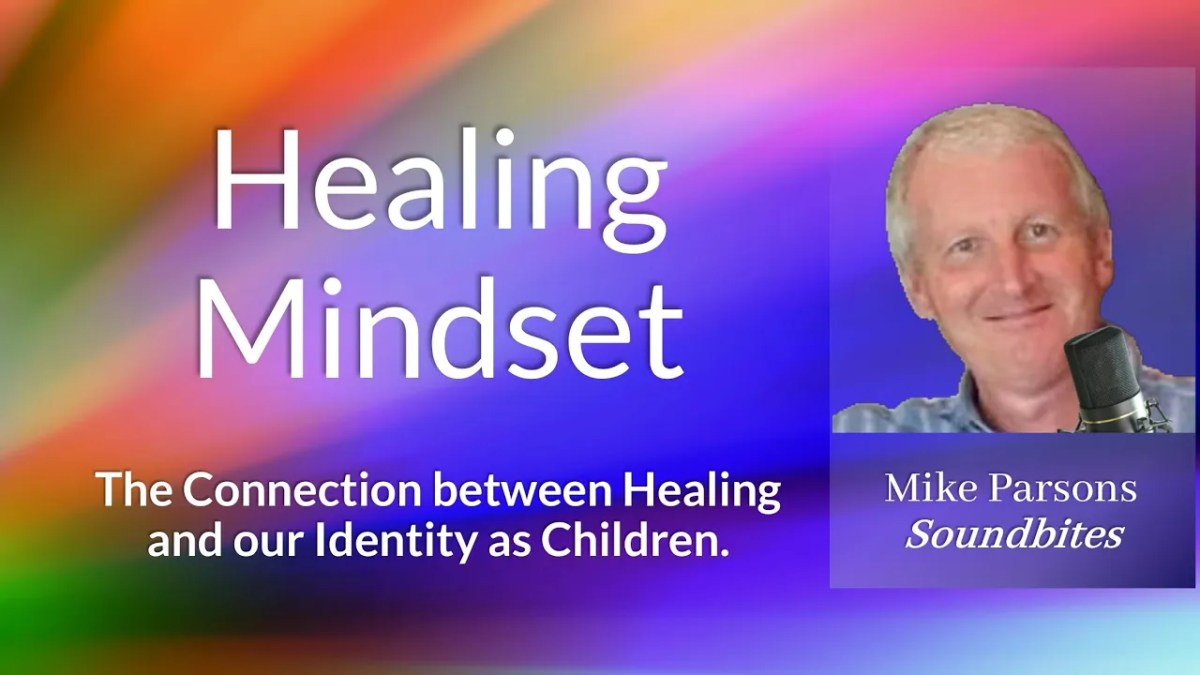
Many people view healing as something to receive from God rather than a state of living in health (and ultimately, immortality). I believe this is where a mindset shift is needed.
A lot of people believe that God heals. Some believe that the Kingdom of God is ‘now and not yet,’ so they can give themselves an excuse—“Well, it’s not yet, so it might not happen.” Others believe healing is included in the atonement—that Jesus died for our sickness just as He did for our sin and death, because they are all interconnected. The wages of sin is death, and sickness is what leads to death, so these things are linked to our lost identity.
Identity and inheritance
Sin is a loss of identity, so if the wages of lost identity is death, then knowing who we truly are brings life. But we have to know who we are. Many people have a general Christian sense of what the Bible says, but do they truly know their identity? Do they know that health, wholeness, and even immortality are part of their inheritance? As children of God, our inheritance includes the fullness of abundant life—health, wholeness, and all the blessings God desires for us.
Many people struggle to love their bodies. Some have bought into the belief that since their body will die one day, it’s inevitable that it will deteriorate. If everyone dies, then surely the body must break down at some point. This is a deeply ingrained way of thinking. But I believe this perspective needs to change.
The body as an equal
Recognising our identity also means recognising that our body is just as important as our spirit and soul. It’s not a lesser part of us—it’s not something temporary that will simply wear out before we receive a new one. Spirit, soul and body are meant to function in union, without contradiction or competition. When we understand this, we can begin to see that within the core of our innermost being, we have the capacity to generate health. The River of Life flows within us, supplying the energy needed to renew and replenish the cells of our physical bodies.
Unfortunately, much of evangelical teaching has treated the body as secondary—something to be discarded one day, so the focus is on the soul and spirit. But we need to honour our body just as much as our spirit and soul. This means loving our body, cooperating with it, treating it with respect, honour and blessing.
A healthy lifestyle
You cannot abuse your body and expect it to remain whole. If we truly love and value our body as much as our spirit and soul, we will care for it accordingly. This includes how we eat, how we rest, and how we maintain our overall health. Some assume, “Well, God will take care of it,” but we are also responsible for working together with Him—spirit, soul, and body together. There are practical things we can do to support our health, such as ensuring we get proper nutrition, taking necessary vitamins, and maintaining a balanced diet. It’s not about extreme diets or fads, but about balance—avoiding excessive sugar and salt, understanding what it means to nourish ourselves properly.
It’s also about maintaining a healthy lifestyle—getting enough sleep, exercising, and having a mindset of love and care towards our body. When we truly value our body, we will look after it. We cannot expect to live in health if we consistently abuse our body.
If you enjoy these blogs and videos, please take a moment to like, share, comment and subscribe. Thank you!
Where you get the terminology often comes from how angels are described in Hebrew. They’re usually called angels, or they might be called seraphim or cherubim, but some of the others aren’t named—they’re just described as angels as a general term— but in reality, they are different orders of angels that people don’t commonly connect with. For instance, there are references to ophanim, chayoth, and others.
The Merkabah
There is an external perspective related to the Throne of God and the Merkabah (divine chariot); however, there’s also an internal aspect which operates within us. The Merkabah represents the core of our being and embodies God’s identity within us. It brings about the focus of spirit, soul and body in union with Father, Son, and Spirit at the core of who we are. And actually, it’s probably more important to grasp that than it is to understand the canopy of angels around the throne of God, the four living creatures and all of those fascinating things, mentioned in Revelation and elsewhere. There is a canopy of angels, and they do have functions, rising up from the throne of God all the way to some of the more unusual ones—the chayoth, which are living creatures that aren’t necessarily humanoid but are living nonetheless. It gets pretty weird. And some of it, does it really matter what all that is about?
God will give us insight when we need it, when we encounter it. Do we need to understand it all? When I first started hearing about the canopy of angels, the ten thousand times ten thousand angels, the myriad of angels, I thought, “What are they all about?” It seemed overwhelming—like, whoa, this is a little more than I can take in. And actually, that’s what God is like in his majesty, the throne of God, and all of that—it’s supposed to be awesome. It’s supposed to be somewhat of a mystery. It’s meant to inspire awe at the amazing things around the throne of God. But it’s also meant to help us engage with the angelic realm ourselves, in our own sonship. When I get to the throne of God, I just want to fall on my face. I want to honour him, to be in awe of him, to totally yield and surrender.
Order of Melchizedek
There are so many different levels of revelation towards each one. Take the four living creatures, for example. They’re connected with what Ezekiel describes as a four-headed being with the cherubic nature of man—reflecting the four living creatures, which, in turn, reflect the order of Melchizedek.
Now, do I literally have the head of an ox, an eagle, and a man? No, I don’t. I have the face of a man. But do I have a cherubic nature, which is how God designed us to function in the order of Melchizedek as a priest, king, oracle and legislator? Yes. There are aspects of who I am that are eagle-like, figuratively speaking. I don’t soar around in the sky, but I carry legislative, governmental authority in terms of my identity. I am an oracle, so I have characteristics of the ox, reflected in being a voice of God—speaking his oracles from his heart. There’s the king, the government, and the priest. So, my nature as a royal priest and an oracle and a legislator is connected to the four living creatures, the cherubic nature, and the cherubim themselves, which carry those characteristics.
I don’t totally need to understand all the symbolism, because some of it is quite weird. I embrace it as part of my identity within the order of Melchizedek. I’ve engaged with the four faces of God, stood in each face, and stood within the name of God. That represents my authority and power of attorney—to use my identity as a son to speak his heart, his intentions, and his purposes, creating reality around my life.
I sort of understand how it relates to those aspects. But do we really need to fully understand how it all relates to the throne of God and the glory and majesty of God? No, because that’s supposed to be an awe-inspiring mystery.
In relation to our sonship
What’s important is how we engage with the angelic realm and the canopy of angels in relation to our sonship. I’ve engaged with the different angelic canopies to see if there was something I need to know to help me in my sonship. That’s how I relate to the angelic canopy—not in terms of their function for God, but their function for me.
If I’m seated on a throne, as we all are in heavenly places, then that canopy comes around me when I’m in that position of identity. They’re designed to help me in my sonship identity, in ruling and reigning from that position. So I engaged with the different angelic beings, to see if there was anything I need to know to help me in my sonship. I have also engaged with the court of angels, participating and sharing there. That drew angels to support, encourage and help, because ‘they are ministering spirits for those who are inheritors of salvation’.
Do I understand all the terminology and functions associated with God’s throne and glory? No, but I do have some insight into how they relate to us, our throne, our position of authority, and our identity. Our glory is our identity, and creation itself will one day be liberated into the freedom of the glory of the children of God. This refers to us, living fully in our identity as sons and daughters of God. There are aspects of these heavenly realities that help us grow into that identity.
Names and functions
Do angelic beings have multiple functions and titles? Perhaps. Some people may relate to them in different ways or use varying names depending on their functions. This is likely where some confusion arises. For instance, who are the twelve ambassadors of the ages? What order of angels are they from, or are they from separate orders? Who are the court of judges or the 24 elders? There are so many questions one could ask that it might seem overwhelming, as though a great deal of knowledge is required. However, I don’t believe such knowledge is essential for day-to-day life. There’s certainly more to discover, but people often describe these realities differently based on their own experiences and where they are in their journey. Just because someone describes it differently doesn’t mean their perspective is definitive or universal—it simply reflects their personal engagement.
For example, have I engaged with cherubim? Yes. Seraphim? Yes. Ophanim, Elohim, and Ben Elohim? To some degree, yes. Each of these has different names in different positions, or functions, and their roles vary. Take the twelve chancellors, for instance—some refer to them as high chancellors, as there are many other chancellors, and we can also function as chancellors ourselves. Wisdom once gave me a seal and staff representing a chancellor’s authority, and I’ve engaged the Chancellors’ Court. I’ve functioned at the bench there to facilitate scrolls and mandates being released and accepted, and other heavenly matters. That said, I’m not someone who pays much attention to details, so I couldn’t describe exactly what the others looked like. My focus was more on their functions and what I could learn to do in cooperation with them. For all I know, each chancellor could be from a different order of angels, and my interactions with them might differ in another type of experience.
Not for intellectual curiosity
It’s not set in stone, a fixed or rigid concept—it’s a dynamic, fluid reality in the heavenly realms. Their roles might vary depending on the situation. For example, the angel who sits behind my throne—though I suspect it might be one of the Ben Elohim—I don’t know for certain, and I haven’t been especially curious to find out. The point is not to engage with these realities for intellectual curiosity or the sake of knowledge but to discern how they relate to our journey, so we can cooperate with them as they help us grow into greater maturity. That’s how I approach these things. They’re about my growth and ascension into deeper levels of maturity, not about creating rigid definitions that apply to everyone universally.
My engagement with cherubim or seraphim has been deeply personal. I’ve encountered seraphim when I was on the altar. I’ve also engaged the seven spirits of God. Are they separate beings? From my perspective, they are. They seem entirely distinct from any other heavenly beings I’ve encountered. To me, they are seven created beings that reflect the fullness of God’s Spirit. Some people might argue they are simply aspects of one Spirit, and while they may reflect aspects of the Spirit, when I engaged them, they were individual personalities—beings embodying specific aspects like wisdom, knowledge, understanding… all seven.
The Spirit of the Fear of the Lord, for example, engaged with my scroll and led me to the Judgment Seat. Each spirit revealed an aspect of my growth in sonship, guiding me in my journey. For me, these encounters aren’t about intellectual pursuits or acquiring knowledge but about learning to cooperate with these heavenly beings in my journey toward maturity.
I agree—it can be confusing to try to understand all the different names, titles and roles of these beings, especially if we attempt to fit them into a fixed, rigid framework—I don’t believe they’re meant to be understood in that way.
If you enjoy this blog and video, please take a moment to like, share, comment and subscribe—it really helps. Thank you!
As individuals and as humanity as a whole, all we, like sheep, have gone astray, following our own path of independence. But God proactively came to seek and save that which was lost. The Good Shepherd sought out the lost sheep—and still does. He is continually seeking those who are living in lost identity. And a lot of Christians are still living in lost identity, even though they have a relationship with God at a certain level. Whatever level of relationship we have, God wants to take it deeper. He doesn’t want us to remain in the same place.
Mankind may have turned away from God to live in that lost identity and independence, but God never turned away from us. God, as Father, has always seen us as His children through the lens of love. He has always desired that we all return to our first love—our origin. This is the key, and there are a number of Bible verses that speak about this love and its depth. , For example,
For I am convinced that neither death nor life, nor angels nor principalities, neither things present nor things to come, nor powers, nor height, nor depth, nor any other created thing [including ourselves] will be able to separate us from the love of God that is in Christ Jesus our Lord (Romans 8:38-39).
That’s quite a statement, but it’s based in God and not in us. It’s not based on our ability to maintain a certain standard. It’s purely a statement of God’s grace, mercy and love. The Mirror Bible puts it like this:
This is my conviction: no threat—whether it be in death or life, be it angelic beings, demon powers, or political principalities, nothing known to us at this time or even in the unknown future, no dimension of any calculation in time or space, nor any device yet to be invented—has what it takes to separate us from the love of God demonstrated in Christ Jesus, our ultimate authority (Romans 8:38-39 Mirror).
Relationship
When we go back through Romans 8, we see there are a number of things that lead up to that passage which are talking about our relationship with God. Romans 8:14 says:
For all who are being led by the Spirit of God, these are the sons and daughters of God.
As we come into union with Him, joined to God—not separated from Him in our own understanding—we become one spirit with Him. This union enables our spirit to mature, to grow, and to develop into who we were always intended to be. It helps us discover who we were before we came here.
For you have not received a spirit of slavery leading to fear again… (Romans 8:15a).
Yet how many people became Christians and, through the church or religion, ended up back in fear—living in works of appeasement to an angry God? But God is a loving Father. He wants us to know the truth: we are sons and daughters.
… but you have received a spirit of adoption as sons and daughters, by which we cry out, ‘Abba, Father.’ (Romans 8:15b).
This was impossible under the old covenant. Crying out “Abba, Father” is a new covenant reality. Jesus came to reveal His relationship with His Father so that it could become our relationship with our Father too.
The Spirit Himself testifies with our spirit that we are children of God (Romans 8:16).
This is what happens in this union: the Spirit testifies to our innermost being, confirming that we are children of God. Not only that, but we always have been; we always will be—we will never, ever not be children of God.
And if children, heirs also—heirs of God and fellow heirs with Christ, if indeed we suffer with Him so that we may also be glorified with Him. (Romans 8:17).
Now, this is where the way this is written may challenge some people because it uses the word ‘if.’ However, this ‘if’ is not conditional, as though we need to do something to make it happen. Instead, it is a declarative statement, affirming that something has already taken place: because we are children, we are heirs. Heirs of what? Heirs of God Himself and fellow heirs, co-heirs with Christ in the whole of creation. And “if indeed we suffer with Him so that we may also be glorified with Him,” is not suggesting that we must endure suffering to earn glory. Instead, it means that we identify with His sufferings because He went through them for us. We don’t have to go through it, other than by identifying with Him.
We originate in God
So if we go back again and read those verses in the Mirror Bible:
The original life of the Father revealed in His Son is the life the Spirit now conducts within us.
So the spirit is now looking, with the Father and the Son, to reveal our original origin and identity, the original life that He intended us to
have as children of God in relationship.
Slavery is such a poor substitute for sonship. They are opposites. The one leads forcibly through fear, while sonship responds fondly to Abba, Father.
This is what God desires: for us to engage with Him as Abba, Father, Daddy, without fear—resting instead in wonderful peace and intimacy.
Verse 16: His Spirit resonates within our spirit to confirm the fact that we originate in God.
Through this process, God is showing us our origin—who we really are, from the beginning, so that who we are now will be in alignment with who we were in the beginning, not as a product of our lives up to this point.
Because we are His offspring, we qualify to be heirs. This isn’t something we earn—it’s purely by grace. God Himself is our portion. We co-inherit with Christ, since we were represented and included in His suffering. This is very different than us going through suffering. We were already included in His suffering, and we equally participate in the glory of His resurrection. This isn’t something that happens in ‘Glory’ (as they used to call heaven); this is something that can happen now—because as He has been resurrected, so also we died with Him and we are now alive with Him, to fully embrace the glory of that resurrection power that reveals who we really are. You could say that ‘who we really are’ is our glory. It is our true identity, the clothing of that glorious nature we have as children of God.
This video blog is an excerpt from Mike's current teaching series, Restoring First Love. Get the full length videos every month, only at eg.freedomarc.org/first-love
Activation
Close your eyes, come to a place of rest. Begin to think of living loved, being loved in that first love way.
Again, start to focus your breathing, just begin to slow down, relax, focus your thinking as you breathe slowly, and breathe deeply, thinking about God, who is love, who loves you.
As you breathe in slowly, you breathe in that unconditional love of the Father. You’re breathing it into your very being. Every breath that you take is a life-giving force of energy, of love.
That unconditional love, as you breathe it in, flows through your being. Start to feel it flowing through you. Breathe deeply. Be still, as God releases that love in you, on you, through you.
You are cocooned in unconditional love, filled to overflowing. Unconditional love flowing through you as God demonstrates to you how much He loves you, how valuable you are to Him.
You are the apple of His eye, the treasure of His heart, the object of His desire. He calls you into union and oneness. He’s calling you into this union of relationship. Be filled with love.
Stay in that place of intimacy and love. Just embrace it.
The music in this activation is by Samuel Lane.
Stream or download more of his soundscapes at linktr.ee/SMLMusic
When it comes to what God is doing and how that is going to be expressed, I think people see it from different perspectives. Personally, I see it as a process, as relationship, not as an event. Now, I’m not saying there won’t be a vanishing point where people may have incredible experiences, but those experiences alone won’t be enough for them to sustain that way of living unless they come into the revelation and reality of it in their own lives.
Things can happen to you, but that doesn’t mean you can do them yourself until you come into that reality. You have to step into it to make it part of who you are. For instance, if someone like Justin has seen in the spirit that congregations may just vanish into heaven and do amazing things, that’s great. But when those people return, how many will be able to engage in that way on their own? That’s the key: living a life where you’ve learned to develop your spiritual senses through practice, enabling you to live out those experiences yourself.
Now, will there be a wave of new giftings? I don’t think there will be new gifts, but rather a restoration of what God originally intended for humanity. Think about being clothed in glory, having the ability to walk through things, or engaging with quantum realities like translocation and transport. These aren’t new ideas; they’re simply a restoration of what Adam could have done if he had continued walking with God.
Yes, there are levels of ascension God wants to take us through, but I don’t believe these will happen corporately in the sense that everyone in a group will suddenly be able to do all these things. There may be corporate experiences that inspire individuals to pursue these realities for themselves, but it’s still a personal journey of development. The same applies to spiritual gifts: there’s a difference between being given a gift for a moment and developing the ability to express that gift as part of who you are as a son or daughter of God.
There might be manifestations that serve to inspire people to live a lifestyle beyond their current expectations. But these manifestations are not a guarantee of lasting ability—they’re invitations to pursue a deeper life of relationship with God. It all comes back to knowing who you are and stepping into your true identity. Along the way, experiences that inspire or motivate us are wonderful, but the ultimate goal is for each person to grow in their own journey.
Years ago, there was a trend where people would go to conferences to have hands laid on them in the hope of receiving an anointing or impartation. Some may have experienced something profound or even temporarily received a gift, but the reality is that lasting transformation requires more than receiving a gift. It requires living a life shaped by that gift.
Our spirit is capable of doing everything the Holy Spirit enables, but we need to develop discernment and practice. The key is to align with the Father’s heart and only operate out of what he is doing—not just act because we can. There’s a temptation for people to misuse spiritual gifts for personal gain, like fame or fortune, and that’s not what God intends. The glory belongs to God, not us.
One danger with dramatic manifestations is that people can become overly focused on the individual through whom those manifestations occur, or on the organisers of such events. This can lead to disappointment when those people inevitably fail or let others down. It’s a cycle we’ve seen repeated time and again. That’s why it’s so important to develop our own relationship with God and nurture our own giftings. When it’s your gift—something developed through practice, perseverance, and growth—it becomes a part of who you are.
There’s a difference between a temporary ability to do something and living in the reality of that ability every day. The latter requires perseverance, growth, and development—not just in ability but also in character. Immaturity in handling spiritual gifts can lead to misuse or even harm, which is why God prioritises the development of our character alongside our abilities. When love is at the centre, we can use these abilities in a way that doesn’t draw attention to ourselves but instead points back to God for his glory.
If you enjoy these blog posts, please take a moment to like, share, comment and subscribe—it really helps. Thank you!
Mike Parsons explores the profound concept of our true identity as spiritual beings created by God and emphasises that while we exist in a fallen world, we are not defined by it. Instead, our purpose is to reconnect our spirit, soul and body, to restore creation, and reveal our identity as sons of God.
Understanding Our True Identity
We didn’t leave our heavenly home. Heaven isn’t our home; creation is our home, within God. God is our home, if you like. We’ve come out of Him; we are spirit, and we’ve come out of Spirit. We haven’t taken on Satan’s fallen identity. We have come into a realm that has fallen, and our role within that realm is to bring restoration to it. But we are not fallen as Satan fell.
So, we may come into this realm and need to reconnect with ourselves. In this realm, we have to connect spirit, soul and body as a way of understanding that as we are restored, creation will be restored. Creation is waiting and longing for the revealing of the sons of God. So, we need to reveal our sonship to creation, which is why we need to be in this realm connected to all the realms, so that we can be a demonstration of God’s heart and desire within the realms of heaven. “Your kingdom come, your will be done on earth as it is in heaven, in creation as it is in heaven.” But we haven’t taken on the fallen identity of the accuser. We have just entered into a world that was created, in a sense, by Adam and Eve’s choice to be independent. So, it is a world shaped after the Tree of the Knowledge of Good and Evil. As we come into that, we are then to bring it back into relationship with the Tree of Life, if you like.
Reconnecting Spirit, Soul and Body
There is a purpose. The sonship mandate was to overcome and to rule, to have dominion. That dominion has just been taken, through humanism, to mean control, empire, and everything else. So, God wants us to restore the relationship with the sons of God. God created us, not to live in Heaven—that’s not our home—God created us to co-heir and co-create with Him in the whole of creation, and therefore there is a role for that.
Is there a heavenly purification or purging of creation? Well, there is us coming into our identity, which enables creation to be set free into our identity. It’s like creation is longing and waiting for the revealing of the sons of God. But it also talks about creation being set free into the glory of the children of God. As we come into that true sense of our sonship, which is the glory—the weight of who we are—then there is a process for us to have our soul, which has been connected to this realm, aligned to our spirit, which is coming from our identity out of heaven. Of course, there is a renewing of the mind that comes because when we come into this world, although we’re alive in the spirit, our spirit and soul are not connected correctly. That is what bringing us back into wholeness and oneness is about.
The Mandate of Sonship
So, I would encourage you, when you’re looking at things like this, just relax and enjoy becoming the son that God created you to be—becoming the person and listening to the vast sum of His thoughts about you, tuning into the reality of who you really are. That will have a positive effect on creation in that it will be a revealing of your true identity and your role within creation itself.
You are being restored; you are learning to breathe easily again, to find that place where life is flowing through you and in you, and then creation begins to respond to you in your sonship. Now, yes, there is the opposite going on—there are the accusations of the enemy, which will try to keep people from their true identity. But Satan fell because he said, “I will be like God.” Eve bought the lie that she could be like God, but without God. Therefore, the Tree of the Knowledge of Good and Evil is really the choice that man has made to follow independence. Jesus came to enable that independence to come to an end, for the lost identity to be recovered, so that people could fully understand who they really are. Their identity with the world will be redefined through our identity—not with a fallen or broken world, but with the restored desire that God has as the Creator of the world, of creation, so that we can participate with Him in its full restoration.
If you enjoy these blogs and videos, would you please take a moment to like, share, comment and subscribe? Whether here or on YouTube (or both!), it really does help. Thank you very much.
God’s desire is for us to embody love because we are made in His image—He is love, light and spirit. Our spirits are light, and we’re designed to love just as God does. The highest goal is to give love, reflecting God’s image. When we follow an independent path, it distorts love into a need and driving force, leading us to seek love from others rather than giving it ourselves.
A common misunderstanding is that we were separated from God and need adoption back into His family. This view, often held in evangelical circles, is flawed. God never separated from us; we were never outside His family. So adoption is our coming of age within that family, not rescue from abandonment. Biblical adoption is about maturity and coming into full authority from the Father, not placing orphans into new families. Genesis 1:26 shows that God created us in His image and blessed us to be fruitful and rule on the earth. Adam’s choice to walk independently disrupted this plan, but now, in Christ, we are redefined by our identity in Him.
Any idea that Jesus is the true Son and we are merely adopted obscures our true identity: we have always been God’s children, made in His image and likeness. Our perception of rejection or abandonment is false. Romans 8:14 says, “For all who are led by the Spirit of God are children of God.” The Spirit is in everyone, guiding us all, even if we don’t always follow. When Jesus breathed the Holy Spirit into His disciples, He revealed their true identity. We all have received God’s Spirit, confirming that we are His children and helping us understand who we really are.
So our Western and Roman concept of ‘adoption’ might not fully capture what the Bible word means. Some interpret adoption as something that happens when we accept salvation or when God adopts us. However, this interpretation can also imply that we were once orphans or outside God’s family, which isn’t accurate. Romans 8:15-17 explains that we have received the Spirit of adoption, not as a sign of previous separation but to affirm our existing sonship. The Spirit confirms that we are already God’s children and co-heirs with Christ. This adoption isn’t about coming from outside into the family but recognising our inherent identity as God’s offspring.
God has always been our origin; we just need to rediscover this truth. Romans 8:14-17 in the Mirror Bible describes the Spirit leading us into the fullness of life in God, showing that we are His children, not through fear but through a relationship with Abba Father.
And Jesus’ suffering was for our benefit, not a requirement for entering our inheritance. The idea that we must suffer to gain inheritance is a misunderstanding. Jesus suffered so that we wouldn’t have to face the same trials. We are not orphans; Jesus assured us that He would not leave us as orphans but would come to us, showing that God dwells within us and is not distant or rejecting. If we teach that people are orphans or rejected by God, we distort the gospel and the true nature of salvation. The message of salvation reflects God’s nature as loving and inclusive, not as one who condemns or separates.
We have the rights and responsibilities of sonship, as part of God’s royal family. Peter tells us that we’re privileged to represent God on earth, showing others what He is like through our relationship with Him. Initially, Israel was meant to fulfil this role, but their system became law-based rather than grace-based. Romans 8:19 reveals that creation eagerly awaits the revealing of God’s children. If we see ourselves as ‘lesser’ adopted children, we miss out on our role as co-creators with God. Being part of a royal family gives us access to the Heavenly Palace, where we’re seated with Jesus and can engage with God intimately in His presence.
Despite being taught that we’re orphans needing adoption, the truth is we’ve always been part of God’s family. According to Ephesians 1:4, our restored face-to-face relationship with God is a done deal, and God’s love will eventually bring everyone to this realisation. Our true identity means we don’t need to live like orphans. We can experience our origin in first love, knowing God as our loving Father. The Spirit confirms this, enabling us to call God “Abba Father.”
Picture a door in your spirit.
God is knocking: invite Him in.
As He enters, He hugs you and breathes His life into you.
Feel His heartbeat and embrace.
Know that you’re home.
He whispers into your heart,
sharing His love and affirmation,
telling you how treasured and loved you are.
If we were all just more cognizant of who we are, and aware of who we are – what our true identity is – and just enjoyed being us, I think we would find a lot of change begin to take place around us because of our light and joy. We leave a residue of that DNA and that light wherever we go. Whenever we speak and act in a place, that gets recorded within the fabric of the atoms, molecules and particles of that place; so when we walk in that place we leave a deposit of ourselves; that light does continue. So let’s make sure we are not miserable and leaving a miserable deposit in the place we have been in: moaning, complaining and grumbling over the fact that it isn’t as we want it to be. Let’s be positive, leave a deposit of activity in the realm of the spirit in that place which will continue until it has finished bringing about change and transformation.
I think that is the key. Jesus said “If you go into a place and they don’t receive you, shake the dust off your feet and leave.” People think that is so negative! And it wasn’t. That was such a positive statement. Because the dust was the rabbi’s dust, reflecting the rabbi’s teaching that they had received and were living. Therefore by shaking that dust off they were leaving a deposit of the truth and the life and the light in that place; so even though they might have rejected Jesus at that moment, they had a possibility of accepting and engaging because you’ve left a positive deposit, not “let’s bring down fire out of heaven and burn up that village.”
Some of them didn’t yet get it because they didn’t get the love dimension yet; and I think Jesus had to show them by his attitude even by being punished, being whipped and beaten and having a crown of thorns and all the terrible things that he went through getting to the cross, let alone on the cross itself. His response was still “Father, forgive them.” His response was still “look after my mum.” He was still thinking of others, he was still thinking about the world even while he was going through those things; and that’s what he taught his disciples. So when they then went through martyrdom or persecution – which he warned them was likely to happen in the next generation; both the religious and the political spirit being against them (both Israel and Rome) – they could do so with a smile. And even when they were crucified upside down, as some of them were, they still rejoiced because they saw it as an honour
We are leaving deposits of light and love and truth wherever we go. If people have found some joy or happiness in being around us because we weren’t miserable and we weren’t complaining and grumbling about the weather and everything else, but we were rejoicing and enjoying and always had something to be thankful for and grateful about, that leaves a deposit of life; and that will bring about change, even after we have left and are no longer there, because we have been there.
What have we left? It’s a good thing to think about. Wherever we have been in the last week, whether it be at work or in the supermarket or in the garden or in meeting people or out having fun or having a meal in a restaurant, did we leave a good deposit? Did we leave a good vibe, a good atmosphere – a rejoicing, peaceful atmosphere – or did we moan and complain and oh, the queue’s too long and we’re getting angry and annoyed and frustrated and all that? What have we left? What deposit have we left wherever we have been, and wherever we are going?
Think about it this week. Wherever you are going this week, whatever you are doing this week, what deposit of light are we leaving behind, of peace, of joy, in the fabric of the very place we have been to bring about that place being transformed? Or the people who are going to come into that place feel and sense something good about it because they pick up the light and that peace that we left there?
It is a good thing to think about isn’t it? Am I leaving rest and joy, and peace and love wherever I’m going? If people see you enjoying your grandchildren and having fun, you’ll leave that deposit with them and with where you’ve been enjoying them; that memory is there in that fabric of that place. It will be a joyful, happy place and other people who come there can still feel and sense it.
Russian scientists, recording light from our very DNA, are still recording it after we left1. I don’t know how they record it after we left, but they have obviously found a way of doing it. But actually it’s more than that! We are leaving more than just residual light, we are leaving a deposit of who we are in that place, and I think that’s what the world needs.
Am I leaving a deposit of rest and joy, peace and love wherever I go?
Our Patreon patrons give a small amount each month and can join us for our monthly group Zooms, get exclusive or early access to Mike’s teaching and enjoy further patron-only benefits. Or you can use the blue button to support our work with a one-time gift*.
Thank you!
Note: This donation is securely handled through PayPal but you do not need to have a PayPal account yourself to make a one-time donation.
For repeating donations, if you do not have (or want) a PayPal account please support us through Patreon instead.
God desires that we live in two realms simultaneously, just as Jesus did,
functioning in both earthly and heavenly realms.
[“I am reading from my book INTO THE DARK CLOUD, in which I describe the process I went through to enable that to begin to happen in my life . I hope it will encourage you to seek God for your own dark cloud experience.”]
I counsel you to open your heart and embrace the fire. The purpose of the fire is not to harm us, but to change and transform us: we need to be willing to embrace both the water and the fire. Some of us will experience different processes of transformation. If you go through a water transformation without needing the fire, so much the better. That was not my experience. I had to go through both water and fire, and the fire was instrumental in bringing about transformation in me.
The places of restriction in our lives are where preparation and transformation occur. Sometimes God tells us that in this season everything has to stop: our busy-ness and constant activity can hinder intimacy with Him. We are so focused on doing, doing, doing, that we do not take the time to simply be.
It is in those moments of being that God has the opportunity to speak to us, challenge us, and bring about change.
We can be so consumed with our activities that we never truly hear God’s voice. We may continue doing things because we think we are doing what God wants, but if we take time to listen, He is telling us to stop and move on
Who am I, if I am not doing any of the things I believe God wants me to do?
Do I still have value and worth?
Do I feel the same about myself, when I am not actively engaged, or when I am not ‘doing’ everything?
These are the questions God starts to raise when He places us in restrictive situations or dark clouds. It is in those moments that we have the time to reflect. Sometimes these seasons will feel like a dark night of the soul
because they involve intense experiences. That is why many people resist or fight against them: they do not understand what God is seeking to accomplish. They try to escape or avoid the process instead of embracing it.
I was like that. I fought it. At least, I certainly tried – for six weeks, and it was a miserable time.
I counsel you to open your heart and embrace the fire.
Key takeaway
Simply be. It is in those moments of being that God has the opportunity to speak to us, challenge us, and bring about change.
This video blog post is a final excerpt from Mike’s latest book, Into the Dark Cloud, out now.
In this series of posts we are looking at new wine and new wineskins. Last time we saw how the new wineskin is each one of us, both individually and coming together as a new order ekklesia, but what is this new wine? What does it represent? Here is some of what I have seen (and if you will engage with God for yourself, I am sure you will see some of this and more besides):
New governmental mandates and new government patterned after heaven. New revelation and understanding of how to expand the kingdom, subdue and rule from a new heavenly perspective of servant leadership.
New values and ideals. Jesus introduced the manifesto of the kingdom, a completely new way of living. As we have seen, the ekklesia is to be a reflection of heaven’s values, an embassy of heaven on earth. We are to be ambassadors of that embassy, carrying the authority of heaven and exercising it on the earth.
New things established in heaven.
New heavenly strategies instead of earthly ones. Let’s stop trying to figure out how to do things and instead go to the heavenly strategy room and get a strategy which will be effective.
A new heavenly identity of sonship. It is in heaven that we operate in fullness of sonship, so that we can be manifested as sons on the earth.
A new health service – healing and health for the world, to demonstrate that God is a loving God who wants to heal. As a first step we will be living in health ourselves: body, soul and spirit in wholeness, connected to heaven, with the life of heaven flowing from the inside out. That will draw those in the world looking for healing.
New economic and financial services. Jesus threw all the money changers’ tables over: kingdom finance and economics bear no resemblance to the systems of the world. Kingdom finance is a love-based system in which we can freely give because we freely receive under an open heaven. Serving in love is the currency of the kingdom, going the extra mile and putting others before self.
A new society – paradise restored. God wants to bring back human society to how it would have developed in the Garden (if the Garden had expanded to fill the earth as it should have). The way up is down; the first will be last and the last first.
New speech, new attitudes, new ideals, new culture. Everything comes from a new perspective as redefined by Jesus.
New behaviours, abilities and powers. We will recover everything that was lost at the fall, at the flood, at Babel and throughout history as our DNA is renewed and restored and as we renew our minds.
Heaven transforming earth. This is God’s ultimate desire and plan.
Experiential
All new ways flow from beyond the veil and they are experiential.
New experiential ways of ministry. No longer will we set ourselves up as ministers who tell people what God is saying and what to do. Instead we will get alongside them and equip them to hear God for themselves. Liebusting is a good example of this new way, in which the person asks Jesus what He wants to do in their life and asks Him to show them how to deal with what stands in the way. And teaching people how to go to the courts equips them to hear first-hand, rather than getting someone else to tell them what the issue is and how to address it.
New experiential ways of teaching – we have to get away from a scenario where it is just me or some other teacher lecturing a roomful of people. It will be all of us together, experiencing. The activations we have done together on a Sunday morning and in some of the online sessions and events are a first step towards that. Alongside the new kingdom financial system, I am sure we will see a new education system as well.
New experiential ways of prayer. We will not just be crying out from here on the earth, hoping that God might hear something, but going to meet Him face to face.
New experiential ways of interceding, not from below but from above. We can stand before God, identifying with the person, city, nation or planet we are interceding for, in a heavenly courtroom, getting His judgment and verdict on the situation.
New more effective ways of kingdom administration: outworking heavenly government on the earth.
New ways of partnering with the angelic realm: angels are ministering spirits sent for the sake of those who inherit salvation. We are already hearing more testimonies of angelic engagement, and that will only increase. They are awesome, powerful created beings, and they can do things which have never even occurred to us yet!
Growing in maturity
The new ways are about our maturity. Moses did miracles, parted the Red Sea, food just appeared, the Israelites’ clothes never wore out, they were led by a pillar of cloud and fire – all this while they were just children who only knew God by His deeds. If they had gone and engaged heaven with Moses, they would not have needed any of that.
Under Joshua’s leadership, the people did the miracles, parted the Jordan, caused the walls of Jericho to fall. They did not need supernatural food or clothing provision because they could all sow in the Promised Land, and reap the harvest of what they sowed.
Jesus showed his disciples how to multiply food, do miracles, produce provision and so on. He taught them how, then sent them out to do it themselves. Unlike Moses, He did not just do it for them. And today He will show us new ways of being salt and light in our world, new ways of being agents of change in history, society and culture, so that we are not influenced but influencers. He will open up new ways for us to bring transformation to our communities. We will do all this by establishing all things in heaven first so they can be manifested on earth – that is the hallmark of the new.
This blog post is adapted from Mike’s teaching in the ‘Engaging God‘ subscription programme.
Our Patreon patrons give a small amount each month and can join us for our monthly group Zooms, get exclusive or early access to Mike’s teaching and enjoy further patron-only benefits. Or you can use the blue button to contact us about making a one-time gift. Thank you! *Note Sadly, because of abuse by scammers we can no longer offer a ‘click to donate’ option. However, if you contact us, we will get back to you with a simple means of giving.
From the beginning we were created to have an intimate relationship with God. Jesus tells us in Matthew 22:37-38 to “Love the Lord your God with all your heart, all your soul and all your mind” and in John 14:6 that the only way we can come to the Father is through Him. Face to face engagement reveals the reality of who God truly is – Love – and exposes the untruths we may have assimilated over the years. Jesus is the ultimate expression of that Love, so if it doesn’t look like Jesus then it probably isn’t Love.
God wants us to know the truth of who He is and who we are as His children. It is the tactic of the accuser to get us to think wrongly about God and about ourselves. As long as we see God as having a dark side, we will never trust him completely. There will always be a slight fear that contradicts love.
Quantum physics 1.01
For example, somehow we have come to believe that God cannot look upon sin, and that He has to turn His face away. If it were true that He could not look upon sin, we would not be here! Quantum physics 1.01 tells us that if He were to stop observing us, we would cease to exist.
On the cross, when Jesus quoted the opening words of Psalm 22, “My God, my God, why have you forsaken me?” He was drawing people’s attention to the content of the whole psalm and its relevance to the events playing out before them. But He had previously told his disciples:
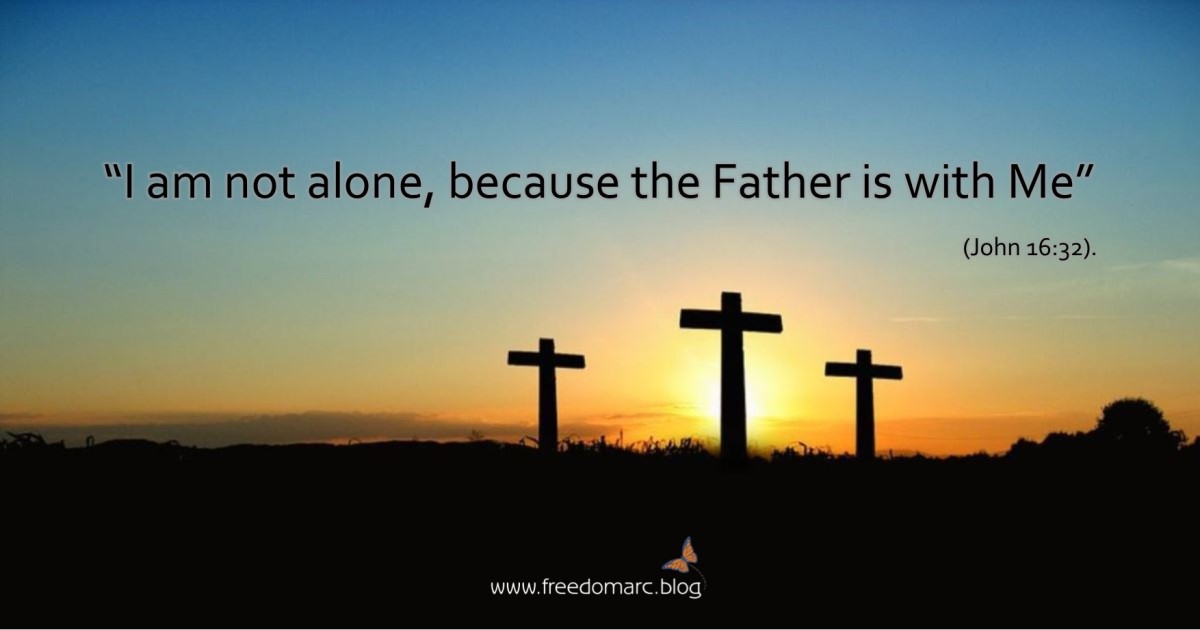
“Behold, an hour is coming, and has already come, for you to be scattered, each to his own home, and to leave Me alone; and yet I am not alone, because the Father is with Me” (John 16:32).
We can clearly see that the hour He was referring to was His crucifixion. According to Jesus, the Father never turned His face away from Him. He was right there with Him.
God’s justice
How could we have got this wrong? The answer is, because we have got something even more fundamental wrong too. We think that on the cross Jesus was taking our punishment for us, suffering the wrath of a vengeful God in judgment that should have fallen upon us. We are used to our human justice system which requires retributive justice – payback – but the truth is that God’s justice is always restorative. We will look at this whole subject of the atonement in detail in another post, but for now let’s consider what the cross was about, if not punishment.
The sin
The original Greek word for ‘sin’ used most often in the New Testament is ‘hamartia’. It is a noun (the sin) not a verb (to sin). ‘The sin’ is the sin of Adam, choosing to follow the DIY pathway of the tree of knowledge of good and evil rather than the pathway of the tree of life. From Adam we all inherited spiritual death (which is a lost relationship with God and lost personal identity), so like Adam we are living in something less than God’s original blueprint or design for us, not recognising our true identity as a person made in His image.
So the wages of sin is death (Romans 6:23 NASB), but God has a solution ready: for as in Adam all die, so in Christ all will be made alive (1 Corinthians 15:22). ‘The sin’ did not need to be punished, as religion would have us believe, but forgiven, corrected, dealt with and removed. We cannot earn God’s forgiveness by doing ‘good’ things (that is the DIY tree again): forgiveness is God’s gift to each of us in Christ.
The word of reconciliation
God was in Christ reconciling the world to Himself, not counting their trespasses against them, and He has committed to us the word of reconciliation (2 Cor 5:19).
The Greek word for ‘the world’ in that verse is ‘cosmos’: it certainly includes the whole planet, and much more besides. Jesus came to reconcile and restore absolutely everything and everyone in the whole of creation back into relationship with God. That is exactly what He accomplished through his death and resurrection, and now we all share in the victory of the cross and resurrection life. In relationship with God we all have a restored identity, knowing we are accepted, forgiven, blessed, and made righteous.
Since we now have the same ministry of reconciliation that Jesus had, we choose to show love and mercy to others just as He has shown love and mercy to us. What is more, the more we engage with the real God, the wider, deeper, longer and higher we perceive that love and mercy to be.
These blog posts are adapted from Mike’s teaching in the ‘Engaging God‘ subscription programme.
Support Freedom ARC
Our Patreon patrons give a small amount each month and can join us for our monthly group Zooms, get exclusive or early access to Mike’s teaching and enjoy further patron-only benefits. Or you can use the blue button to contact us about making a one-time gift. Thank you! *Note Sadly, because of abuse by scammers we can no longer offer a ‘click to donate’ option. However, if you contact us, we will get back to you with a simple means of giving.